

Lathe Selection for American Manufacturers: How to Reduce Machining Costs Without Sacrificing Quality
For manufacturers in the Americas, purchasing a lathe is not simply a matter of comparing machine prices.
A lathe is a long-term production investment. The wrong machine can lead to excessive setup time, inconsistent machining accuracy, unnecessary tooling costs, higher maintenance expenses, and lower productivity. For small and medium-sized machine shops in particular, these problems can directly affect profitability.
At the same time, manufacturers across the United States, Canada, Mexico, and other American markets are facing several common challenges:
- Increasing labor costs
- Skilled machinist shortages
- Pressure to shorten production cycles
- Demand for consistent machining quality
- More customized and small-batch orders
- Rising energy and operating costs
- Pressure to maintain competitive part prices
- Increasing expectations for machine reliability
- Difficulty finding machines that balance price and performance
This makes lathe selection an important production decision.
Instead of choosing a machine based only on the initial purchase price, manufacturers should evaluate the complete production process and determine whether the machine can deliver reliable performance over many years.
This article focuses on one key question:
How can manufacturers in the Americas choose a lathe that reduces total machining costs while maintaining reliable production quality?
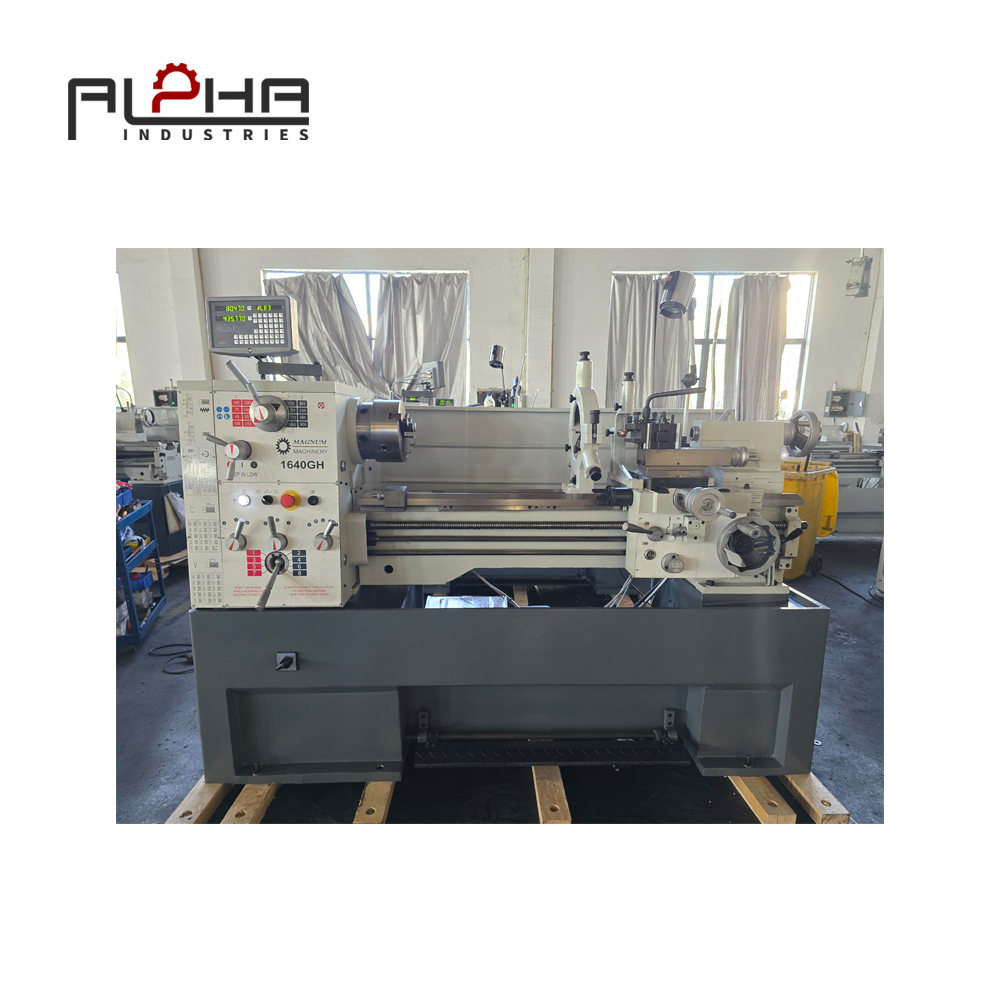
Why Lathe Selection Has Become More Important in the Americas
The manufacturing environment in the Americas has changed significantly.
Many machine shops are no longer producing only large volumes of identical components. Instead, they may need to manufacture shafts, bushings, pins, sleeves, flanges, threaded components, automotive parts, agricultural machinery components, and industrial replacement parts in relatively small or medium batches.
This creates a difficult balance.
A machine needs to be flexible enough to handle different jobs while remaining productive enough to generate acceptable output.
A low-cost lathe may look attractive during the purchasing stage, but the initial purchase price represents only one part of the total cost.
Machine A
- Lower purchase price
- Limited working capacity
- Less rigid structure
- More frequent setup adjustments
- Higher tooling consumption
- Longer machining cycles
Machine B
- Higher initial investment
- Better rigidity
- Larger working range
- More stable cutting performance
- Better tooling flexibility
- Shorter production cycles
Machine A may appear cheaper initially. However, if Machine B saves significant production time every day, its total operating cost may become lower over several years.
This is why American manufacturers should consider total cost of ownership, rather than simply looking at the machine quotation.
Machine Rigidity: One of the Most Important Factors
When selecting a lathe, machine rigidity deserves special attention.
During turning operations, the cutting tool applies considerable force to the workpiece. If the machine structure is not sufficiently rigid, vibration and chatter can occur.
These problems can result in:
- Poor surface finish
- Reduced dimensional accuracy
- Faster tool wear
- Increased noise
- Longer machining time
- More rejected parts
A rigid machine structure helps maintain stability during cutting.
This becomes especially important when processing harder materials or larger workpieces.
What Should Buyers Check?
When evaluating a lathe, manufacturers should examine:
- Bed construction
- Machine weight
- Guideway design
- Headstock structure
- Spindle support
- Tailstock rigidity
- Overall machine stability
A heavier and more rigid machine is not automatically better for every application, but structural stability should be matched to the type of work being performed.
Working Capacity Should Match Real Production Requirements
Another common mistake is purchasing a machine based on the largest possible workpiece instead of the actual production range.
Before purchasing a lathe, manufacturers should identify:
- Maximum turning diameter
- Maximum turning length
- Spindle bore
- Workpiece weight
- Chuck size
- Tailstock capacity
- Required tooling
- Typical material types
For example, a shop primarily manufacturing medium-sized shafts does not necessarily need an extremely large machine.
On the other hand, purchasing a machine that is too small can create production limitations.
The machine may technically process the workpiece, but operators may need additional setups, special tooling, or slower cutting parameters.
Therefore, the ideal solution is to select a lathe machine with sufficient capacity while leaving reasonable room for future production requirements.
Spindle Performance Directly Influences Productivity
The spindle is one of the core components of a lathe.
Its performance affects cutting stability, machining speed, surface finish, and production efficiency.
Manufacturers should consider:
Spindle Speed Range
Different materials require different cutting conditions. A useful spindle speed range allows manufacturers to process a broader range of materials and component types.
Spindle Power
Higher spindle power can be beneficial when heavy cutting is required.
However, maximum spindle power alone should not be used as the primary purchasing criterion.
The machine should provide an appropriate balance between:
Spindle Power + Torque + Speed + Rigidity + Application Requirements
Spindle Bore
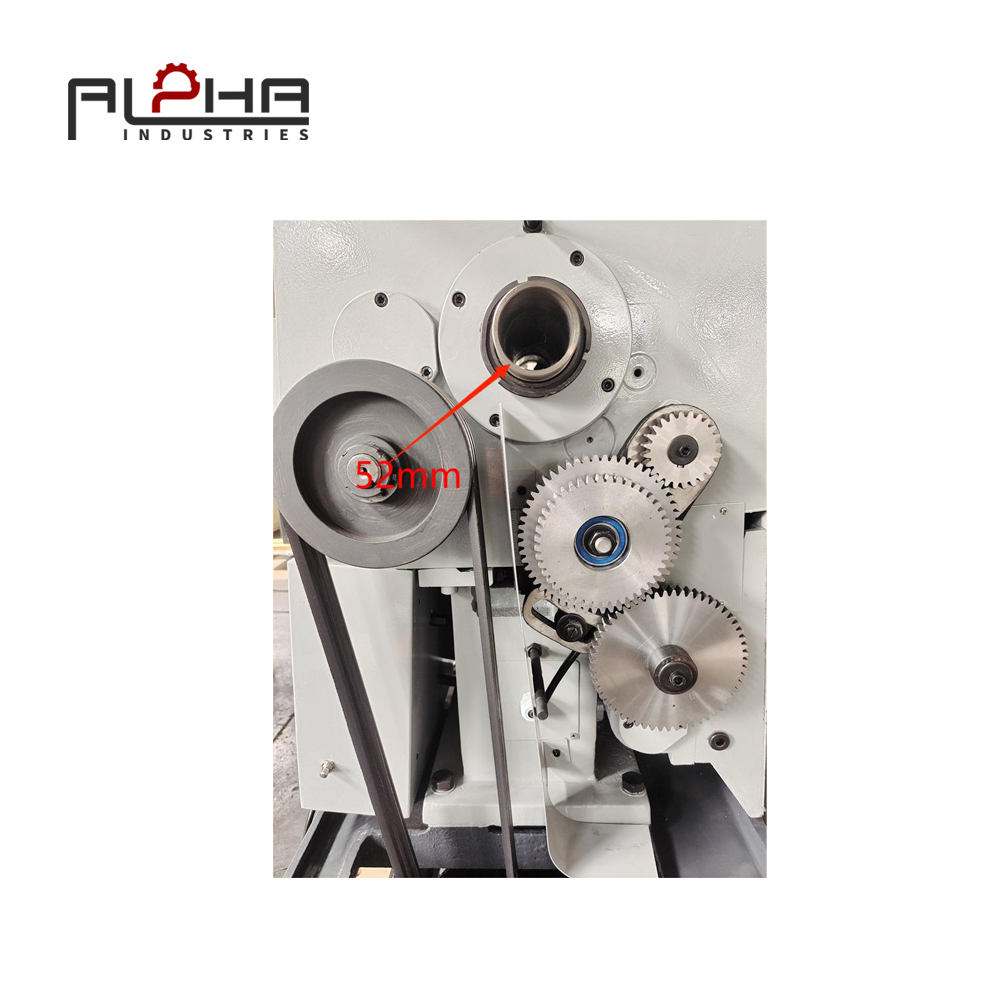
Spindle bore is particularly important when machining long bar stock or larger-diameter components.
A larger spindle bore can reduce the need for additional processing steps and increase production flexibility.
Labor Costs Are a Major Concern for American Machine Shops
Labor is one of the most important operating costs for many manufacturers in the Americas.
Finding experienced machinists can also be challenging.
For this reason, machine usability should be considered during equipment selection.
A machine that is technically capable but difficult to operate may increase training time and production errors.
Manufacturers should therefore evaluate:
- Control layout
- Machine accessibility
- Tool changing convenience
- Workholding setup
- Operator visibility
- Maintenance access
- Programming or operation requirements
For shops with multiple operators, a machine that is easier to understand and maintain can provide significant long-term value.
The goal is not simply to purchase a machine.
The goal is to build a production system that allows operators to produce consistent parts efficiently.
Tooling Flexibility Can Reduce Setup Time
Production flexibility is increasingly important in American manufacturing.
Many machine shops handle multiple customer orders rather than producing one component continuously.
This means setup time becomes an important part of production cost.
A flexible metal lathe can help manufacturers process different components without extensive machine modifications.
Depending on the application, manufacturers should evaluate compatibility with:
- Standard cutting tools
- Tool holders
- Boring bars
- Threading tools
- Parting tools
- Different chuck configurations
- Specialized workholding systems
The more efficiently a machine can transition between jobs, the more useful it becomes for high-mix manufacturing environments.
Accuracy and Repeatability Matter More Than a Single Precision Specification
Manufacturers often compare machines by looking at a single accuracy number.
However, real production performance depends on more than that.
A machine's actual machining consistency can be affected by:
- Machine structure
- Thermal stability
- Guideway condition
- Spindle performance
- Tool condition
- Workholding
- Operator procedures
- Cutting parameters
- Maintenance
For this reason, buyers should evaluate whether a machine can maintain stable performance during continuous production.
For parts such as shafts, bushings, sleeves, and threaded components, repeatability can be especially important.
Consistent machining reduces:
- Scrap
- Rework
- Inspection time
- Customer complaints
- Production interruptions
In the long run, these savings can be more valuable than a small difference in the initial machine price.
Maintenance Should Be Considered Before Purchasing
Machine downtime can be expensive.
When a lathe stops unexpectedly, production may stop with it.
For American machine shops, this can be particularly problematic when machines are supporting urgent customer orders.
Before purchasing a lathe, buyers should ask:
How easy is the machine to maintain?
Important factors include:
- Accessibility of maintenance components
- Lubrication system
- Electrical system
- Common replacement parts
- Technical support
- Spare parts availability
- Troubleshooting support
- Machine documentation
A reliable supplier should be able to provide clear technical information and after-sales support.
A machine purchase should therefore be evaluated as a long-term supplier relationship rather than a one-time transaction.
Choosing Between a Conventional Lathe and Other Turning Solutions
Different production environments require different types of turning machines.
A conventional lathe can be a practical choice for:
- Repair shops
- Maintenance departments
- Small-batch production
- Training applications
- General machining
- Customized components
- Prototyping
For shops producing relatively simple components in small quantities, a conventional machine can offer flexibility without unnecessary system complexity.
For higher-volume production, manufacturers may consider more automated turning solutions.
The correct choice depends on:
Production Volume + Part Complexity + Labor Availability + Required Accuracy + Budget
There is no universal machine that is ideal for every manufacturer.
Total Cost of Ownership Is More Important Than Purchase Price
A professional machine purchase should consider the total cost over its expected service life.
A simplified calculation can be expressed as:
Total Cost = Purchase Cost + Installation + Tooling + Labor + Energy + Maintenance + Downtime + Scrap
This explains why the cheapest quotation does not always represent the lowest-cost solution.
For example, if a machine costs less but requires:
- More operator intervention
- More frequent maintenance
- Longer setup times
- More tooling
- More rework
The apparent price advantage can disappear quickly.
Manufacturers should therefore ask suppliers for more than a machine quotation.
They should also request information about:
- Machine specifications
- Recommended applications
- Standard configuration
- Optional equipment
- Tooling requirements
- Installation requirements
- Warranty
- Spare parts
- Technical support
This provides a more complete basis for comparison.
What Should American Buyers Ask a Lathe Supplier?
Before placing an order, manufacturers can use the following checklist.
Technical Questions
What is the maximum turning diameter?
This determines the maximum practical workpiece size.
What is the maximum turning length?
This is important for shafts and other long components.
What is the spindle bore?
It affects the size of material that can pass through the spindle.
What spindle speed and power are available?
These determine the machine's cutting capability.
What materials can the machine process?
The answer should correspond to the buyer's actual production requirements.
Production Questions
How quickly can the machine be set up for another job?
This is particularly important for small-batch production.
What tooling system does the machine support?
Standard tooling can simplify procurement and maintenance.
What optional configurations are available?
Options can help manufacturers adapt the machine to different production requirements.
Service Questions
Are spare parts readily available?
This can significantly influence downtime.
What technical support is provided?
Remote and local support can be important when problems occur.
What documentation is included?
Clear manuals and technical documentation can reduce troubleshooting time.
Frequently Asked Questions About Lathe Machines
What Is a Lathe Used For?
A lathe is a machine tool primarily used to rotate a workpiece while a cutting tool removes material. Common operations include turning, facing, threading, boring, grooving, and other cylindrical machining processes.
How Do I Choose the Right Lathe?
Choose a lathe according to workpiece diameter, machining length, material, production volume, required accuracy, spindle requirements, tooling, operator skill level, and expected operating cost.
What Is the Most Important Factor When Buying a Lathe?
There is no single factor that applies to every application. Machine rigidity, working capacity, spindle performance, accuracy, reliability, tooling flexibility, maintenance, and supplier support should all be considered together.
Is a Heavier Lathe Better?
A heavier machine often provides greater structural stability, which can be beneficial for heavy cutting and vibration control. However, machine weight should be evaluated together with the specific application and production requirements.
How Can a Lathe Reduce Manufacturing Costs?
A suitable lathe can reduce production costs through shorter machining cycles, fewer setup changes, lower scrap rates, better tool life, reduced downtime, and improved operator productivity.
What Size Lathe Should a Machine Shop Buy?
The machine should be sized according to the typical workpiece range rather than only the largest component. It is generally advisable to leave sufficient capacity for future production needs.
Why Is Spindle Bore Important?
Spindle bore determines the approximate diameter of material that can pass through the spindle. A suitable spindle bore can improve flexibility when machining larger bar stock and long components.
How ALPHA Supports Lathe Buyers
For manufacturers looking for a reliable lathe machine solution, ALPHA focuses on practical machine configurations designed around real manufacturing requirements.
Rather than selecting equipment based only on a specification sheet, buyers should communicate their actual applications with the supplier.
Providing information such as:
- Workpiece drawings
- Material type
- Workpiece dimensions
- Production volume
- Required tolerances
- Current machining problems
- Preferred tooling
- Expected production schedule
allows the supplier to recommend a more appropriate machine configuration.
For American manufacturers, this application-based approach can be especially useful because production requirements can vary considerably between automotive components, agricultural machinery, general engineering, repair work, and industrial parts.
Conclusion: Buy for Production, Not Just for Price
Choosing the right lathe is ultimately a production decision, not simply a purchasing decision.
For manufacturers across the Americas, rising labor costs, skilled-worker shortages, competitive pricing pressure, and increasingly customized production make machine efficiency more important than ever.
The best lathe is not necessarily the machine with the lowest purchase price.
It is the machine that provides the right combination of:
Rigidity + Capacity + Spindle Performance + Accuracy + Flexibility + Reliability + Service Support
When these factors are properly matched to the application, manufacturers can improve productivity, reduce unnecessary operating costs, and build a more stable machining process.
If you are evaluating a lathe for your production requirements, ALPHA can help you compare machine configurations based on your workpiece size, material, production volume, and machining requirements.
Learn more about ALPHA's machining solutions and discuss your requirements with our team.