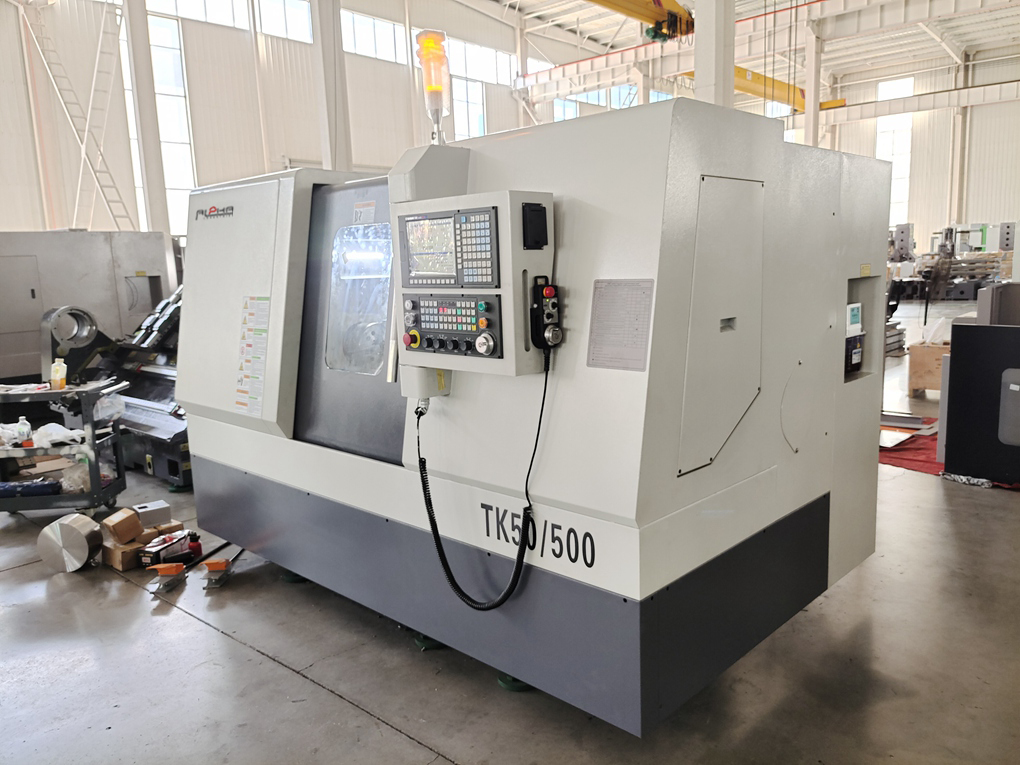


Slant Bed Lathe: Improve CNC Turning EfficiencyManufacturing in the Americas is entering a period where production efficiency is increasingly connected to labor availability.
For many machining companies, the challenge is no longer simply finding enough machines. The bigger challenge is finding enough experienced people to operate, maintain, program, inspect, and manage those machines efficiently.
The situation is particularly important in the United States. The National Association of Manufacturers reported 529,000 manufacturing job openings in May 2026, while its recent manufacturing outlook also identified the need for skilled production workers as a significant concern.
At the same time, manufacturers are dealing with rising input costs. NAM's second-quarter 2026 outlook identified rising raw material costs as the top business challenge reported by manufacturers.
Across North America, nearshoring is also changing production requirements. Mexico has become an increasingly important manufacturing location connected to North American supply chains, creating opportunities for local suppliers while also increasing expectations for production capacity, quality, and responsiveness.
These conditions create a clear manufacturing objective:
Produce more consistent parts with fewer unnecessary manual interventions.
This is where the slant bed lathe becomes particularly relevant.
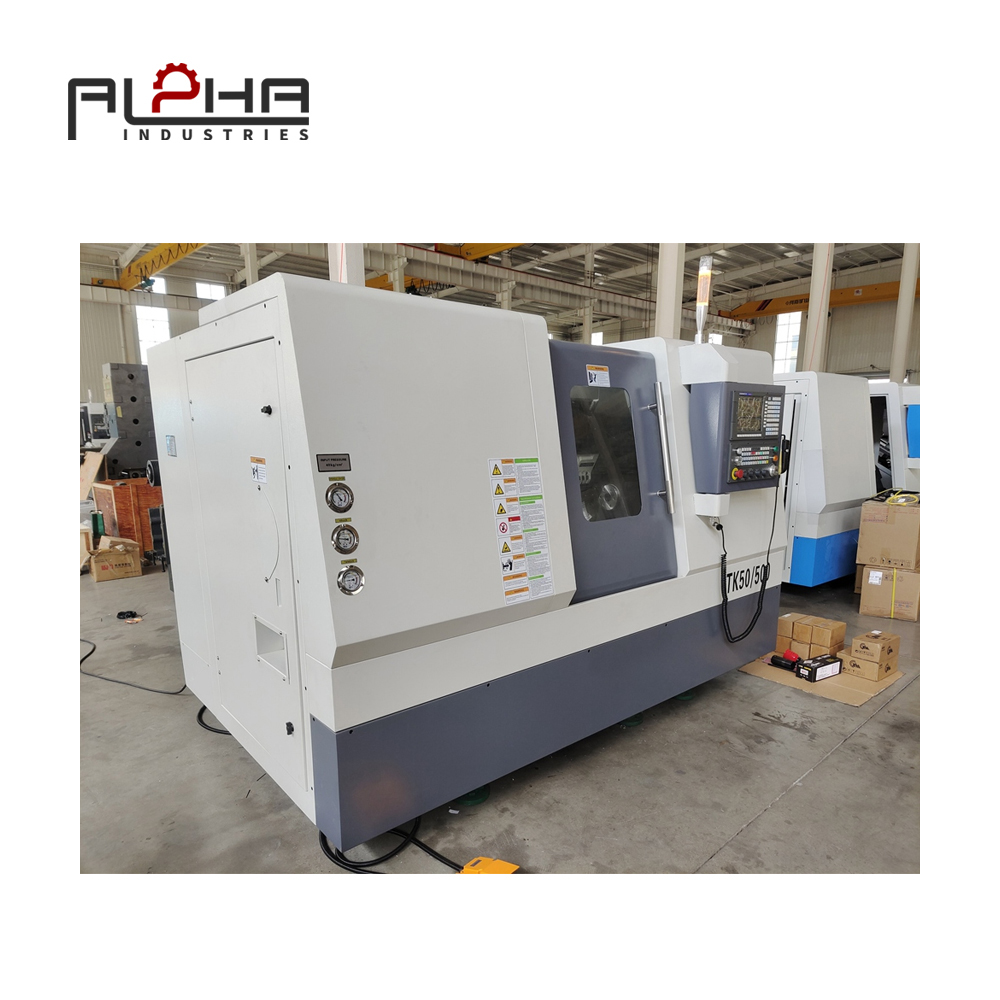
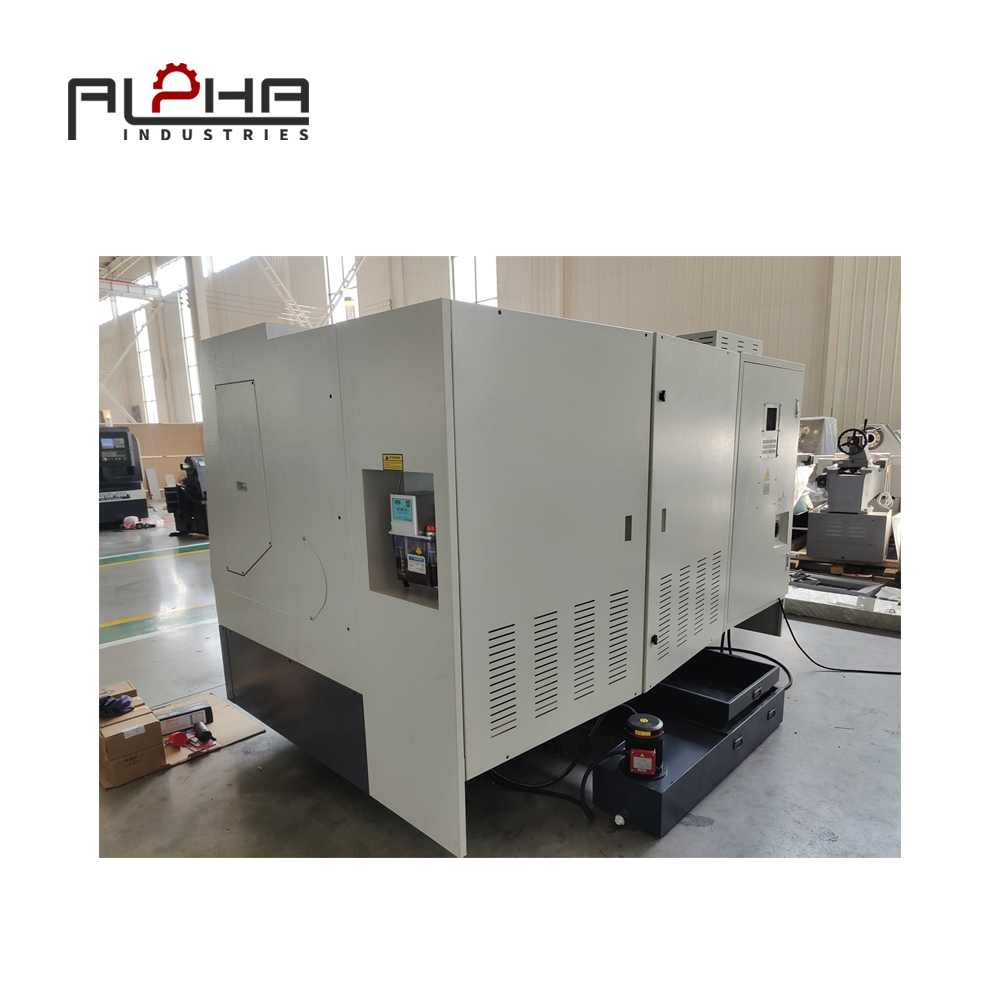
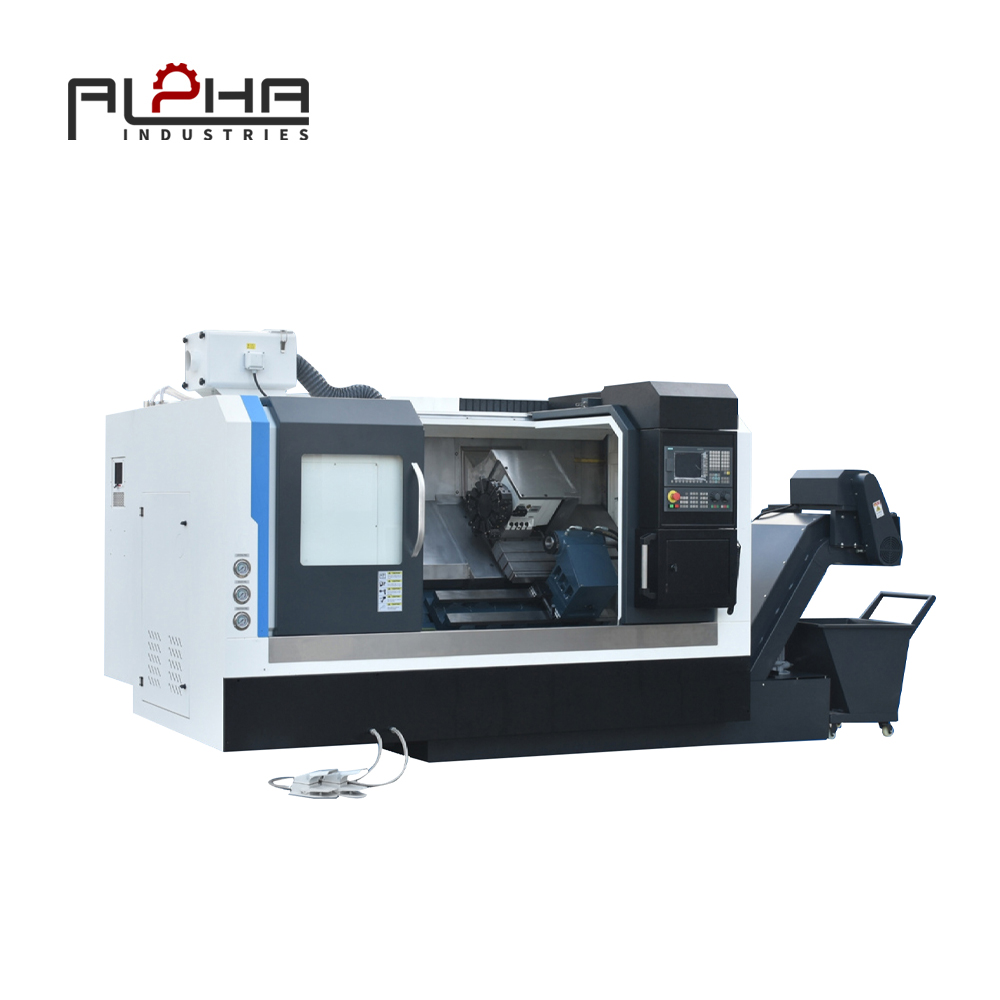
A slant bed CNC lathe is not simply a turning machine with an angled bed. Its structure can support efficient chip evacuation, convenient access to the machining area, automated material handling, stable production, and integration with modern manufacturing systems.
For companies facing labor pressure in the Americas, these characteristics can help transform CNC turning from an operator-intensive process into a more structured and automation-ready production workflow.
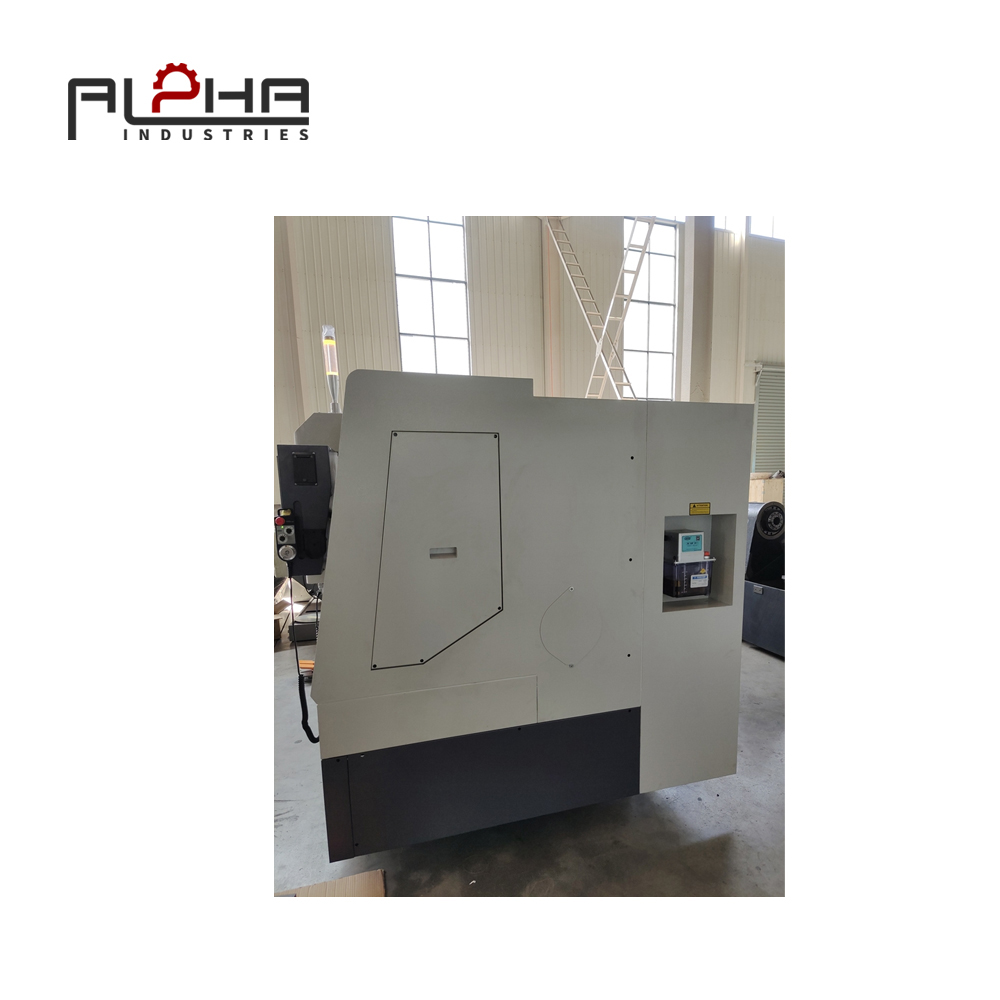
The Real Manufacturing Problem Is Not Always the Machine Operator
When manufacturers discuss labor shortages, the conversation often focuses on hiring more CNC operators.
However, adding employees is not always the most practical solution.
A better question is:
How much manual intervention does each production process actually require?
Consider a typical CNC turning operation. An operator may need to:
-
Load raw material
-
Start the machine
-
Monitor machining
-
Remove finished parts
-
Remove chips
-
Measure components
-
Adjust tool offsets
-
Replace worn tools
-
Respond to alarms
-
Clean the machining area
-
Reload material
-
Perform setup changes
None of these tasks are necessarily difficult individually. The problem is repetition.
When an operator performs the same task hundreds of times during a shift, labor requirements increase rapidly.
The objective of modern CNC automation is therefore not necessarily to eliminate skilled operators. It is to remove repetitive tasks from the operator's workload.
A properly configured slant bed CNC lathe can become an important part of this strategy.
Why a Slant Bed Lathe Is Suitable for Automation
The structure of a slant bed lathe provides several characteristics that are useful for automated production.
The inclined machine bed creates a compact machining area and allows chips to move downward toward the lower section of the machine.
This is important because automated production requires predictable machine behavior.
If chips continuously accumulate around the workpiece, tooling, or chuck, the operator may eventually need to intervene. If the machine requires frequent manual cleaning, it becomes more difficult to operate with limited supervision.
Efficient chip evacuation therefore supports automation indirectly.
The production process can move toward:
Automatic Material Feeding → CNC Turning → Automatic Chip Removal → Automatic Part Collection → Inspection
The fewer unnecessary interruptions between these stages, the more effectively the machine can operate with limited operator intervention.
Chip Evacuation Is More Important Than It Looks
Chip removal may appear to be a simple housekeeping issue. In reality, it can affect machine utilization.
During continuous turning, the machine can produce a large quantity of chips. Depending on the material and cutting conditions, chips may be short and broken, long and continuous, tangled, hot, heavy, or difficult to transport.
If chips remain inside the machining area, they can interfere with production.
This can result in:
Chip accumulation → machine interruption → manual cleaning → lost production time
A slant bed structure helps because gravity naturally encourages chips to move downward.
When combined with coolant and a chip conveyor, the machine can continuously move chips away from the machining area.
This creates a more automation-friendly environment.
For a company operating one machine, the time savings may appear small. For a company operating ten machines across multiple shifts, the cumulative effect can be much larger.
Reducing Operator Intervention Is the Real Goal
A manufacturer should not evaluate automation simply by asking:
“Can this machine run automatically?”
Almost every modern CNC machine has some level of automation capability.
A more useful question is:
How long can the machine continue producing acceptable parts without requiring unnecessary operator intervention?
For example, a production cell may be able to operate for several hours with only periodic operator checks.
The operator can then supervise multiple machines instead of continuously standing beside one machine.
This can increase the productivity of skilled workers.
The operator remains important, but their time is used more effectively.
Automatic Bar Feeding Can Change the Production Model
For suitable turning applications, automatic bar feeding can significantly reduce manual material handling.
Without automatic feeding, the operator may repeatedly need to:
Stop → Open → Remove Material → Load New Material → Close → Restart
With an automatic bar feeder, material can be supplied continuously according to the machining program and machine configuration.
The operator can therefore spend less time handling raw material.
This becomes particularly valuable for high-volume production.
A slant bed CNC lathe combined with a suitable bar feeder can create a more continuous manufacturing process.
For manufacturers facing labor constraints, this can be an important productivity advantage.
Robotic Loading for Short Components
Not every turning application uses long bar stock.
Some manufacturers produce short individual blanks or cast/forged components.
In these cases, robotic loading can be considered.
A robotic system can:
-
Pick up the raw component
-
Position it in the chuck
-
Start the machining cycle
-
Remove the finished component
-
Place it into a collection area
This can reduce repetitive loading and unloading tasks.
The operator can then focus on:
-
Process monitoring
-
Tool management
-
Quality inspection
-
Maintenance
-
Production scheduling
The slant bed CNC lathe becomes the machining core of an automated cell rather than a standalone machine.
Why This Matters for Nearshoring in the Americas
Nearshoring is changing the competitive landscape in North American manufacturing.
Mexico has attracted manufacturing investment because of its proximity to the U.S. market and its integration into regional supply chains. Deloitte has highlighted manufacturing, transportation equipment, metals, electronics, and related sectors among areas connected to nearshoring activity.
This creates an opportunity for local suppliers, but it also creates higher expectations.
When a new production project moves closer to the final market, suppliers may need to provide:
-
Faster delivery
-
Stable quality
-
Consistent capacity
-
Flexible production
-
Competitive pricing
-
Reliable documentation
-
Repeatable processes
A supplier that depends heavily on manual production may struggle to scale quickly.
A supplier with automated CNC machining capacity can be better positioned to respond to increasing demand.
This is why automation-ready CNC equipment can play a role in nearshoring strategies.
The Labor Challenge Is Also a Productivity Challenge
A skilled CNC operator can create significant value.
But skilled workers should spend their time on tasks that require judgment and experience.
They should not spend most of their shift:
-
Removing chips
-
Loading repetitive blanks
-
Collecting finished parts
-
Repeating basic measurements
-
Performing routine material handling
These tasks can often be partially automated.
A slant bed lathe can serve as a platform for this approach.
With the right configuration, the operator becomes a production supervisor rather than a machine attendant.
This is a fundamental change in manufacturing productivity.
More Machines per Operator
One potential benefit of automation is allowing one skilled operator to supervise multiple machines.
The exact number depends on:
-
Machine complexity
-
Part geometry
-
Automation level
-
Production volume
-
Inspection requirements
-
Tool life
-
Material handling
-
Factory layout
It would be incorrect to assume that every slant bed CNC lathe automatically allows one operator to run several machines.
The important principle is different:
Reducing unnecessary manual intervention creates the possibility of more efficient labor allocation.
For manufacturers facing difficulty recruiting experienced machinists, this can be strategically valuable.
Production Stability Matters More Than Maximum Speed
Manufacturers often compare CNC lathes based on maximum spindle speed.
However, maximum speed does not necessarily determine actual production output.
A better production system considers:
Machine uptime + stable cutting + automation + tool life + chip management + operator efficiency
For example, a machine running at a slightly lower cutting speed but producing stable parts continuously may outperform a machine operating at a higher theoretical speed but experiencing frequent interruptions.
This is particularly important for automated production.
Automation requires predictability.
A machine that behaves consistently is easier to automate than one that requires frequent intervention.
Tool Life and Unattended Production
Unattended production creates another important requirement: predictable tool life.
If a cutting tool fails unexpectedly, production may stop.
Depending on the automation level, the machine could continue running incorrectly, producing rejected parts, or trigger an alarm.
Manufacturers should therefore establish appropriate tool-management strategies, such as:
-
Tool-life monitoring
-
Tool wear compensation
-
Automatic tool measurement
-
Scheduled tool replacement
-
First-piece inspection
-
In-process measurement
A slant bed CNC lathe can be integrated into such a process depending on its control and configuration.
The objective is to make the machining process more predictable.
Automatic Inspection Can Further Reduce Manual Work
Quality inspection is essential.
Automation does not mean eliminating quality control. Instead, inspection can also become more efficient.
Depending on the application, manufacturers can use:
-
Touch probes
-
Tool setters
-
In-process measurement
-
Automatic gauging
-
Statistical process control
-
Automated inspection stations
For high-volume production, this can reduce the amount of manual measurement required.
A machine can produce the component, while automated systems help verify that the process remains within specified limits.
This creates a closed-loop production concept:
Machining → Measurement → Adjustment → Continued Production
The exact implementation depends on the machine, component, tolerance, and factory requirements.
Slant Bed Lathe for Automotive Manufacturing
Automotive manufacturing is particularly sensitive to production efficiency.
Large quantities of components may be required continuously.
Potential applications for slant bed CNC turning include:
-
Shafts
-
Bushings
-
Pins
-
Hubs
-
Valve components
-
Sensor components
-
Fittings
-
Transmission parts
-
Hydraulic components
The production process may require:
High volume + repeatability + automation + stable cycle time
A slant bed lathe can provide an appropriate foundation for such production when correctly configured.
Slant Bed Lathe for Hydraulic and Pneumatic Components
Hydraulic and pneumatic components often combine several machining features.
A component may require:
-
External turning
-
Internal boring
-
Threading
-
Grooving
-
Facing
-
Drilling
-
Parting
A CNC turning center capable of integrating several operations can reduce the need for repeated handling.
For manufacturers producing multiple variations of hydraulic or pneumatic components, this can also improve production flexibility.
The appropriate machine configuration should be determined from the actual component drawing and production volume.
Slant Bed Lathe for General Industrial Components
The application of a slant bed CNC lathe is not limited to one sector.
It can also be used for suitable components in:
-
Industrial machinery
-
Agricultural equipment
-
Construction equipment
-
Pumps
-
Valves
-
Energy equipment
-
Electrical equipment
-
General engineering
-
Automation equipment
The key consideration is always the relationship between the machine and the workpiece.
What Should Manufacturers Automate First?
Not every factory needs full automation immediately.
A gradual approach can often be more practical.
Manufacturers can begin with the tasks that consume the most operator time.
Material loading: If operators spend significant time loading bar stock, consider an automatic bar feeder.
Chip removal: If chip cleaning frequently interrupts production, consider a chip conveyor and improved coolant management.
Part unloading: If finished components require continuous manual removal, consider robotic unloading.
Measurement: If operators spend a large portion of the shift measuring parts, consider automatic gauging or in-process measurement.
Tool management: If tool wear frequently causes production interruptions, consider tool-life monitoring or automatic tool measurement.
This approach allows automation investment to directly target the largest production bottleneck.
How to Calculate the Value of a Slant Bed CNC Lathe
Machine purchasing should be based on measurable production requirements.
Manufacturers should record:
-
Current operator hours per shift
-
Manual loading time
-
Chip-cleaning time
-
Setup time
-
Inspection time
-
Downtime
-
Scrap rate
After collecting these numbers, manufacturers can estimate how much productivity could potentially be recovered through better machine configuration and automation.
This makes the investment decision more objective.
Total Cost of Ownership Is More Important Than Machine Price
The lowest-priced CNC lathe is not necessarily the lowest-cost manufacturing solution.
Manufacturers should consider:
-
Initial machine investment
-
Tooling
-
Automation
-
Labor
-
Energy
-
Maintenance
-
Spare parts
-
Coolant
-
Scrap
-
Downtime
-
Production capacity
For example, a machine that costs more initially but requires less manual intervention may reduce operating costs over many years.
For manufacturers in the Americas facing labor and input-cost pressure, this long-term perspective is particularly important.
What Makes a Slant Bed Lathe a Good Automation Platform?
Several characteristics should be evaluated together.
Machine Structure
The machine should provide appropriate rigidity and stability for the intended material and component.
Chip Evacuation
The inclined structure should work effectively with coolant and chip-conveyor systems.
CNC Control
The control should provide practical program management, tool management, and automation interfaces.
Tooling
The tool configuration should support the actual machining operations.
Workholding
The chuck or collet system should securely and consistently hold the workpiece.
Material Handling
Bar feeders or robots should match the production requirements.
Inspection
The machine should be capable of supporting the required measurement strategy.
After-Sales Service
Technical support, training, spare parts, and maintenance should be considered before purchasing.
How ALPHA Can Support Your CNC Turning Project
At ALPHA, we understand that a slant bed lathe should not be selected only according to a machine specification sheet.
The correct solution depends on the actual production problem.
If labor availability is the biggest challenge, automation may be the priority.
If chip accumulation is reducing machine uptime, chip management may be more important.
If production volume is increasing, automatic material handling may provide the greatest benefit.
If multiple part numbers are being produced, flexible tooling and efficient setup may become more important.
ALPHA can help customers evaluate:
-
Workpiece dimensions
-
Material
-
Production volume
-
Tolerances
-
Machining operations
-
Spindle requirements
-
Tooling
-
Workholding
-
Bar feeding
-
Robotic automation
-
Chip management
-
Inspection requirements
The goal is to create a complete CNC turning solution, not simply supply a machine.
Frequently Asked Questions About Slant Bed Lathes
What is a slant bed lathe?
A slant bed lathe is a CNC turning machine with an inclined machine-bed structure. The design can support efficient chip evacuation, accessible machining, compact machine construction, and integration with automated production systems.
Why is a slant bed CNC lathe useful for manufacturers in the Americas?
It can support manufacturers that need higher production efficiency, reduced manual intervention, automation, and stable CNC turning. These factors are particularly relevant when manufacturers face skilled labor constraints and rising operating costs.
Can a slant bed lathe reduce labor requirements?
It can reduce repetitive manual work when combined with automatic bar feeding, robotic loading, chip conveyors, automatic measurement, and other automation systems. The actual labor reduction depends on the production application.
Can a slant bed lathe run automatically?
Yes. Depending on the machine configuration, it can be integrated with automatic material feeding, robotic handling, chip removal, tool measurement, and inspection systems.
Is a slant bed lathe suitable for unattended machining?
It can be suitable for minimally attended or unattended production when the machine, tooling, workholding, material handling, tool-life strategy, chip management, and inspection system are properly configured.
Why does a slant bed lathe evacuate chips efficiently?
The inclined bed allows chips to move downward under gravity toward the lower part of the machine. When combined with coolant and a chip conveyor, this can improve continuous chip removal.
What industries use slant bed CNC lathes?
Slant bed CNC lathes can be used for suitable components in automotive, hydraulic, pneumatic, aerospace, industrial machinery, energy, electronics, and general metalworking applications.
Is a slant bed lathe better than a flat bed lathe?
Neither is universally better. A slant bed lathe is particularly attractive for automated production, efficient chip evacuation, compact layouts, and repetitive CNC turning. Flat bed machines may be preferable for certain large or heavy-duty applications.
What should I consider before buying a slant bed lathe?
Consider workpiece dimensions, material, tolerances, production volume, required operations, spindle requirements, tooling, workholding, automation, chip management, inspection, maintenance, and after-sales service.
Can ALPHA provide a complete slant bed CNC turning solution?
ALPHA can evaluate the customer's application and help determine an appropriate machine configuration based on workpiece requirements, production volume, machining operations, automation needs, and production objectives.
Conclusion: The Future of CNC Turning Is Less Manual, Not Simply Faster
For manufacturers across the Americas, the biggest production challenge may not always be machining speed.
It may be how much skilled labor is required to keep the machining process running.
Manufacturers continue to face skilled labor and input-cost pressures, while nearshoring and regional supply-chain development are creating opportunities for manufacturers that can provide reliable production capacity.
In this environment, automation-ready CNC equipment becomes increasingly valuable.
A slant bed lathe can provide an effective foundation because its inclined structure supports efficient chip evacuation, convenient machining access, stable turning, and integration with automated material handling.
When combined with a bar feeder, robot, chip conveyor, automatic measurement, suitable tooling, and effective production planning, a slant bed CNC lathe can help manufacturers move from operator-dependent production toward a more predictable manufacturing process.
The objective is not to eliminate skilled workers.
The objective is to make every skilled worker more productive.
For manufacturers competing on cost, delivery, and quality, that difference can become a meaningful long-term advantage.
Contact Us
Are you looking for a reliable Slant Bed Lathe for your manufacturing operation?
Whether you are producing automotive components, hydraulic parts, shafts, bushings, industrial components, or other precision turned parts, ALPHA can help you evaluate the right CNC turning solution based on your workpiece dimensions, material, production volume, machining requirements, and automation goals.
Contact ALPHA today to discuss your Slant Bed Lathe requirements and find the right solution for your production process.