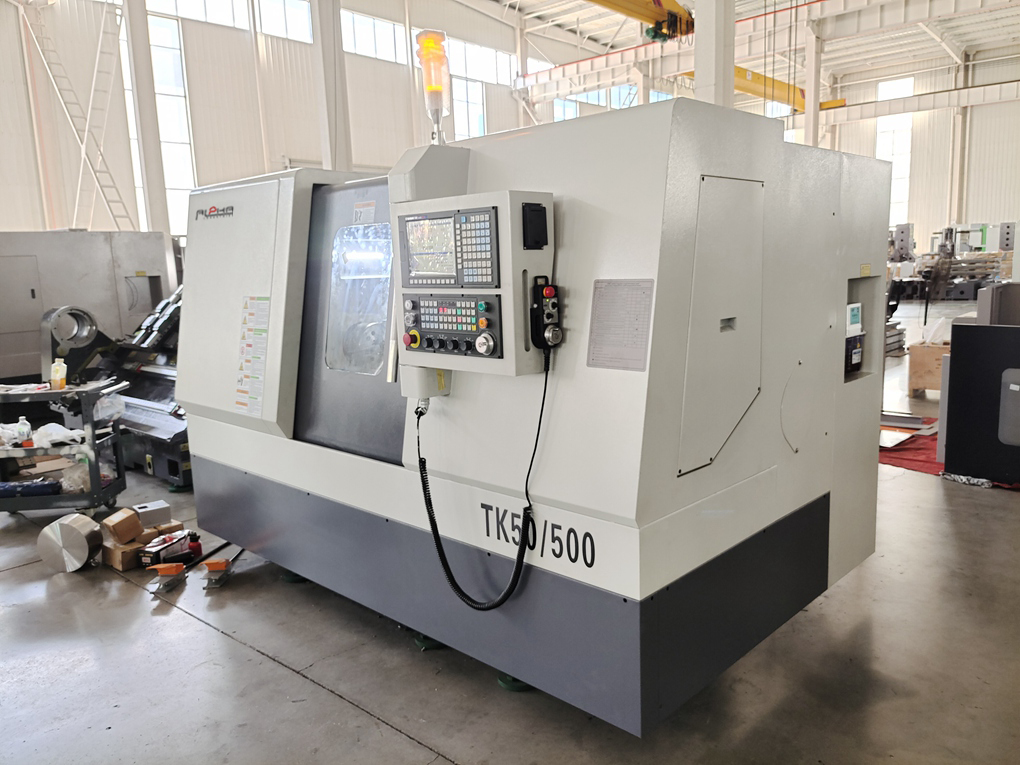


Slant Bed Lathe for the Americas: How Better Chip Management Can Improve Turning Productivity
Manufacturers across the Americas are under continuous pressure to produce more efficiently.
Whether a factory is located in the United States, Canada, Mexico, Brazil, or another growing manufacturing market in the Americas, the basic production challenge is similar:
How can manufacturers increase output without allowing labor, downtime, maintenance, and production interruptions to increase at the same rate?
For many machining companies, the answer is not simply to purchase a machine with a higher spindle speed.
A more effective approach is to examine the entire machining process.
During CNC turning, cutting tools continuously remove material from the workpiece. This produces chips that must be evacuated from the machining area. When chip removal is inefficient, chips can accumulate around the workpiece, tooling, chuck, or machine enclosure.
This can create unnecessary interruptions.
The operator may need to stop the machine, remove chips, clean the machining area, inspect the workpiece, and restart production.
One interruption may not seem significant. But when the same process is repeated hundreds of times over multiple shifts, the lost production time can become an important operating cost.
This is one reason why the slant bed lathe deserves attention.
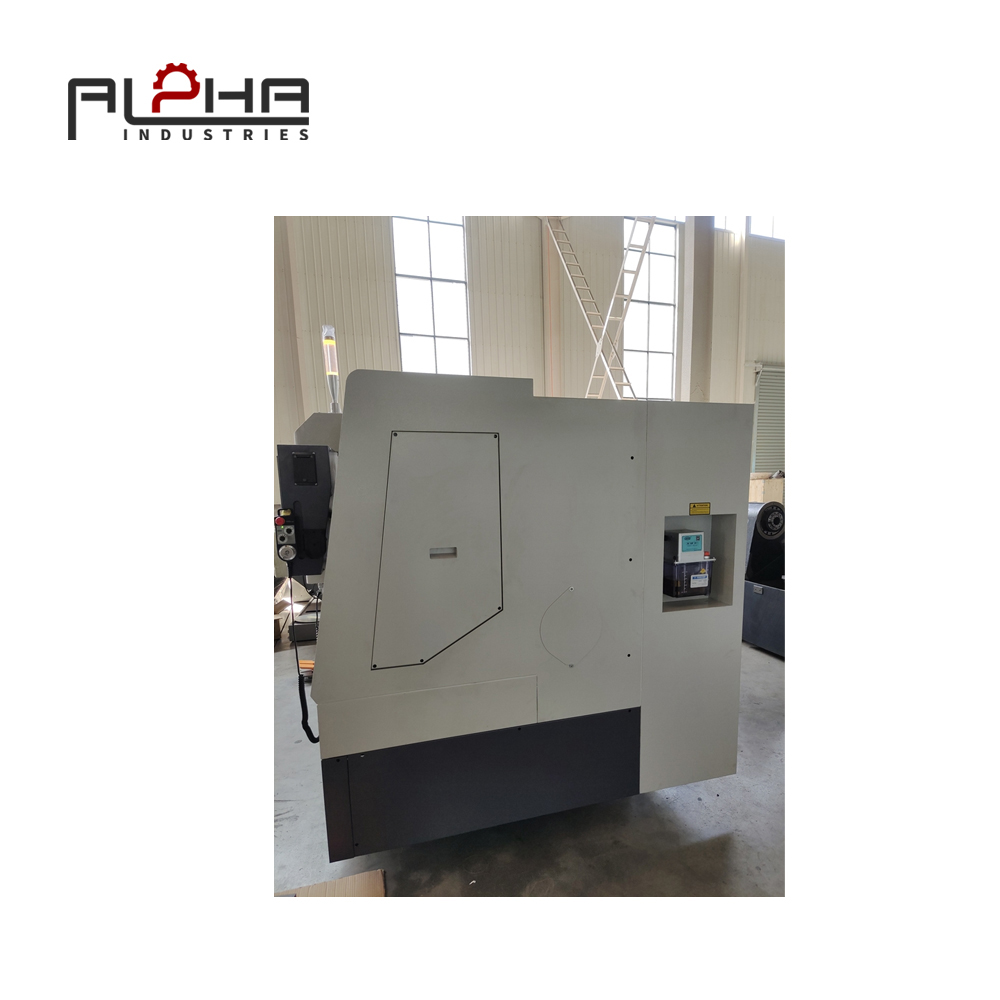
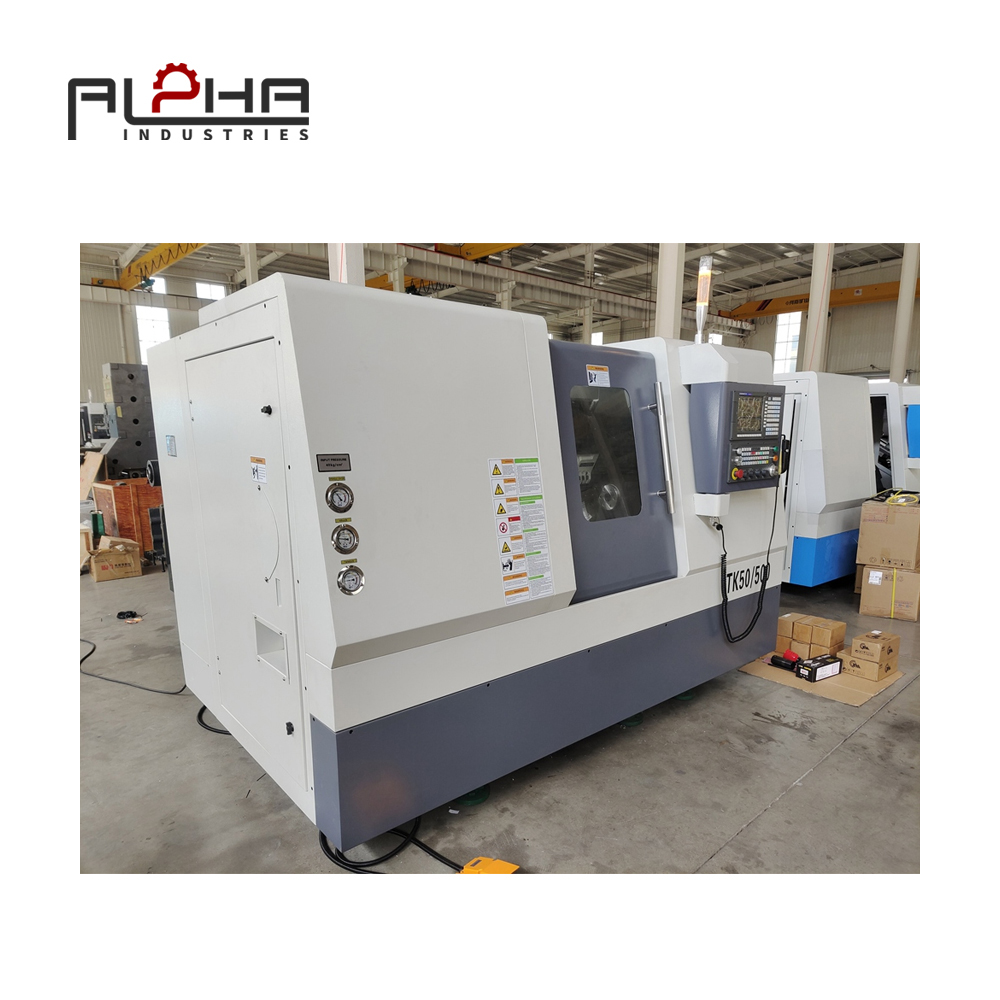
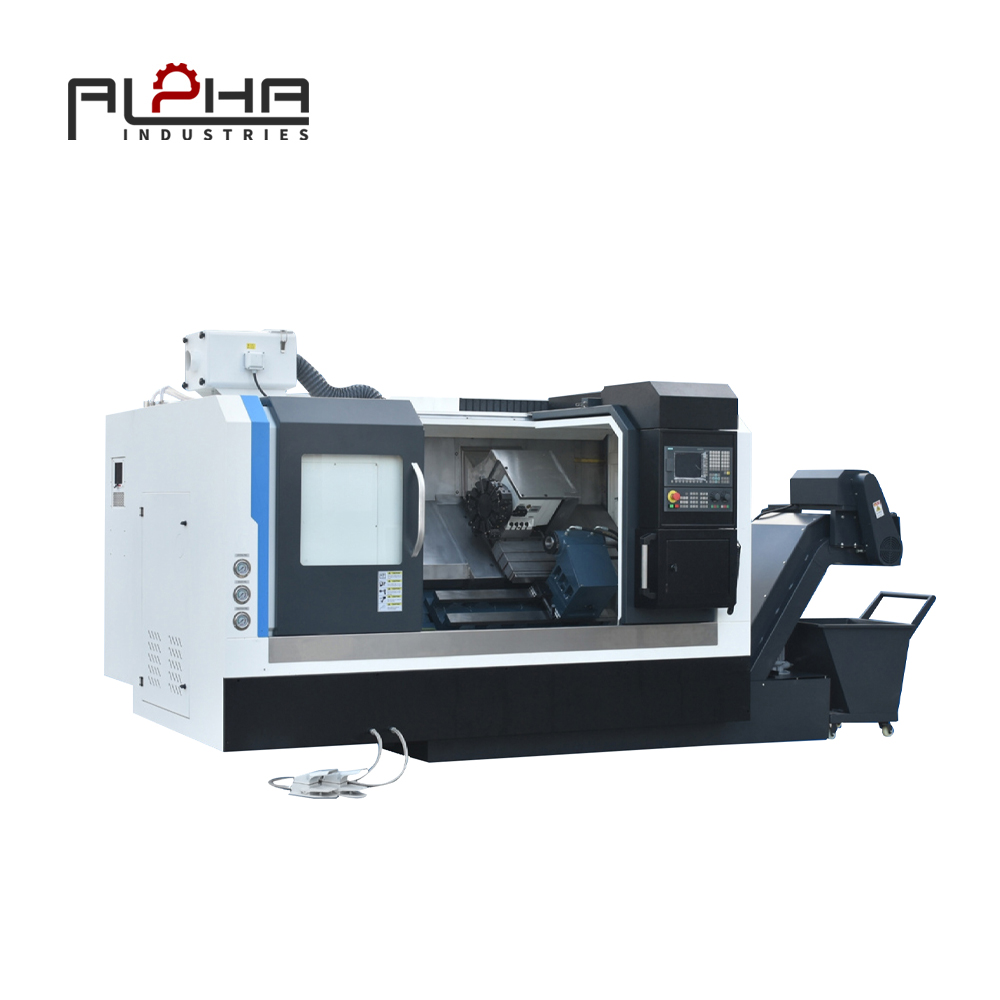
A slant bed lathe uses an inclined machine-bed structure that helps chips move downward toward the chip collection area. Combined with coolant and an appropriate chip conveyor, this design can contribute to a cleaner and more efficient turning process.
For manufacturers in the Americas, the real advantage is therefore not simply the appearance of an inclined machine bed.
The important question is:
Can better chip evacuation help create a more stable and productive turning operation?
For high-volume manufacturing, the answer can be significant.
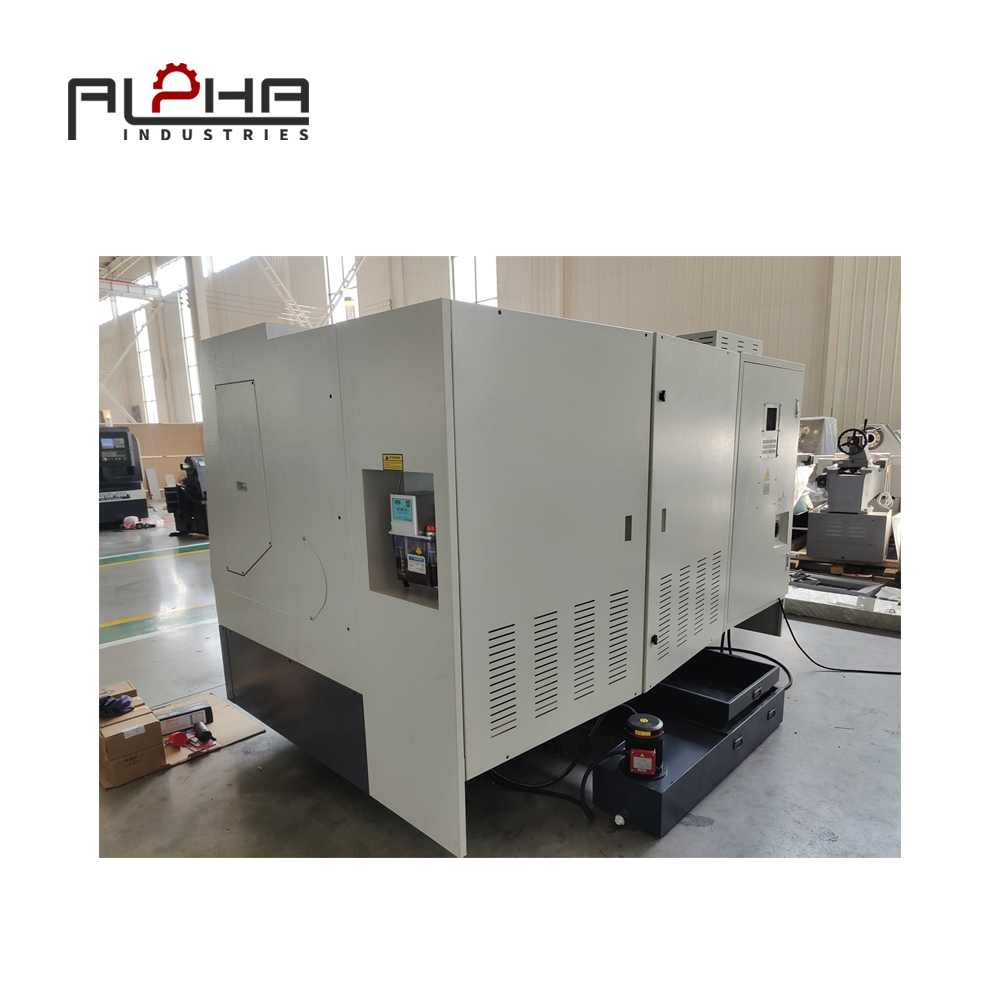
The Hidden Cost of Poor Chip Management
Chip management is often overlooked when companies compare turning machines.
Buyers typically focus on:
- Spindle speed
- Spindle power
- Maximum turning diameter
- Maximum turning length
- Chuck size
- Number of tool stations
- Positioning accuracy
- CNC control system
These specifications are important.
However, they do not tell the complete story about production efficiency.
Imagine a machine producing thousands of steel components every month. Every machining cycle generates chips.
If the chips remain around the cutting area, they can interfere with production. Long chips may become tangled, while small chips may accumulate around the workpiece.
If the machine requires frequent manual cleaning, operator productivity decreases.
This creates a hidden production cost.
The machine may technically be capable of running continuously, but the actual production process is interrupted repeatedly.
A slant bed lathe addresses part of this problem through its machine-bed geometry.
Because the bed is inclined, chips have a natural downward path away from the machining area.
This is a simple mechanical principle, but it can become extremely valuable in continuous production.
Why the Slant Bed Design Matters
The defining characteristic of a slant bed lathe is its inclined bed structure.
Compared with a traditional flat-bed configuration, the sloped structure changes the relationship between the cutting area, machine bed, tooling system, and chip collection area.
During turning, chips naturally fall toward the lower section of the machine.
This reduces the possibility of chips remaining on horizontal surfaces around the machining area.
When the machine is equipped with a suitable chip conveyor, the chips can be continuously transported out of the enclosure.
The overall process can therefore become:
Cutting → Chip Evacuation → Chip Collection → Continuous Production
Rather than:
Cutting → Chip Accumulation → Manual Cleaning → Production Interruption
This distinction becomes increasingly important as production volume increases.
For a low-volume workshop, occasional chip cleaning may have little impact.
For a high-volume factory operating several machines across multiple shifts, chip management can directly affect machine utilization.
The American Manufacturing Challenge: More Output with Less Manual Intervention
Manufacturers in the Americas are increasingly interested in automation.
The reason is straightforward.
Automation can help companies make better use of available labor while reducing repetitive manual tasks.
A slant bed CNC lathe can be integrated with systems such as:
- Automatic bar feeders
- Robotic loading
- Robotic unloading
- Hydraulic chucks
- Pneumatic systems
- Automatic tool measurement
- Part collection systems
- Chip conveyors
- Coolant filtration
- Workpiece probing
The machine therefore becomes part of a larger production system.
Instead of an operator continuously handling individual parts, the operator can monitor several machines and focus on quality control, tool management, process optimization, and production planning.
This is especially useful when manufacturers are trying to increase output without proportionally increasing labor requirements.
Slant Bed Lathe and Lights-Out Manufacturing
One of the most important trends in modern machining is unattended or minimally attended production.
This is sometimes called lights-out manufacturing.
The goal is to reduce unnecessary human intervention during stable production cycles.
A successful automated turning cell may include:
Raw Material
↓
Automatic Loading
↓
Slant Bed CNC Turning
↓
Automatic Chip Removal
↓
Finished Part Collection
↓
Inspection
The more reliable each stage becomes, the easier it is to extend production periods with limited operator intervention.
A slant bed lathe with efficient chip evacuation, automatic material handling, stable tooling, and appropriate monitoring systems can provide a stronger foundation for automated turning.
Machine Uptime Is More Important Than Machine Speed Alone
Manufacturers sometimes focus heavily on cycle time.
For example, reducing the cycle time from 60 seconds to 50 seconds appears to create an obvious productivity improvement.
But cycle time is only one part of machine utilization.
The first machine may have a faster theoretical cycle but require frequent cleaning and manual intervention.
The second machine may have a slightly longer cycle but operate consistently for longer periods with fewer interruptions.
The second machine may produce more usable parts over an entire shift.
This is why manufacturers should evaluate:
Actual production output rather than theoretical cutting speed.
A more useful production calculation considers:
- Cycle time
- Setup time
- Loading and unloading time
- Tool changes
- Chip removal
- Inspection
- Downtime
- Maintenance
- Scrap
- Operator intervention
This broader perspective can reveal why machine structure matters.
Improving Production Stability Through Better Chip Evacuation
Chip accumulation can affect more than cleanliness.
Depending on the material and machining conditions, chips can interfere with:
- Cutting tools
- Workpieces
- Coolant flow
- Automatic loading
- Part collection
- Operator access
- Machine maintenance
Long, tangled chips can be particularly problematic.
When chips wrap around a component or tool, the machine may need to be stopped.
A slant bed configuration encourages chips to move away from the cutting zone.
The combination of machine geometry, coolant flow, and chip conveyor design can therefore create a more stable machining environment.
However, machine design alone cannot solve every chip problem.
Chip control also depends on:
- Tool geometry
- Cutting speed
- Feed rate
- Depth of cut
- Material
- Coolant
- Workpiece geometry
Machine selection and process engineering should therefore be considered together.
The Relationship Between Chip Evacuation and Tool Life
Tool life is another important production factor.
Poor chip evacuation can allow chips to remain near the cutting zone, potentially affecting coolant access and cutting conditions.
Efficient chip removal helps keep the machining area clearer and can support more stable cutting conditions.
For high-volume manufacturers, tool performance should be evaluated together with:
- Cutting conditions
- Coolant performance
- Chip evacuation
- Tool geometry
- Material characteristics
- Machine rigidity
The goal is not simply to maximize tool life.
The goal is to achieve predictable tool life.
Predictability makes production planning easier.
Slant Bed Lathe for High-Volume Manufacturing
Slant bed CNC lathes can be suitable for high-volume production of components such as:
- Shafts
- Bushings
- Pins
- Hubs
- Connectors
- Valve components
- Hydraulic components
- Transmission components
- Sensor housings
For these applications, manufacturers often need:
Speed + Repeatability + Automation + Reliable Chip Management
A slant bed CNC lathe can provide a suitable platform depending on the part geometry and machine configuration.
Slant Bed CNC Lathe vs. Flat Bed CNC Lathe
Both machine configurations have their advantages. The choice should depend on the application.
| Feature | Slant Bed CNC Lathe | Flat Bed CNC Lathe |
|---|---|---|
| Chip evacuation | Excellent | Good |
| Continuous production | Excellent | Good |
| Automation integration | Excellent | Good |
| Machining accessibility | Excellent | Good |
| High-volume turning | Excellent | Good |
| Compact production layout | Excellent | Good |
| General turning | Excellent | Excellent |
| Heavy-duty applications | Application dependent | Excellent |
| Complex production cells | Excellent | Good |
| Flexible machining | Excellent | Excellent |
For many modern production environments, the slant bed configuration provides advantages in automation and chip management.
However, flat bed machines can remain highly useful for specific heavy-duty or large-component applications.
There is no universal machine configuration that is ideal for every production requirement.
How to Select the Right Slant Bed Lathe
Machine selection should start with the component rather than the machine catalog.
Manufacturers should evaluate:
Workpiece Size
Determine the required turning diameter and machining length.
Material
Common materials include:
- Carbon steel
- Alloy steel
- Stainless steel
- Aluminum
- Brass
- Cast iron
- Titanium
Production Volume
Prototype production and high-volume manufacturing require different machine configurations.
Machining Operations
Consider whether the part requires:
- Turning
- Facing
- Boring
- Drilling
- Threading
- Grooving
- Parting
- Milling
Automation Requirements
Consider whether you need:
- Bar feeding
- Robotic loading
- Automatic unloading
- Chip conveyor
- Parts collection
- Automatic measurement
Tolerance Requirements
The machine should be evaluated according to the actual dimensional and geometric tolerances required.
Total Cost of Ownership Matters More Than Purchase Price
One of the most common mistakes in machine purchasing is focusing entirely on the initial price.
A more complete evaluation should include:
- Machine investment
- Tooling
- Labor
- Energy
- Maintenance
- Coolant
- Spare parts
- Downtime
- Scrap
- Production capacity
- Automation
A machine that costs slightly more but produces more usable parts with less operator intervention may provide better long-term value.
Maintenance and Chip Management
Good machine maintenance is essential for long-term production performance.
Manufacturers should establish a regular maintenance schedule covering:
- Guideways
- Lubrication
- Coolant
- Hydraulic systems
- Pneumatic systems
- Spindle
- Chuck
- Tooling
- Chip conveyor
- Electrical systems
Good maintenance practices help protect machine performance and reduce unexpected downtime.
Why ALPHA Focuses on the Complete Turning Solution
At ALPHA, we understand that purchasing a slant bed lathe is not simply a matter of selecting a machine from a catalog.
The appropriate solution depends on:
- Workpiece dimensions
- Material
- Production volume
- Required tolerance
- Machining operations
- Spindle requirements
- Tooling
- Workholding
- Automation
- Chip management
- Production goals
ALPHA can help customers evaluate these factors and develop a turning solution based on the actual manufacturing application.
The objective is to help manufacturers achieve a more stable, efficient, and repeatable production process.
Frequently Asked Questions About Slant Bed Lathes
What is a slant bed lathe?
A slant bed lathe is a turning machine with an inclined machine-bed structure. The sloped design helps chips move away from the machining area and supports efficient production.
What is the main advantage of a slant bed CNC lathe?
One of its main advantages is efficient chip evacuation. The inclined bed helps maintain a cleaner machining area during continuous production.
Is a slant bed lathe better than a flat bed lathe?
Not in every application. Slant bed lathes are particularly suitable for automated and high-volume turning, while flat bed machines can be advantageous for heavy-duty applications.
Why are slant bed lathes suitable for automation?
Their compact layout, efficient chip evacuation, and compatibility with bar feeders, robots, and chip conveyors make them suitable for automated production cells.
Can a slant bed lathe reduce labor requirements?
It can reduce repetitive manual tasks when combined with automatic feeding, unloading, and chip removal systems.
Is a slant bed lathe suitable for high-volume production?
Yes. It is well suited to continuous and automated production where stable machining and reduced operator intervention are important.
Conclusion: Better Chip Management Can Become a Production Advantage
For manufacturers in the Americas, improving turning productivity requires more than simply increasing cutting speed.
Machine uptime, labor efficiency, automation, tool life, chip management, maintenance, and production stability all contribute to the final cost of a machined component.
The slant bed lathe provides a structural advantage by allowing chips to move away from the cutting area more efficiently.
When combined with automatic material handling, chip conveyors, appropriate tooling, reliable workholding, and effective process planning, the machine can become part of a highly efficient turning production cell.
The goal is not simply to purchase a faster machine.
The goal is to create a production process that runs efficiently, consistently, and with fewer unnecessary interruptions.
Contact Us
Are you looking for a reliable Slant Bed Lathe for your manufacturing operation?
Whether you are producing shafts, bushings, hydraulic components, industrial parts, or other precision turned components, ALPHA can help you evaluate the right turning solution based on your workpiece, material, production volume, machining requirements, and automation needs.
Contact ALPHA today to discuss your Slant Bed Lathe requirements and find the right solution for your production process.