

Slant Bed Lathe for the Americas: How Faster Setup Can Improve CNC Turning Productivity
For manufacturers in the Americas, increasing machining productivity is no longer simply a question of cutting faster.
A machine with a high-speed spindle may produce excellent cycle times, but if production is repeatedly interrupted by long setups, difficult tool changes, manual adjustments, inefficient material handling, or complicated job changeovers, the theoretical machining speed does not necessarily translate into higher daily output.
This is a common challenge for modern machining companies.
A manufacturer may receive several orders during the same week. One customer requires automotive components. Another needs hydraulic parts. A third customer requires industrial shafts or precision bushings.
The machine must therefore produce different components while maintaining consistent quality and reasonable delivery times.
This creates a fundamental production challenge:
How can a manufacturer reduce the time between jobs without sacrificing machining accuracy or production stability?
For many applications, a slant bed lathe can provide an effective solution.
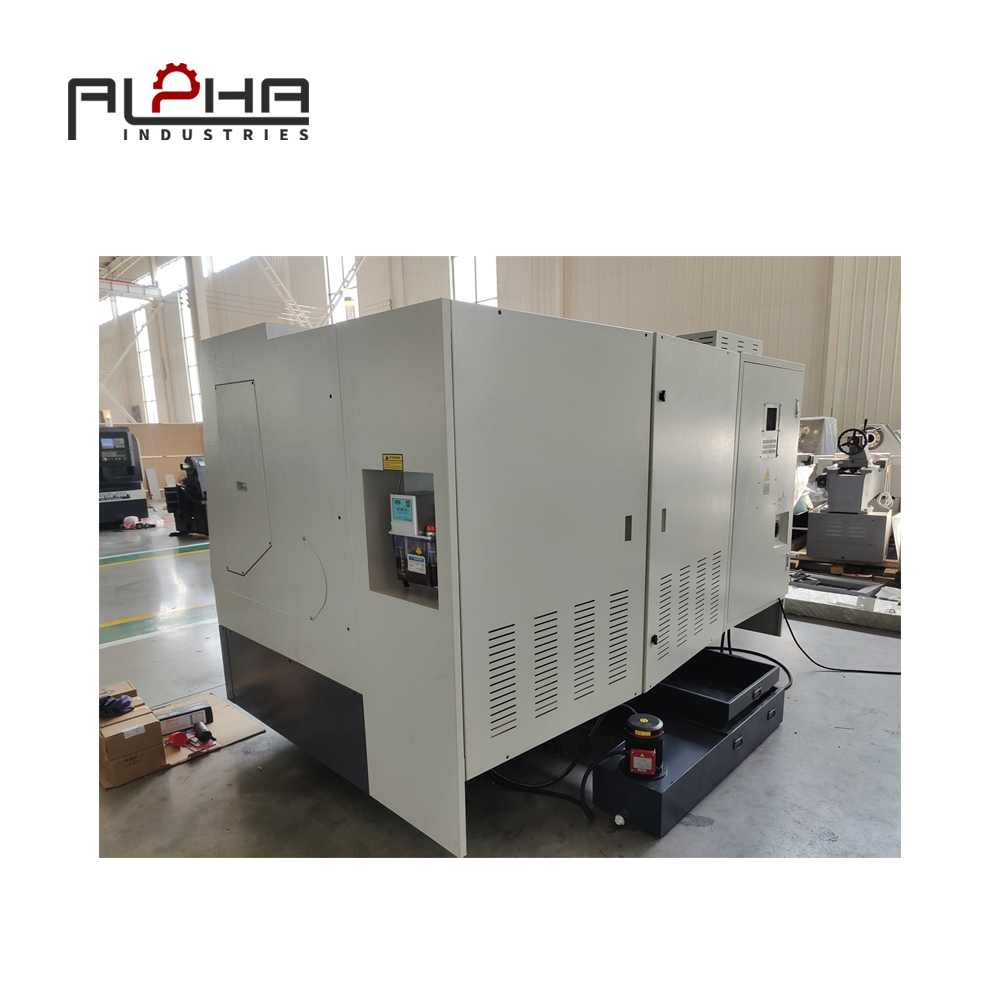
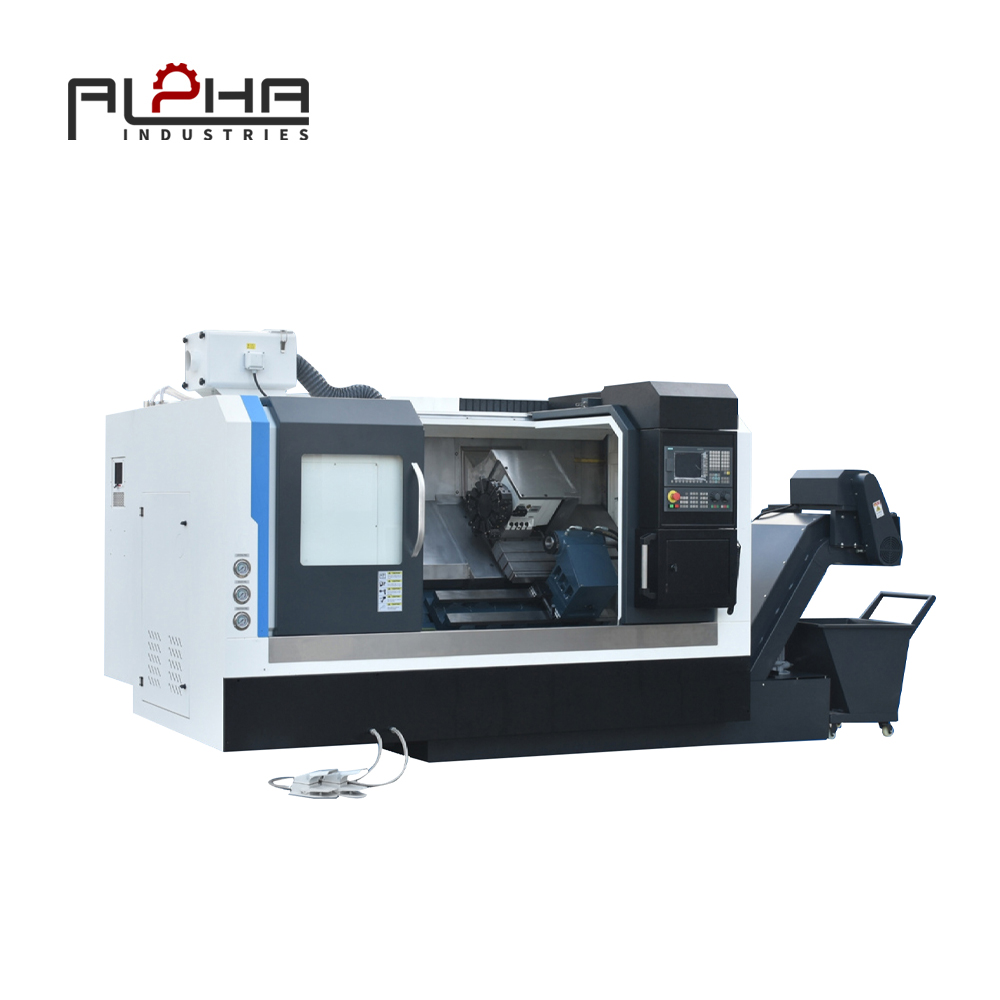
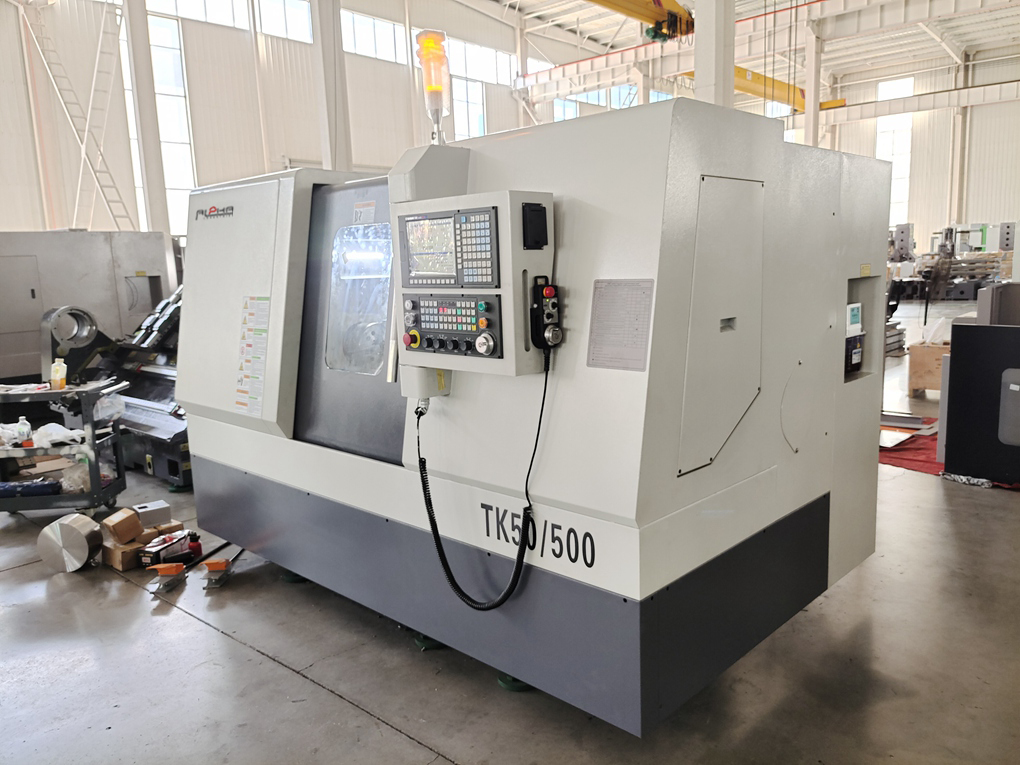
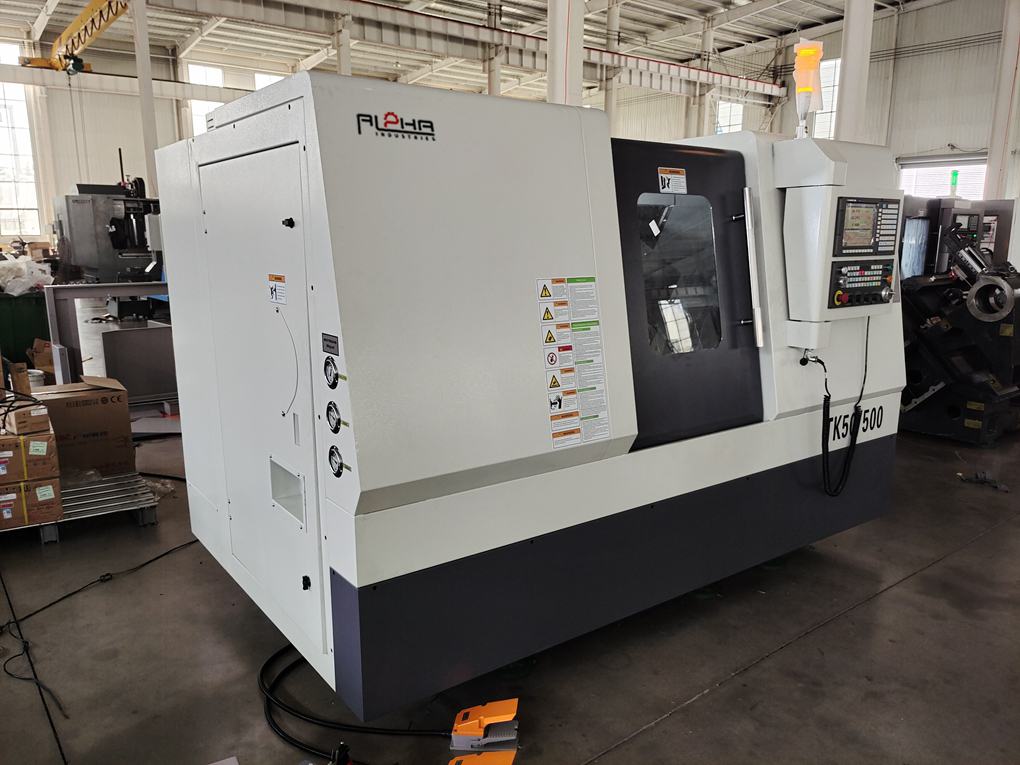
The inclined structure of a slant bed CNC lathe is designed not only for chip evacuation but also for efficient access to the machining area, compact machine construction, tooling arrangement, automation integration, and production workflow.
This makes the slant bed configuration particularly relevant to manufacturers that want to improve setup efficiency and production flexibility.
The goal is not simply to purchase a faster CNC machine.
The goal is to reduce the amount of time the machine spends doing everything except producing finished parts.
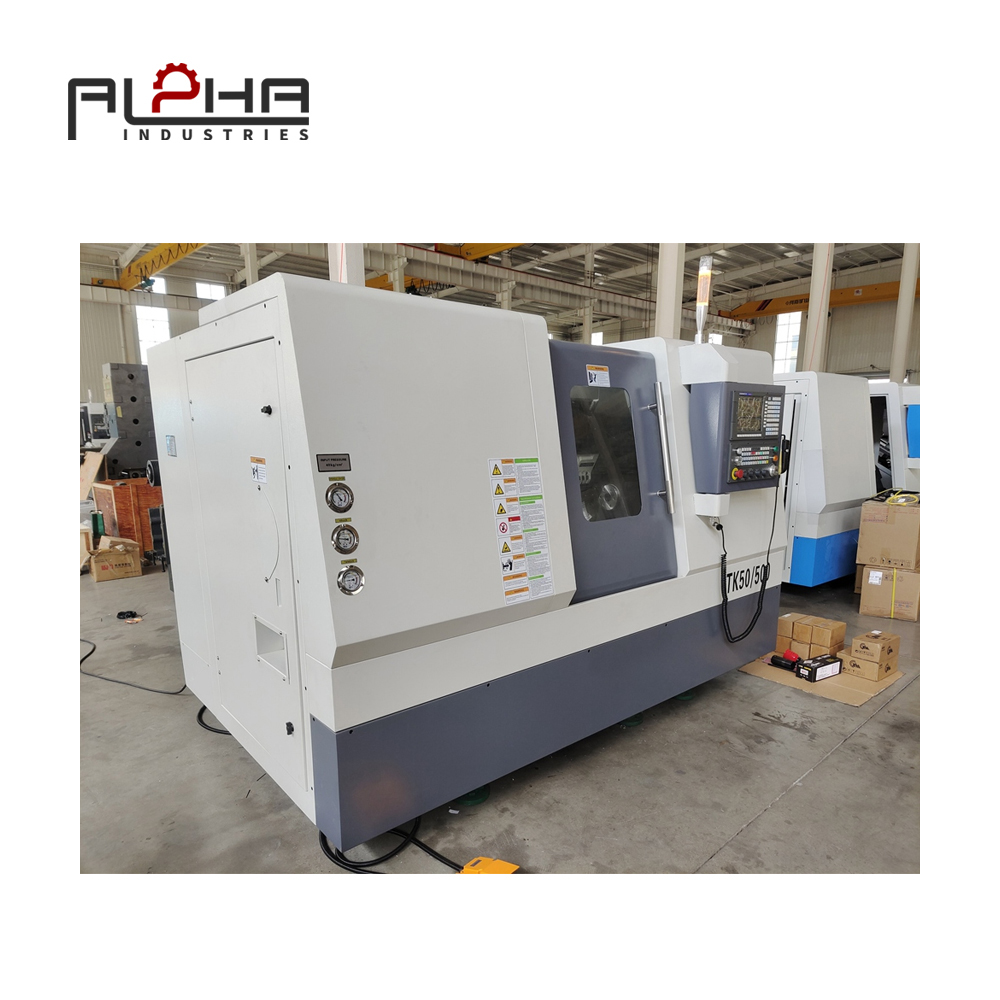
The Productivity Problem Between Two Production Runs
Machining productivity is often measured by cycle time.
For example, if a CNC lathe completes one component every 45 seconds, it appears easy to calculate hourly output.
However, real manufacturing rarely operates under perfectly continuous conditions.
A typical production schedule may look like this:
Job A → Setup → Production → Inspection → Tool Adjustment → Job B → Setup → Production → Job C
Every transition consumes time.
The machine may need to stop while the operator:
-
Changes tooling
-
Adjusts tool offsets
-
Changes workholding
-
Loads a new program
-
Adjusts coolant
-
Checks the first component
-
Removes chips
-
Repositions material
-
Verifies dimensions
These activities do not directly create finished parts.
For a manufacturer producing large batches of one component, setup time may represent a relatively small percentage of total production.
For a manufacturer producing many different components, setup time can become a major productivity issue.
This is particularly relevant to small and medium-sized manufacturers in the Americas that need to remain flexible rather than dedicate one machine to one product permanently.
Why Production Flexibility Matters in the American Market
Manufacturing demand is becoming increasingly dynamic.
Customers may require smaller batches, shorter lead times, customized components, and faster response to changes in demand.
This creates a different production environment from the traditional model of producing one standardized component continuously.
Manufacturers increasingly need machines capable of handling:
High-volume production + short-run orders + product variation + quick changeovers.
A CNC turning machine therefore needs to provide more than cutting capability.
It should also support efficient setup and practical operator access.
This is one area where the design of a slant bed CNC lathe becomes important.
How the Slant Bed Structure Supports a More Efficient Workflow
The inclined bed is the defining characteristic of a slant bed lathe.
Instead of positioning the machine bed horizontally, the structure is angled.
This changes the physical relationship between the spindle, carriage, tool post, workpiece, and machining area.
For operators, the machining area can be easier to access during setup and inspection.
For production, the compact layout can help organize the working area around the cutting zone.
For chip management, the inclined surface encourages chips to move downward instead of remaining on horizontal machine surfaces.
These characteristics work together.
The result is a machine structure that can support a more efficient production workflow.
This is particularly useful when operators frequently need to enter the machining area to perform setup or change production jobs.
Faster Tool Access Can Help Reduce Setup Time
Tool setup is an important part of CNC turning.
Before production begins, the operator needs to ensure that the required tools are installed correctly and that their offsets are properly established.
Depending on the component, the machine may require:
-
External turning tools
-
Internal boring tools
-
Grooving tools
-
Threading tools
-
Drills
-
Parting tools
-
Live tooling
The easier these components are to access, the more efficiently setup work can be performed.
An accessible machining area can make routine tool adjustments and inspections more convenient.
This does not mean that the machine automatically eliminates setup time.
Rather, a good machine design can make the setup process more organized and practical.
For manufacturers running multiple part numbers, this can have a measurable effect on machine utilization.
Workholding Is Another Important Setup Factor
Changing from one component to another often requires workholding changes.
Different components may require different:
-
Chuck configurations
-
Collets
-
Soft jaws
-
Fixtures
-
Clamping pressures
Workholding must securely hold the component while maintaining the required positioning accuracy.
If workholding changes are complicated or difficult to access, changeover time increases.
A well-designed CNC turning center should provide practical access to the workholding system.
This allows operators to complete setup tasks more efficiently.
For manufacturers with frequent production changes, the ability to perform workholding changes quickly can be just as important as the maximum spindle speed.
CNC Programming and Setup Efficiency
Machine hardware is only part of setup efficiency.
The CNC control and programming workflow also matter.
A modern production environment may involve dozens or hundreds of part programs.
Manufacturers need an organized way to:
-
Store programs
-
Retrieve programs
-
Modify cutting parameters
-
Manage tool offsets
-
Track production information
-
Transfer programs
-
Verify new jobs
A well-organized CNC programming process can reduce unnecessary setup delays.
Manufacturers should therefore evaluate the CNC control interface when purchasing a slant bed CNC lathe.
The question should not simply be:
“Which CNC control does this machine use?”
A better question is:
“How efficiently can our operators use this control during real production?”
Ease of operation can have a direct effect on training time and production changeovers.
Reducing Operator Dependency Without Removing Human Expertise
Automation is often discussed as a solution to labor shortages.
However, automation should not be understood simply as replacing operators.
A more practical objective is to reduce repetitive work so skilled operators can focus on higher-value activities.
For example, instead of continuously loading individual components, an operator can monitor several machines equipped with automatic feeding systems.
Instead of manually removing chips throughout the shift, an automated chip conveyor can handle continuous chip transportation.
Instead of manually checking every production step, automatic measurement systems can support process monitoring.
A slant bed CNC lathe can serve as the central machine within such a production cell.
Potential automation options include:
-
Bar feeders
-
Robotic loading
-
Automatic unloading
-
Chip conveyors
-
Automatic tool measurement
-
Workpiece probing
-
Part collection
-
Automated inspection
The appropriate automation level depends on production volume and component complexity.
Why Setup Time Has a Bigger Impact on Small-Batch Production
Consider two manufacturers.
Manufacturer A produces one component for eight hours.
Manufacturer B produces eight different components during the same shift.
Manufacturer A may spend almost the entire shift machining.
Manufacturer B may spend significant time changing tooling, programs, workholding, and materials.
Even if both manufacturers use identical CNC lathes, their actual machine utilization can be very different.
This illustrates an important point:
The ideal machine depends on the production model.
A manufacturer producing many different components should pay close attention to setup efficiency.
A slant bed lathe can be particularly attractive when the production environment requires frequent changes while still demanding accurate CNC turning.
Slant Bed Lathe for Automotive Suppliers
Automotive suppliers often need a combination of high-volume production and flexibility.
A supplier may produce:
-
Shafts
-
Bushings
-
Pins
-
Hubs
-
Valve components
-
Sensor components
-
Fittings
-
Transmission components
Different customers may require different specifications.
Production schedules can also change according to customer demand.
A slant bed CNC lathe can provide a flexible platform for these applications, particularly when equipped with appropriate tooling and automation.
For automotive suppliers, the important metrics may include:
Cycle time
Setup time
Machine utilization
Tool life
Part consistency
Scrap rate
Operator productivity
A machine that performs well across all these categories can provide greater long-term value than one that only offers high theoretical cutting speed.
Slant Bed Lathe for Hydraulic and Pneumatic Parts
Hydraulic and pneumatic components are another application where flexible CNC turning can be valuable.
Components may require several operations such as:
-
Turning
-
Facing
-
Boring
-
Threading
-
Grooving
-
Drilling
-
Parting
A manufacturer may produce several variations of similar components.
Efficient setup becomes important because the machine must move between different part specifications.
A slant bed CNC lathe can support this production environment through accessible tooling, CNC programming, efficient chip evacuation, and compatibility with automated material handling.
The actual configuration should be selected according to the workpiece dimensions and machining requirements.
Slant Bed CNC Lathe for Small and Medium-Sized Manufacturers
Large factories can dedicate individual machines to specific production lines.
Smaller manufacturers often cannot.
One machine may need to produce several types of components.
This makes versatility particularly valuable.
A CNC lathe should ideally support different production requirements without requiring excessive setup time for every new component.
This is one reason why the slant bed configuration is attractive to many general machining companies.
It can provide a combination of:
-
Compact structure
-
Good machining accessibility
-
Efficient chip evacuation
-
CNC automation
-
Flexible tooling
-
Production stability
For a smaller manufacturer, improving machine utilization can sometimes be more valuable than simply increasing theoretical cutting speed.
How to Measure Whether a Slant Bed Lathe Will Improve Productivity
Manufacturers should measure their current production process before purchasing new equipment.
Useful metrics include:
Average setup time
How long does it take to change from one part to another?
Machine utilization
What percentage of available production time is the machine actually cutting?
Operator intervention
How often must the operator stop the machine?
Cycle time
How long does one finished component take?
Tool change frequency
How often are cutting tools replaced or adjusted?
Scrap rate
How many parts are rejected because of dimensional or process problems?
Downtime
How much production time is lost to maintenance, cleaning, setup, or unexpected problems?
These numbers provide a baseline.
After identifying the biggest source of lost time, the manufacturer can determine whether a new slant bed CNC lathe can address that specific problem.
The Importance of Total Production Time
A useful way to evaluate CNC equipment is to look beyond machining cycle time.
Consider this simplified production equation:
Total Production Time = Setup Time + Cutting Time + Handling Time + Inspection Time + Downtime
A machine can only improve overall productivity if it addresses one or more of these factors.
This is why setup efficiency is so important.
If cutting time represents only part of the production process, reducing cycle time alone may not produce the expected productivity improvement.
For manufacturers with frequent job changes, reducing setup and handling time can create a significant improvement in overall output.
Slant Bed Lathe and Automatic Material Handling
Material handling is another potential source of lost production time.
Manual loading may be acceptable for low-volume production.
However, as production volume increases, automatic material handling becomes increasingly attractive.
A slant bed CNC lathe can be integrated with a bar feeder for continuous material supply.
For certain production environments, robotic systems can also be used for loading and unloading.
This creates a more automated production flow:
Material Supply → CNC Turning → Finished Part Collection
The operator can then focus on monitoring production rather than repeatedly handling individual workpieces.
Why Chip Evacuation Still Matters
Although this article focuses on setup efficiency, chip evacuation remains an important advantage of the slant bed structure.
During setup and production, accumulated chips can make the machining area more difficult to access.
Efficient chip evacuation helps keep the working area cleaner.
The inclined bed encourages chips to move toward the lower section of the machine.
When combined with coolant and a chip conveyor, this can create a more efficient chip-management system.
For manufacturers changing jobs frequently, a clean machining area can also make setup and inspection easier.
Slant Bed Lathe and Production Consistency
Fast setup is valuable only when the machine can return to stable production quickly.
After changing a job, the manufacturer must still achieve the required dimensions and surface quality.
This means setup efficiency must be combined with process stability.
Important factors include:
-
Machine rigidity
-
Spindle performance
-
Tooling quality
-
Workholding
-
CNC control
-
Cutting parameters
-
Coolant
-
Operator training
-
Measurement equipment
A good production system therefore combines fast setup with reliable machining.
The objective is not simply to start the machine quickly.
The objective is to produce good parts quickly.
How to Choose a Slant Bed CNC Lathe for the Americas
Before purchasing a slant bed lathe, manufacturers should prepare detailed information about their production requirements.
Workpiece Dimensions
Identify maximum and minimum:
-
Turning diameter
-
Machining length
-
Bar diameter
-
Workpiece weight
Material
Determine whether the machine will process:
-
Carbon steel
-
Alloy steel
-
Stainless steel
-
Aluminum
-
Brass
-
Cast iron
-
Titanium
-
Engineering plastics
Production Volume
Define expected:
-
Daily production
-
Monthly production
-
Annual production
Number of Part Numbers
This is especially important for manufacturers with diverse product portfolios.
A factory producing many part numbers should prioritize setup flexibility.
Required Operations
Identify whether the component requires:
-
Turning
-
Facing
-
Boring
-
Drilling
-
Threading
-
Grooving
-
Parting
-
Milling
Automation Requirements
Determine whether you need:
-
Bar feeder
-
Robotic loading
-
Automatic unloading
-
Chip conveyor
-
Automatic inspection
After-Sales Support
For manufacturers in the Americas, technical support should also be considered.
Important factors include:
-
Installation
-
Training
-
Spare parts
-
Remote technical support
-
Maintenance
-
Troubleshooting
-
Response time
A machine is a long-term investment, so support after installation can be as important as the initial machine specification.
Slant Bed Lathe vs. Traditional Flat Bed Lathe
Both machine designs have legitimate applications.
| Production Requirement | Slant Bed Lathe | Flat Bed Lathe |
|---|---|---|
| Frequent job changes | Excellent | Good |
| Chip evacuation | Excellent | Good |
| Automation | Excellent | Good |
| Production machining | Excellent | Good |
| Tool accessibility | Excellent | Good |
| High-volume turning | Excellent | Excellent |
| General turning | Excellent | Excellent |
| Heavy-duty applications | Application dependent | Excellent |
| Compact production cells | Excellent | Good |
| Flexible CNC production | Excellent | Good |
The purpose is not to suggest that every manufacturer should replace a flat bed lathe with a slant bed machine.
Instead, manufacturers should identify the production problem first.
If the biggest challenges are setup time, automation, accessibility, chip management, and machine utilization, a slant bed CNC lathe may be a strong candidate.
The Business Case: More Productive Hours Instead of More Machine Hours
One of the most useful ways to evaluate CNC equipment is to ask:
How many productive hours will this machine provide?
A machine may be available for 16 hours per day but spend part of that time on setup, cleaning, inspection, manual handling, and adjustments.
The actual cutting time may therefore be significantly lower.
Improving the production process means increasing the percentage of available time that generates finished components.
This is where a well-configured slant bed CNC lathe can create value.
The machine itself is only one part of the equation.
Tooling, programming, workholding, automation, operator training, and production planning must work together.
Why ALPHA Provides More Than a CNC Machine
At ALPHA, we understand that different manufacturers require different turning solutions.
A company producing thousands of identical automotive components may prioritize automation and cycle time.
A job shop producing many different components may prioritize flexibility and setup efficiency.
A manufacturer producing hydraulic parts may require specific threading, boring, and grooving capabilities.
These applications should not all receive the same machine configuration.
ALPHA can help customers evaluate:
-
Workpiece dimensions
-
Production volume
-
Material
-
Machining operations
-
Tolerance requirements
-
Spindle specifications
-
Tooling
-
Workholding
-
Automation
-
Chip management
-
Production workflow
The objective is to help customers choose a machine that fits the actual production process.
For manufacturers in the Americas, this means looking beyond the initial purchase price and considering how the machine can contribute to long-term productivity.
Frequently Asked Questions About Slant Bed Lathes
What is a slant bed lathe?
A slant bed lathe is a CNC turning machine that uses an inclined machine-bed structure. The design can provide advantages in chip evacuation, machining accessibility, compact machine layout, and automation-oriented production.
Why is a slant bed lathe useful for production machining?
A slant bed design can support efficient chip evacuation, convenient access to the machining area, stable CNC turning, and integration with automated material-handling systems.
Can a slant bed lathe reduce setup time?
The machine itself does not automatically eliminate setup time, but its accessible machining area, tooling arrangement, CNC control, workholding access, and automation compatibility can help create a more efficient changeover process.
Is a slant bed CNC lathe suitable for small-batch production?
Yes. A properly configured slant bed CNC lathe can be suitable for manufacturers producing multiple part numbers because efficient tooling access, programming, and workholding can support flexible production.
Is a slant bed lathe suitable for high-volume production?
Yes. Slant bed CNC lathes can be used for high-volume production, particularly when equipped with automatic bar feeding, chip conveyors, robotic handling, and appropriate tooling.
Can a slant bed lathe machine stainless steel?
Yes. A suitable machine can process stainless steel when the spindle, tooling, coolant system, workholding, and cutting parameters are properly matched to the material.
What industries use slant bed CNC lathes?
Applications can be found in automotive, hydraulic and pneumatic equipment, general machinery, aerospace, electronics, energy equipment, and other metalworking industries.
What is the main advantage of a slant bed lathe?
Its main advantages include efficient chip evacuation, good machining accessibility, compact structure, production stability, and compatibility with automation.
How do I choose the right slant bed CNC lathe?
Evaluate your workpiece dimensions, materials, tolerances, production volume, number of part numbers, required machining operations, spindle requirements, tooling, workholding, automation, and after-sales support.
Is a slant bed lathe better than a flat bed lathe?
Neither configuration is universally better. A slant bed lathe can be particularly advantageous for modern production environments emphasizing automation, chip management, accessibility, and efficient CNC turning.
Conclusion
For manufacturers in the Americas, productivity is increasingly determined by what happens between machining cycles, not just by how quickly a cutting tool removes material.
Long setup times, frequent job changes, manual material handling, difficult tool access, and production interruptions can significantly reduce the number of productive hours available each day.
A slant bed lathe provides a machine structure designed around efficient CNC turning, improved accessibility, chip evacuation, and automation integration.
When combined with appropriate tooling, workholding, CNC programming, automatic material feeding, and production planning, a slant bed CNC lathe can help manufacturers create a more flexible and efficient machining process.
For companies producing multiple part numbers or looking to improve machine utilization, reducing setup and non-cutting time can be just as important as reducing the machining cycle itself.
The most productive CNC machine is not necessarily the one with the fastest spindle. It is the one that spends more of its available time producing quality parts.
Contact Us
Are you looking for a reliable Slant Bed Lathe for your manufacturing operation?
Whether you are producing automotive components, hydraulic parts, shafts, bushings, industrial components, or other precision turned parts, ALPHA can help you evaluate a suitable CNC turning solution based on your workpiece dimensions, materials, production volume, machining requirements, and automation needs.
Contact ALPHA today to discuss your Slant Bed Lathe requirements and find the right solution for your production process.