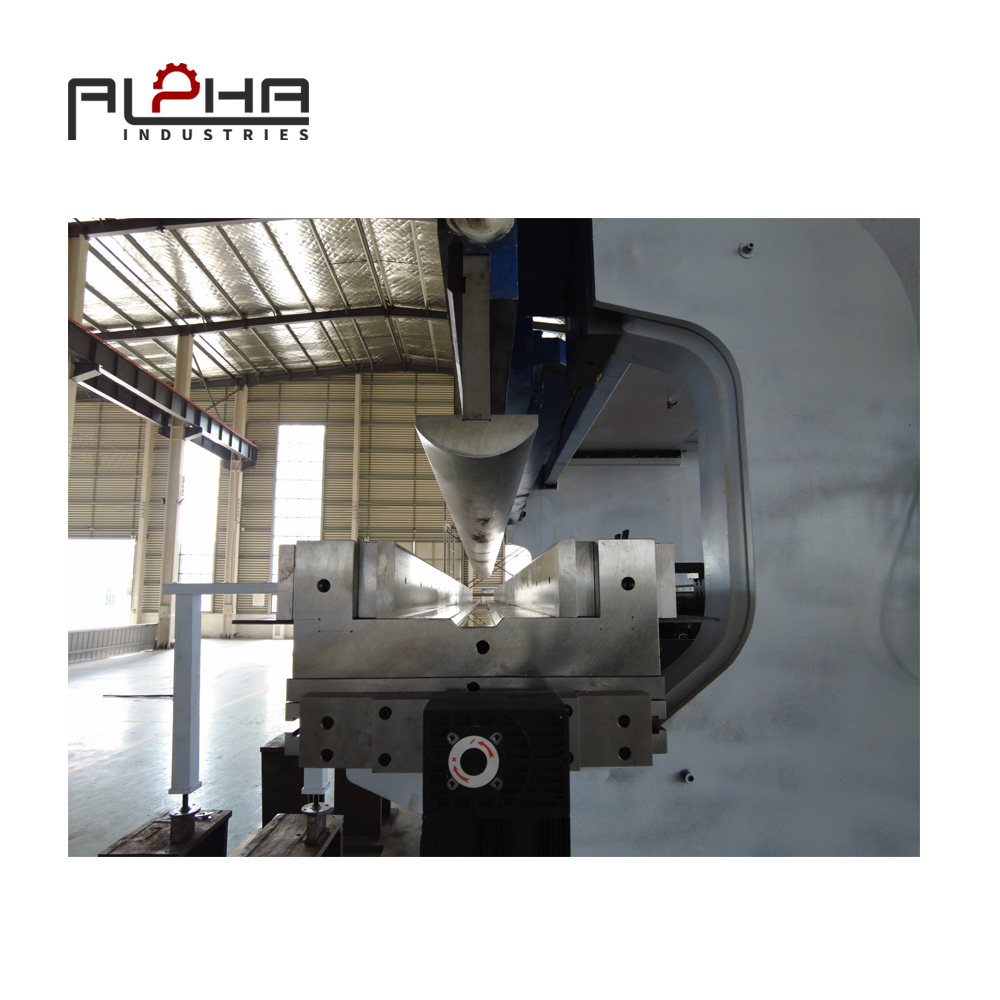


Skilled Labor Shortages Are Reshaping Sheet Metal Manufacturing Across the Americas
Across the Americas, sheet metal manufacturers are facing a challenge that cannot be solved simply by purchasing more equipment.
The challenge is finding enough skilled people to operate that equipment efficiently.
Manufacturers in industries such as metal fabrication, HVAC, construction equipment, automotive components, electrical enclosures, agricultural machinery, energy equipment, and industrial manufacturing increasingly face difficulties recruiting experienced press brake operators.
At the same time, production requirements continue to increase.
Customers expect:
- Faster delivery
- Higher bending accuracy
- More consistent quality
- Shorter production lead times
- Greater flexibility for customized orders
- Competitive pricing
Traditional sheet metal bending often depends heavily on operator experience.
An experienced operator understands how different materials behave, how bending angles can change, how to select tools, how to position workpieces, and how to compensate for production variations.
However, when experienced workers are difficult to find, manufacturers become more vulnerable.
This is why the skilled labor shortage has become one of the most important operational challenges for the sheet metal industry.
The solution increasingly involves a combination of advanced CNC Press Brake technology, automation, simplified programming, and more intelligent bending processes.
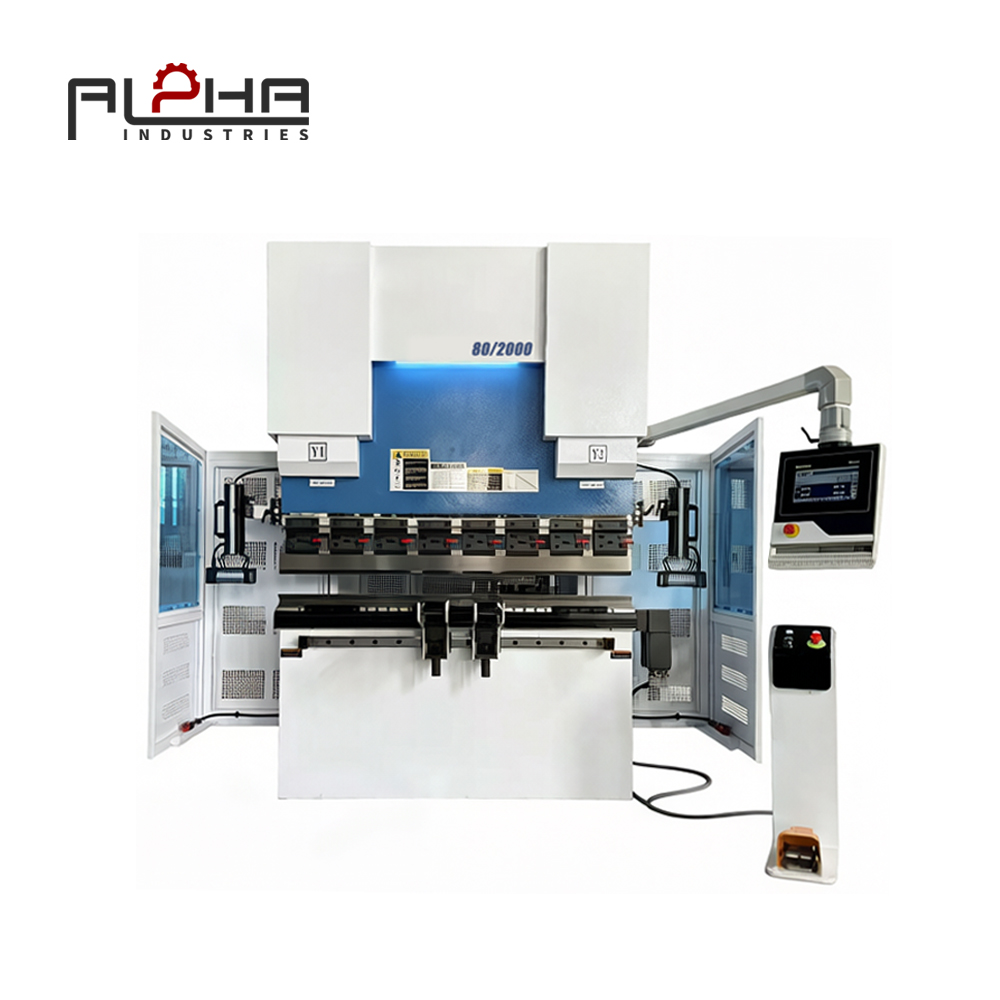
Why Press Brake Operations Traditionally Depend on Skilled Workers
Press brake bending is more complex than simply placing a sheet of metal into a machine and pressing a button.
Accurate bending depends on many variables, including:
- Material type
- Material thickness
- Tensile strength
- Tool selection
- Punch and die configuration
- Bending sequence
- Backgauge position
- Bending angle
- Springback
Small changes in any of these factors can affect the final result.
In traditional bending operations, experienced operators often make manual adjustments based on their knowledge and production experience.
For example, an operator may need to adjust the bending process because the actual material behaves differently from the theoretical bending parameters.
This dependence on individual experience creates a major challenge.
When a highly skilled operator leaves the company, valuable production knowledge may leave with them.
For manufacturers facing workforce shortages, relying too heavily on individual operators creates long-term production risk.
The Cost of Skilled Labor Shortages in Sheet Metal Bending
The labor shortage affects much more than recruitment.
It can influence the entire manufacturing operation.
Longer Training Periods
Training a new press brake operator requires time.
The operator must learn:
- Machine operation
- Safety procedures
- Tooling selection
- CNC programming
- Material behavior
- Bending sequences
- Quality inspection
During the training process, production efficiency may be lower.
Errors may also be more common.
Higher Risk of Production Errors
Inexperienced operators may make mistakes involving:
- Incorrect tool selection
- Incorrect bending sequence
- Improper material positioning
- Programming errors
- Incorrect angle adjustment
These mistakes can lead to material waste and rework.
Reduced Production Flexibility
When only one or two experienced operators can perform complex bending jobs, the entire production schedule may depend on their availability.
This creates a bottleneck.
Higher Labor Costs
Manufacturers may need to offer higher wages to attract experienced operators.
Overtime costs may also increase when production schedules depend on a limited number of skilled workers.
How CNC Press Brakes Reduce Dependence on Operator Experience
Modern CNC Press Brakes are designed to make bending operations more controlled, repeatable, and easier to manage.
The goal is not necessarily to eliminate operators.
The goal is to make operators more productive and reduce unnecessary dependence on manual experience.
Several technologies are especially important.
Intelligent CNC Controls Simplify Press Brake Programming
The CNC control system is one of the most important components of a modern press brake.
Advanced controls can help operators manage complex bending operations more efficiently.
Depending on the machine configuration, CNC systems can support:
- Bending program creation
- Angle programming
- Backgauge positioning
- Multi-step bending sequences
- Tooling configuration
- Production parameter storage
This allows manufacturers to create standardized programs for repeat production.
Instead of relying entirely on operator memory, bending parameters can be stored and reused.
This improves production consistency.
It also makes it easier for trained operators to repeat established processes.
Precision Backgauge Systems Improve Repeatability
The backgauge system plays a critical role in determining bending position.
Inaccurate positioning can affect the dimensions of the finished part.
Modern CNC press brakes can use multi-axis backgauge systems to improve positioning flexibility and accuracy.
A precision backgauge can support:
- Accurate part positioning
- Complex bending sequences
- Faster repeat production
- Reduced manual measurement
For complex parts, multi-axis movement can reduce the number of manual adjustments required during production.
This is particularly valuable for manufacturers producing customized or high-mix sheet metal components.
Automatic Bending Sequences Reduce Operator Decisions
Complex sheet metal parts may require multiple bends.
The order of these bends is important.
An incorrect bending sequence can cause:
- Part interference
- Positioning difficulties
- Dimensional errors
- Production delays
Advanced CNC programming helps organize bending sequences.
This reduces the number of decisions the operator must make during each production cycle.
The result is a more standardized process.
Standardization is particularly important when manufacturers need to train new employees quickly.
Automatic Angle Control Improves Production Consistency
Material behavior is one of the biggest challenges in sheet metal bending.
Different materials can produce different bending results.
Even materials with the same thickness may have variations in tensile strength.
Springback can also affect the final bending angle.
Advanced press brake systems may use angle measurement and compensation technologies to improve bending accuracy.
The goal is to reduce the need for repeated manual adjustments.
Improved angle control can help manufacturers achieve:
- More consistent bending results
- Less trial-and-error
- Reduced material waste
- Faster production setup
This is particularly important for manufacturers producing high-value components or large production batches.
Faster Setup Helps Manufacturers Do More With Fewer Skilled Operators
Setup time is often one of the largest hidden costs in sheet metal bending.
Traditional setup may require significant manual work.
Operators may need to:
- Select tools
- Install punches
- Install dies
- Adjust backgauges
- Test bending parameters
For high-mix production environments, frequent setup changes can consume significant production time.
Reducing setup time allows skilled workers to focus on more valuable tasks.
Modern press brake solutions can improve setup efficiency through:
- CNC-controlled backgauges
- Stored bending programs
- Tooling management
- Quick-change tooling
- Repeatable machine positioning
The ability to recall existing programs is particularly valuable for repeat orders.
Instead of rebuilding the entire bending process, manufacturers can reuse proven production parameters.
Why Standardized Bending Processes Are Critical for the Americas
Manufacturers increasingly operate in environments where experienced workers cannot always be replaced immediately.
This makes standardized production processes more important.
A standardized bending process allows manufacturers to reduce dependence on individual knowledge.
Instead of production knowledge existing only in the experience of one operator, key bending parameters can be documented and stored.
Standardization supports:
- Faster operator training
- More consistent production
- Easier shift changes
- Reduced dependency on individual employees
- Better repeatability
For manufacturers operating multiple shifts, this can be especially valuable.
The goal is to achieve consistent results regardless of which qualified operator is running the machine.
Automation Does Not Replace Operators — It Makes Them More Productive
There is often a misconception that press brake automation completely eliminates the need for human operators.
In reality, operators remain important.
They are responsible for:
- Production supervision
- Quality control
- Material handling
- Tooling decisions
- Process optimization
However, automation can reduce repetitive and time-consuming activities.
This allows one operator to manage production more efficiently.
Automation options may include:
- Automatic backgauge movement
- Automatic tool positioning
- Robotic material handling
- Automated part loading and unloading
- Production monitoring
For manufacturers facing labor shortages, improving productivity per employee can be more realistic than simply trying to hire additional workers.
Robotic Press Brake Automation for Higher Production Efficiency
For companies with repetitive production requirements, robotic automation can provide additional benefits.
A robotic bending system can support:
- Automated part loading
- Automated material handling
- Repetitive bending operations
- Extended production hours
Robotic systems are particularly suitable for applications involving:
- High production volumes
- Repetitive parts
- Consistent material specifications
However, automation should be selected based on actual production requirements.
Not every manufacturer needs a fully automated production cell.
For some companies, an advanced CNC press brake with intelligent controls may provide the best balance between investment cost and production improvement.
Selecting the Right Press Brake for Workforce Challenges
Manufacturers should not select a press brake based only on tonnage.
The machine should match the actual production environment.
Bending Capacity
Manufacturers should consider:
- Maximum bending force
- Maximum bending length
- Material thickness
- Material type
The machine should provide sufficient capacity without excessive overcapacity.
CNC System
The control system should support the complexity of the production requirements.
For manufacturers facing workforce challenges, ease of programming and operation should be important considerations.
Backgauge Configuration
The required number of axes depends on the complexity of the parts.
More complex bending operations may require more flexible backgauge movement.
Tooling Requirements
Tooling should match the range of products being manufactured.
Efficient tooling systems can reduce setup time.
Automation Potential
Manufacturers should consider future production requirements.
Even if full automation is not required today, selecting a system with future automation potential can provide greater long-term flexibility.
How Reduced Operator Dependency Improves Total Cost of Ownership
The purchase price of a press brake is only one part of the investment.
Manufacturers should also consider the long-term cost of operation.
A machine that requires highly specialized operators for every production task may create significant labor costs.
An advanced CNC Press Brake can help reduce long-term costs by supporting:
- Faster training
- Reduced setup time
- Less material waste
- Higher production consistency
- Increased operator productivity
These factors can improve the overall Total Cost of Ownership (TCO).
For manufacturers across the Americas, the ability to produce more efficiently with a limited workforce can provide a major competitive advantage.
How ALPHA Supports Advanced Press Brake Solutions
ALPHA provides metalworking and sheet metal machinery solutions designed for different manufacturing requirements.
Choosing the right Press Brake involves more than selecting tonnage and bending length.
Manufacturers should evaluate:
- Material requirements
- Product complexity
- Production volume
- Operator skill levels
- CNC requirements
- Backgauge configuration
- Automation plans
A properly configured press brake can help manufacturers improve production efficiency while reducing unnecessary dependence on highly specialized manual operations.
FAQ
Can a CNC Press Brake be operated by less experienced workers?
With proper training, modern CNC press brakes can make many operations easier to manage through programmed bending sequences, automatic positioning, and stored production parameters. Complex applications may still require experienced operators.
How does CNC technology reduce press brake setup time?
CNC technology can automate backgauge positioning, store bending programs, control multi-step bending sequences, and improve repeatability for repeat production jobs.
Does press brake automation improve bending accuracy?
Automation and CNC control can improve consistency by reducing manual positioning errors and providing more controlled bending parameters.
Is robotic press brake automation suitable for every manufacturer?
No. Robotic automation is generally most beneficial for repetitive, high-volume production. Manufacturers with high product variation may benefit more from flexible CNC press brake solutions.
How can manufacturers reduce dependence on experienced press brake operators?
Manufacturers can standardize bending programs, improve CNC automation, simplify setup procedures, use repeatable tooling systems, and provide structured operator training.
What should manufacturers consider when buying a CNC Press Brake?
Key factors include bending force, bending length, material requirements, CNC control system, backgauge configuration, tooling, production volume, operator requirements, and future automation needs.
Final Thoughts: Technology Is Becoming a Workforce Strategy
For manufacturers across the Americas, skilled labor shortages are no longer a temporary problem.
They are becoming a long-term manufacturing challenge.
Companies that depend entirely on a small number of highly experienced operators may face increasing production risks.
Advanced CNC Press Brake technology provides a practical way to reduce those risks.
Through intelligent controls, automated positioning, standardized bending programs, precision backgauges, and automation options, manufacturers can build a more consistent and efficient bending operation.
The future of sheet metal bending is not simply about replacing people with machines.
It is about helping manufacturers enable their workforce to produce more, learn faster, and maintain consistent quality.
For companies facing labor shortages, investing in the right press brake technology can become an important part of their long-term manufacturing strategy.
Explore More Press Brake and Sheet Metal Solutions
Explore advanced sheet metal machinery and manufacturing solutions from ALPHA CNC.
For press brake specifications, customized configurations, technical consultation, or automation solutions, Contact Us.