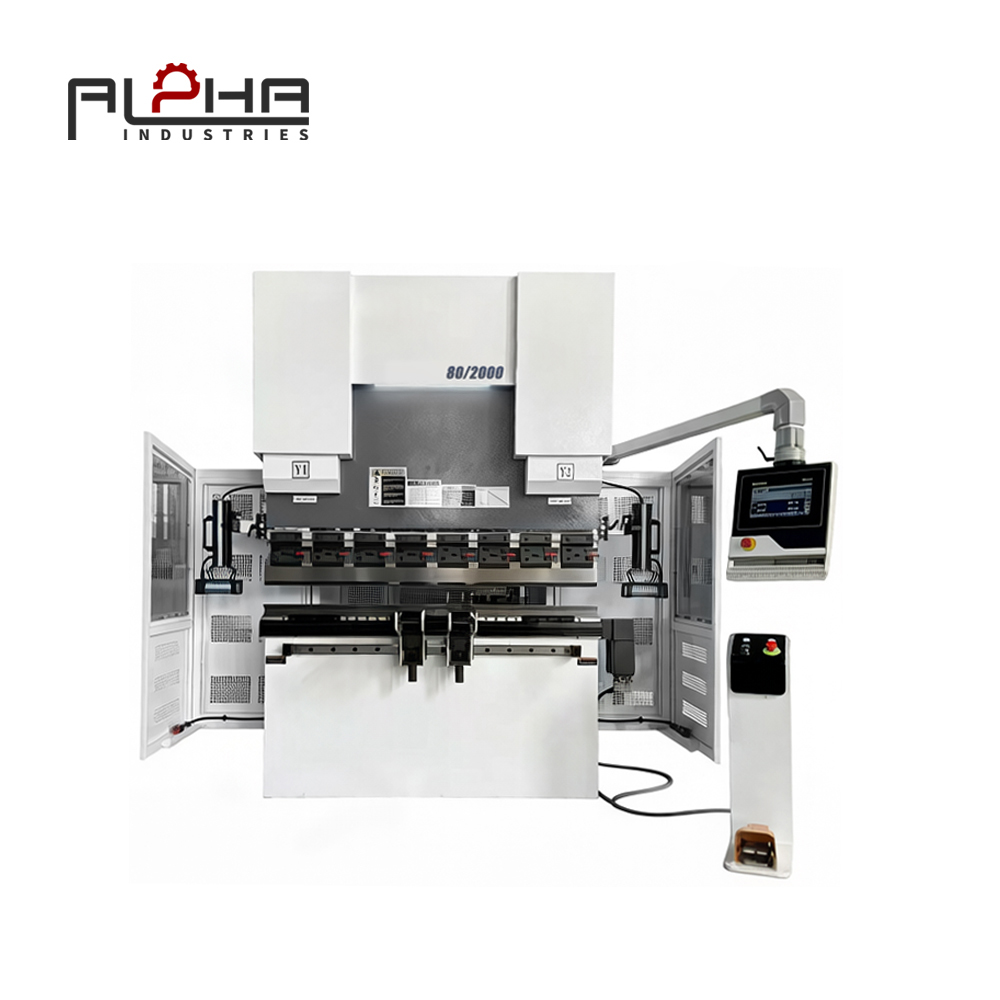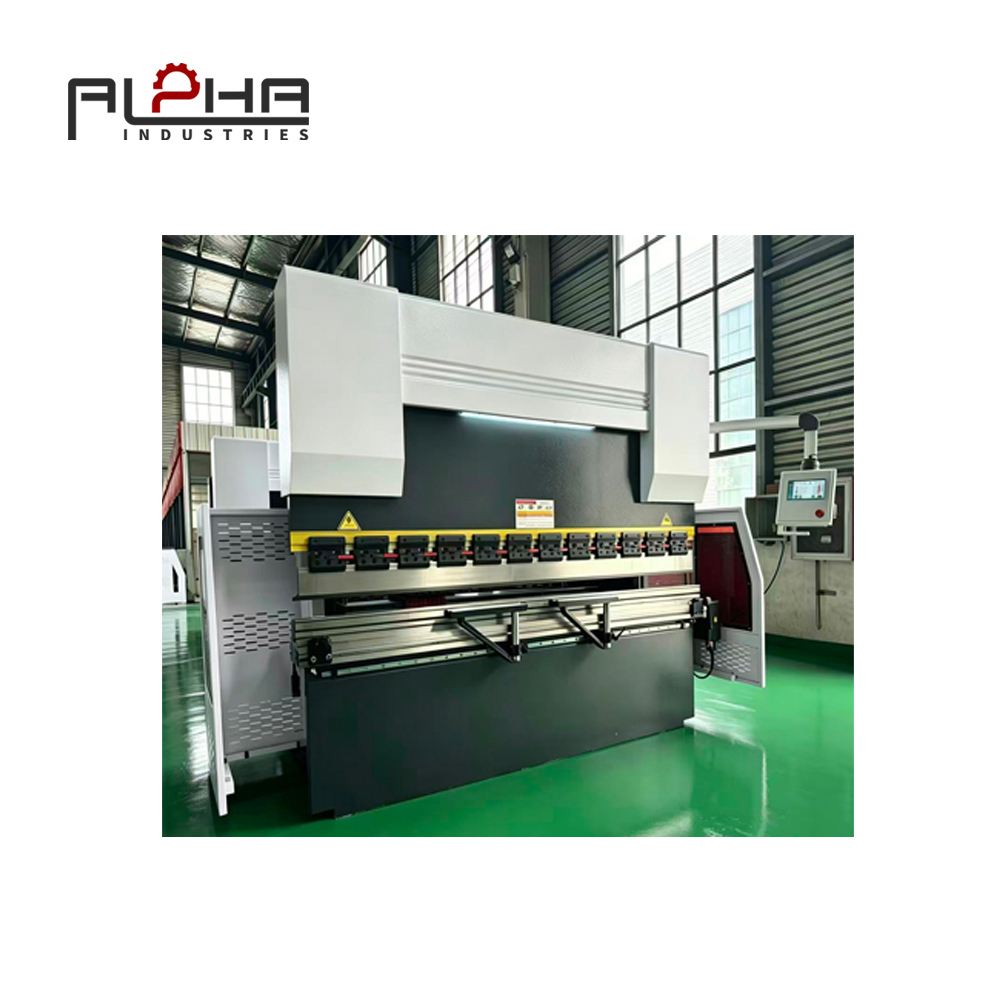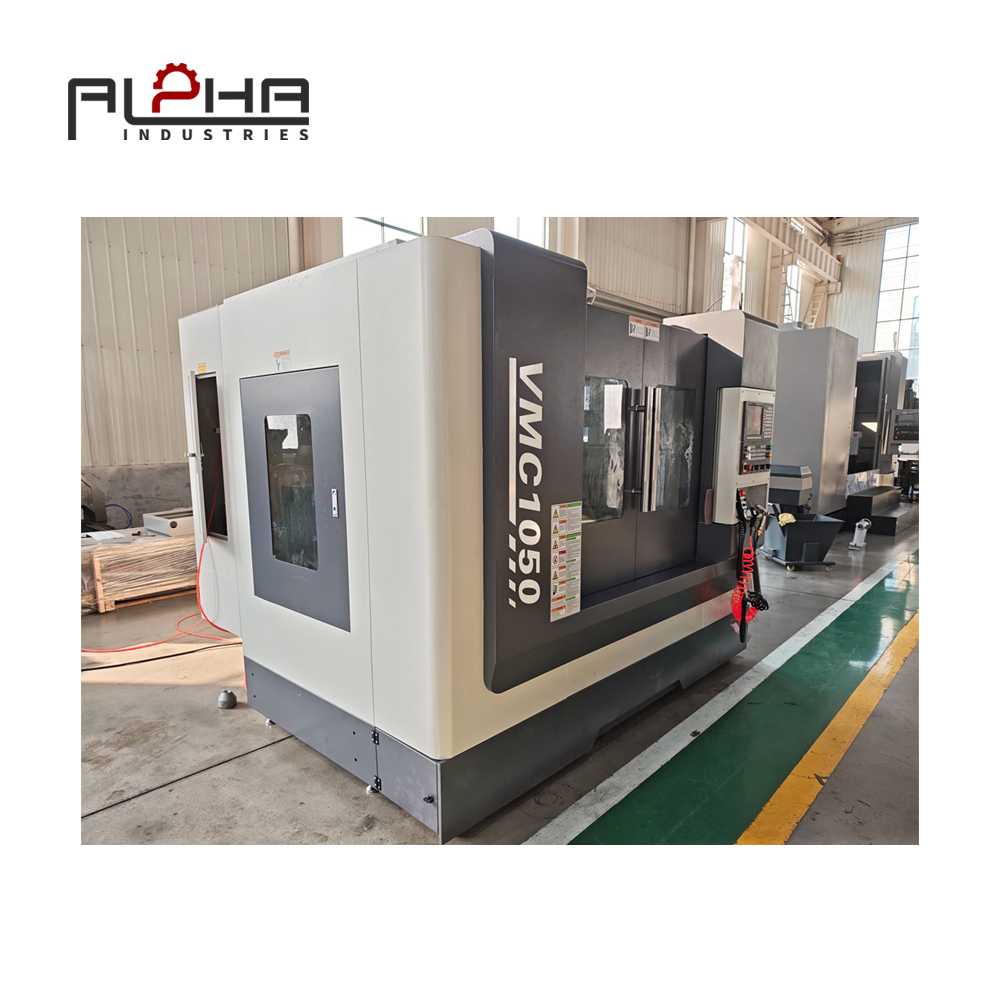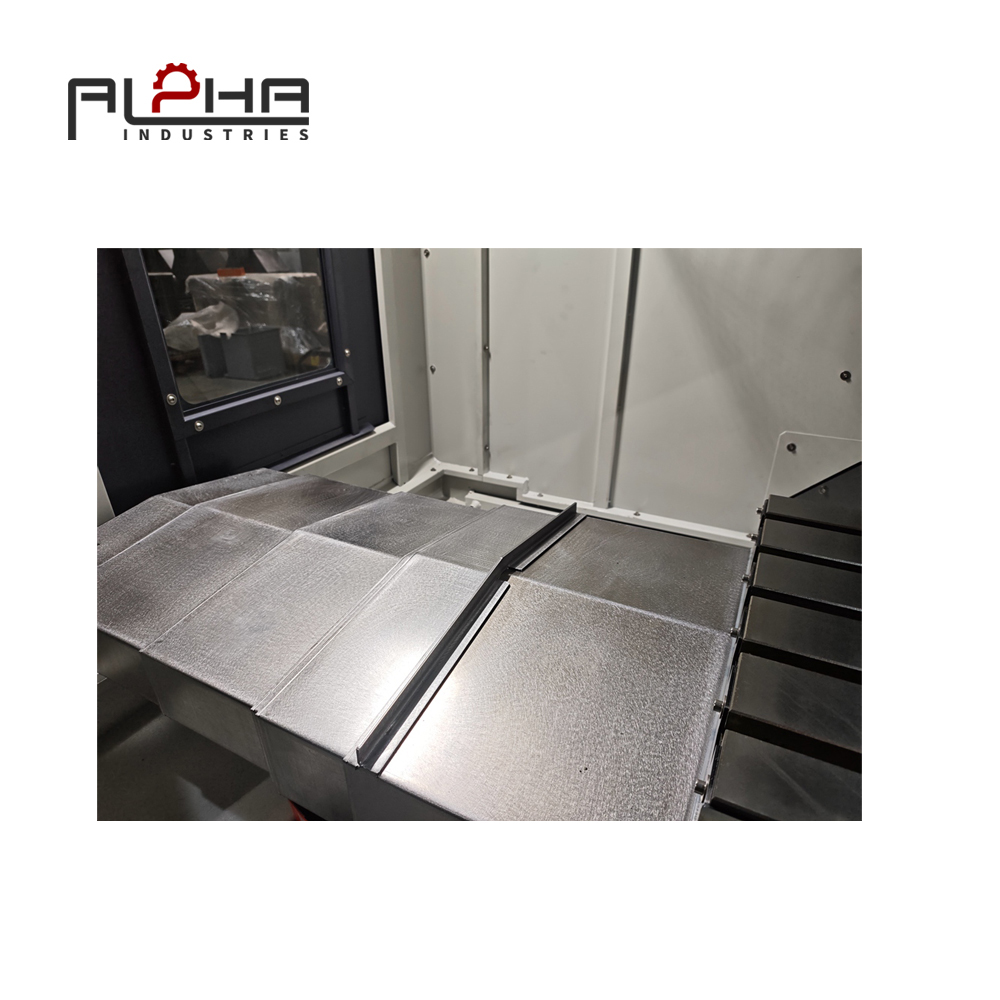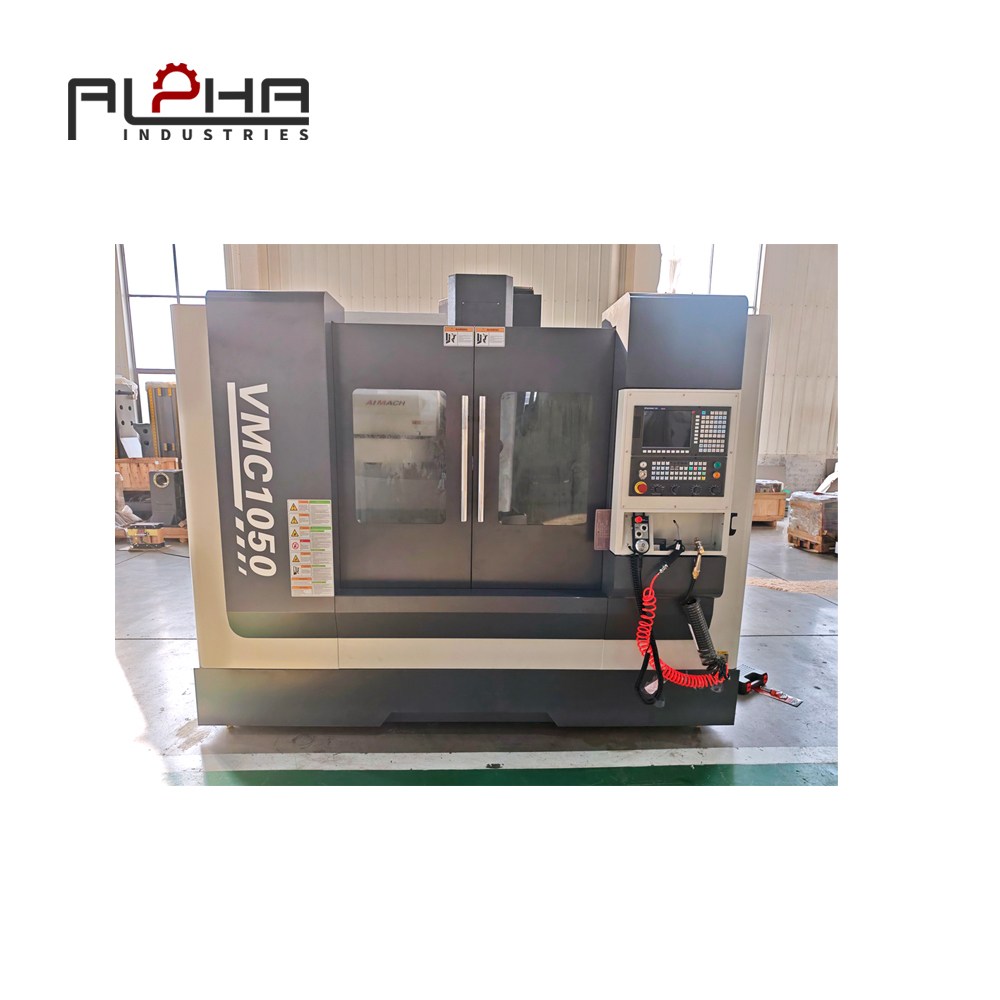


What is a Gantry CNC Milling Machine?
A Gantry CNC Milling Machine is a large-scale, computer-controlled machining center designed for high-precision cutting, milling, and contouring of oversized metal or composite components. Characterized by its bridge-type structure and moving gantry design, it offers superior rigidity and stability compared to conventional vertical or horizontal machining centers.
At Alpha, our Gantry CNC Milling Machines are engineered to perform heavy-duty, multi-axis machining with exceptional geometric accuracy — making them ideal for industries such as aerospace, automotive, mold manufacturing, and precision engineering.
Core Focus: Structural Rigidity — The Foundation of Machining Accuracy
In precision machining, rigidity equals accuracy. The gantry structure forms the foundation of all dimensional stability, vibration control, and tool life. Alpha’s engineering team designs each machine with an optimized finite element (FEA) analysis approach to achieve maximum stiffness-to-weight ratio and minimum thermal deformation.
1. Dual-Column Bridge Design
Alpha’s gantry structure features dual high-rigidity cast iron columns connected by a robust crossbeam. This closed-loop frame design minimizes deflection during heavy cutting operations.
Key Benefits:
-
Uniform force distribution along the gantry axis.
-
Improved vibration damping for smoother tool engagement.
-
Consistent geometric precision across large workpieces.
2. Finite Element Optimization
Using FEA structural simulation, Alpha engineers optimize the mass, rib layout, and joint interfaces to ensure the gantry resists both static and dynamic loads. This results in:
-
Deformation rate < 0.002 mm per ton of load
-
Natural frequency optimization to prevent chatter
-
Enhanced rigidity under 5-axis simultaneous machining
Thermal Stability — The Hidden Element of Accuracy
In large-format machining, heat expansion is the invisible enemy. As the spindle, ball screws, and structure heat up during long operation cycles, accuracy can drift.
Alpha combats this with an integrated thermal control system, including:
-
Coolant circulation through spindle and ball screws
-
Temperature sensors across the column and base
-
Automatic thermal compensation algorithms within the CNC system
These innovations ensure that Alpha Gantry CNC Milling Machines maintain dimensional accuracy within ±0.005 mm, even during extended high-load machining.
Spindle Technology — Power Meets Stability
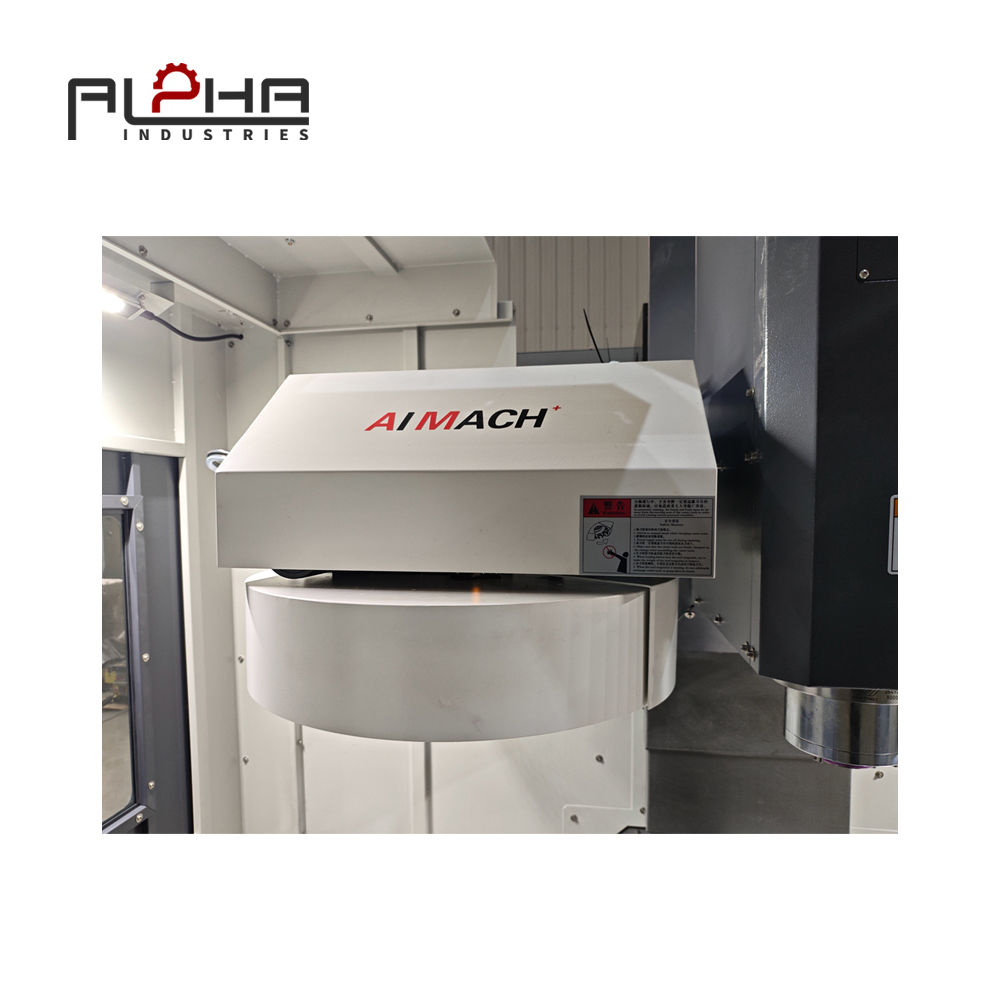
The spindle in a gantry machine must deliver high torque while maintaining balance under large tool loads. Alpha integrates direct-drive spindle motors with dual angular contact bearings and chiller-cooled housings.
Technical Highlights:
-
Maximum spindle speed: 6,000–12,000 rpm
-
Torque output: 400–1,000 Nm depending on model
-
Thermal drift compensation: ±0.3°C temperature control
-
Tool interface: BT50 / HSK100 for heavy-duty cutting
This spindle system enables stable chip removal and consistent surface finish — critical for aerospace structural components and precision dies.
Precision Axis Control — Servo Synchronization
Alpha’s Gantry CNC Mills utilize dual servo motors on the Y-axis to synchronize gantry movement and prevent misalignment under load. Each servo is equipped with absolute encoders and feedback loops to maintain micron-level parallelism.
Control Benefits:
-
Backlash-free drive with preloaded ball screws
-
Smooth interpolation for 5-axis contouring
-
Real-time position correction with CNC adaptive feedback
Supported by advanced control systems such as Fanuc 31i, Siemens 840D, or Heidenhain TNC, Alpha’s machines achieve positioning accuracy of ±0.004 mm and repeatability of ±0.002 mm.
Heavy-Duty Table Design
The machine table carries not only workpieces but also defines vibration behavior. Alpha’s hardened, ribbed cast-iron tables are stress-relieved and ground for precision flatness.
Specifications:
-
Load capacity: 10 – 25 tons
-
T-slot layout optimized for flexible clamping
-
Surface hardness: HB 280–320
-
Table straightness: ≤0.005 mm/m
This structure supports large molds, frames, or aerospace parts without losing dimensional consistency.
Advanced CNC System Integration
To fully leverage mechanical performance, Alpha integrates smart CNC control functions such as:
-
3D toolpath simulation to prevent collision.
-
Dynamic feed rate optimization based on tool load.
-
Automatic thermal drift compensation for long cycles.
-
Energy regeneration module during axis braking.
This not only increases machining precision but also supports AEO (Answer Engine Optimization) by providing machine-readable operational data through structured descriptions and schema markup.
Industrial Applications of Alpha Gantry CNC Milling Machine
| Industry | Application |
|---|---|
| Aerospace | Titanium and aluminum wing structures |
| Automotive | Mold bases and engine block machining |
| Energy | Turbine housings, impeller parts |
| Mold & Die | Die casting, injection molds |
| Shipbuilding | Structural plates, precision flanges |
Each field benefits from Alpha’s rigid gantry structure, thermal stability, and intelligent control integration.
Energy Efficiency and Sustainability
Alpha integrates energy-regenerative servo drives that convert kinetic energy from axis deceleration back into usable power. Combined with optimized lubrication systems, this reduces energy consumption by up to 25%, contributing to low-carbon manufacturing goals.
FAQ:
Q1: What makes the gantry structure superior to vertical machining centers?
The gantry structure offers enhanced rigidity and stability across large work areas, minimizing deflection during heavy or multi-axis machining.
Q2: How does Alpha ensure thermal stability in Gantry CNC Mills?
Alpha employs coolant-cooled spindles, thermal sensors, and CNC-based compensation algorithms to maintain dimensional stability throughout long cycles.
Q3: What industries benefit most from Alpha’s Gantry CNC Machines?
Aerospace, mold, automotive, and shipbuilding industries rely on Alpha’s gantry mills for high-precision, large-format machining.
Q4: What is the positioning accuracy of Alpha’s Gantry CNC Milling Machine?
Alpha’s machines achieve ±0.004 mm positioning accuracy and ±0.002 mm repeatability, even under heavy load.
Call to Action (CTA)
Upgrade your manufacturing capability with Alpha Gantry CNC Milling Machines — engineered for unmatched rigidity, precision, and performance.
Explore Alpha Gantry CNC Milling Machine
Learn more about Metal Processing Solutions