

Why Setup Time Has Become a Major Challenge for US Sheet Metal Manufacturers
The US metal fabrication industry serves a wide range of sectors, including automotive, construction, aerospace, agricultural machinery, electrical equipment, and industrial manufacturing.
Many manufacturers no longer work exclusively with large, repetitive production orders. Instead, they increasingly handle customized components, smaller batches, and orders with different specifications.
A fabrication workshop may need to produce several types of metal brackets in the morning, switch to electrical cabinet panels in the afternoon, and prepare customized equipment enclosures for the next production order.
Although these jobs may require relatively straightforward bending operations, frequent changes between products create a hidden production cost: machine setup time.
Every time a new job enters the press brake workstation, operators may need to:
-
Review engineering drawings and bending requirements.
-
Select suitable punches and dies.
-
Install and adjust tooling.
-
Enter or modify CNC bending programs.
-
Configure backgauge positions.
-
Verify bending angles and dimensions.
-
Perform first-piece inspections.
When these activities are repeated many times throughout the working day, setup time can consume a considerable portion of available machine capacity.
For US manufacturers facing pressure to deliver customized products quickly, reducing unnecessary setup time is an important step toward improving overall production efficiency.
How Frequent Job Changes Reduce Press Brake Productivity
A press brake may have sufficient bending force, working length, and operating speed, but its actual productivity depends on more than mechanical performance.
In high-mix production, the time between two different jobs can be just as important as the bending cycle itself.
Repeated Tooling Changes
Different sheet metal products may require different punch shapes, die openings, and bending radii.
When operators frequently switch between product specifications, tooling changes become a regular part of production.
Manual tooling installation and alignment can take additional time, especially when the workshop processes many customized components.
If tooling information is not properly organized, operators may also spend time searching for the correct tools or checking previous production records.
Repeated CNC Programming Adjustments
Different products require different bending sequences, positioning settings, and operating parameters.
Without organized CNC programs, operators may need to enter production information repeatedly or modify existing programs for every new order.
This increases preparation time and creates opportunities for programming mistakes.
For manufacturers processing multiple customized components, maintaining reusable and clearly identified bending programs can significantly improve workflow organization.
First-Piece Inspection and Corrections
The first workpiece produced after a setup change is particularly important.
Operators must verify critical dimensions, bending angles, flange positions, and overall product geometry.
If the initial settings are incorrect, additional adjustments and test bends may be necessary.
Repeated corrections increase material consumption and delay the start of normal production.
The objective is not simply to make the machine bend faster. It is to reduce the time required to prepare the machine and achieve an acceptable first production piece.
How a CNC Press Brake Helps Reduce Setup Time
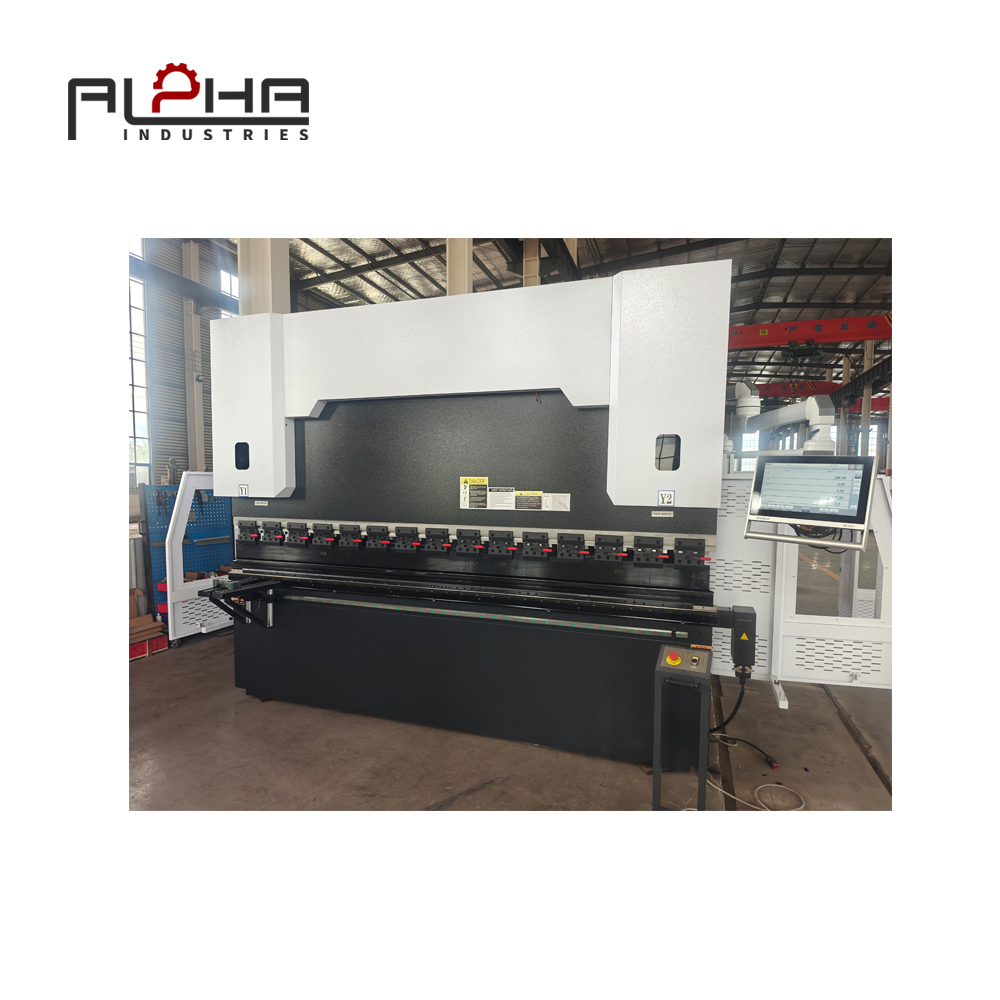
A CNC press brake provides several practical functions that can help manufacturers manage frequent product changes.
When properly configured and integrated into production procedures, CNC technology can make bending operations more organized and repeatable.
Save Time with Programmable Bending Sequences
A CNC controller allows operators to create and store bending programs for different products.
Instead of manually calculating and entering every positioning parameter for each production run, operators can retrieve previously prepared programs when processing repeat orders.
A stored program may contain relevant information such as:
-
Bending sequence
-
Backgauge positions
-
Ram positioning parameters
-
Bending angles
-
Tooling information
-
Related production settings
This helps reduce repeated data entry and makes it easier to switch between established jobs.
For manufacturers with recurring customized orders, organized program management can become an important part of daily production efficiency.
Improve Positioning with CNC Backgauge Systems
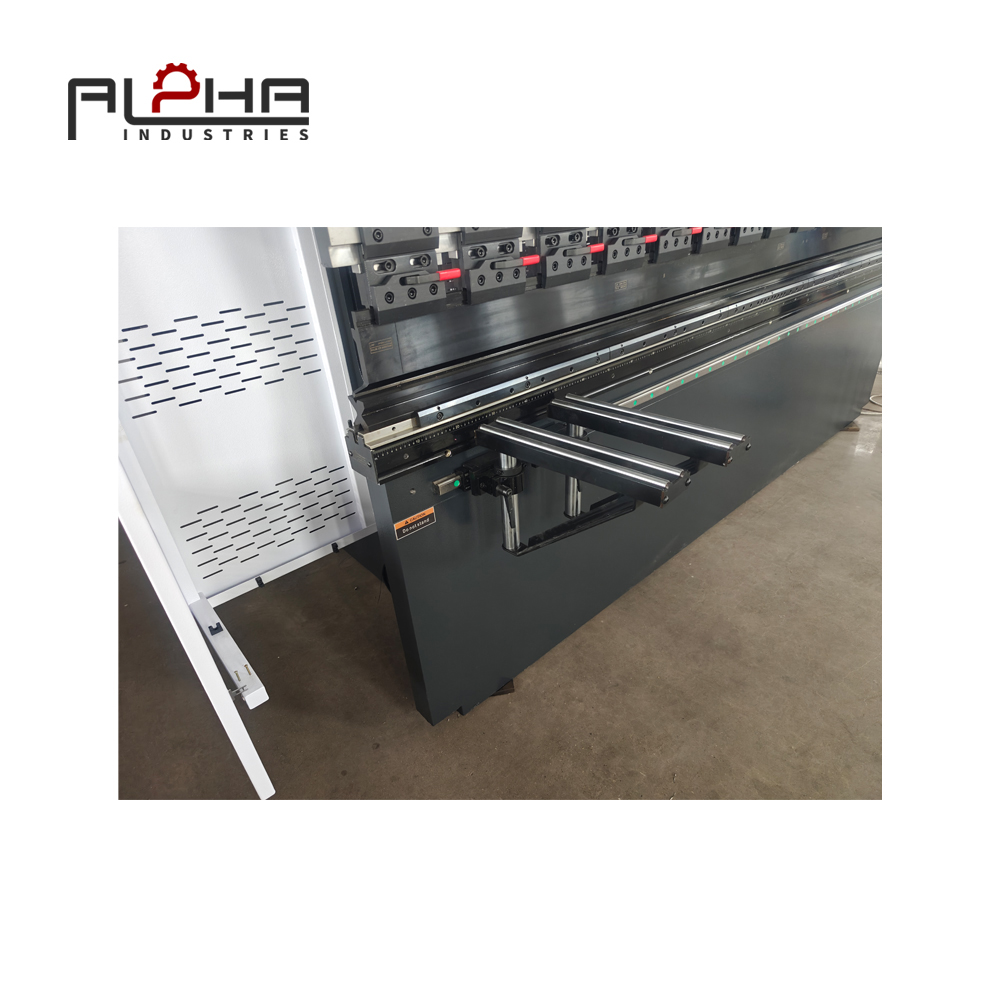
The backgauge determines the positioning of the sheet metal before each bending operation.
When processing different products, backgauge positions may change according to flange dimensions and workpiece geometry.
A CNC-controlled backgauge allows operators to manage different positioning requirements through programmed settings.
Depending on the machine configuration, multiple backgauge axes can provide additional flexibility for complex components.
This is particularly useful when manufacturing products with different flange lengths, multiple bending positions, or more complicated geometries.
Accurate and repeatable positioning also helps reduce unnecessary manual adjustments between operations.
Standardize Tooling Selection and Machine Preparation
A CNC press brake cannot eliminate every tooling change, but manufacturers can improve setup efficiency by standardizing their tooling management.
For example, a workshop can establish a tooling database that records:
-
Punch and die identification
-
Tool dimensions
-
Compatible material thicknesses
-
Recommended bending applications
-
Previous production settings
Operators can refer to these records before starting a new job.
Combining standardized tooling information with CNC programs helps reduce preparation uncertainty and makes job changes easier to manage.
For workshops with a large variety of sheet metal products, this approach can improve coordination between engineering, production planning, and machine operators.
Reduce Trial Bending Through Better Process Preparation
Trial bending is sometimes necessary when processing unfamiliar materials or customized components.
However, excessive trial bending often indicates that production preparation can be improved.
Before starting a new job, manufacturers should verify the material thickness, tooling selection, bending calculations, and required product dimensions.
Where suitable CNC functions are available, operators can use programmed parameters and stored production information to establish a more consistent starting point.
First-piece inspection should focus on critical dimensions and bending angles.
Once the process has been verified, the approved settings can be recorded for future production runs.
This creates a more repeatable process and reduces the need to solve the same setup problems repeatedly.
Why High-Mix Production Requires More Than a Fast Press Brake
One common mistake when purchasing bending equipment is focusing too heavily on ram speed.
A machine with a faster bending cycle does not necessarily provide better productivity when production orders involve frequent changes.
Consider a workshop producing ten different sheet metal components in one shift.
Even if every individual bending operation is relatively fast, the workshop may lose substantial time switching between products.
The real production challenge involves the complete workflow:
Order Preparation
Engineering drawings and product specifications should be reviewed before the machine is assigned a new job.
Tooling Preparation
Required punches and dies should be identified and prepared in advance.
Program Management
Existing CNC programs should be organized and easy to retrieve.
Machine Setup
Operators should follow standardized procedures when changing tools and production parameters.
First-Piece Verification
Critical dimensions should be checked before continuing with the production batch.
Production Documentation
Approved settings should be recorded for repeat orders.
This approach helps manufacturers improve the utilization of existing equipment without relying exclusively on higher machine speeds.
What Should US Manufacturers Look for When Choosing a CNC Press Brake?
Selecting the right CNC press brake requires evaluating both machine specifications and the production environment.
The following factors deserve particular attention.
CNC Controller and Programming Functions
The controller should provide an intuitive interface and practical programming functions.
Manufacturers should evaluate whether the system supports the required bending sequences, axis configurations, program storage, and production adjustments.
For workshops with frequent product changes, convenient program management can be particularly valuable.
Backgauge Axis Configuration
Different backgauge configurations provide different levels of positioning flexibility.
A standard configuration may be sufficient for straightforward products, while more complex components may require additional controlled axes.
The appropriate configuration should be determined by actual workpiece geometry and production requirements.
Tooling Compatibility
Tooling availability directly affects how efficiently a workshop can handle different products.
Manufacturers should check the machine's tooling system, available punch and die options, installation requirements, and compatibility with their regular bending applications.
Machine Capacity and Working Length
Even when setup time is the primary concern, machine capacity should not be overlooked.
The press brake must provide sufficient bending force and working length for the company's regular products.
Material type, thickness, bending length, and die opening should all be considered when calculating the required tonnage.
Operator Convenience and Safety
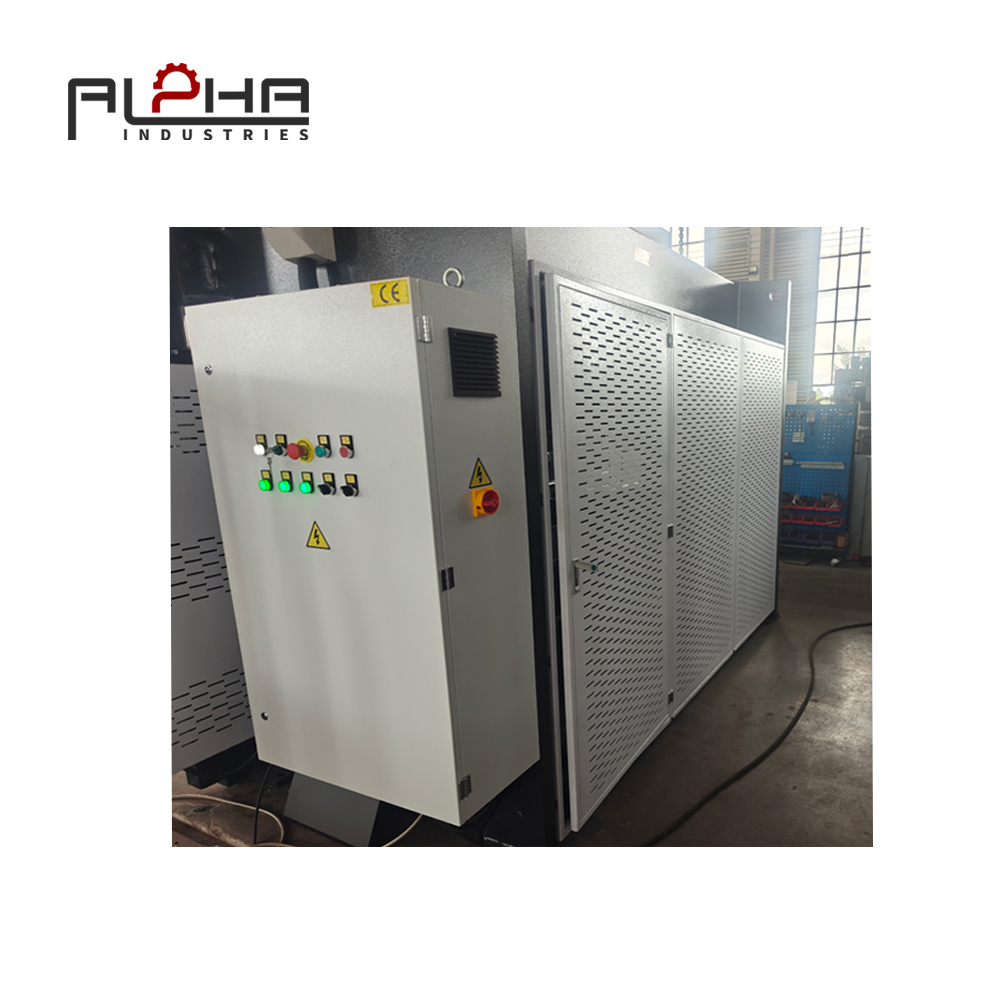
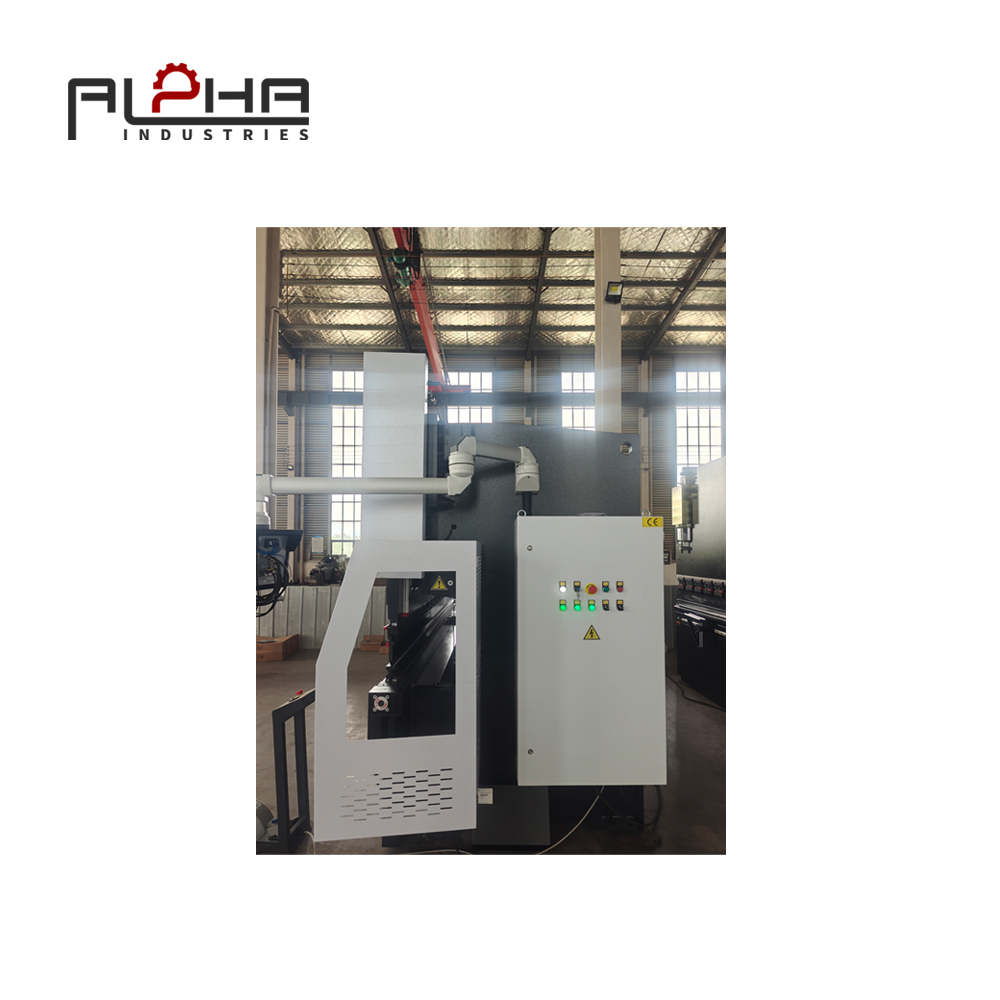
A practical machine design should support convenient operation, accessible controls, and appropriate safety protection.
For workshops with multiple operators, a user-friendly control system and standardized operating procedures can also help reduce differences between shifts.
A Practical Example: Improving Production Changeovers in a US Metal Fabrication Workshop
Consider a hypothetical US metal fabrication company producing customized electrical cabinet panels.
The workshop receives orders with different panel dimensions, flange lengths, and bending requirements.
Previously, operators prepared each new order individually. They reviewed drawings, selected tooling, entered bending parameters, adjusted the backgauge, and performed several test bends before production could begin.
As the number of customized orders increased, machine preparation became a bottleneck.
The company could improve its process through several practical changes.
First, frequently used tooling combinations could be documented and organized.
Second, CNC programs for repeat products could be stored under standardized product identification numbers.
Third, production planning could arrange jobs with similar tooling requirements together whenever delivery schedules allowed.
Fourth, first-piece inspection results could be recorded to support future repeat production.
Finally, operators could follow a consistent checklist before starting each new order.
These improvements do not depend on one advanced machine function alone. They combine suitable CNC press brake technology with better production organization.
The result is a more predictable changeover process, less repeated preparation work, and better use of available machine hours.
How ALPHA Supports Flexible Sheet Metal Bending Production
For US metal fabrication companies, choosing a press brake should involve more than comparing machine prices or maximum bending force.
The equipment should match the company's product range, order structure, production volume, and future manufacturing plans.
ALPHA provides metalworking machinery solutions for manufacturers looking to improve their sheet metal processing capabilities.
When evaluating a CNC press brake, important considerations include:
-
Required bending force and working length.
-
CNC controller and programming functions.
-
Backgauge axis configuration.
-
Machine structure and operating stability.
-
Tooling compatibility and application requirements.
-
Production flexibility and operator convenience.
Whether your business manufactures electrical enclosures, automotive components, industrial panels, construction products, or customized metal parts, selecting the appropriate bending equipment can help establish a more efficient production process.
ALPHA focuses on practical machinery configurations designed around different manufacturing applications.
Frequently Asked Questions About CNC Press Brake Setup Time
How can I reduce press brake setup time?
You can reduce setup time by organizing tooling, preparing CNC programs in advance, standardizing machine preparation procedures, and recording approved production settings for repeat orders.
Does a CNC press brake reduce operator workload?
A CNC press brake can reduce repeated manual programming and positioning adjustments. However, operators still need appropriate training in tooling selection, machine operation, safety, and quality inspection.
Why is setup time important in high-mix production?
When manufacturers process many different products in small batches, frequent job changes increase non-production time. Reducing setup time helps improve machine utilization and makes customized production more efficient.
Is a CNC press brake suitable for customized sheet metal orders?
Yes. CNC press brakes are suitable for many customized bending applications because they support programmable operations and adjustable positioning. Machine capacity and tooling must match the specific products.
What specifications should I consider when purchasing a CNC press brake?
Important specifications include bending force, working length, stroke, open height, CNC controller, backgauge configuration, tooling compatibility, and safety features.
Can CNC programming improve repeat production?
Yes. Storing and retrieving verified bending programs can reduce repeated programming work and help maintain consistent production settings for recurring orders.
How can manufacturers reduce trial bending?
Manufacturers should verify material specifications, bending calculations, tooling selection, and CNC parameters before production. Recording approved first-piece inspection results can also help improve future repeat orders.
Conclusion: Turn Faster Setup into a Competitive Advantage
In the US sheet metal fabrication industry, handling customized orders efficiently is becoming increasingly important.
For manufacturers operating in high-mix, low-volume environments, frequent tooling changes, repeated programming, and machine preparation can reduce available production time.
A properly configured CNC press brake, combined with standardized tooling management and organized production planning, can help address these challenges.
Rather than focusing only on bending speed, manufacturers should consider the entire changeover process when evaluating new equipment.
Reducing setup time means making better use of existing machine capacity, improving production flexibility, and responding more effectively to changing customer requirements.
Looking for a CNC press brake for your sheet metal fabrication business?
Explore ALPHA's machinery solutions and contact our team to discuss your production requirements.
Visit ALPHA:
Contact Us: