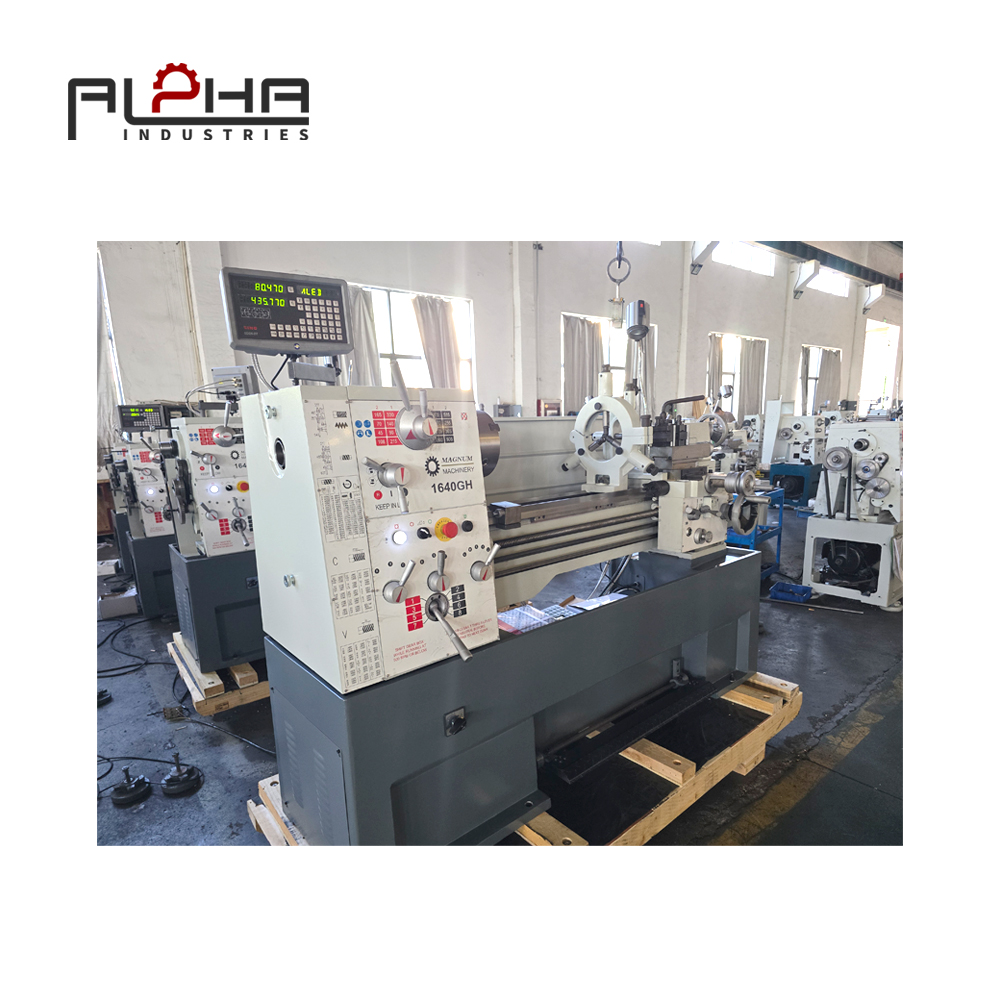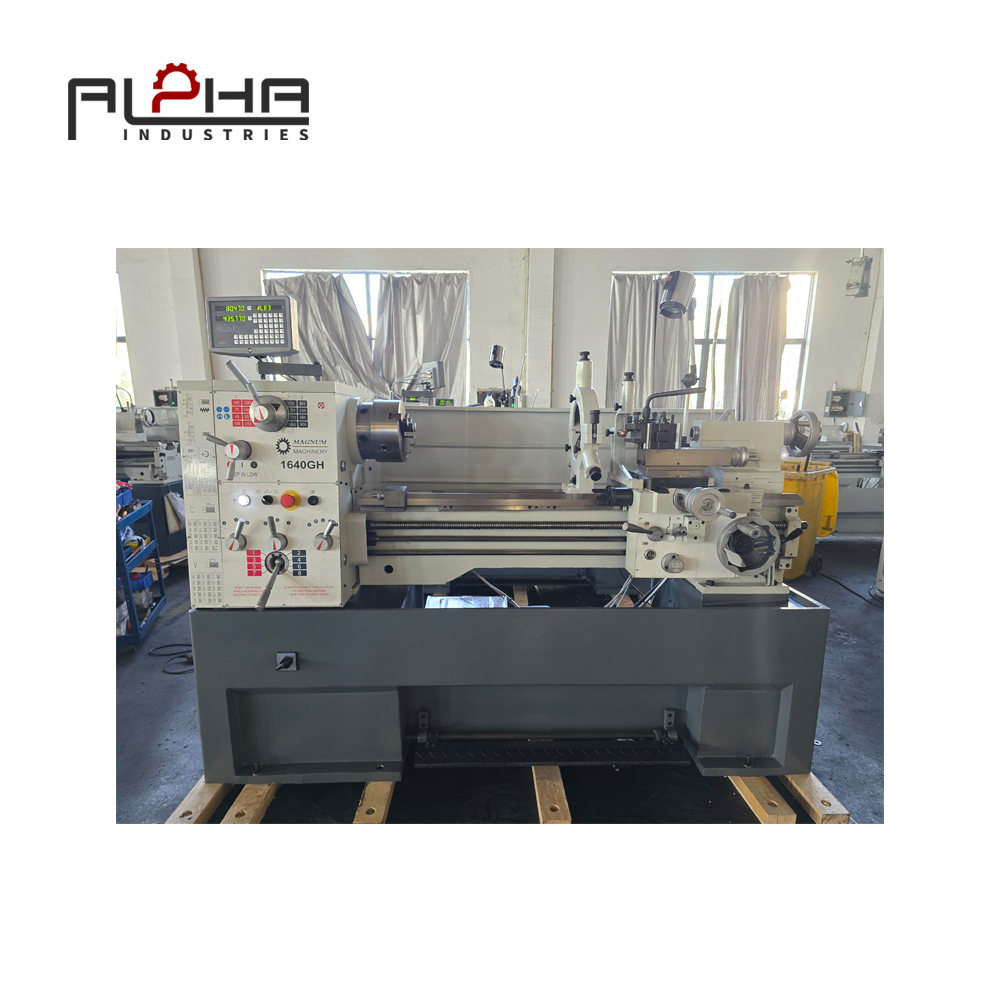


How the Right Lathe Helps American Machine Shops Reduce Setup Time and Labor Costs
For many manufacturers in the Americas, the biggest machining challenge is no longer simply how to cut metal.
The bigger question is:
How can a machine shop produce more parts with limited skilled labor while keeping production costs under control?
This question has become increasingly important for manufacturers in the United States, Canada, Mexico, and other markets throughout North and South America.
Machine shops are dealing with several pressures at the same time. Customers expect competitive pricing and shorter delivery times, while manufacturers need to maintain machining quality and production flexibility. At the same time, finding experienced machinists can be difficult, particularly for shops that handle a wide variety of components.
Under these conditions, investing in the right lathe machine can have a direct effect on production efficiency.
However, simply purchasing a lathe with a larger motor, higher spindle speed, or more advanced specifications does not automatically solve the problem.
For many small and medium-sized manufacturers, the more important issue is how efficiently the machine can be integrated into daily production.
This article focuses on one specific manufacturing challenge:
Reducing setup time and operator workload with the right lathe.
When this problem is addressed correctly, manufacturers can potentially improve machine utilization, reduce labor pressure, lower production costs, and respond more quickly to changing customer orders.
Why Setup Time Has Become a Major Cost for American Machine Shops
A machine can spend hours producing parts, but it can also spend significant time doing something that generates no finished product.
That is setup.
Typical setup activities may include:
-
Removing the previous workholding
-
Installing a new chuck or fixture
-
Aligning the workpiece
-
Installing cutting tools
-
Adjusting tool positions
-
Setting cutting parameters
-
Checking dimensions
-
Producing the first test part
-
Making corrections
-
Preparing inspection equipment
For high-volume production, these activities may represent only a small percentage of total production time.
But the situation is different for small-batch and high-mix manufacturing.
Imagine a machine shop receives ten different orders during one week. Instead of producing one component continuously, the operator may need to change from:
Shaft → Bushing → Pin → Sleeve → Threaded Component → Flange
Each transition creates additional setup work.
If every change requires extensive adjustment, the machine's productive time decreases.
Therefore, when choosing a lathe, manufacturers should not only ask:
"How fast can this machine cut?"
They should also ask:
"How quickly can this machine move from one job to the next?"
That question can have a significant impact on the actual cost per part.
The Real Cost of a Lathe Is More Than Its Purchase Price
A common purchasing mistake is comparing machines only according to their initial quotation.
| Cost Factor | Lower-Cost Machine | More Efficient Machine |
|---|---|---|
| Initial investment | Lower | Higher |
| Setup time | Potentially higher | Potentially lower |
| Operator involvement | Higher | Lower |
| Tool adjustment | More frequent | More standardized |
| Production flexibility | Limited | Higher |
| Downtime risk | Depends on support | Depends on support |
| Long-term productivity | Application dependent | Application dependent |
The important point is that the cheapest machine is not always the cheapest machine to operate.
For manufacturers in the Americas, labor can represent a significant portion of manufacturing expenses. If an operator spends a large amount of time preparing, adjusting, and checking a machine instead of producing components, the actual machining cost increases.
This is why manufacturers should evaluate total cost of ownership rather than purchase price alone.
A simple production-cost model is:
Cost per Part = Machine Cost + Labor Cost + Tooling Cost + Energy Cost + Setup Cost + Scrap Cost + Downtime Cost
Reducing setup time can therefore influence several areas simultaneously.
Choosing a Lathe Based on the Parts You Actually Produce
A good metal lathe should match the manufacturer's actual production requirements.
Before purchasing equipment, machine shops should analyze their existing production data.
Important questions include:
-
What is the average workpiece diameter?
-
What is the longest component normally produced?
-
What materials are commonly machined?
-
How many different components are produced each month?
-
What percentage of orders are small batches?
-
How frequently are jobs changed?
-
What operations are most commonly required?
-
How much operator intervention is normally required?
This information is more valuable than simply selecting a machine based on its maximum theoretical specifications.
For example, a shop producing many different medium-sized components may benefit more from a flexible and easy-to-set-up lathe than from an extremely large machine designed primarily for heavy-duty applications.
The objective should be:
Match machine capability to production reality.
Machine Rigidity Helps Reduce Rework and Operator Intervention
Setup time is only one part of the productivity equation.
Once production begins, machining stability also matters.
If a machine experiences excessive vibration during cutting, operators may need to repeatedly adjust:
-
Cutting speed
-
Feed rate
-
Tool position
-
Depth of cut
-
Workholding
-
Tool geometry
Excessive vibration can also affect surface finish and dimensional consistency.
A rigid industrial lathe can provide a more stable cutting platform, particularly when machining larger components or performing heavier cutting operations.
Machine rigidity depends on several elements, including:
-
Bed design
-
Machine weight
-
Headstock structure
-
Guideway construction
-
Spindle support
-
Tailstock structure
-
Overall machine assembly
A stable machine can make the cutting process more predictable.
That predictability is valuable because operators spend less time correcting unexpected machining problems.
Spindle Performance Should Match the Application
Spindle specifications are another important consideration.
Manufacturers should look beyond the maximum spindle speed.
The more useful question is:
Does the spindle provide the right combination of speed and torque for the materials and operations being performed?
Different applications require different cutting conditions.
A machine shop processing aluminum components may prioritize different spindle characteristics from a manufacturer machining steel shafts or larger industrial components.
Spindle power and torque can become particularly important during heavier cutting, while spindle speed can influence productivity during lighter machining operations.
The correct configuration should therefore be determined according to:
Material + Workpiece Size + Cutting Operation + Tooling + Production Volume
rather than simply choosing the highest available spindle specification.
Workholding Can Make or Break Setup Efficiency
Workholding is often overlooked during machine purchasing.
Yet every workpiece must be positioned and secured before machining can begin.
Depending on the application, manufacturers may use different:
-
Chucks
-
Collets
-
Fixtures
-
Centers
-
Faceplates
-
Soft jaws
-
Specialized workholding solutions
If changing between jobs requires extensive manual adjustment, setup time can increase considerably.
For high-mix production, manufacturers should therefore consider how easily the lathe can accommodate different workholding configurations.
A well-planned workholding strategy can help improve:
-
Setup consistency
-
Operator productivity
-
Part positioning
-
Repeatability
-
Job changeover speed
In many cases, improving the setup process can deliver greater productivity gains than simply increasing cutting speed.
Tooling Standardization Can Reduce Operator Workload
Tooling is another area where machine shops can lose valuable time.
When each job requires a completely different tooling arrangement, operators may spend significant time installing and adjusting tools.
A standardized tooling strategy can simplify production.
For example, manufacturers can establish commonly used tooling for:
-
Rough turning
-
Finish turning
-
Facing
-
Threading
-
Grooving
-
Parting
-
Boring
Standardization can make it easier for operators to prepare the machine for new jobs.
It can also make tool inventory management more straightforward.
For American machine shops dealing with multiple customer orders, reducing unnecessary variation in tooling can be particularly useful.
The Best Lathe for a Small-Batch Shop Is Not Necessarily the Fastest One
High spindle speed is often used as a selling point.
But speed is only useful when it contributes to actual production output.
Consider a shop producing small batches. If the machine can cut extremely quickly but requires a long setup for every new component, the productivity advantage may be reduced.
A more balanced production solution may provide:
-
Stable cutting
-
Convenient setup
-
Flexible workholding
-
Appropriate spindle performance
-
Easy tool adjustment
-
Reliable operation
This is particularly important for job shops and manufacturers producing customized industrial components.
The objective is not to maximize one specification.
The objective is to maximize useful production time.
Skilled Labor Shortages Make Machine Usability More Important
A highly experienced machinist can often compensate for machine limitations through experience.
But manufacturers cannot always depend on having one highly experienced operator available for every shift.
This makes machine usability increasingly important.
A practical lathe machine should allow operators to understand its basic functions clearly and perform common procedures consistently.
Manufacturers should consider:
Operator Access:
Can the operator easily access the work area?
Control Layout:
Are commonly used functions easy to locate?
Tool Adjustment:
Can tools be installed and adjusted efficiently?
Maintenance:
Can routine maintenance be performed without unnecessary disassembly?
Documentation:
Are operating instructions and technical documentation available?
These factors may appear minor when comparing machine specifications. However, they can have a meaningful effect on daily production.
Maintenance Downtime Can Destroy Productivity Gains
Even an efficient lathe cannot generate output when it is not running.
Unexpected downtime can create a chain reaction:
Machine Failure → Production Delay → Delivery Pressure → Overtime → Higher Labor Cost
This is why maintenance should be considered before purchasing a machine.
Manufacturers should ask suppliers:
-
What components require routine maintenance?
-
What is the recommended maintenance schedule?
-
Are replacement parts available?
-
How quickly can technical support respond?
-
What documentation is provided?
-
What warranty coverage is available?
-
What troubleshooting support is available?
A reliable supplier relationship can be just as important as the machine itself.
Why Production Flexibility Matters in the Americas
Manufacturing customers increasingly expect suppliers to handle changing requirements.
One month a machine shop may receive an order for shafts.
The next month it may need to produce:
-
Bushings
-
Pins
-
Rollers
-
Sleeves
-
Threaded parts
-
Hydraulic components
-
Agricultural machinery components
-
Industrial replacement parts
This means flexibility can be more valuable than specialization in some production environments.
A versatile turning machine can help a shop respond to a broader range of orders without requiring a completely different machine for every component type.
This can improve equipment utilization and reduce the need for excessive capital investment.
How to Calculate Whether a Lathe Can Actually Improve Productivity
Manufacturers can conduct a simple comparison before purchasing.
Assume an existing machine requires:
2 hours setup + 8 hours machining
for a particular production batch.
A new production solution reduces setup to:
1 hour setup + 7.5 hours machining
The machine has saved:
1.5 hours per batch.
If the shop performs 100 similar setups per year:
1.5 × 100 = 150 hours saved annually.
The actual financial benefit depends on labor rates, machine utilization, production volume, tooling, and other costs.
This demonstrates why setup efficiency deserves to be measured.
Instead of asking only:
"How much does this lathe cost?"
Manufacturers should ask:
"How many productive hours can this machine create over its service life?"
That is a much more useful purchasing question.
What American Buyers Should Include in a Lathe RFQ
When requesting a quotation, providing detailed information can help suppliers recommend a more appropriate configuration.
An effective RFQ should include:
Workpiece Information
-
Maximum diameter
-
Minimum diameter
-
Maximum length
-
Typical workpiece weight
-
Material type
Production Information
-
Annual production volume
-
Typical batch size
-
Number of different part types
-
Required production time
Machining Information
-
Turning
-
Facing
-
Threading
-
Boring
-
Grooving
-
Parting
-
Other required operations
Quality Requirements
-
Dimensional tolerances
-
Surface finish
-
Inspection requirements
Business Requirements
-
Target investment
-
Installation location
-
Delivery expectations
-
Training requirements
-
After-sales service requirements
The more information the supplier receives, the easier it becomes to recommend a suitable machine rather than simply providing a generic quotation.
ALPHA: Building the Lathe Selection Around Your Production Needs
At ALPHA, the focus should not be simply on selling a machine based on a specification sheet.
The more important objective is understanding the customer's actual production requirements.
For manufacturers in the Americas, different applications can require significantly different machine configurations.
A customer producing long shafts may prioritize one set of specifications. A repair shop may require another. A manufacturer producing small batches may place greater importance on flexibility and setup efficiency.
A heavy industrial manufacturer may prioritize rigidity, spindle torque, and cutting stability.
This is why machine selection should begin with the application.
ALPHA can work with customers to evaluate factors such as:
-
Workpiece dimensions
-
Material
-
Production volume
-
Machining operations
-
Required accuracy
-
Workholding
-
Tooling
-
Operator requirements
-
Maintenance expectations
The goal is to help customers select a lathe that fits their production environment rather than purchasing unnecessary specifications.
Frequently Asked Questions About Lathe Machines
What is the best lathe for a small machine shop?
The best lathe depends on the shop's workpiece size, materials, production volume, required accuracy, tooling, and available labor. For small machine shops, flexibility, ease of setup, reliability, and appropriate working capacity can be more important than maximum machine specifications.
How can a lathe reduce labor costs?
A suitable lathe can reduce labor costs by shortening setup time, simplifying tool changes, reducing manual adjustments, improving machining consistency, and allowing operators to spend more time on productive work.
Why is setup time important in lathe machining?
Setup time does not directly produce finished parts. For small-batch and high-mix production, frequent job changes can consume a significant amount of available machine and operator time.
Is a high-speed lathe always more productive?
No. Productivity depends on the complete machining process. Spindle speed should be matched with material, tooling, workpiece size, cutting conditions, setup time, and production volume.
How important is machine rigidity?
Machine rigidity is important because it can help reduce vibration and support stable cutting. Better stability can contribute to improved surface finish, tool life, dimensional consistency, and overall machining reliability.
What should I consider before buying a lathe?
Consider machine capacity, spindle performance, rigidity, workholding, tooling, accuracy, operator usability, maintenance, spare parts, technical support, production volume, and total cost of ownership.
How can a machine shop reduce lathe setup time?
Manufacturers can reduce setup time through standardized tooling, suitable workholding, organized job documentation, repeatable setup procedures, appropriate machine configuration, and careful planning of production sequences.
Should I choose a conventional lathe or another turning solution?
The answer depends on production volume, part complexity, operator requirements, automation needs, and budget. Conventional lathes can be useful for general machining, repair work, prototypes, and certain small-batch applications, while other turning solutions may be more appropriate for higher-volume or more automated production.
Final Takeaway
For manufacturers in the Americas, improving machining productivity does not always mean buying the fastest or most expensive machine.
In many cases, the bigger opportunity is to reduce non-productive time.
A lathe that provides suitable capacity, stable cutting performance, practical workholding, efficient tooling, reliable operation, and manageable setup procedures can help machine shops make better use of both their equipment and their workforce.
The key question should therefore be:
Can this lathe help my shop produce more valuable parts with the same amount of time and labor?
That question shifts the purchasing decision from machine price to production value.
For manufacturers facing small-batch production, frequent job changes, labor pressure, and increasing customer expectations, this approach can provide a more practical way to evaluate a new lathe machine.
Looking for a lathe solution for your production requirements? Contact ALPHA to discuss your workpieces, materials, production volume, and machining requirements.