

Why Machine Investment Decisions Matter for Colombian Fabricators
For metal fabrication companies in Colombia, purchasing a new industrial machine is a decision that affects production capacity, cash flow, and long-term competitiveness.
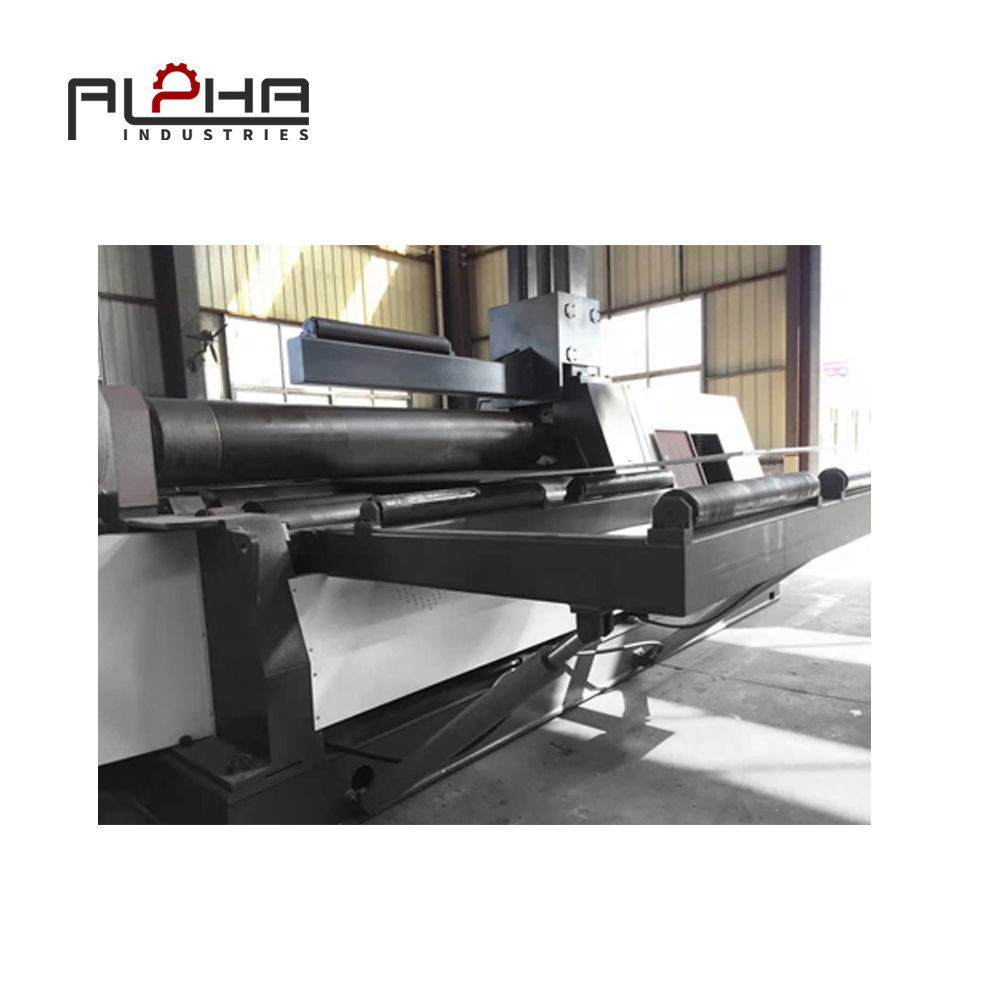
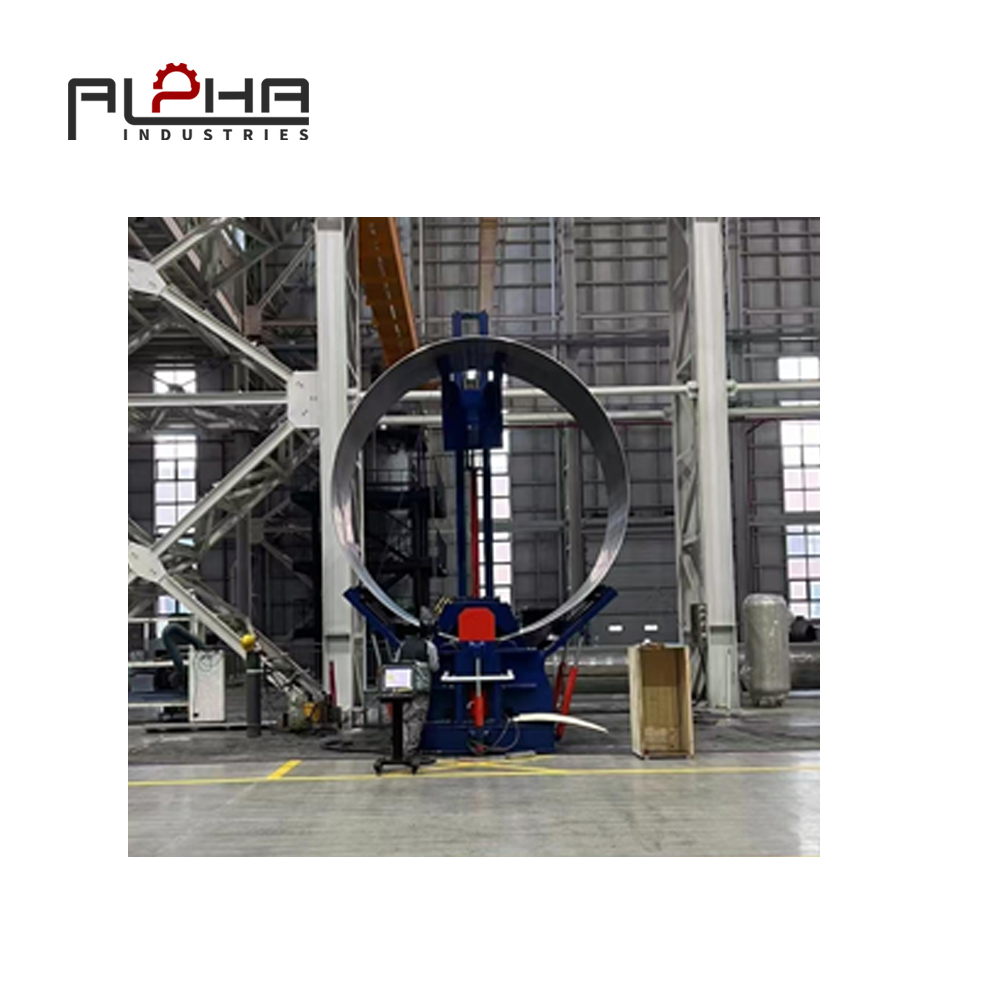
A 4-roller plate rolling machine can be an important investment for manufacturers producing cylindrical steel shells, storage tanks, industrial containers, structural components, and other rolled products. However, the right machine is not necessarily the one with the highest rated capacity or the most advanced configuration.
The real question is whether the machine matches the company's current workload and future business plans.
This consideration is particularly relevant in a market where manufacturers need to manage material costs, project uncertainty, and competitive pressure. Colombia's metalworking industry serves several downstream sectors, including construction, infrastructure, agriculture, and industrial equipment manufacturing. The Colombian government's investment information portal describes metalworking as a production chain covering raw materials, steel transformation, industrial products, and their use across multiple sectors.
At the same time, the Colombian steel industry has faced pressure from weaker domestic demand and international price competition. In July 2025, the Colombian National Association of Entrepreneurs (ANDI) highlighted the challenges facing local steel producers, including import competition and reduced demand from the construction sector.
For downstream fabricators, these conditions make investment planning especially important. A machine should improve the company's ability to complete profitable orders, not simply increase its theoretical production capacity.
This is where proper selection of a 4-roller plate rolling machine becomes essential.
Instead of purchasing equipment based only on maximum plate thickness, manufacturers should evaluate the relationship between machine capacity, typical workpieces, production frequency, and expected return on investment.
The Hidden Cost of Choosing the Wrong Machine Capacity
Machine capacity is one of the first specifications buyers consider. However, selecting equipment based only on the maximum thickness number can create two different problems.
An undersized machine may not meet the company's actual production requirements. An oversized machine may require more capital than necessary and remain underutilized for much of its operating life.
Both situations can affect profitability.
When the Machine Is Undersized
A machine with insufficient capacity may limit the types of orders a workshop can accept.
For example, a fabricator may regularly process medium-thickness carbon steel plates but occasionally receive orders involving thicker materials. If the machine cannot handle these jobs within its rated capacity, the company may need to outsource the forming operation or decline the order.
This can create several disadvantages:
-
Reduced flexibility when responding to customer requests
-
Dependence on external processing suppliers
-
Additional transportation and coordination
-
Less control over delivery schedules
-
Limited opportunities to expand into new product categories
The problem becomes more serious when thicker or wider plates are a regular part of the company's business rather than occasional exceptions.
When the Machine Is Oversized
Buying a machine with substantially more capacity than the workshop needs can also be inefficient.
A higher-capacity machine may involve a larger initial investment, greater space requirements, and different demands on foundations, lifting equipment, and material handling.
If most production consists of relatively light plates and small or medium-sized cylinders, the additional capacity may not generate enough extra business to justify the investment.
The key is to identify the machine specification that covers the company's real production range without paying unnecessarily for capacity that is unlikely to be used.
Start with Actual Workpieces, Not Maximum Capacity
A practical machine selection process should begin with the products a company manufactures.
Before requesting quotations, Colombian fabricators should review their previous orders and identify the workpieces that represent the largest share of production.
This information is more useful than estimating machine requirements from a single unusually large project.
Identify the Most Common Plate Thickness
Prepare a record of the plate thicknesses processed during a normal production period.
For example, a workshop may regularly roll plates in several thickness ranges, while thicker materials appear only occasionally.
The machine should be selected based on the frequency and importance of these jobs, while still considering any realistic future requirements.
Buyers should also distinguish between:
-
Maximum rolling thickness
-
Maximum pre-bending thickness
-
Material grade
-
Plate width
-
Required rolling diameter
These specifications are related, but they are not interchangeable.
A machine's rated rolling capacity does not automatically mean it can pre-bend the same thickness under identical conditions.
Determine the Actual Working Length
The working length determines the maximum plate width that can be processed within the machine's specified operating conditions.
A company producing wide storage tank shells may need a different machine configuration from a workshop manufacturing shorter cylindrical components.
Choosing an unnecessarily long machine can increase investment and occupy valuable floor space. Choosing a machine that is too short can prevent the company from accepting certain orders.
The best approach is to review the width of regular workpieces and identify the largest dimensions that are genuinely expected in future production.
Review the Required Cylinder Diameter
The minimum and maximum rolling diameters are equally important.
Some manufacturers mainly produce large-diameter tanks and cylindrical shells. Others manufacture smaller industrial components that require a tighter rolling radius.
The selected machine must be suitable for the required combination of plate thickness, material, and diameter.
Buyers should request the manufacturer's capacity chart and confirm whether the stated values apply to the actual material and forming conditions they intend to use.
Understand the Relationship Between Rolling Capacity and Pre-Bending Capacity
A 4-roller plate rolling machine is valued for its integrated plate clamping, pre-bending, and rolling process.
However, buyers should understand that rolling capacity and pre-bending capacity may differ.
What Is Rolling Capacity?
Rolling capacity describes the machine's ability to form a plate into a curved or cylindrical shape under specified conditions.
It depends on factors such as:
-
Plate thickness
-
Material strength
-
Working length
-
Required rolling diameter
-
Roller dimensions
-
Machine structure and available forming force
The capacity should always be evaluated using the manufacturer's technical data.
What Is Pre-Bending Capacity?
Pre-bending capacity refers to the machine's ability to form the plate ends before the main rolling operation.
This step is important because the ends of a flat plate can remain relatively straight if they are not properly pre-bent.
For tank shells and cylindrical components, excessive straight-edge sections may create difficulties when matching the two ends before welding.
A machine with suitable pre-bending capability can help reduce these unformed sections and simplify the forming sequence.
However, the result depends on the machine's geometry, roller arrangement, material properties, and required diameter.
Why Buyers Should Check Both Figures
Imagine a workshop that regularly rolls plates of a certain thickness but also needs to pre-bend those plates before forming the complete cylinder.
If the machine's advertised maximum thickness refers only to rolling capacity, the buyer may discover that the pre-bending requirement exceeds the machine's rated capability.
This can lead to additional processing steps or limitations in production.
For this reason, ALPHA recommends evaluating rolling and pre-bending capacity separately when comparing four-roll plate rolling machines.
Calculate Machine Utilization Before Increasing Investment
A machine's theoretical capacity is not the same as its actual contribution to business performance.
A workshop may purchase a high-capacity machine but use only a small part of its available operating time or production range.
To make a more informed decision, manufacturers should estimate how frequently the machine will be used and what types of orders it will process.
Understand Productive Operating Time
Machine utilization can be considered by comparing the time the equipment is productively used with the time it is available for operation.
A simple utilization formula is:
Machine Utilization (%) = Productive Operating Hours ÷ Available Operating Hours × 100
For example, if a machine is available for 160 hours in a month and is used productively for 96 hours, its utilization rate is 60%.
This figure does not automatically determine whether the investment is profitable. It is a management indicator that should be considered alongside order value, labor, maintenance, material costs, and other operating expenses.
Separate Productive Work from Waiting Time
When evaluating current production, manufacturers should identify how much time is spent on:
-
Actual plate rolling
-
Plate loading and unloading
-
Machine setup and adjustment
-
Waiting for material
-
Waiting for lifting equipment
-
Quality inspection
-
Maintenance and downtime
This helps identify whether the real production limitation is machine capacity or the surrounding workflow.
For example, if a workshop has sufficient forming capacity but frequently waits for plates to arrive from the cutting department, purchasing a larger rolling machine may not solve the main problem.
The company may benefit more from improving production planning and material flow.
Estimate Future Demand Conservatively
Future orders are important, but purchasing decisions should not rely entirely on optimistic forecasts.
A more practical approach is to prepare several demand scenarios:
Current Production Scenario: What machine capacity is required for confirmed and recurring orders?
Expected Growth Scenario: What additional capacity may be needed if regular customers increase their orders?
Expansion Scenario: What new product categories or larger workpieces does the company realistically plan to manufacture?
This approach helps buyers distinguish between necessary capacity and speculative investment.
Why Machine Configuration Matters More Than a Single Specification
Two four-roll plate rolling machines may have similar nominal thickness ratings but different configurations.
These differences can affect their suitability for a particular workshop.
Roller Diameter and Structural Rigidity
The roller system must withstand the forces generated during forming.
Roller dimensions, material, support structure, bearings, and frame rigidity all influence machine performance.
When processing thicker plates or higher-strength materials, buyers should pay particular attention to the machine's structural design.
It is not enough to compare only the motor power or maximum plate thickness.
Hydraulic System
Hydraulic systems are commonly used to control roller movement and provide the force required for forming operations.
When comparing machines, buyers should review the hydraulic configuration, control method, and maintenance requirements.
The hydraulic system should be suitable for the machine's intended workload and the workshop's operating environment.
Control System
The required level of automation depends on production complexity.
A workshop processing relatively simple workpieces may find an NC control system sufficient.
A company handling frequent repeat orders, multiple forming programs, and more complicated production requirements may benefit from a CNC configuration.
Buyers should compare actual functions rather than assuming that a more advanced controller is always the better investment.
Important points include:
-
Number of controlled axes
-
Roller positioning accuracy
-
Position feedback
-
Program storage
-
Manual and automatic operating modes
-
Repeat-production functions
-
Ease of operation
-
Availability of technical support and training
The control system should support the company's production process without introducing unnecessary complexity.
Consider Workshop Space and Supporting Equipment
Machine selection should include the surrounding workshop layout.
A four-roll plate rolling machine needs sufficient space for loading, forming, unloading, and removing completed workpieces.
This becomes especially important when producing large cylindrical shells.
Check the Complete Machine Footprint
Do not evaluate only the machine's overall dimensions.
The workshop should also consider:
-
Space required for plate loading
-
Clearance for lifting equipment
-
Space for finished cylindrical products
-
Operator working areas
-
Maintenance access
-
Movement between cutting, rolling, and welding departments
A machine that fits into the available floor area may still create operational difficulties if there is insufficient room to handle the workpieces.
Evaluate Lifting and Material Handling
Depending on plate dimensions and weight, the workshop may need an overhead crane, forklift, or other suitable lifting equipment.
The capacity and arrangement of these devices should match the materials being processed.
The machine itself is only one part of the production system. If the workshop cannot move plates efficiently to and from the machine, the expected production benefits may not be achieved.
Plan the Connection with Other Processes
Plate rolling is often part of a larger manufacturing sequence.
A typical workflow may include:
-
Plate cutting
-
Edge preparation
-
Plate loading
-
Pre-bending
-
Rolling
-
Dimensional inspection
-
Welding and assembly
The position of the rolling machine should support a logical material flow.
Reducing unnecessary movement between departments can help the workshop use its available floor space more effectively.
Choosing Between Manual, NC, and CNC Control
The control system is an important part of the machine investment decision.
However, the most advanced control option is not necessarily the most economical choice for every business.
Manual Operation
Manual control may be suitable for workshops with relatively simple forming requirements and low production volumes.
It can provide a straightforward operating approach, although the final result may depend more heavily on operator experience and adjustment procedures.
NC Control
NC control can provide more structured control of machine movements and is often considered by manufacturers that want to improve operating convenience without adopting a more complex CNC configuration.
The actual functions vary by machine model.
CNC Control
CNC control may be appropriate for workshops with more demanding production requirements.
Depending on the configuration, it can support programmed roller movements, stored forming parameters, and more repeatable production procedures.
This can be valuable when the same types of cylindrical products are manufactured regularly.
How to Make the Right Decision
Before selecting a control system, ask:
-
How many different workpiece specifications are processed each month?
-
Are production orders repeated frequently?
-
Do operators need to reproduce previous forming programs?
-
How much setup time is currently required?
-
Does the company have personnel who can operate and maintain the selected system?
-
Will the additional automation functions create measurable production value?
The answers help determine whether manual, NC, or CNC control is the most suitable option.
A Practical Investment Checklist for Colombian Buyers
Before purchasing a 4-roller plate rolling machine, manufacturers should prepare a technical and commercial checklist.
|
Evaluation Area |
Information to Confirm |
Why It Matters |
|---|---|---|
|
Plate thickness |
Common and maximum thickness |
Determines required forming capacity |
|
Pre-bending |
Required pre-bending thickness |
Helps avoid capacity limitations |
|
Working length |
Maximum plate width |
Defines workpiece size range |
|
Material |
Carbon steel, stainless steel, or other grades |
Influences forming force and springback |
|
Rolling diameter |
Minimum and maximum required diameter |
Confirms product compatibility |
|
Roller system |
Roller diameter and structural design |
Supports machine suitability |
|
Control system |
Manual, NC, or CNC |
Matches automation to production needs |
|
Workshop layout |
Machine footprint and operating clearance |
Prevents installation problems |
|
Handling equipment |
Crane, forklift, and support requirements |
Supports material movement |
|
Service |
Installation, training, and spare parts |
Helps maintain long-term operation |
A complete evaluation should also include the machine's electrical requirements, foundation recommendations, delivery conditions, installation arrangements, and available technical documentation.
For international purchases, buyers should clarify what is included in the quotation and which services are available before placing an order.
Common Purchasing Mistakes to Avoid
A machine investment can become more expensive than expected when important production details are overlooked.
The following mistakes are worth avoiding.
Selecting a Machine Only by Maximum Thickness
Maximum thickness is important, but it does not describe the entire forming range.
Buyers must also check pre-bending capacity, working length, material grade, and rolling diameter.
Ignoring the Most Frequently Processed Workpieces
A machine should be selected around the company's regular production requirements.
Occasional oversized workpieces should be considered, but they should not automatically determine the entire investment unless they represent a realistic business opportunity.
Choosing Automation Without Evaluating Operator Capability
An advanced control system may provide useful functions, but operators need appropriate training.
The company should consider whether it can support the selected system in daily production.
Forgetting Installation and Handling Requirements
A machine may meet all technical requirements but still be unsuitable for the workshop if there is insufficient floor space or lifting capacity.
Installation planning should therefore be completed before delivery.
Comparing Quotations Without Comparing Configurations
A lower quotation does not necessarily represent better value.
Different suppliers may offer different roller dimensions, control systems, hydraulic configurations, accessories, and service arrangements.
Buyers should compare machines using the same workpiece specifications and technical requirements.
How ALPHA Helps Manufacturers Evaluate Plate Rolling Requirements
For metal fabrication companies in Colombia, choosing a 4-roller plate rolling machine should be a production decision supported by actual technical information.
The most suitable machine is not automatically the largest or most expensive model. It is the configuration that can handle the company's intended materials, dimensions, and production workload while supporting future business development.
ALPHA focuses on metalworking machinery solutions for industrial manufacturing and fabrication applications.
When evaluating a plate rolling machine, it is useful to provide the following information:
-
Material type and grade
-
Maximum and commonly used plate thickness
-
Required pre-bending thickness
-
Maximum plate width
-
Minimum and maximum rolling diameter
-
Expected production volume
-
Preferred control system
-
Workshop power supply and installation conditions
With these details, the machine configuration can be evaluated against the actual application instead of relying on a general capacity estimate.
A carefully selected 4-roller plate rolling machine can help Colombian manufacturers establish a more suitable production capacity, avoid unnecessary investment, and make better use of their workshop resources.
Contact ALPHA
Looking for a suitable 4-roller plate rolling machine for your production requirements? Contact ALPHA to discuss your workpiece specifications and machine configuration.
Contact Us: https://alpha-cnc.com/contact-us