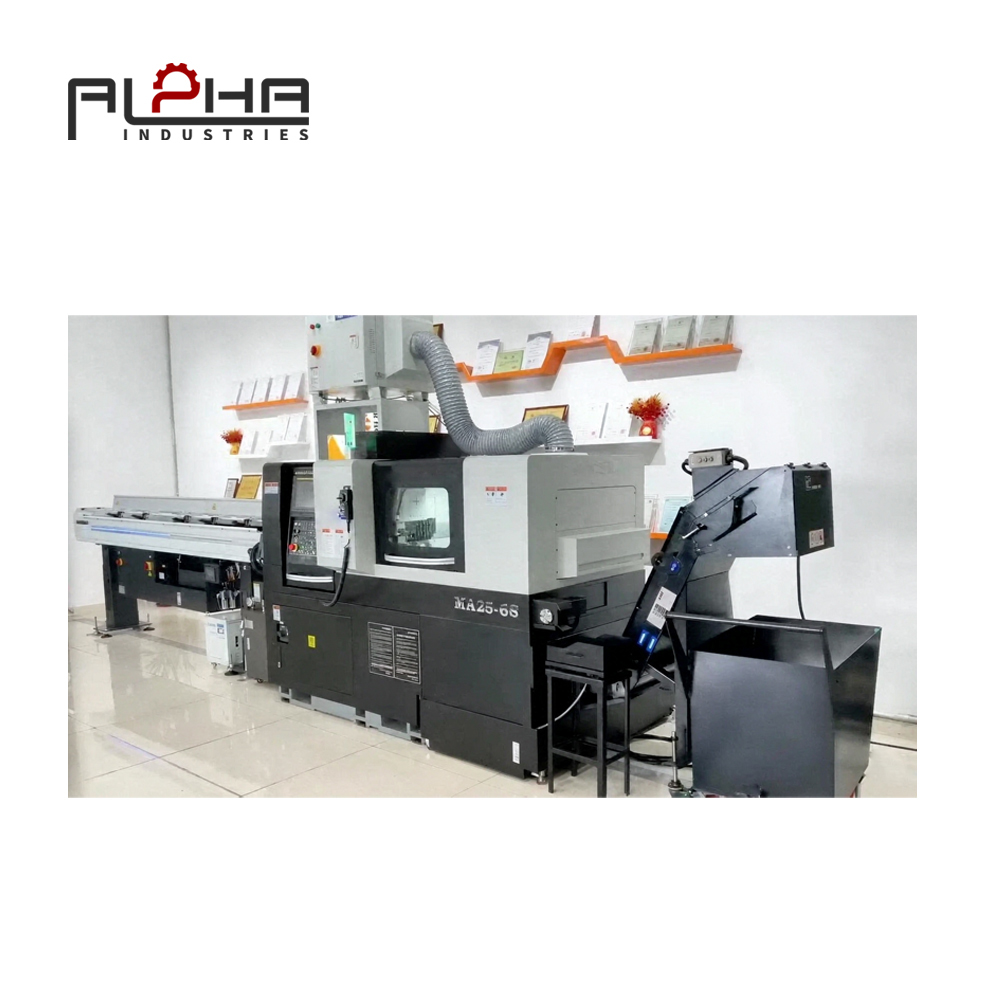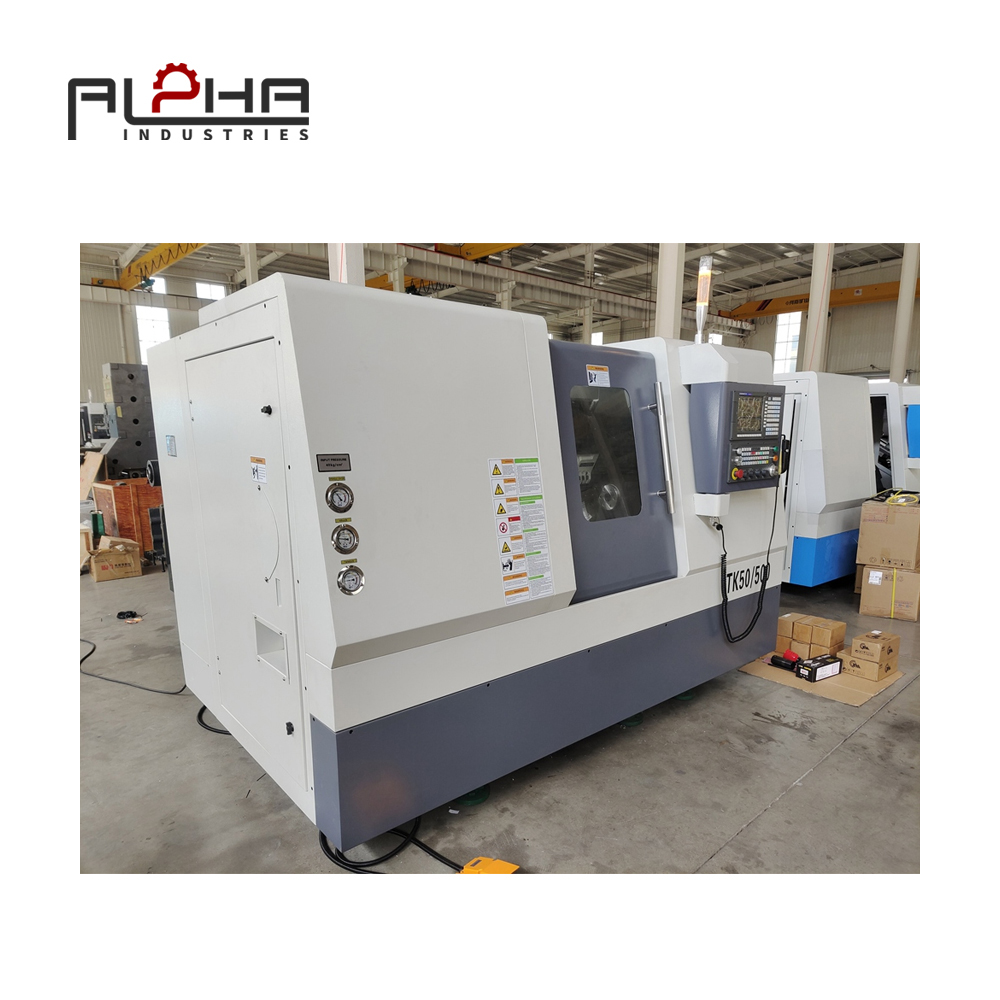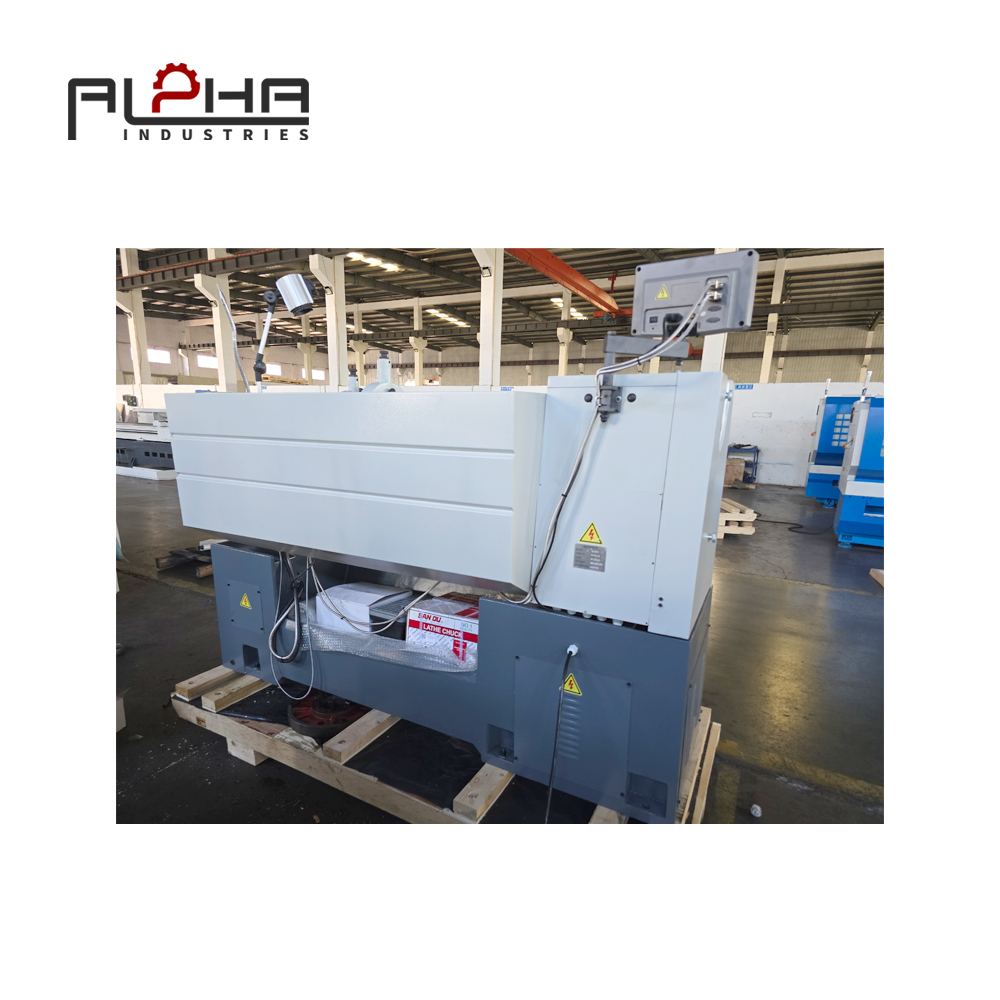


Lathe Machine Scrap Reduction: Why Material Waste Is Becoming a Major Manufacturing Problem Across the Americas
For manufacturers across North America, Central America, and South America, controlling raw material costs has become increasingly important.
Steel, stainless steel, aluminum, brass, and other industrial materials represent a significant part of total manufacturing costs.
When a machined component is rejected because of dimensional errors, poor surface finish, incorrect threads, or setup mistakes, the loss is not limited to the material itself.
The manufacturer may also lose:
-
Machine time
-
Cutting tools
-
Labor costs
-
Energy
-
Production capacity
-
Delivery time
For high-value materials or large workpieces, a single rejected part can create a significant financial loss.
This is why material waste reduction has become an important manufacturing objective.
For companies using lathe machines, one key question is becoming increasingly relevant:
How can manufacturers reduce scrap without slowing down production?
The answer requires more than simply inspecting parts more frequently. It requires a more stable and repeatable turning process.
Modern CNC lathe machines can play an important role in helping manufacturers reduce variation and improve first-pass production quality.
The Real Cost of Scrap Is Higher Than the Price of Raw Material
Many manufacturers calculate scrap costs based on the value of the rejected material.
However, the true cost is usually much higher.
Consider a metal component that goes through several stages:
Raw Material → Cutting → CNC Turning → Secondary Machining → Inspection
If the part fails during final inspection, the manufacturer may lose the value added at every previous stage.
The rejected part may already include:
-
Raw material
-
Machine setup
-
Rough turning
-
Finish turning
-
Threading
-
Tool wear
-
Operator time
-
Inspection time
In addition, the machine capacity used to produce the rejected part cannot be recovered.
This creates a hidden cost.
For manufacturers operating with limited machine capacity, scrap directly reduces profitability and available production time.
Why Turning Operations Produce Material Waste
Material waste in turning operations can occur for many reasons.
Understanding these causes is the first step toward reducing them.
Incorrect Machine Setup
A small setup error can affect an entire production batch.
Common problems include:
-
Incorrect work offsets
-
Incorrect tool offsets
-
Improper workpiece positioning
-
Incorrect chuck pressure
-
Tool alignment errors
If the problem is not detected quickly, multiple parts may be produced incorrectly, creating significant material losses.
Cutting Parameter Errors
Incorrect machining parameters may result in:
-
Poor surface finish
-
Excessive tool wear
-
Dimensional variation
-
Workpiece deformation
-
Unstable cutting
Selecting appropriate cutting parameters is essential for both productivity and quality.
Tool Wear
Cutting tools gradually wear during production. As wear increases, machining results may change.
Possible problems include:
-
Poor dimensional accuracy
-
Rough surface finishes
-
Incorrect thread profiles
-
Increased cutting forces
If tools are not monitored properly, worn tools can produce multiple defective parts before the problem is identified.
Workholding Problems
The workpiece must remain stable during machining.
Poor clamping can result in:
-
Runout
-
Vibration
-
Part movement
-
Dimensional errors
Workholding should therefore be considered part of the complete machining process.
How CNC Lathe Machines Help Reduce Material Waste
A modern CNC lathe provides greater process control compared with traditional manual machining.
Once a machining process is correctly developed, CNC programming allows the machine to repeat defined movements consistently.
This can reduce variation between parts.
1. Repeatable CNC Machining Reduces Human Variation
Manual turning depends heavily on operator control.
Different operators may use slightly different:
-
Feed rates
-
Tool positions
-
Cutting techniques
-
Measurement methods
A CNC lathe follows programmed machining instructions and can repeatedly control:
-
Tool movement
-
Spindle speed
-
Feed rate
-
Cutting sequence
-
Machining dimensions
This repeatability helps reduce unnecessary variation, particularly for manufacturers producing large batches of similar parts.
2. Accurate Positioning Supports First-Pass Quality
One of the most effective ways to reduce scrap is to produce a correct part the first time.
This is often described as improving first-pass yield.
A properly configured CNC lathe helps maintain accurate positioning during machining operations.
This is particularly important for components requiring:
-
Tight diameters
-
Multiple steps
-
Precision threads
-
Grooves
-
Bores
When positioning is stable and repeatable, manufacturers can reduce the number of parts requiring correction or rejection.
3. Stored Programs Reduce Repeated Setup Errors
CNC programs can be stored and reused for repeat production.
Instead of manually developing the machining process every time an order returns, manufacturers can use documented programs and setup procedures.
This can reduce the risk of:
-
Programming mistakes
-
Incorrect machining sequences
-
Inconsistent settings
However, manufacturers should always verify programs and setup conditions before production.
4. Automated Tool Management Improves Process Consistency
Many CNC lathe machines use tool turret systems that allow multiple tools to be installed and selected automatically.
A standardized tool setup can reduce manual tool positioning errors.
Typical operations include:
-
Facing
-
Rough turning
-
Finish turning
-
Grooving
-
Threading
-
Drilling
-
Boring
Reducing unnecessary manual intervention helps create a more controlled process.
Material Waste and the Importance of First-Pass Yield
The most efficient manufacturing process is not necessarily the process with the fastest cutting speed.
A production process that operates extremely fast but produces a high number of rejected parts may actually be less profitable.
Manufacturers should focus on:
Good Parts Produced Per Hour
rather than simply:
Parts Produced Per Hour
For example, a machine produces 100 parts per hour with a 5% rejection rate, while another machine produces 95 parts per hour with a 1% rejection rate.
The second process may produce more acceptable components while consuming less material.
Therefore, productivity should always be evaluated together with quality.
How Process Stability Reduces Scrap
Process stability means the machining process produces consistent results over time.
A stable process requires control over several factors.
Machine Stability
The machine structure must support the required cutting conditions.
Excessive vibration can affect:
-
Surface finish
-
Tool life
-
Dimensional accuracy
Tooling Stability
The correct cutting tool must be selected for:
-
Material
-
Cutting speed
-
Operation type
Tool quality and proper installation are important for consistent results.
Workholding Stability
The workpiece must be securely positioned.
Workholding problems can create variation even when the CNC program is correct.
Cutting Condition Stability
Cutting parameters should remain within an appropriate range.
Sudden changes in material or tooling conditions may affect machining results.
The Americas Manufacturing Challenge: Higher Material Costs and Tighter Margins
Manufacturers across the Americas are competing in markets where customers continue to demand competitive prices.
At the same time, production costs can increase because of:
-
Raw material price fluctuations
-
Energy costs
-
Labor expenses
-
Transportation costs
-
Tooling costs
When profit margins are tight, excessive material waste becomes difficult to accept.
Manufacturers cannot always increase prices to compensate for internal production losses.
Instead, they must improve efficiency.
Reducing scrap is one of the most direct ways to improve profitability because manufacturers can produce more acceptable parts from the same production resources.
A reliable lathe machine can support this objective by helping create a more consistent turning process.
Reducing Scrap During CNC Lathe Setup
The first parts produced after a machine setup can be especially important.
Manufacturers should establish a structured setup process.
Step 1: Verify the Workpiece
Confirm:
-
Material type
-
Material dimensions
-
Initial condition
Step 2: Verify Workholding
Check:
-
Clamping position
-
Chuck condition
-
Workpiece stability
Step 3: Verify Tools
Confirm:
-
Correct tool selection
-
Tool condition
-
Tool positioning
Step 4: Verify CNC Program
Check:
-
Program version
-
Tool offsets
-
Work offsets
-
Machining sequence
Step 5: Inspect the First Part
Measure critical dimensions before continuing full production.
This process can help prevent a setup error from creating a large number of rejected components.
Automation Can Help Improve Material Utilization
Automation is often discussed as a way to increase production speed.
However, automation can also help reduce material waste.
Automated systems can provide more consistent:
-
Workpiece positioning
-
Loading procedures
-
Production cycles
For high-volume turning, options may include:
-
Bar feeders
-
Automatic loaders
-
Robotic systems
-
Automatic part collection
The objective is not simply to automate every process. The objective is to reduce unnecessary variation.
Choosing the Right Lathe Machine for Scrap Reduction
Manufacturers should select a machine based on actual production requirements.
Important factors include:
Required Accuracy
The machine should provide sufficient positioning and repeatability for the required part tolerances.
Workpiece Size
Consider:
-
Maximum turning diameter
-
Maximum machining length
-
Workpiece weight
The machine should support the component without creating unnecessary setup difficulties.
Material Type
Different materials require different machining conditions.
Machine configuration should match the materials being processed.
Production Volume
Higher-volume production may benefit from:
-
Automation
-
Tool monitoring
-
Standardized workholding
Lower-volume production may prioritize flexibility.
Flat Bed and Slant Bed CNC Lathes: Matching the Machine to the Application
Different lathe configurations can support different production requirements.
Flat Bed CNC Lathe
A flat bed CNC lathe can provide flexibility and stable performance for many general turning applications.
It may be suitable for:
-
General-purpose turning
-
Larger workpieces
-
Flexible production
Slant Bed CNC Lathe
A slant bed CNC lathe is often selected for more automated production environments.
Potential advantages can include:
-
Efficient chip removal
-
Tool turret integration
-
Faster production cycles
-
Automation compatibility
The best choice depends on the workpiece and production requirements.
How Alpha Helps Manufacturers Reduce Turning Waste
Alpha provides lathe and CNC turning solutions for manufacturers with different machining requirements.
Reducing material waste begins with understanding the customer's production process.
Before selecting a lathe solution, manufacturers should consider:
-
Workpiece design
-
Material type
-
Required tolerances
-
Production volume
-
Machining operations
-
Automation requirements
Alpha can help evaluate machine configurations that support stable and repeatable turning operations.
The objective is not simply to increase machining speed.
It is to help manufacturers produce more acceptable components with fewer unnecessary losses.
For companies across the Americas facing rising material costs, improving process consistency can become an important long-term competitive advantage.
Quick Answers About CNC Lathe Scrap Reduction
How can a CNC lathe reduce material waste?
A CNC lathe can reduce material waste through repeatable machining movements, accurate positioning, standardized programs, and consistent production processes.
What causes scrap in turning operations?
Common causes include incorrect machine setup, worn tools, poor workholding, incorrect cutting parameters, programming errors, and inconsistent machining processes.
What is first-pass yield in CNC machining?
First-pass yield refers to the percentage of parts produced correctly without requiring rework or rejection during the initial manufacturing process.
Can automation reduce machining scrap?
Automation can help reduce variation in workpiece handling and production cycles, which may improve consistency and reduce certain process-related errors.
Is faster machining always more profitable?
No. A faster process that creates excessive scrap can increase overall costs. Manufacturers should focus on producing acceptable parts efficiently and consistently.
Frequently Asked Questions About Lathe Machines
What is a lathe machine used for?
A lathe machine rotates a workpiece while cutting tools perform operations such as turning, facing, threading, grooving, drilling, and boring.
What is the difference between a manual lathe and a CNC lathe?
A manual lathe relies heavily on direct operator control, while a CNC lathe uses programmed instructions to control machine movement and machining operations.
Can CNC lathes improve machining consistency?
Yes. CNC lathes can repeat programmed machining sequences and help reduce variation caused by manual operation.
What materials can be machined on a lathe?
Depending on the machine and tooling, lathes can machine materials such as steel, stainless steel, aluminum, brass, and various industrial alloys.
How can manufacturers reduce CNC machining waste?
Manufacturers can reduce waste by improving machine setup, monitoring tools, using stable workholding, verifying CNC programs, and inspecting the first part before full production.
Material Efficiency Is Becoming a Competitive Advantage
For manufacturers across the Americas, controlling material waste is becoming increasingly important.
Raw materials represent a major production cost.
When valuable material is converted into scrap, the manufacturer loses more than the material itself.
The company also loses:
-
Machine capacity
-
Tool life
-
Labor
-
Energy
-
Production time
A modern CNC lathe machine can help manufacturers create a more stable and repeatable turning process.
By improving programming consistency, positioning accuracy, tooling management, and process control, manufacturers can reduce unnecessary variation and improve first-pass production quality.
The goal is not simply to machine faster.
The goal is to produce more acceptable parts from the same materials, machines, and labor resources.
For companies seeking stronger profitability and better production control, reducing machining scrap can become one of the most effective operational improvements.
Explore Alpha Lathe Machine Solutions
Looking for a reliable Lathe Machine or CNC Lathe to improve machining consistency and reduce material waste?
Alpha can help evaluate a suitable turning solution based on your:
-
Workpiece dimensions
-
Material type
-
Required tolerances
-
Machining operations
-
Production volume
-
Automation requirements
Contact Us to discuss your turning application and find a suitable CNC lathe solution for your manufacturing operation.