

Why the Skilled Labor Shortage Is Becoming a Major Challenge for Lathe Operations Across the Americas
Across North America, Central America, and South America, manufacturers are facing a growing challenge: finding and retaining experienced machining professionals.
For companies operating lathe machines, this problem can be particularly serious.
Traditional turning operations often depend on skilled machinists who understand:
- Cutting parameters
- Tool selection
- Workpiece clamping
- Spindle speed
- Feed rate
- Machining sequences
- Dimensional inspection
- Surface finish requirements
An experienced operator can quickly identify machining problems and make adjustments based on practical knowledge.
However, when experienced machinists retire, change jobs, or become difficult to recruit, manufacturers can face a serious gap in production capability.
The challenge is not simply hiring more workers.
The challenge is finding workers with the knowledge required to produce precision components consistently.
For many manufacturers across the Americas, this has created a growing interest in CNC lathe machines and automated turning technology.
The objective is clear:
Reduce dependence on individual operator experience while maintaining productivity and machining quality.
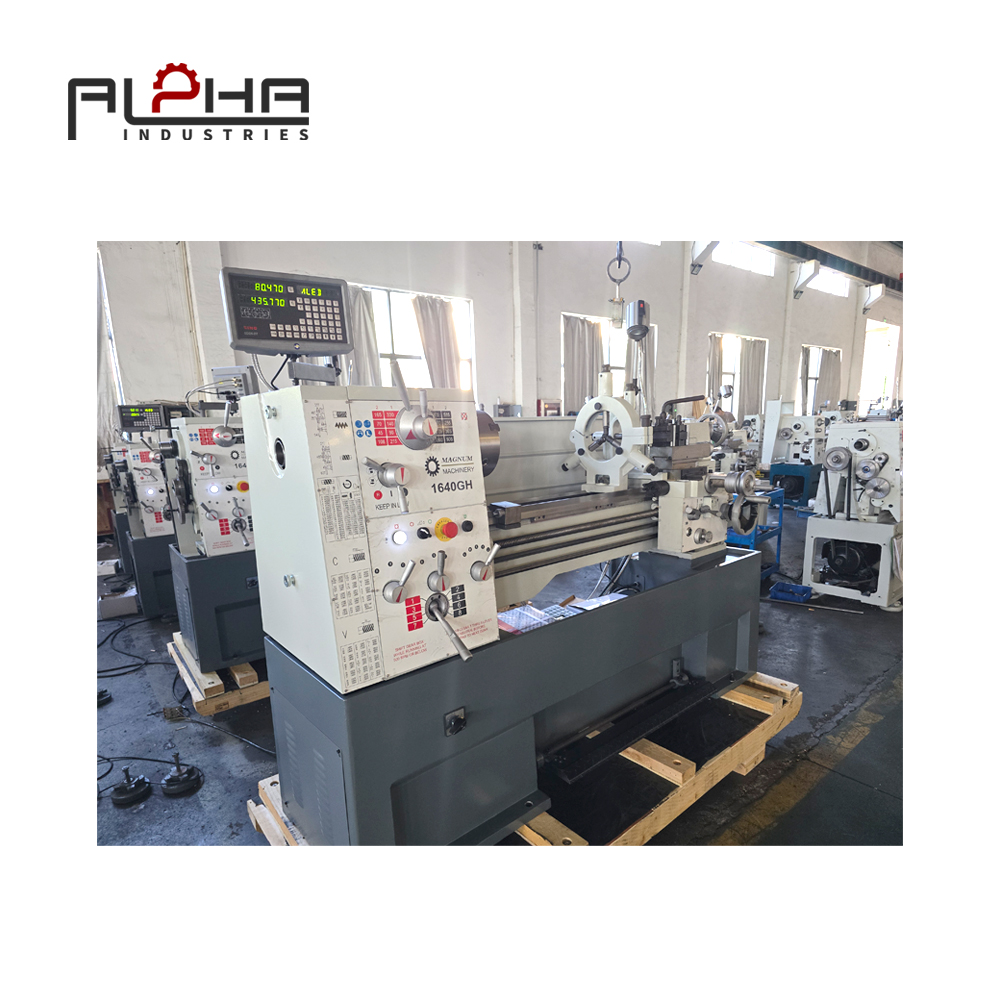
The Hidden Cost of Depending Too Heavily on Skilled Manual Operators
Many factories still operate successfully with conventional manual lathes.
For certain applications, manual machines remain practical and cost-effective.
However, heavy dependence on highly skilled operators can create several long-term production risks.
Production Knowledge Becomes Concentrated in Individuals
In traditional machining environments, important production knowledge may exist primarily in the experience of a few operators.
These individuals may know:
- Which cutting parameters work best
- How to correct machining deviations
- How to reduce vibration
- How to achieve better surface finish
- How to set up difficult workpieces
When an experienced operator is unavailable, production performance may change significantly.
This creates risks for manufacturers that depend on consistent delivery and repeatable quality.
Training New Operators Takes Time
Turning is not simply about starting a machine.
New operators must learn:
- Machine safety
- Workpiece setup
- Tool positioning
- Measurement methods
- CNC programming principles
- Cutting behavior
- Quality control
Training requires time and resources.
During the training process, manufacturers may experience:
- Lower productivity
- Higher scrap rates
- More supervision requirements
- Increased setup time
For companies already facing delivery pressure, extended training periods can create additional challenges.
Labor Shortages Can Limit Production Growth
A manufacturer may have strong customer demand but still be unable to increase production.
Why?
Because additional machines alone do not solve the problem if there are not enough qualified operators available.
This creates a production bottleneck.
The factory may have:
- Available floor space
- New customer orders
- Sufficient raw materials
- Additional machine capacity
But without enough skilled labor, production expansion becomes difficult.
This is one of the reasons why manufacturers are increasingly investing in CNC technology.
How Modern CNC Lathe Machines Reduce Operator Dependency
A CNC lathe does not eliminate the need for skilled workers.
However, it can significantly reduce the amount of manual adjustment required during repetitive production.
Once a machining program and process are properly developed, the machine can repeat programmed operations with high consistency.
This helps standardize production.
Instead of manually controlling every movement, the CNC system manages programmed machining sequences.
Operators can focus more on:
- Loading and unloading workpieces
- Tool monitoring
- Quality inspection
- Process management
This makes production easier to standardize and scale.
1. Programmable Machining Creates Repeatable Production
One of the biggest advantages of a CNC lathe is repeatability.
A machining program can define:
- Spindle speed
- Feed rate
- Tool movement
- Cutting depth
- Machining sequence
- Tool changes
Once correct parameters are established, the machine can repeat the same process for multiple workpieces.
This reduces variation caused by manual operation.
Common applications include:
- Shafts
- Bushings
- Flanges
- Hubs
- Threaded components
- Hydraulic components
- Automotive parts
Repeatable CNC machining helps manufacturers maintain consistent production quality even with different operator experience levels.
2. Standardized Programs Help Preserve Manufacturing Knowledge
One important advantage of CNC technology is knowledge preservation.
Instead of keeping machining knowledge only in an operator’s experience, production processes can be documented through:
- CNC programs
- Setup instructions
- Tooling information
- Process parameters
- Inspection standards
This creates a more standardized production system.
When experienced employees leave, manufacturers can retain valuable machining knowledge through documented procedures.
3. Automatic Tool Changing Reduces Manual Intervention
Depending on machine configuration, CNC lathes can support automated tool changes.
Different tools can perform operations such as:
- Turning
- Facing
- Grooving
- Threading
- Boring
- Drilling
Automation reduces non-cutting time and improves process consistency.
This is especially valuable for components requiring multiple machining operations.
4. Higher Repeatability Improves Quality Consistency
Manual machining quality can vary depending on operator experience.
Small differences in:
- Tool positioning
- Feed control
- Cutting technique
- Measurement
can influence final part quality.
CNC control helps standardize these variables.
For manufacturers with strict dimensional requirements, improved repeatability can help reduce:
- Part variation
- Rework
- Scrap
- Inspection issues
The result is a more predictable turning process.
Why This Matters for Manufacturers in the Americas
Manufacturers across the Americas are under pressure to improve productivity while controlling labor costs.
Customers increasingly expect:
- Shorter lead times
- Consistent quality
- Competitive pricing
- Reliable delivery
At the same time, manufacturers may struggle with:
- Skilled machinist shortages
- Rising wages
- Employee turnover
- Long training periods
A modern CNC turning machine allows manufacturers to move toward a more standardized production model.
This does not mean replacing skilled employees.
Instead, it allows experienced workers to focus on:
- Process development
- Programming
- Quality improvement
- Production planning
- Advanced troubleshooting
Meanwhile, repetitive machining operations become more automated.
CNC Lathe Automation and the Productivity Gap
The labor shortage is not only about finding people.
It is also about using available employees efficiently.
If skilled machinists spend most of their time performing repetitive manual operations, their expertise may not be fully utilized.
Automation helps manufacturers increase output without requiring the same increase in labor.
A CNC lathe can be combined with:
- Automated programs
- Tool turrets
- Automatic feeding systems
- Bar feeders
- Part collection systems
For high-volume production, these technologies can significantly improve productivity.
Choosing the Right Lathe for Your Production Requirements
Not every manufacturer needs the same type of lathe.
The correct machine depends on production requirements.
Workpiece Diameter and Length
Manufacturers should evaluate:
- Maximum turning diameter
- Maximum machining length
- Chuck size
- Distance between centers
Material Type
Different materials require different machining strategies.
Common materials include:
- Carbon steel
- Stainless steel
- Aluminum
- Brass
- Cast materials
- Alloy materials
Production Volume
Low-volume production may require flexibility.
High-volume production may benefit from:
- Automation
- Faster tool changes
- Automatic loading
- Bar feeding
Required Accuracy
Manufacturers should consider:
- Dimensional tolerances
- Surface finish
- Repeatability
- Concentricity
The objective is to match machine capability with actual production requirements.
Flat Bed CNC Lathe vs. Slant Bed CNC Lathe
Flat Bed CNC Lathe
A flat bed CNC lathe provides a practical solution for many turning applications.
It may be suitable for:
- General-purpose machining
- Larger workpiece capacity
- Flexible production
- Straightforward operation
Slant Bed CNC Lathe
A slant bed CNC lathe is commonly used for higher-efficiency production environments.
Advantages include:
- Efficient chip evacuation
- Automatic tool turrets
- Faster production cycles
- Higher automation capability
The correct choice depends on the application.
Reducing Setup Time Helps Reduce Labor Pressure
Machining time is not the only productivity factor.
Setup time can also consume significant labor resources.
Modern CNC technology helps standardize:
- Machine preparation
- Tool positioning
- Work offsets
- Dimensional checks
- Cutting parameters
Reducing setup complexity is especially valuable when factories have limited experienced machinists.
The Importance of Training and User-Friendly CNC Operation
Although CNC machines reduce manual intervention, proper training remains essential.
Operators should understand:
- CNC safety procedures
- Basic programming concepts
- Tool management
- Workholding
- Alarm interpretation
- Quality inspection
The goal is not to remove human knowledge.
The goal is to make production less dependent on a small number of individuals.
How Alpha Helps Manufacturers Modernize Turning Operations
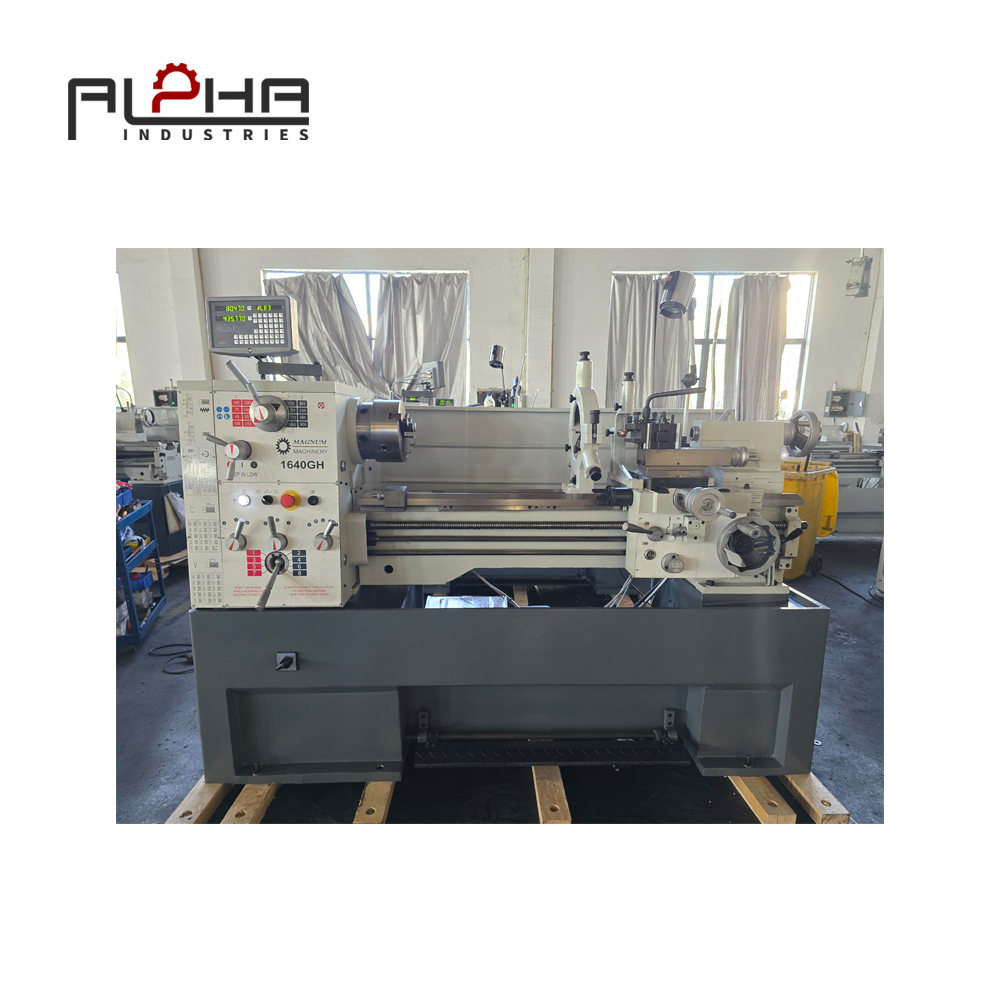
Alpha provides lathe and CNC turning solutions for different industrial applications.
When selecting a machine, manufacturers should consider:
- Workpiece dimensions
- Material type
- Production volume
- Accuracy requirements
- Automation requirements
- Operator skill levels
Alpha helps manufacturers evaluate suitable turning solutions based on actual production needs.
Quick Answers About CNC Lathe Machines
How does a CNC lathe help solve skilled labor shortages?
A CNC lathe standardizes repetitive machining through programmed operations, reducing manual control requirements.
Can CNC programs preserve manufacturing knowledge?
Yes. CNC programs and setup data can document machining processes and reduce dependence on individual experience.
Is a CNC lathe easier to operate than a manual lathe?
A CNC lathe requires training, but repetitive operations become more standardized through programmed control.
What manufacturers benefit from CNC turning automation?
Manufacturers producing repeatable components or requiring consistent quality can benefit from CNC automation.
Can a CNC lathe improve production consistency?
Yes. CNC machines repeat programmed sequences, helping reduce variation between parts.
Frequently Asked Questions About Lathe Machines
What is a lathe machine used for?
A lathe machine is used for turning, facing, threading, drilling, boring, and grooving operations.
What is the difference between a manual lathe and a CNC lathe?
A manual lathe requires direct operator control, while a CNC lathe uses programmed instructions.
What industries use CNC lathes?
CNC lathes are widely used in automotive, machinery, aerospace, energy, hydraulics, and general manufacturing.
How do manufacturers choose the right lathe machine?
Manufacturers should consider workpiece size, material, production volume, accuracy, and automation requirements.
The Future of Turning Production Depends on Standardization and Automation
The shortage of skilled labor requires more than adding machines.
Manufacturers need production systems that maximize available workforce efficiency.
Modern lathe machines, especially CNC lathes, help companies achieve more standardized and repeatable production.
By reducing manual intervention, preserving machining knowledge, and improving consistency, manufacturers can build more flexible and scalable turning operations.
The goal is not to replace skilled machinists.
The goal is to use their expertise more effectively while allowing technology to manage repetitive production tasks.
Explore Alpha Lathe Machine Solutions
Looking for a reliable Lathe Machine or CNC Lathe for your production operation?
Alpha can help evaluate the right turning solution based on:
- Workpiece diameter
- Machining length
- Material type
- Required accuracy
- Production volume
- Automation requirements
Contact Us to discuss your turning requirements and find the right lathe solution for your manufacturing operation.