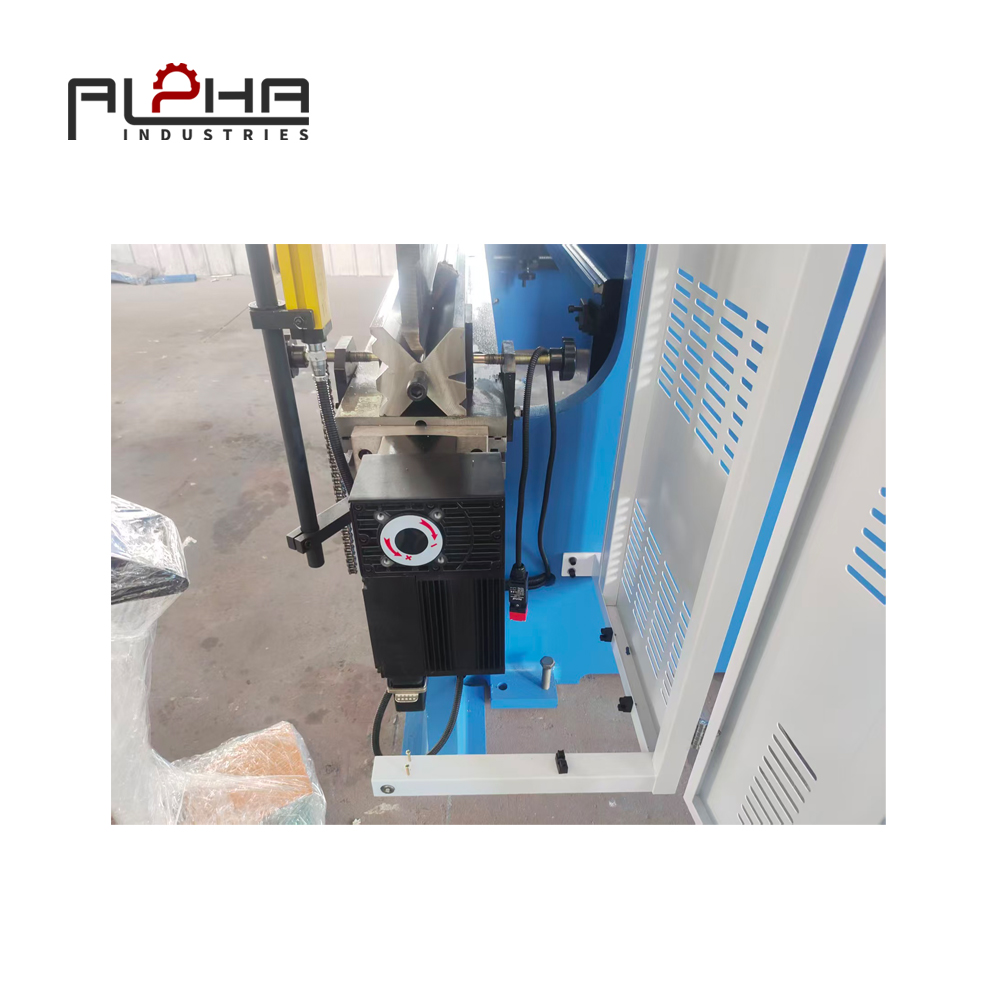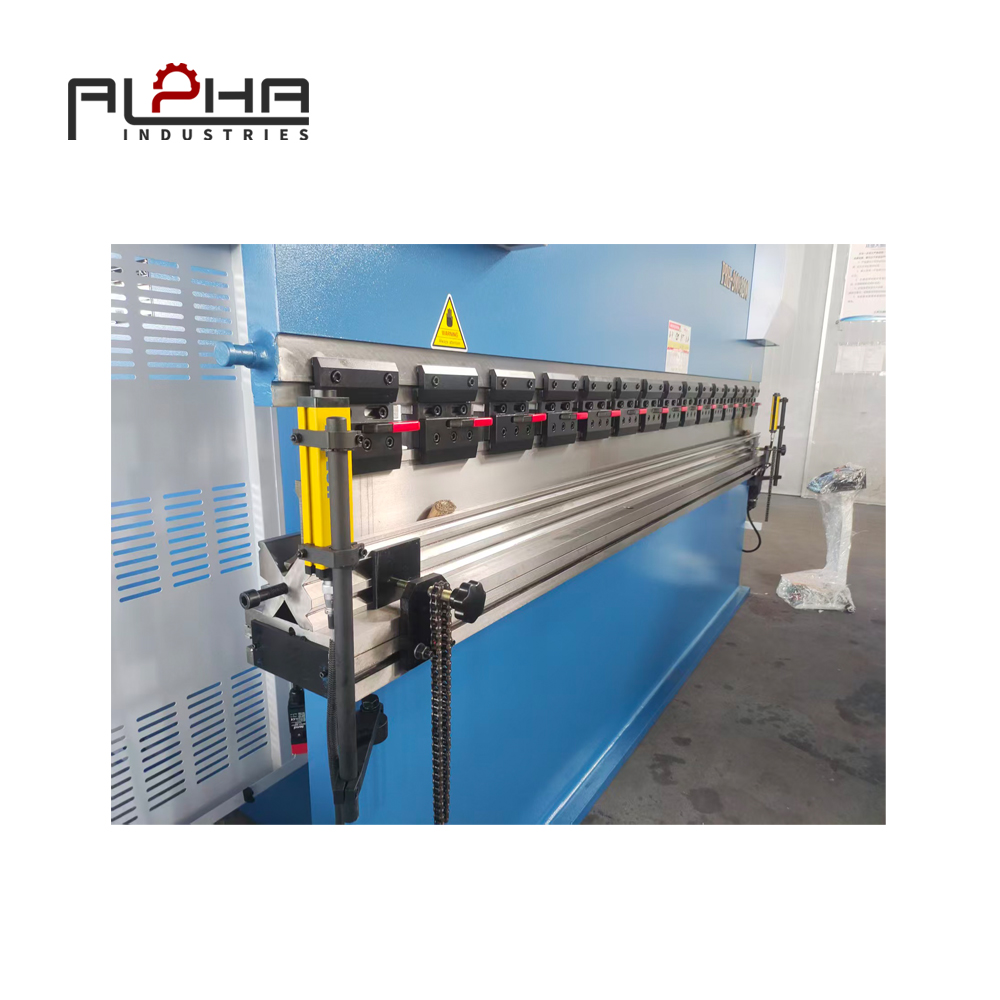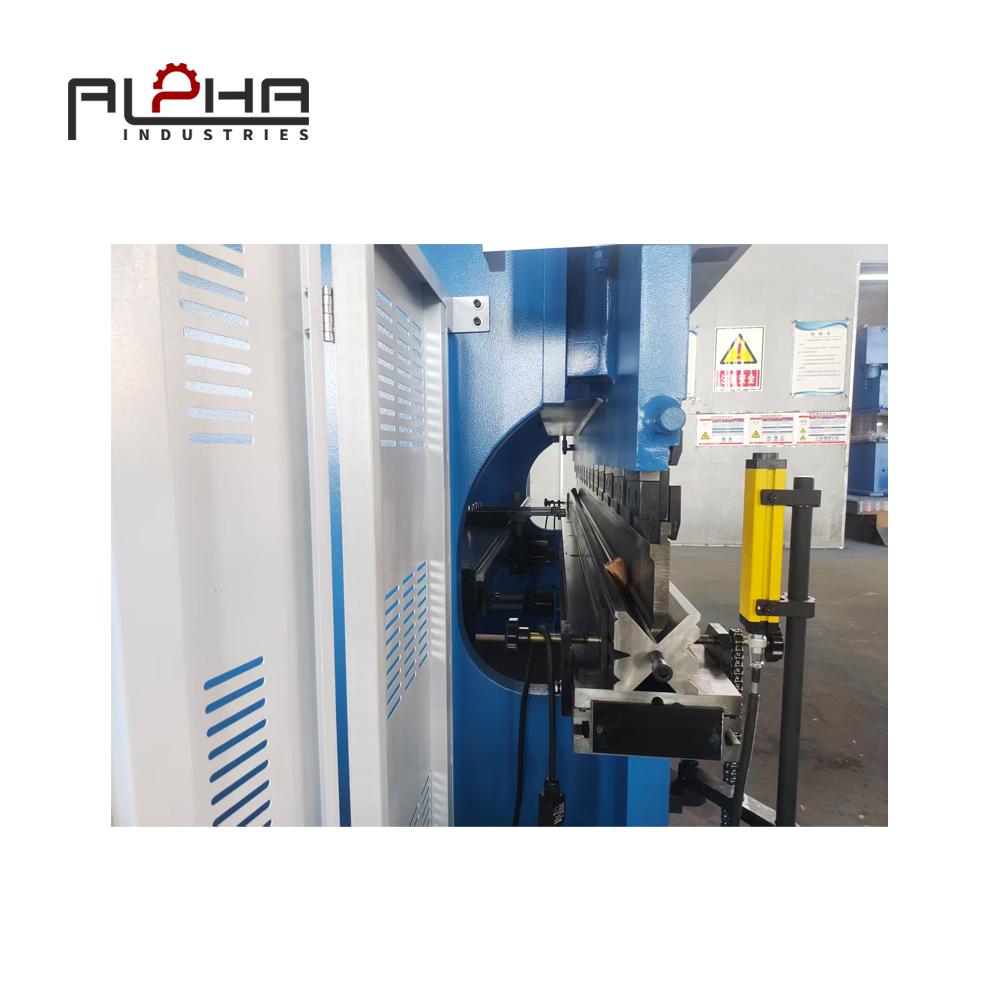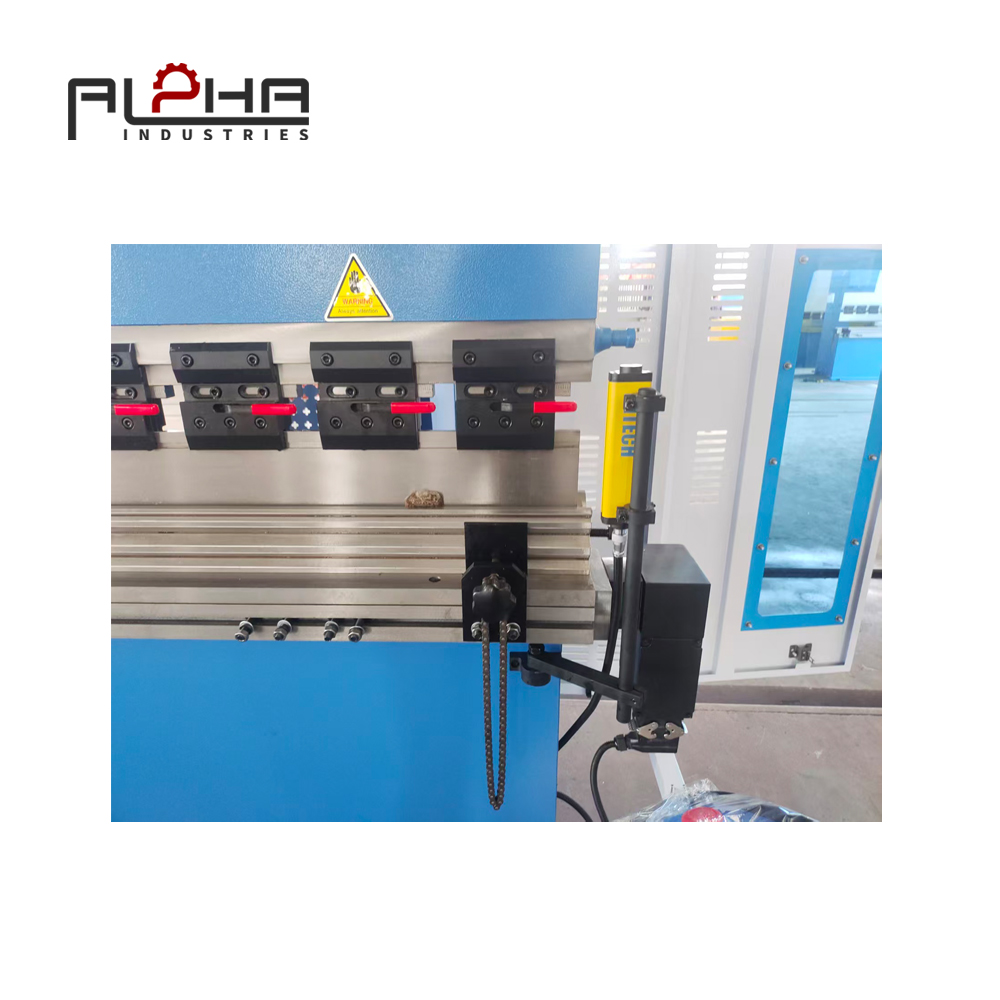


For manufacturers in Ukraine, increasing production capacity is no longer simply a question of purchasing more machines.
A more difficult question is:
Who will operate the machines, and how much production knowledge is required to operate them efficiently?
This question is particularly important in sheet metal fabrication.
A press brake can be a highly capable production machine, but bending quality depends on many variables, including material characteristics, tooling, bend sequence, backgauge positioning, springback, machine setup, and operator decisions.
Experienced press brake operators can manage these variables through years of practical knowledge.
However, manufacturers need practical ways to reduce their dependence on individual operator experience while maintaining production flexibility and bending quality.
The objective is not to eliminate skilled workers. Instead, it is to make skilled workers more productive while creating a production process that is easier to train, standardize, repeat, and scale.
For Ukrainian manufacturers dealing with labor constraints, changing customer requirements, customized orders, operating cost pressure, and potential production interruptions, these improvements can be particularly valuable.
A practical solution combines:
CNC Press Brake Technology + Standardized Processes + Tooling Management + Production Data + Selective Automation
This article focuses on one specific production challenge:
How can manufacturers in Ukraine reduce operator dependency while maintaining flexibility and bending quality?
Why Operator Dependency Has Become a Press Brake Challenge
Traditional press brake operations can require substantial operator knowledge.
An experienced operator may understand which punch and die to select, how different materials behave, how to compensate for springback, which bending sequence is appropriate, how to position unusual workpieces, how to interpret technical drawings, and how to correct dimensional variation.
This experience has significant value.
The problem occurs when too much production knowledge exists only in the operator's memory.
Imagine a Ukrainian manufacturer with one highly experienced press brake operator. That person may know exactly how to produce a complicated component.
But if the operator is unavailable, another employee may need considerable time to reproduce the same process.
This creates operational dependency.
The machine is available. The production order is available. The material is available.
But production may still depend on one person's experience.
For manufacturers seeking to maintain output, meet delivery commitments, and respond to changing orders, this dependency can become a significant limitation.
The Skilled Labor Challenge in Sheet Metal Manufacturing
The skilled labor challenge is not simply about the number of workers available. It is also about the time required to train workers to a level where they can independently manage complex production.
A press brake operator may need to understand technical drawings, sheet metal behavior, bend allowance, springback, tooling, CNC controls, backgauges, material handling, quality inspection, and machine safety.
The more customized the production environment, the more knowledge the operator may need.
This creates a challenge for job shops and contract manufacturers handling many different components.
A company may have sufficient orders but still struggle to increase output because its production capacity depends on a limited number of experienced operators.
For Ukrainian manufacturers, reducing unnecessary setup work and making production knowledge easier to share can help improve operational resilience.
The Goal Is Not to Replace Operators
There is an important distinction between automation and operator replacement.
For many manufacturers, the more realistic objective is to make each operator more productive.
A modern CNC press brake can help accomplish this by moving certain repetitive decisions from manual operation into programmed production processes.
Instead of requiring the operator to manually calculate or adjust every movement, the machine can use stored programs for many repetitive operations.
The operator remains responsible for appropriate machine operation, material handling, inspection, and process control.
CNC technology supports the operator rather than eliminating the need for human oversight.
How CNC Press Brake Technology Reduces Manual Work
A modern CNC press brake can store and execute programmed bending sequences.
Depending on the machine configuration, the CNC system can manage functions such as bend sequence, ram positioning, backgauge movement, bending parameters, tooling configuration, production programs, and repeat operations.
This creates a more standardized process.
For a repeat order, the operator may be able to retrieve an established program rather than rebuilding the entire process.
This can reduce setup variation and make operator training more manageable because production information is documented within the machine instead of existing only as individual knowledge.
For manufacturers in Ukraine, this approach can be useful when experienced personnel are limited or production schedules require flexible allocation of workers.
From Operator Knowledge to Process Knowledge
One of the most important improvements manufacturers can make is transforming individual experience into documented production knowledge.
Consider two production systems.
Operator-Dependent System
The experienced operator knows which tool, sequence, position, and adjustment to use.
When that operator is unavailable, the knowledge becomes difficult to reproduce.
Process-Dependent System
The company documents the material, tooling, CNC program, bend sequence, backgauge settings, inspection requirements, and setup procedure.
The production process becomes easier to reproduce.
This does not eliminate operator skill. Instead, it allows the organization to preserve valuable production knowledge and make it available to other qualified employees.
For Ukrainian manufacturers facing changing production requirements, documented processes can also make it easier to resume repeat jobs after interruptions.
Why Standardization Matters for Multiple Shifts
Multi-shift manufacturing creates another challenge.
The same component may be produced by different operators during different shifts. If every operator uses a slightly different setup method, production variation can increase.
Standardized CNC programs can help reduce this variation.
A production system can establish the following workflow:
Approved Program → Approved Tooling → Standard Setup → First-Part Inspection → Production
This creates a common process for different operators.
For manufacturers operating several press brake machines, standardization can be particularly important. It can also make it easier to transfer repeat jobs between machines when the equipment, tooling, and programs are appropriately configured.
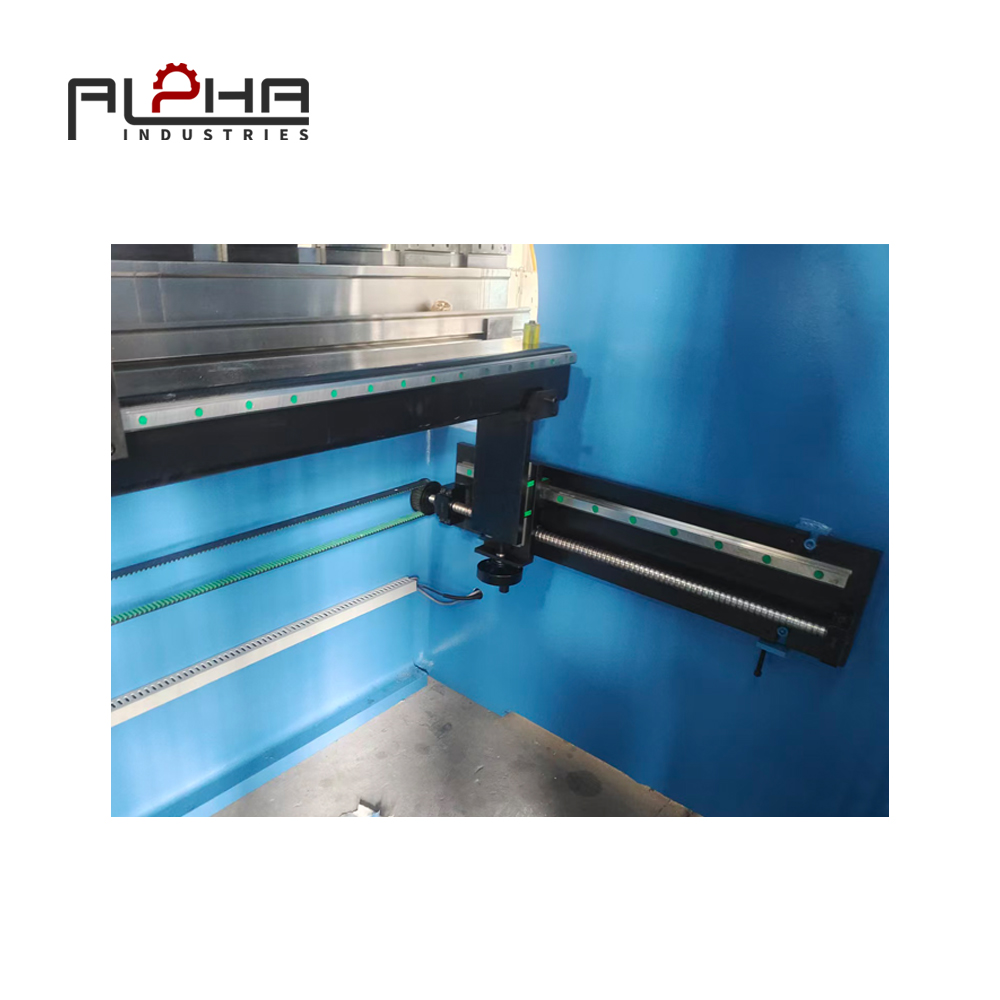
The Backgauge Is More Important Than It Looks
The backgauge plays an important role in reducing manual positioning.
Without an effective positioning system, operators may need to measure and reposition the workpiece repeatedly.
A CNC-controlled backgauge can provide programmed positioning for different bending steps. This can support repeatable flange dimensions, faster setup, reduced manual measurement, more consistent production, and more complex bending sequences.
For manufacturers producing components with multiple bends, the backgauge becomes an important part of the overall workflow.
The correct backgauge configuration depends on the geometry of the parts being produced.
Why Multi-Axis Backgauges Can Matter for Complex Parts
A simple component may require only straightforward positioning.
A more complex component may require the sheet to be positioned differently for multiple bends.
Multi-axis backgauge systems can provide additional positioning flexibility. This can be useful for parts involving different flange lengths, multiple bend directions, complex geometries, offset features, and irregular shapes.
The purpose is not simply to add more axes.
The purpose is to reduce unnecessary manual repositioning while maintaining accurate workpiece positioning.
Ukrainian manufacturers producing customized sheet metal components should evaluate backgauge requirements according to their actual part designs and production volumes.
Tooling Management Can Reduce Operator Dependency
Tool selection is another area where manufacturers often depend on experienced operators.
A skilled operator may immediately know which tooling combination is appropriate. A less experienced operator may spend significantly more time determining the correct configuration.
A standardized tooling system can help.
Manufacturers can organize tooling information according to material, thickness, bend radius, bend type, tool geometry, and production application.
Common jobs can then have predefined tooling configurations.
This reduces the number of decisions an operator needs to make from scratch and helps make production procedures easier to repeat.
Tooling Organization Is a Productivity Issue
Tooling may appear to be a small part of the overall production process. However, repeated searching and setup can accumulate significant production time.
Consider a production environment where an operator changes jobs several times per shift.
Every changeover may require finding the correct tools, removing the previous tools, installing new tools, checking alignment, selecting the program, producing the first part, and making any necessary corrections.
If tooling is poorly organized, setup time increases.
A structured tooling system can reduce unnecessary searching and improve workflow consistency.
For Ukrainian manufacturers managing customized orders or shorter production runs, efficient tooling organization can help limit the time lost between jobs.
First-Part Inspection Makes Standardization Practical
Standardization does not mean assuming that every production setup will always be perfect.
The first part still needs to be checked.
A practical workflow is:
Program → Tooling → Setup → First Part → Inspection → Production
The first part can be checked for critical characteristics such as bend angle, flange length, bend location, overall dimensions, and assembly-related dimensions.
If an adjustment is required, it can be made before the full production run begins.
This protects production capacity and reduces the possibility of producing a large quantity of incorrect parts.
For manufacturers in Ukraine facing pressure to control material costs and delivery schedules, first-part inspection can help prevent avoidable rework and production delays.
Why Reducing Rework Helps Solve Labor Problems
Labor constraints do not only affect machine operation. They also affect quality control and rework.
Suppose a bending error results in a large batch of defective components.
The company may need additional workers to inspect the parts, identify the problem, rework components, produce replacements, and perform additional quality checks.
This increases labor demand and consumes time that could otherwise be used for productive manufacturing.
Therefore, improving first-part verification and process repeatability can indirectly reduce the amount of labor required to recover from production errors.
Reducing rework also helps manufacturers use materials more efficiently and maintain more predictable production schedules.
Standardized Programs Preserve Production Knowledge
A CNC program can become a form of manufacturing knowledge.
For example, a repeat production program may contain the bend sequence, backgauge positions, ram positions, tool information, and production parameters.
When the same component returns several months later, the manufacturer does not need to start completely from the beginning.
This can be particularly useful for companies producing replacement parts, industrial equipment, agricultural machinery, HVAC components, electrical cabinets, construction components, and customized fabricated products.
Repeatable digital production information can help shorten future setup processes and reduce dependence on individual memory.
For Ukrainian manufacturers that need to manage changing production schedules, storing reliable programs can also support more consistent repeat orders.
Press Brake Productivity for High-Mix Manufacturing
High-mix production presents a unique challenge.
A manufacturer may process ten different parts today, twenty different parts tomorrow, a repeat order next month, and a completely new component next week.
The machine must therefore be flexible.
A solution designed only for high-volume production may not be appropriate for this environment.
For high-mix manufacturers, a productive press brake should support:
Fast Program Changes + Flexible Tooling + Accurate Backgauging + Easy Setup
This combination can help manufacturers respond to customer-specific requirements without requiring every job to be handled by the most experienced operator.
Press Brake Automation for High-Volume Production
Automation becomes more attractive when production volumes increase.
Depending on the application, automated bending may include robotic part handling, automatic loading, automatic unloading, tool management, production monitoring, and automated bending sequences.
Automation can reduce repetitive material-handling tasks and help maintain a consistent production rhythm.
However, automation should be selected according to actual production requirements.
A highly automated system may not be economically appropriate for a company producing hundreds of different low-volume parts.
Ukrainian manufacturers should evaluate the relationship between production volume, labor availability, part complexity, investment costs, and expected productivity improvements before selecting an automation solution.
Selective Automation May Be More Practical
Manufacturers do not always need to automate the entire press brake operation.
Instead, they can identify the specific bottleneck.
Problem: Material Handling
Consider loading or unloading assistance.
Problem: Setup Time
Consider tooling organization and CNC program standardization.
Problem: Operator Availability
Consider simplifying programming or adding automated handling where appropriate.
Problem: High Production Volume
Consider robotic bending or automated production cells.
This approach can make automation investment more targeted.
The goal should be to automate the task that limits production rather than simply adding technology.
For Ukrainian manufacturers managing budgets carefully, selective automation may provide a practical way to improve productivity in stages.
Why Labor Productivity Should Be Measured Per Operator
A useful production metric is not simply the number of operators.
It can also be:
Qualified Parts per Operator per Shift
This helps manufacturers understand whether process improvements are actually increasing labor productivity.
For example, if a CNC press brake allows an operator to manage more repeatable bending operations with less manual measurement and setup, the same workforce may support greater production output.
The machine is not replacing the operator. It is increasing the amount of productive work the operator can manage.
Other useful indicators include setup time, first-pass yield, rework rate, scrap rate, machine utilization, and unplanned downtime.
Tracking these indicators helps manufacturers identify which improvements produce measurable operational benefits.
Press Brake Safety and Operator Efficiency
Productivity should never be achieved by bypassing safety systems.
Press brake operation involves hazards around the point of operation, moving components, tooling, and workpiece handling. Appropriate safeguarding depends on the machine configuration, manufacturing process, workpiece, and operating conditions.
Manufacturers should evaluate suitable protective devices, operating procedures, operator training, and maintenance requirements according to applicable Ukrainian regulations and relevant safety standards.
A safer workflow can also be a more standardized workflow.
Manufacturers should not remove or bypass safety devices simply to make a production task faster.
Instead, the machine, tooling, material handling, and operating procedure should be evaluated together to support both safe operation and consistent production.
Why Material Handling Matters for Operator Productivity
Large sheet metal components can require considerable physical effort.
An operator may need to position large sheets, rotate workpieces, support long components, maintain alignment, and remove finished parts.
Material handling solutions can reduce physical workload and improve workflow consistency.
For large workpieces, appropriate support equipment can also help maintain better control of the material during bending.
The appropriate solution depends on sheet dimensions, material thickness, workpiece weight, production volume, machine configuration, and part geometry.
For Ukrainian manufacturers seeking to improve productivity with limited personnel, suitable material support can help reduce unnecessary physical effort and make bending operations more manageable.
Maintenance Protects Production Capacity
A machine that requires frequent unexpected intervention can reduce the effective production capacity of a factory.
Preventive maintenance should follow the equipment manufacturer's requirements and may include appropriate inspection of hydraulic systems, electrical components, CNC systems, backgauge mechanisms, mechanical components, lubrication systems, tooling, and safeguarding devices.
Regular maintenance can help identify potential problems before they cause avoidable interruptions.
For Ukrainian manufacturers facing production scheduling challenges, protecting machine availability is an important part of maintaining delivery performance.
Maintenance planning should also include access to suitable technical documentation, replacement parts, and qualified service support.
Choosing the Right Press Brake for a Labor-Constrained Factory
When purchasing a new press brake, manufacturers should evaluate more than tonnage.
Is the CNC system easy to operate?
A complicated control system may increase training requirements.
Can production programs be stored?
Stored programs can support repeat production and help preserve process knowledge.
Is the backgauge appropriate?
The required configuration depends on part geometry and positioning requirements.
How flexible is the tooling system?
Tooling flexibility can be important for high-mix production.
Can the machine support future automation?
Manufacturers may not automate immediately but may want that option later.
Can operators quickly understand the workflow?
Ease of operation can influence training time and productivity.
Is the machine suitable for the actual production mix?
A machine designed around the wrong production profile may create unnecessary limitations.
For Ukrainian manufacturers, the right press brake should balance bending requirements, ease of operation, reliability, maintenance needs, production flexibility, and total operating cost.
Press Brake Selection for Job Shops in Ukraine
Job shops often have different requirements from high-volume manufacturers.
A job shop may need to process many different materials and part designs in relatively small quantities.
For this environment, flexibility can be more valuable than maximum automation.
A suitable CNC press brake may provide flexible programming, multiple tooling options, accurate backgauging, quick setup, easy job recall, and repeatable production.
This allows the manufacturer to respond to customer orders without rebuilding the entire production process for every component.
For Ukrainian job shops handling customized work, a practical configuration should be selected according to typical material thicknesses, bending lengths, part complexity, and expected order patterns.
Press Brake Selection for High-Volume Manufacturers
High-volume manufacturers have different priorities.
They may produce thousands of similar components.
In this situation, the focus may shift toward cycle time, automation, robotic handling, repeatability, production monitoring, tool management, and reduced operator intervention.
A press brake cell can potentially become part of a larger automated production line.
The appropriate solution depends on production volume, part geometry, material handling, available factory space, and return-on-investment considerations.
Manufacturers should evaluate automation according to their actual production requirements rather than assuming that the highest level of automation will always deliver the best results.
Building a More Scalable Press Brake Department
A scalable bending department should not depend entirely on a few highly experienced operators.
Instead, manufacturers can build a system around documented processes, stored CNC programs, standardized tooling, first-part inspection, operator training, machine maintenance, and production data.
This allows the organization to increase production capacity without increasing operator complexity at the same rate.
As production grows or order requirements change, these systems become increasingly important.
For Ukrainian manufacturers, a standardized bending process can also help improve continuity when production schedules, staffing arrangements, or order priorities change.
A Practical Press Brake Workforce Strategy
Manufacturers can begin with a relatively simple process.
Step 1: Identify Operator-Dependent Tasks
List the activities that currently require the most experience.
Step 2: Standardize Repeat Jobs
Document programs, tooling, and inspection requirements.
Step 3: Improve CNC Programming
Move repetitive positioning and sequencing into the machine control where appropriate.
Step 4: Organize Tooling
Make frequently used tooling easier to identify and prepare.
Step 5: Establish First-Part Inspection
Verify critical dimensions before full production.
Step 6: Measure Production Bottlenecks
Track setup time, waiting time, rework, scrap, and machine utilization.
Step 7: Automate the Actual Bottleneck
Consider material handling, robotic bending, or other automation only where it addresses a real production constraint.
This approach allows manufacturers to improve productivity without immediately making a large automation investment.
How ALPHA Approaches Press Brake Solutions
At ALPHA, we understand that a press brake is not simply a machine that applies bending force. It is part of a larger manufacturing process.
For manufacturers in Ukraine, press brake solutions can be evaluated according to factors such as material type, material thickness, bending length, production volume, part complexity, CNC requirements, tooling, backgauge configuration, operator workflow, and automation requirements.
For a job shop, the priority may be flexibility and fast setup.
For a high-volume manufacturer, automation and repeatability may become more important.
For a manufacturer facing labor constraints, CNC programming, process standardization, and operator-friendly machine configuration may provide greater value.
The objective is to match the press brake configuration to the actual production environment.
By evaluating these requirements before selecting a machine, manufacturers can make more informed decisions about production efficiency, operational costs, and future manufacturing needs.
Frequently Asked Questions
How can a press brake help Ukrainian manufacturers deal with skilled labor shortages?
A CNC press brake can reduce repetitive manual setup and positioning work by storing production programs and controlling programmed bending operations. This can help operators handle established processes more consistently and reduce dependence on individual experience.
Does a CNC press brake eliminate the need for skilled operators?
No. Operators remain important for machine operation, setup, material handling, inspection, process control, and safe working practices. CNC technology can reduce certain repetitive tasks and help preserve production knowledge.
How does CNC programming improve press brake productivity?
CNC programming can store bending sequences, positioning information, and other production parameters. This can reduce repeated manual adjustments and make repeat production easier to reproduce.
Can press brake automation solve labor shortages in Ukraine?
Automation can reduce certain repetitive tasks and increase operator productivity, but it does not provide a universal solution to labor shortages. The appropriate automation level depends on production volume, part geometry, material handling, and workflow.
What is the advantage of a CNC backgauge?
A CNC backgauge provides programmed positioning of the workpiece. This can improve repeatability and reduce manual measurement and positioning for many bending applications.
Is a hydraulic press brake suitable for Ukrainian manufacturers?
Hydraulic press brakes are widely used for industrial sheet metal bending. The appropriate configuration depends on required bending force, bending length, material characteristics, production volume, and other application requirements.
How can manufacturers reduce press brake setup time?
Manufacturers can standardize tooling, store CNC programs, prepare materials in advance, organize production information, and establish repeatable setup procedures.
What should a job shop in Ukraine consider when buying a press brake?
A job shop should consider flexibility, CNC programming, tooling options, backgauge configuration, setup time, material range, accuracy, operator workflow, and potential future automation.
How can a manufacturer measure press brake productivity?
Useful indicators include qualified parts per shift, setup time, machine utilization, rework, scrap, downtime, and output per operator.
What is the most important factor when selecting a press brake?
There is no single specification that applies to every manufacturer. The machine should be evaluated according to material, thickness, bending length, production volume, part complexity, accuracy requirements, operator workflow, and future production plans.
Conclusion
The workforce challenge facing sheet metal manufacturers in Ukraine is not simply a question of finding more workers. It is also a question of how much production capability can be built into the manufacturing process itself.
A modern press brake can become more than a machine operated by an experienced individual.
With CNC programming, accurate backgauging, standardized tooling, documented processes, first-part inspection, appropriate material handling, and selective automation, manufacturers can build a bending process that is easier to reproduce and scale.
The objective is not to remove people from the manufacturing process. It is to reduce unnecessary operator dependency and allow qualified employees to spend more time on productive work.
For manufacturers facing labor constraints, the long-term opportunity is to transform individual operator experience into repeatable production knowledge.
CNC Press Brake + Standardized Process + Skilled Operator + Appropriate Automation
This combination can provide a practical foundation for improving sheet metal bending productivity.
For Ukrainian manufacturers considering a new press brake, upgrading existing bending capabilities, or planning future automation, ALPHA can evaluate machine configurations according to actual production requirements.
Learn more about ALPHA's press brake solutions and discuss your manufacturing requirements:
Contact Us – https://alpha-cnc.com/contact-us