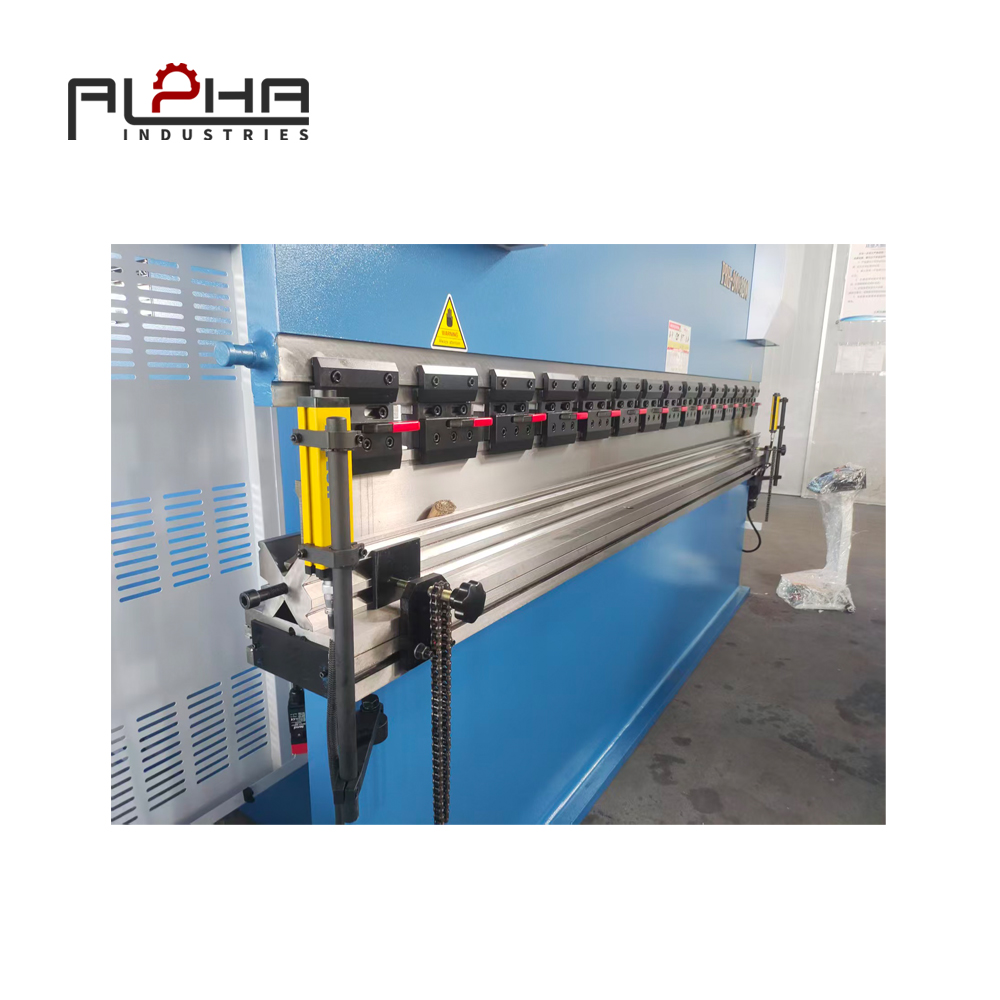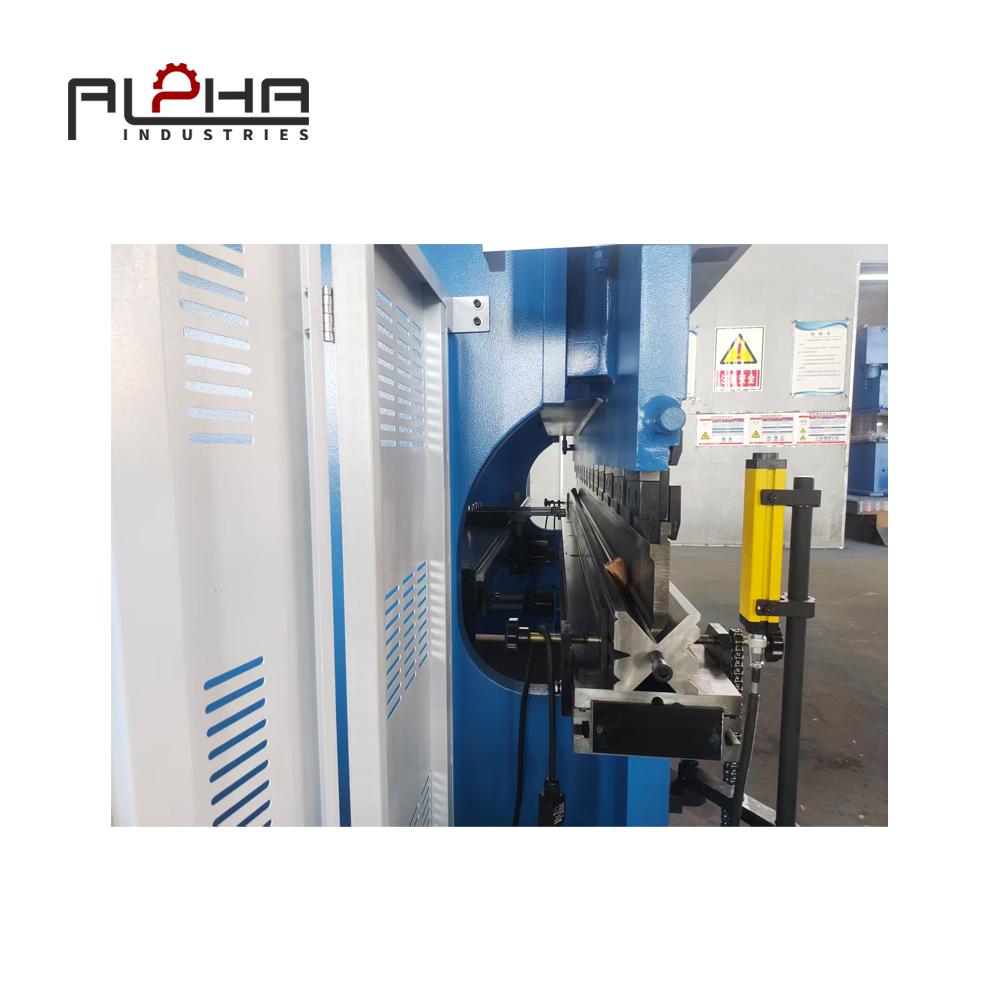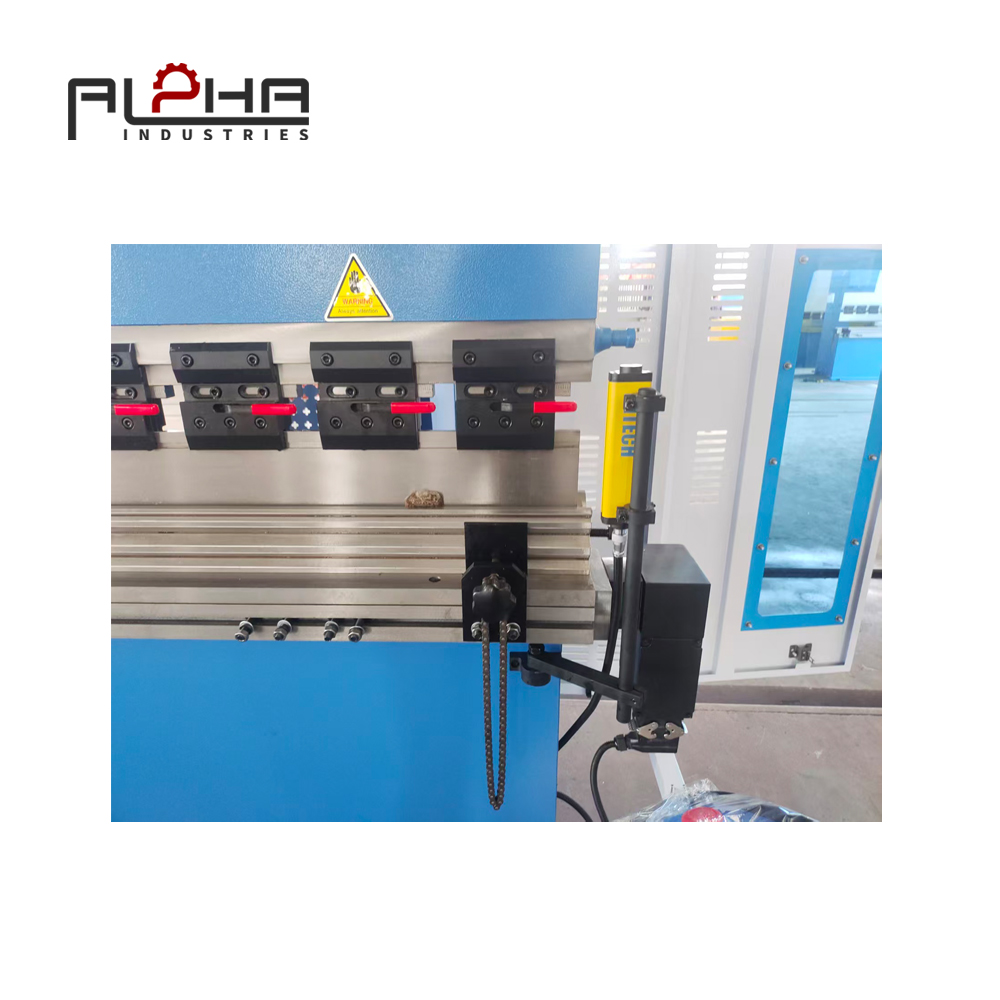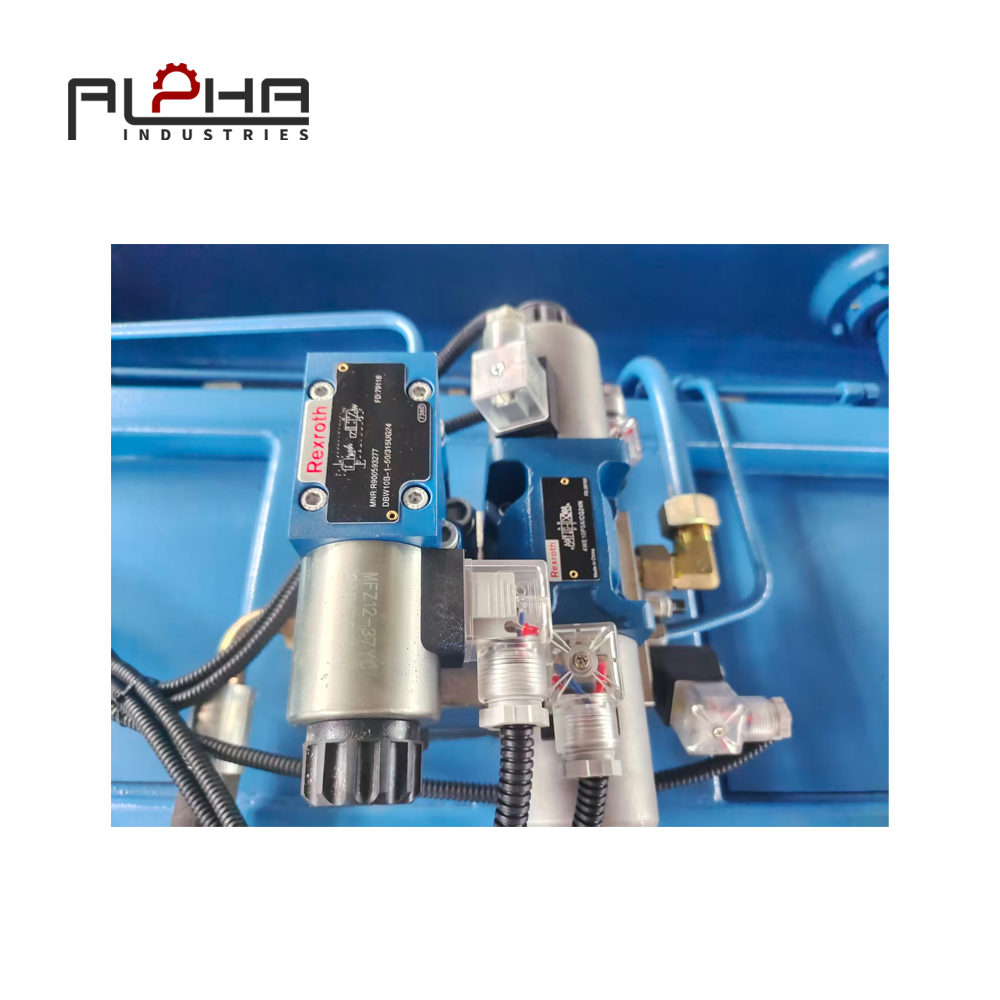


For sheet metal manufacturers in Ukraine, reducing press brake scrap is no longer just a matter of controlling material costs. Every rejected bent part also represents lost machine time, labor, inspection time, setup time, delivery capacity, and production planning efficiency.
This is particularly important for Ukrainian manufacturers facing changing customer requirements, customized orders, shorter production runs, labor constraints, operational interruptions, and increasing pressure to control production costs.
A press brake plays a critical role in this process.
When bending accuracy is unstable, manufacturers may experience incorrect angles, dimensional deviations, inconsistent flange lengths, surface damage, excessive trial bends, and repeated setup adjustments. These problems can turn an otherwise efficient sheet metal operation into a source of continuous rework and material waste.
A modern CNC press brake can address many of these challenges by creating a more repeatable bending process.
The key question is not simply how fast a press brake can bend.
The more important question is:
How consistently can the press brake produce acceptable parts from the first production piece to the last?
For Ukrainian manufacturers looking to improve profitability, first-pass yield can be a more valuable performance indicator than nominal bending speed or machine tonnage alone.
Why Scrap Reduction Has Become a Critical Press Brake Issue in Ukraine
Ukraine's sheet metal fabrication industry serves a wide range of applications, including construction equipment, agricultural machinery, HVAC systems, electrical enclosures, industrial equipment, energy infrastructure, transportation components, and general metal fabrication.
Many manufacturers must handle mixed production requirements. One order may involve hundreds of identical components, while the next may require a different material, thickness, bend sequence, or geometry.
This creates a challenging production environment.
A press brake must transition between different jobs while maintaining dimensional consistency. At the same time, manufacturers need to control:
Material utilization
Setup time
Bending accuracy
First-piece approval
Rework and scrap
Labor hours
Production lead time
Delivery reliability
Operational costs
For Ukrainian manufacturers managing uncertain production schedules or frequent changes in order requirements, unnecessary trial bending and repeated setup adjustments can further reduce productive machine time.
If every new job requires several trial pieces before reaching the correct angle and dimensions, the hidden cost can quickly become significant.
For this reason, scrap reduction should be considered part of press brake productivity rather than a separate quality-control issue.
What Causes Scrap During Press Brake Bending?
Scrap does not always result from a major machine malfunction. In many cases, waste is caused by small variations accumulated throughout the bending process.
Common causes include:
-
Incorrect bending angles
-
Material springback
-
Incorrect backgauge positioning
-
Improper tooling selection
-
Material thickness variation
-
Incorrect bend sequences
-
Machine deflection
-
Incorrect program parameters
-
Operator measurement errors
-
Improper workpiece positioning
-
Excessive trial bending
-
Tool wear or incorrect tooling installation
A particularly difficult problem is that the same CNC program does not always guarantee identical results when the material or production conditions change.
Material properties can vary even when the nominal grade and thickness remain the same. Actual thickness, yield strength, material batch, grain direction, tooling geometry, and forming conditions can all influence the final bending result.
This means effective scrap reduction requires control of the complete bending process, not simply a reliable machine.
The Hidden Cost of an Incorrect First Bend
Consider a typical production order.
A Ukrainian manufacturer receives an order for 500 sheet metal brackets. The production team prepares the material, installs the tooling, loads the CNC program, and begins bending.
The first part is inspected, but the angle is incorrect.
The operator makes an adjustment and produces another part. The second part is closer, but the flange dimension is still outside tolerance. Another adjustment is required before the third part passes inspection.
At first glance, only two pieces were wasted.
However, the real cost is larger.
The machine was occupied during the adjustment process. The operator spent additional time making corrections. The quality department may have performed additional inspections, and production scheduling may have been delayed.
If similar adjustments occur across multiple jobs every week, the accumulated cost can become substantial.
This is why manufacturers should focus on first-pass yield rather than looking only at the final number of scrapped parts.
How CNC Press Brakes Help Improve First-Pass Yield
A CNC press brake can improve process repeatability by controlling key machine movements through programmed parameters.
Depending on the machine configuration, CNC control can manage:
-
Ram position
-
Backgauge movement
-
Bending sequence
-
Bend depth
-
Multiple-axis positioning
-
Program storage
-
Tooling information
-
Production parameters
The main benefit is process repeatability.
Instead of depending entirely on manual positioning and repeated measurements, the machine can execute a predefined bending sequence.
This is especially useful when a manufacturer receives repeat orders or needs to switch between different products regularly.
Once a qualified bending program has been established, the same production parameters can be recalled for future batches. This reduces the need to rebuild the process from the beginning.
For Ukrainian manufacturers seeking more predictable production despite changing order schedules, standardized CNC bending can help reduce unnecessary adjustments and improve production consistency.
Backgauge Accuracy and Dimensional Consistency
The backgauge is one of the most important components for dimensional control during press brake operation.
Even when the bending angle is correct, incorrect sheet positioning can produce an unacceptable part.
A small positioning error can affect:
-
Flange length
-
Hole-to-bend distance
-
Overall part dimensions
-
Bend-to-bend spacing
-
Assembly fit
Modern CNC backgauges provide repeatable positioning for different bending operations. Multi-axis configurations can also offer greater flexibility when manufacturing complex components.
For manufacturers producing a variety of sheet metal parts, this flexibility can reduce manual repositioning and repeated measurement.
The objective is not simply faster movement. It is consistent positioning that helps produce acceptable parts from the first bend.
Material Springback: One of the Biggest Challenges in Angle Accuracy
Springback is a fundamental issue in sheet metal bending.
When the bending force is removed, the material partially returns toward its original shape. As a result, the final angle after unloading can differ from the angle observed while force is being applied.
Springback can be affected by:
-
Material strength
-
Material thickness
-
Inside bend radius
-
Bend angle
-
V-die opening
-
Tooling geometry
-
Grain direction
-
Forming method
-
Actual material properties
This creates a challenge for manufacturers working with different material batches.
A bending program that works well with one batch may require adjustment when material characteristics change.
Therefore, effective press brake production should not depend only on theoretical bending calculations. It should incorporate practical measurement, controlled correction, and first-piece verification.
Why First-Piece Inspection Matters
First-piece inspection is an important step in controlling bending quality.
Rather than producing an entire batch and discovering a dimensional problem afterward, manufacturers can validate the first completed component before continuing production.
The inspection may include:
-
Bend angle
-
Flange length
-
Overall dimensions
-
Hole position
-
Bend-to-bend dimensions
-
Surface condition
-
Part geometry
Once the first part meets the required specifications, the approved program and setup can be used for the remaining production run.
This approach helps prevent a small setup error from becoming a large batch of defective components.
For manufacturers in Ukraine working with expensive stainless steel, aluminum, or other materials, controlling the first piece can be particularly important because scrapping a large batch can significantly increase production costs.
Reducing Rework Through Standardized Bending Programs
One advantage of CNC press brake technology is the ability to store production programs.
For repeat orders, manufacturers can create standardized bending recipes containing important parameters, such as:
-
Material type
-
Material thickness
-
Tooling configuration
-
Bend sequence
-
Backgauge positions
-
Bend angles
-
Ram positions
-
Number of bends
-
Production notes
The exact information available depends on the CNC system and machine configuration.
The principle is simple: operators should not have to recreate a proven process every time the same product returns to production.
Standardization can help reduce setup variation between shifts and operators. It can also make production easier to reproduce when the same component is manufactured weeks or months later.
For Ukrainian manufacturers managing changing order volumes and limited production windows, retaining validated bending parameters can help shorten repeat-job preparation and reduce avoidable setup errors.
Tooling Selection Directly Influences Scrap
Tooling should not be treated as a secondary consideration.
The punch and die configuration directly influences the bending process. Incorrect tooling can lead to:
-
Incorrect bend radius
-
Surface marking
-
Unstable positioning
-
Excessive forming force
-
Dimensional problems
-
Difficult bend sequences
For manufacturers producing different material thicknesses and part geometries, tooling flexibility becomes increasingly important.
A press brake should therefore be evaluated together with its tooling system rather than as an isolated machine.
When purchasing a new CNC press brake, Ukrainian manufacturers should consider the types of parts they actually produce and whether the proposed tooling configuration supports those applications.
Why High-Mix Production Needs a Different Press Brake Strategy
High-volume production and high-mix production have different priorities.
For high-volume production, manufacturers may focus heavily on cycle time and automation. For high-mix production, setup flexibility is equally important.
A sheet metal fabrication workshop may frequently change between:
-
Different materials
-
Different thicknesses
-
Different bend angles
-
Different tooling
-
Different part sizes
-
Different bend sequences
If each change requires extensive manual adjustment, the machine can spend a significant portion of its working day in setup rather than production.
A CNC press brake with programmable positioning and repeatable setup procedures can help reduce this transition time.
For Ukrainian manufacturers handling customized orders, variable batch sizes, and changing delivery priorities, the objective is to make small-batch production more predictable without sacrificing accuracy.
Press Brake Crowning and Long-Part Accuracy
Long workpieces create another bending challenge.
Under high bending loads, machine structures can experience deflection. Without appropriate compensation, the bending angle may vary between the center and the ends of a long workpiece.
This can create dimensional inconsistencies even when the CNC program is correct.
Depending on machine design, press brakes may use mechanical or hydraulic crowning systems to compensate for deformation.
For manufacturers producing long panels, frames, cabinets, structural components, or other large sheet metal parts, this feature should be evaluated carefully.
The required configuration depends on bending length, material thickness, machine capacity, and production requirements.
How to Reduce Scrap Without Simply Slowing Down Production
A common reaction to quality problems is to slow the machine down.
Slower production may sometimes provide additional operator control, but it does not necessarily solve the underlying problem.
If the root cause is incorrect tooling, material variation, inaccurate positioning, or an unsuitable bending program, reducing speed alone will not create a stable process.
A more systematic approach is:
Measure → Identify the variation → Correct the process → Verify the first piece → Standardize the successful setup → Repeat.
This approach creates a feedback loop.
Instead of repeatedly reacting to defective parts, manufacturers gradually build a more reliable bending process. It also helps distinguish problems that can be addressed through programming and setup from those requiring changes to tooling, materials, or machine configuration.
For manufacturers operating under production cost and delivery pressures in Ukraine, a controlled process can be more valuable than simply increasing bending speed.
What Should Manufacturers in Ukraine Look for When Buying a Press Brake?
When evaluating a press brake, manufacturers should look beyond maximum tonnage. The right machine should match the company's actual production requirements.
1. Bending Force
The required tonnage depends on material type, thickness, bending length, tooling, and bending method.
Selecting a machine with insufficient capacity can limit production flexibility. Excessive capacity, however, may increase capital cost without providing meaningful production benefits.
2. Bending Length
The working length should match the dimensions of typical workpieces. Longer components may also require additional support and compensation considerations.
3. CNC Control
The CNC system should be evaluated based on programming convenience, repeatability, storage capability, and compatibility with the production workflow.
4. Backgauge Configuration
The appropriate number of controlled axes depends on part complexity. Simple components may require fewer axes, while complex geometries may benefit from more flexible positioning.
5. Tooling System
Tooling should support the materials, thicknesses, bend radii, and geometries commonly produced by the manufacturer.
6. Angle Measurement and Compensation
For applications with demanding angle tolerances, manufacturers should evaluate whether the selected machine supports suitable angle measurement or compensation technologies.
7. Crowning
For long bending applications, crowning may be important for maintaining consistent results across the workpiece.
8. Safety Configuration
Safety should be considered during machine selection, installation, operation, and maintenance.
Manufacturers should verify the machine's protective devices, operating procedures, applicable Ukrainian requirements, and relevant standards before commissioning equipment.
9. Service and Technical Support
Technical support, spare parts availability, maintenance guidance, and operator training can all influence long-term machine performance.
For manufacturers concerned about production interruptions, it is important to understand what support the supplier can provide, how technical issues will be handled, and whether essential replacement parts can be obtained within an acceptable timeframe.
These factors should be considered alongside machine price and performance when evaluating the total cost of ownership.
How Can a Press Brake Reduce Material Waste?
A press brake can help reduce material waste when it improves the repeatability of bending operations.
The biggest opportunities generally come from reducing:
-
Trial parts
-
Incorrect bends
-
Dimensional rejections
-
Rework
-
Setup errors
-
Incorrect positioning
-
Batch inconsistencies
However, the machine itself is only one part of the equation.
Material preparation, part design, tooling, programming, inspection, and operator procedures all influence final scrap rates.
A successful scrap-reduction strategy therefore connects the entire bending workflow, from preparation and setup to inspection and repeat production.
Does a CNC Press Brake Eliminate Scrap Completely?
No. No press brake can guarantee zero scrap in every production environment.
Material variation, incorrect programming, tooling problems, design changes, measurement errors, and unexpected production conditions can still create defective parts.
The purpose of CNC technology is to make the process more controlled and repeatable.
The better objective is not zero defects at any cost. It is a stable process with predictable quality, controlled variation, and continuously improving first-pass yield.
Is a CNC Press Brake Suitable for High-Mix Production?
Yes. A CNC press brake can be particularly useful for high-mix production because programmable positioning and stored bending programs can reduce repeated manual setup.
However, the appropriate machine configuration depends on the number of products, material range, part complexity, batch size, tooling requirements, and required tolerances.
For some applications, flexible CNC control may provide greater value than full robotic automation.
How Does Springback Affect Press Brake Accuracy?
Springback changes the final angle after the bending force is removed.
The effect depends on material properties, thickness, bend geometry, tooling, and forming conditions.
A practical production strategy is to use calculated parameters as a starting point, verify a representative bend, measure the result, and apply a controlled correction when necessary.
The validated setup can then become a repeatable production parameter.
How Can Manufacturers Reduce Press Brake Rework?
Manufacturers can reduce rework by controlling the complete bending process rather than focusing on one machine parameter.
Key actions include:
-
Standardizing bending programs
-
Improving first-piece inspection
-
Selecting appropriate tooling
-
Maintaining accurate backgauge positioning
-
Controlling material variation
-
Recording successful setup parameters
-
Using suitable angle compensation where required
-
Training operators on standardized procedures
-
Monitoring recurring dimensional problems
The goal is to identify variation before it becomes a large batch problem.
What Is More Important: Press Brake Speed or Accuracy?
The answer depends on the production application.
High speed can increase productivity when the rest of the process can support it. However, speed that produces more defects can increase total production costs.
For many manufacturers, a more useful performance assessment considers:
Cycle Time + First-Pass Yield + Setup Time + Rework + Scrap.
A slightly slower process that consistently produces acceptable parts may generate better overall production performance than a faster process with frequent adjustments and rejected components.
How ALPHA CNC Approaches Press Brake Production
For manufacturers in Ukraine, a press brake should be considered part of a complete sheet metal production strategy.
ALPHA CNC provides CNC machine solutions designed to support accurate and repeatable metal processing.
For press brake applications, important considerations include machine capacity, bending length, CNC control, backgauge configuration, tooling, accuracy requirements, production volume, material range, and future automation needs.
Every fabrication operation has different requirements.
A machine designed for short, customized production may require a different configuration from one designed for repetitive, high-volume bending.
This is why machine selection should begin with the actual production application rather than simply choosing the largest available tonnage.
For Ukrainian manufacturers, evaluating the complete application can help balance bending accuracy, setup efficiency, operating costs, and long-term production requirements.
FAQ:
What is the main cause of press brake scrap?
Press brake scrap can result from incorrect bend angles, material springback, inaccurate positioning, unsuitable tooling, programming errors, material variation, machine deflection, and inconsistent setup procedures.
Can a CNC press brake reduce material waste?
Yes. CNC control can improve repeatability in positioning and bending sequences, helping reduce trial parts, dimensional errors, rework, and rejected components when the machine is properly configured and operated.
How can I improve first-pass yield on a press brake?
Start by controlling the first-piece setup, verifying tooling and material parameters, checking backgauge positioning, measuring the finished bend, and storing validated production parameters for repeat jobs.
Why does the same press brake program sometimes produce different bend angles?
Material properties can vary between batches. Differences in actual thickness, strength, grain direction, tooling, and forming conditions can affect springback and the final bend angle.
Is press brake automation necessary for every manufacturer?
No. The appropriate level of automation depends on production volume, part variety, labor availability, material handling requirements, and return-on-investment considerations. A flexible CNC press brake may be sufficient for many high-mix manufacturers.
What should Ukrainian manufacturers consider when buying a CNC press brake?
Consider bending force, bending length, material range, CNC control, backgauge axes, tooling, crowning, angle measurement, safety configuration, production volume, technical support, spare parts availability, and future automation requirements.
Conclusion: Make First-Pass Yield a Press Brake Priority
For sheet metal manufacturers in Ukraine, reducing press brake scrap is closely connected to production efficiency and profitability.
The cost of a defective bent part extends beyond the value of the sheet metal. It can include machine time, operator labor, inspection, rework, scheduling delays, delivery risk, and lost production capacity.
A modern CNC press brake can help manufacturers create a more repeatable bending process through programmable positioning, CNC-controlled sequences, stored production parameters, precision backgauging, suitable tooling, and optional compensation technologies.
The most effective strategy is not simply to bend faster. It is to produce the correct part consistently, minimize unnecessary trial pieces, identify process variation early, and turn successful setups into repeatable production standards.
For Ukrainian manufacturers facing variable order requirements and pressure to control material and operating costs, first-pass yield should be an important metric when evaluating press brake performance.
Contact ALPHA CNC
If you are evaluating a CNC press brake for your sheet metal production, ALPHA CNC can help you review machine configurations according to your material, bending length, thickness, production requirements, and accuracy expectations.
Contact us to discuss your press brake application and find a suitable CNC bending solution: