

Press Brake Energy Efficiency: How Ukrainian Manufacturers Can Reduce Operating Costs in Sheet Metal Bending
For manufacturers in Ukraine, controlling production costs has become an important part of maintaining stable manufacturing operations.
Material costs, labor expenses, maintenance requirements, equipment utilization, and energy consumption can all influence the cost of producing finished sheet metal components.
For companies operating press brakes for long production hours, energy efficiency deserves greater attention.
A press brake may not operate with the same continuous cutting load as some other metalworking equipment, but manufacturers running multiple machines or long production shifts still need to consider the relationship between energy consumption and productive output.
The important question is therefore not simply:
"How much power does the press brake use?"
A more useful question is:
"How much useful production does the machine generate for the energy it consumes?"
This is particularly relevant for Ukrainian manufacturers facing pressure to maintain stable production, control operating costs, manage different order types, and respond quickly to changing customer requirements.
Energy efficiency should not be considered separately from productivity.
If a machine consumes less energy but produces fewer qualified parts, the overall production economics may not improve.
The goal is to create a better balance:
Energy Consumption + Production Output + Machine Utilization + Product Quality
This article focuses on how Ukrainian manufacturers can improve the energy efficiency of press brake operations without sacrificing bending performance or production flexibility.
Why Energy Efficiency Matters for Press Brake Operations
A press brake can spend its working day in several different states.
It may be:
- Actively bending material
- Positioning the workpiece
- Moving the ram
- Adjusting the backgauge
- Waiting for material
- Waiting for an operator
- Waiting for another production process
- Running during setup
- Operating between production cycles
Not all of these activities create the same production value.
This creates an important concept:
Productive Energy vs. Non-Productive Energy
Energy used while producing a qualified component contributes directly to manufacturing output.
Energy consumed while the machine is waiting, unnecessarily cycling, or operating inefficiently contributes less directly to production.
Therefore, improving press brake energy efficiency involves more than selecting a lower-power machine.
It also involves reducing unnecessary operating time.
The Hidden Cost of Press Brake Idle Time
One of the simplest areas to examine is idle time.
A press brake may remain powered while:
- Operators wait for material
- Previous processes are delayed
- Tooling is being prepared
- Production orders are changed
- Operators are performing inspections
- Maintenance work is scheduled
- The next job is not ready
The machine may not be performing productive bending during these periods.
For a single short interruption, the impact may be small.
But across thousands of operating hours, repeated idle periods can accumulate.
For Ukrainian manufacturers, reducing unnecessary idle time can be particularly useful when production schedules need to remain flexible and operating costs need to be carefully controlled.
Manufacturers should monitor not only machine utilization but also the reasons for downtime.
For example:
Material Waiting
may require a different solution from:
Tooling Change
and both may require a different solution from:
Machine Maintenance
Understanding the cause is the first step toward improving efficiency.
Machine Utilization Is Closely Connected to Energy Efficiency
Consider two hypothetical production environments.
Factory A
The press brake is powered for a long shift but experiences frequent interruptions and long setup periods.
Factory B
The press brake has a similar operating schedule, but materials, tooling, CNC programs, and production orders are prepared in advance.
Even if the machines have similar specifications, Factory B may obtain more productive output from the same operating period.
This demonstrates an important principle:
Energy efficiency should be measured together with production efficiency.
Ukrainian manufacturers should not simply ask how much electricity a machine consumes.
They should also consider:
- Qualified parts per shift
- Setup time
- Idle time
- Rework
- Scrap
- Maintenance downtime
- Production throughput
This creates a more complete picture of operating efficiency.
How CNC Control Can Support Efficient Production
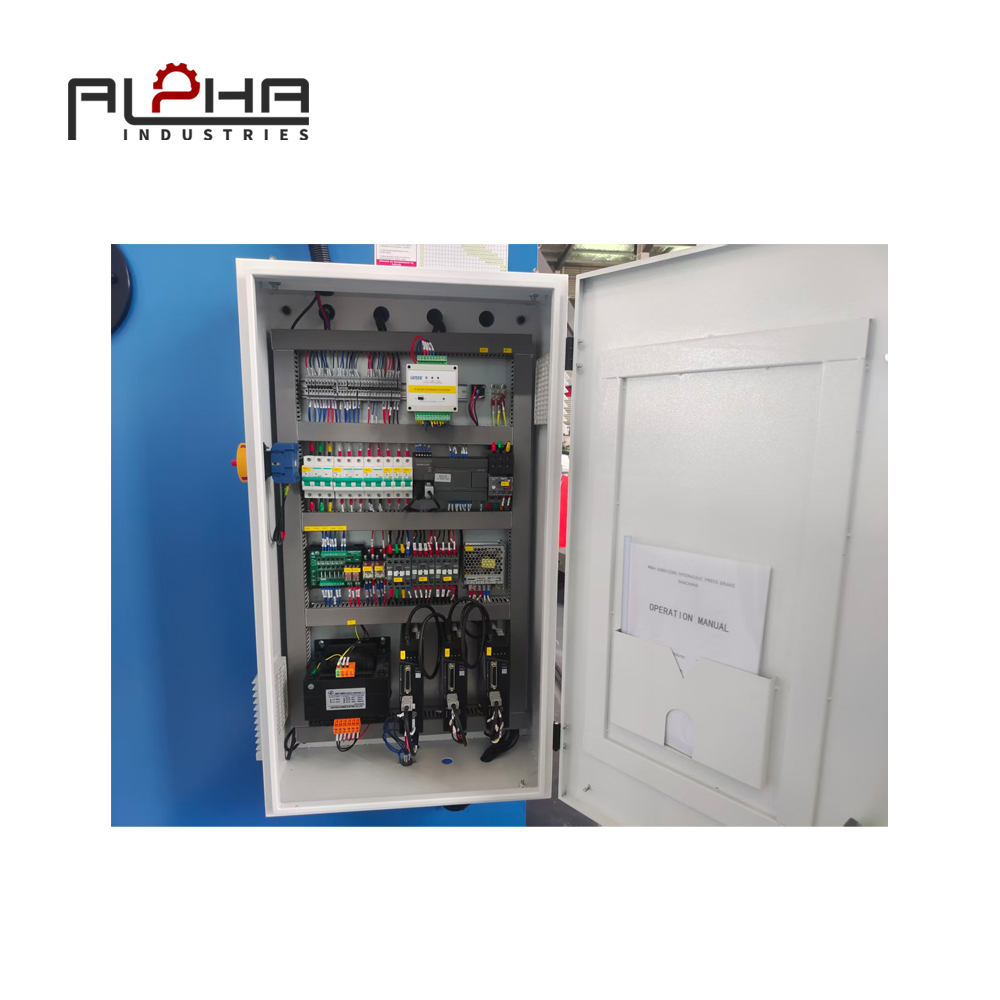
Modern CNC press brake systems can help Ukrainian manufacturers improve production planning and repeatability.
CNC control can manage functions such as:
- Bending sequences
- Ram positioning
- Backgauge positioning
- Production programs
- Multi-step bending
- Repeat jobs
- Process parameters
When production programs are stored and reused, operators may spend less time recreating machine settings manually.
This can reduce setup time.
Reducing setup time can indirectly improve energy efficiency because the machine can spend more of its operating schedule producing parts rather than remaining in preparation.
The relationship is therefore:
Better Programming → Faster Setup → Higher Utilization → More Productive Output
Energy efficiency is not isolated from workflow efficiency.
Reduce Unnecessary Machine Movements
Every machine movement requires energy.
This does not mean manufacturers should attempt to eliminate every movement.
The bending process naturally requires the ram, backgauge, and other components to move.
However, unnecessary movements can sometimes be reduced through better programming and process planning.
For example, a poorly optimized bending sequence may require additional repositioning.
A better sequence may reduce unnecessary travel while still producing the same finished component.
This is particularly relevant for complex parts with many bending operations.
The production program should therefore consider not only:
Can the machine make the part?
but also:
Can the machine make the part efficiently?
Backgauge Efficiency and Energy Use
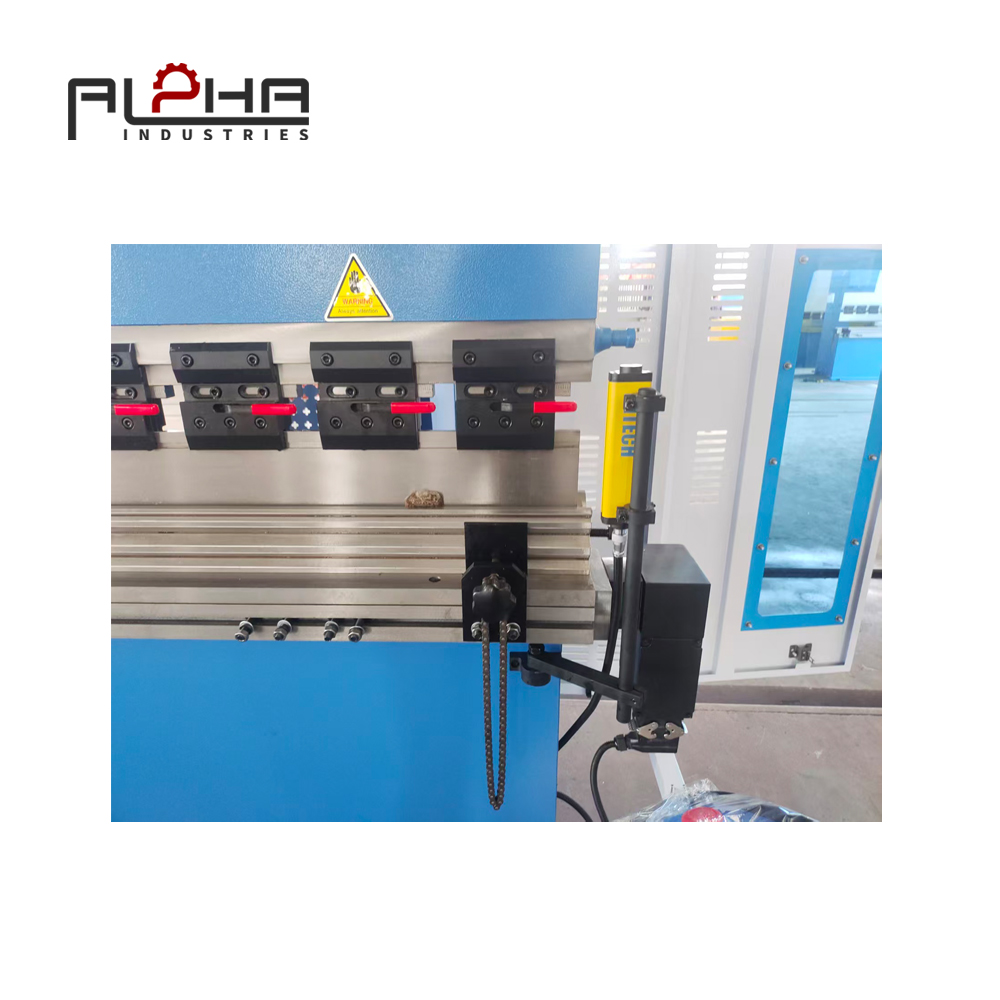
The backgauge plays an important role in CNC bending.
It moves the workpiece into the required position before each bend.
For a simple component, only a few movements may be required.
For a complex component, the backgauge may reposition many times.
Optimizing the bending sequence can potentially reduce unnecessary positioning movements.
However, this should never compromise dimensional accuracy.
The correct objective is:
Minimum Necessary Movement + Required Accuracy
rather than simply:
Minimum Movement
Production efficiency must always remain connected to part quality.
Hydraulic Press Brake Efficiency
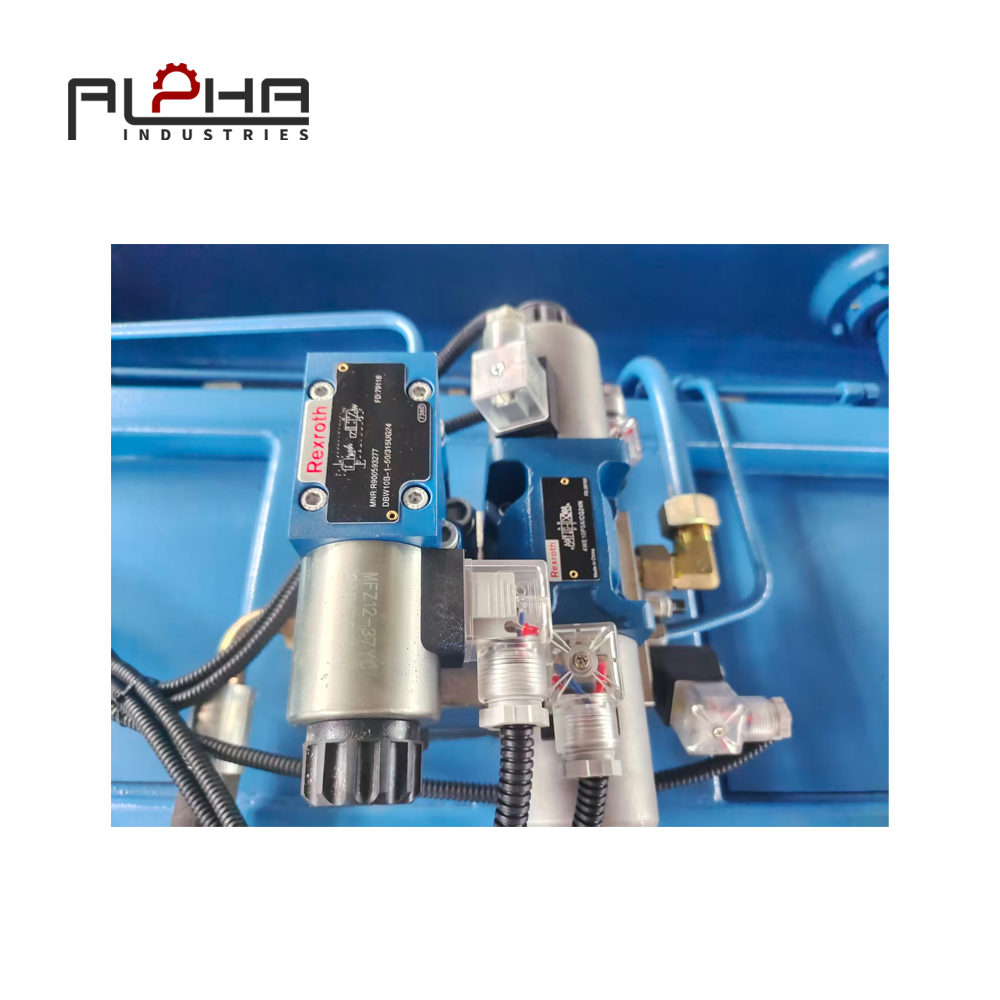
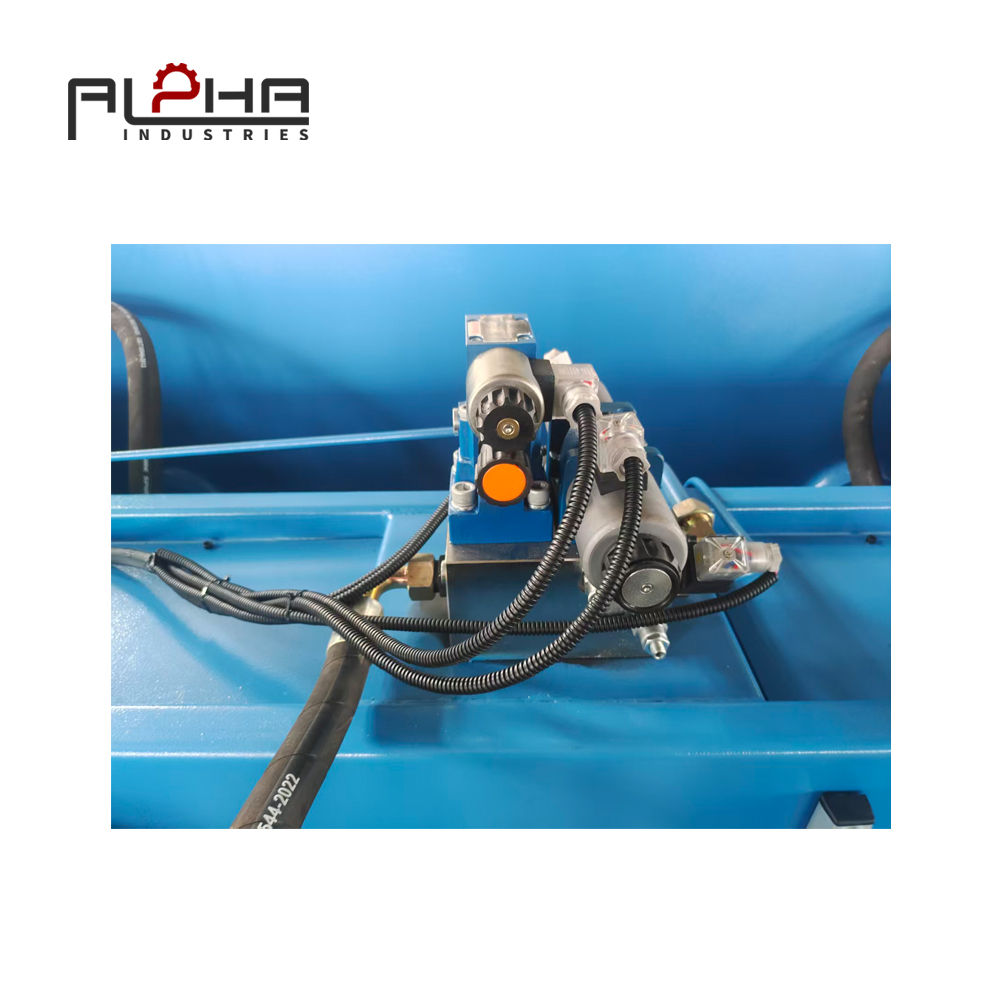
Hydraulic systems are widely used in industrial press brakes.
The hydraulic system provides the force required to move the ram and perform the bending operation.
Hydraulic press brake efficiency can be influenced by factors including:
- Hydraulic system condition
- Oil condition
- Pump performance
- Leakage
- Pressure settings
- Maintenance
- Machine loading
- Operating cycle
- Ambient conditions
A poorly maintained hydraulic system may operate less efficiently than a properly maintained system.
For Ukrainian manufacturers, regular maintenance can help keep equipment performance stable and reduce unexpected production interruptions.
Manufacturers should follow the machine manufacturer's maintenance recommendations and monitor signs such as unusual noise, excessive heat, leaks, unstable operation, or inconsistent movement.
Preventive Maintenance Can Support Energy Efficiency
Maintenance is sometimes viewed primarily as a way to prevent machine breakdowns.
It can also contribute to efficient operation.
A machine with worn components may require additional effort to achieve the same production result.
Examples can include:
- Hydraulic leakage
- Worn seals
- Poor lubrication
- Misalignment
- Electrical issues
- Cooling problems
- Dirty filters
- Incorrect pressure settings
Regular inspection can help identify these issues before they develop into larger production problems.
For Ukrainian manufacturers operating several press brake machines, a structured maintenance schedule can also help make machine performance more predictable.
Why Production Planning Matters for Energy Consumption
Energy efficiency begins before the press brake starts bending.
Production scheduling can influence machine utilization significantly.
If a press brake is repeatedly started, stopped, changed over, and left waiting for material, the production process may become less efficient.
A better production plan can group compatible jobs according to:
- Material
- Thickness
- Tooling
- Production quantity
- Part geometry
- Delivery priority
Grouping similar jobs can reduce unnecessary setup activity.
It can also help the machine maintain a more continuous production rhythm.
For Ukrainian manufacturers handling customized orders and different production batches, better scheduling can help balance flexibility and machine utilization.
Reduce Changeover Time to Improve Energy Productivity
Changeover optimization is particularly important for high-mix manufacturers.
Every changeover can involve:
- Tool replacement
- Program selection
- Backgauge setup
- Material preparation
- First-part inspection
During this period, the machine may be consuming energy without producing finished parts.
A more efficient process prepares the next job before the previous job is completed.
The operator can have:
- Material ready
- CNC program ready
- Tooling ready
- Drawing available
- Inspection requirements confirmed
This can reduce the transition between production orders.
The goal is not merely faster setup.
The goal is more productive machine hours.
Tooling Selection Can Influence Production Efficiency
Press brake tooling affects both bending performance and setup requirements.
Poor tooling organization can result in:
- Longer setup times
- Additional machine adjustments
- More trial bends
- Increased operator workload
Standardized tooling can make repeat jobs easier to prepare.
For high-mix production, organized tooling storage can reduce the time required to locate and install the correct tools.
Again, the energy benefit is indirect.
Better tooling management means less machine time spent waiting or preparing.
First-Part Inspection and Energy Efficiency
Quality control also has an energy component.
Suppose a press brake produces a large batch of components before an incorrect bending parameter is discovered.
The manufacturer may need to:
- Rework parts
- Rebend components
- Produce replacements
- Repeat production
- Inspect additional parts
All of these activities consume additional energy.
Therefore, accurate first-part inspection can help prevent unnecessary production.
A practical workflow is:
Setup → First Part → Inspection → Approval → Full Production
rather than:
Setup → Full Production → Inspection → Discover Problem → Rework
Preventing defective production is one of the simplest ways to avoid unnecessary resource consumption.
Energy Efficiency Does Not Mean Sacrificing Productivity
Manufacturers should be careful when evaluating energy-saving strategies.
The lowest energy consumption is not necessarily the best manufacturing result.
For example, a machine that operates at lower power but requires significantly longer production time may not provide lower total energy consumption per finished part.
A better metric is:
Energy Per Qualified Part
This considers both energy consumption and production output.
The concept can be extended to:
Energy Cost per Qualified Component
This provides a more useful comparison between different production processes.
Ukrainian manufacturers can use this approach to evaluate whether improvements in machine efficiency produce measurable manufacturing benefits.
The Importance of Energy Efficiency for Multi-Machine Facilities
Energy management becomes even more relevant when a factory operates several press brakes.
One machine may not represent a large portion of total factory energy consumption.
But several machines operating across multiple shifts create a different situation.
Manufacturers can therefore monitor:
- Machine operating hours
- Idle hours
- Production hours
- Maintenance downtime
- Output
- Energy consumption
This information can help identify machines or production periods where utilization is lower than expected.
Instead of making assumptions, manufacturers can use production data to identify where improvements may be possible.
Digital Production Monitoring Can Improve Visibility
Modern manufacturing increasingly depends on production data.
Depending on the machine and control architecture, manufacturers may be able to monitor information such as:
- Production cycles
- Machine status
- Program usage
- Downtime
- Production quantities
- Alarm conditions
- Maintenance requirements
This information can help managers understand why a machine is consuming operating time without producing output.
For example:
High Idle Time + Low Output
may indicate a workflow problem.
While:
High Production Time + High Scrap
may indicate a quality or process-control problem.
These require different solutions.
Energy Efficiency and Labor Productivity Are Connected
Energy efficiency is also related to operator productivity.
An operator who spends a large part of the shift waiting for materials, searching for tooling, or correcting machine settings may not be using the press brake efficiently.
Standardized workflows can help reduce this lost time.
For example:
Material Ready + Program Ready + Tooling Ready + Operator Ready
creates a smoother production start.
This can improve machine utilization while also reducing unnecessary operator waiting.
For Ukrainian manufacturers facing pressure on production efficiency and technical labor availability, improving workflow efficiency can support both machine and labor productivity.
Automation Can Improve Productive Machine Utilization
Automation can provide another pathway toward improved production efficiency.
Depending on the application, automation may include:
- Automatic material loading
- Robotic workpiece handling
- Automatic unloading
- Tool management
- CNC programming
- Production monitoring
The key is to automate the bottleneck.
If the main problem is manual loading, loading automation may provide greater value than a more sophisticated bending control.
If the main problem is frequent setup, standardized CNC programming and tooling management may be more appropriate.
Automation should therefore follow production analysis rather than precede it.
When Automation May Not Be Necessary
Not every Ukrainian manufacturer needs a fully automated press brake cell.
For high-mix, low-volume production, a flexible CNC press brake operated by a skilled worker may provide an appropriate balance between flexibility and efficiency.
A fully automated cell may be more suitable when:
- Production volume is high
- Part geometry is relatively stable
- Material handling can be standardized
- Production runs are long
- Labor savings justify the investment
For customized job shops, the priorities may be different.
Flexibility, fast setup, and easy program changes can be more important.
Press Brake Energy Efficiency and the Ukraine Market
Ukrainian manufacturers operate across different industries and production environments.
A large industrial manufacturer may prioritize continuous production and automation.
A smaller fabrication workshop may prioritize flexibility and fast changeovers.
A contract manufacturer may need to handle frequent customer-specific designs.
A manufacturer of agricultural or construction equipment may need to process large and thick components.
Therefore, there is no single press brake configuration that is ideal for every application.
Energy efficiency must be considered within the context of:
- Production volume
- Material type
- Sheet thickness
- Bending length
- Number of shifts
- Machine utilization
- Product variety
- Labor availability
- Automation level
This application-specific approach is more useful than evaluating energy consumption as an isolated specification.
Safety Must Remain Part of Press Brake Efficiency
Energy efficiency should never compromise machine safety.
Manufacturers should evaluate energy efficiency together with:
- Machine safeguarding
- Operator training
- Maintenance
- Safe setup procedures
- Work area organization
- Emergency procedures
An efficient production process is only successful when it is also operated appropriately and safely.
A Practical Press Brake Energy Efficiency Checklist
Manufacturers can begin with a simple review of their current operation.
Machine
- Is the press brake properly maintained?
- Are hydraulic systems operating correctly?
- Are there signs of leakage or abnormal operation?
- Are machine parameters appropriately configured?
Production
- How many hours per shift are spent actually bending?
- How much time is spent waiting?
- How often are jobs changed?
- How much time is spent on setup?
Programming
- Are repeat programs stored?
- Are bending sequences optimized?
- Is unnecessary backgauge movement minimized?
Tooling
- Are frequently used tools organized?
- Are tool changes efficient?
- Are tools properly maintained?
Quality
- Is first-part inspection standardized?
- How much rework occurs?
- How much scrap is generated?
Automation
- Is the main bottleneck related to loading, bending, unloading, or setup?
- Would selective automation address the actual problem?
This checklist can provide a starting point before investing in new equipment.
How ALPHA Approaches Press Brake Solutions
At ALPHA, press brake selection is considered as part of the customer's complete production process.
The objective is not simply to provide a machine with a particular tonnage or bending length.
A suitable solution should match the customer's:
- Material requirements
- Sheet thickness
- Bending length
- Production volume
- Product variety
- CNC requirements
- Tooling
- Machine utilization
- Labor structure
- Automation plans
For a high-mix manufacturer, fast setup and flexible CNC programming may be important.
For a high-volume manufacturer, production automation and continuous utilization may be more relevant.
For a heavy fabrication operation, machine capacity and reliable handling of large workpieces may take priority.
By evaluating these factors together, Ukrainian manufacturers can make more informed decisions about press brake configuration and long-term operating efficiency.
Frequently Asked Questions
How can a press brake become more energy efficient?
Energy efficiency can be improved through appropriate machine selection, reduced idle time, optimized production planning, efficient CNC programming, preventive maintenance, and better machine utilization.
Does a CNC press brake use less energy?
Energy consumption depends on the machine design and operating conditions. CNC control can improve production efficiency by reducing setup and positioning time, which may increase productive output relative to operating time.
Why is idle time important for press brake energy efficiency?
During idle periods, the machine may consume energy without producing finished parts. Reducing unnecessary waiting can improve productive output relative to energy consumed.
Can maintenance affect press brake energy efficiency?
Yes. Proper maintenance can help keep hydraulic, electrical, mechanical, and control systems operating as intended. Maintenance requirements should follow the machine manufacturer's recommendations.
Is a hydraulic press brake energy efficient?
Energy efficiency depends on the specific machine design, hydraulic system, operating cycle, maintenance condition, and production requirements. It should be evaluated based on actual energy use and production output.
How does production planning affect energy consumption?
Better scheduling can reduce unnecessary waiting and changeovers, allowing the machine to spend more of its operating time producing qualified parts.
Should manufacturers choose a press brake based only on power consumption?
No. Manufacturers should consider total production performance, including energy consumption, bending capacity, productivity, quality, setup time, maintenance, labor requirements, and expected production volume.
Can automation reduce energy consumption?
Automation may improve productive machine utilization by reducing waiting, handling, or setup time. Whether it reduces energy per qualified part depends on the complete system and production conditions.
Conclusion
For manufacturers in Ukraine, press brake energy efficiency is not simply a question of machine power consumption.
The more useful question is how efficiently the machine converts operating time and energy into qualified production.
A press brake that spends too much time waiting for material, changing tools, repeating setup procedures, correcting quality problems, or operating below its productive capacity may have significant opportunities for improvement.
Manufacturers can begin by focusing on:
Reduced Idle Time + Better CNC Programming + Efficient Changeovers + Preventive Maintenance + Optimized Production Planning + Appropriate Automation
The objective is not to reduce machine activity at any cost.
It is to increase the amount of useful production generated by each operating hour.
For ALPHA, this means evaluating press brake solutions according to the complete manufacturing environment rather than focusing on one machine specification.
When selecting a new press brake machine, Ukrainian manufacturers should consider bending requirements, material characteristics, production volume, CNC configuration, tooling, maintenance, operator workflow, energy use, and future automation together.
For manufacturers in Ukraine looking to improve their sheet metal bending operations, ALPHA can help evaluate the appropriate press brake configuration according to specific production requirements.
Contact ALPHA to discuss your press brake and sheet metal manufacturing requirements: