

Vertical Machining Center Reliability: Why Reducing Downtime Has Become a Priority for Manufacturers Across the Americas
For many manufacturers across North America, Central America, and South America, production downtime is no longer simply a maintenance issue.
It has become a serious business problem.
When a Vertical Machining Center stops unexpectedly, the consequences can quickly spread throughout the entire production process.
One machine failure can lead to:
- Delayed customer orders
- Missed delivery schedules
- Idle operators
- Production bottlenecks
- Emergency maintenance costs
- Overtime expenses
- Reduced machine utilization
- Lost production capacity
For manufacturers operating in competitive industrial markets, the real cost of downtime is often much higher than the cost of repairing a single component.
This is why more companies are evaluating CNC equipment based not only on machining speed or purchase price, but also on long-term reliability and production continuity.
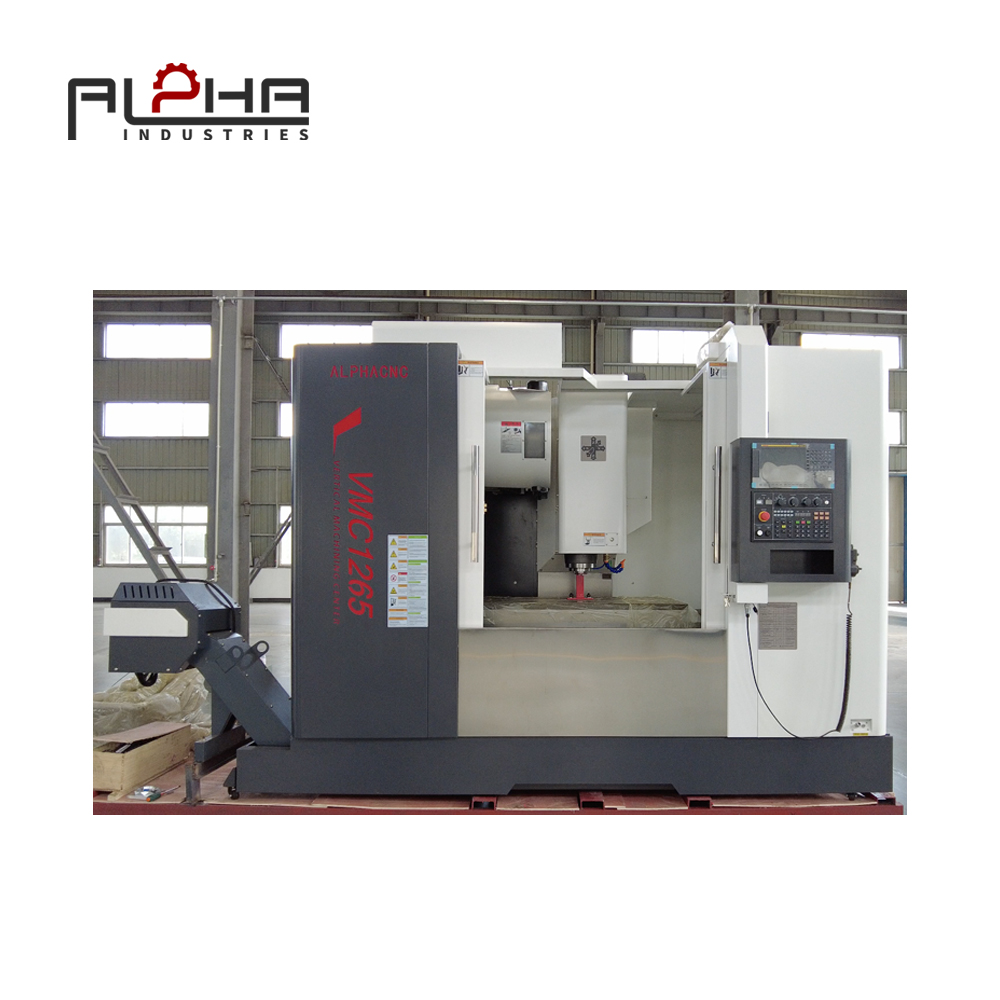
A reliable Vertical Machining Center, commonly known as a VMC, plays an important role in helping manufacturers maintain stable production and reduce unexpected interruptions.
For many factories across the Americas, the question is no longer:
How fast can this machine machine a part?
The more important question is:
How consistently can this machine continue producing parts every day?
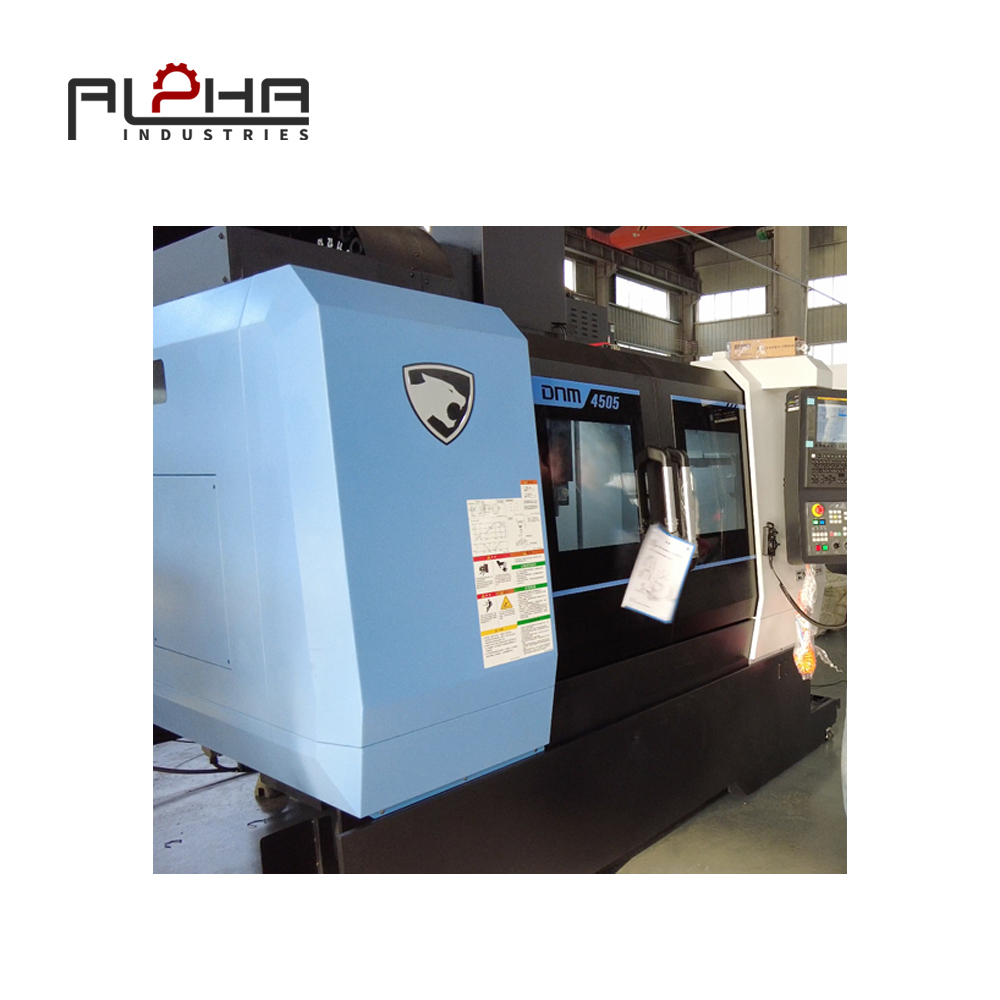
Why Unplanned Downtime Is Such an Expensive Manufacturing Problem
Every manufacturing facility depends on production flow.
When CNC equipment operates continuously and predictably, scheduling becomes easier. Material moves through the factory according to plan, operators can manage production more efficiently, and delivery dates are easier to maintain.
However, unplanned downtime creates uncertainty.
A CNC machine may stop because of:
- Electrical failures
- Spindle problems
- Lubrication issues
- Poor maintenance
- Component wear
- Cooling problems
- Servo system errors
- Control system issues
- Chip accumulation
- Operator-related problems
The immediate repair may be relatively simple.
However, the indirect costs can continue long after the machine is restarted.
For example, a manufacturer may need to:
- Stop the production line.
- Diagnose the problem.
- Wait for replacement parts.
- Schedule maintenance personnel.
- Restart and test the machine.
- Reorganize production schedules.
- Increase overtime to recover lost capacity.
This chain reaction can significantly increase the total cost of production.
For companies serving demanding industries, machine reliability is therefore directly connected to profitability.
The Americas Manufacturing Market Is Facing Increasing Pressure to Keep Machines Running
Manufacturers throughout the Americas are facing a combination of operational challenges.
These challenges include:
- Higher labor costs
- Shortages of skilled CNC technicians
- Pressure for faster delivery
- Increasing customer quality requirements
- More complex machined parts
- Rising maintenance costs
- Supply chain uncertainty for replacement components
In many factories, experienced maintenance personnel are responsible for multiple machines.
When a major CNC machine stops, maintenance teams may not always be able to respond immediately.
If replacement parts are not locally available, downtime can become even longer.
For this reason, manufacturers increasingly value machines designed to support:
- Stable operation
- Predictable maintenance
- Easy inspection
- Efficient troubleshooting
- Long-term durability
A reliable Vertical Machining Center can help reduce the risk of unexpected production interruptions before they become major operational problems.
The Real Manufacturing Pain Point: Lost Production Capacity
Many companies calculate downtime based only on maintenance expenses.
However, the larger cost is often lost production capacity.
Imagine a VMC that normally produces components continuously throughout the day.
If the machine stops unexpectedly for several hours, the factory does not simply lose several hours of machine operation.
It may also lose:
- Scheduled production capacity
- Available operator time
- Material flow efficiency
- Assembly capacity
- Shipping flexibility
If the machine is part of a larger production process, the impact can become even greater.
Downstream operations may be forced to wait for components.
For example:
Raw Material → CNC Machining → Inspection → Assembly → Final Delivery
If the CNC machining stage stops, the entire production chain may be affected.
This is why reducing downtime is particularly important for manufacturers using Vertical Machining Centers for critical components.
How a Vertical Machining Center Helps Improve Production Continuity
A high-quality Vertical Machining Center is designed to provide more than precision machining.
It must also support stable and repeatable long-term operation.
Several machine design factors directly influence reliability.
1. Rigid Machine Structure Supports Stable Machining
Machine rigidity is one of the foundations of reliable CNC machining.
During milling operations, the cutting tool creates continuous forces and vibrations.
If the machine structure is not sufficiently rigid, manufacturers may experience:
- Excessive vibration
- Reduced surface quality
- Tool wear
- Lower machining accuracy
- Unstable cutting conditions
These problems can also place additional stress on machine components.
A rigid Vertical Machining Center helps provide a stable foundation for the machining process.
Stable machining conditions can reduce unnecessary stress on critical systems and support longer-term production reliability.
For manufacturers machining steel, cast materials, aluminum, and other industrial materials, machine rigidity should be considered an important factor in both accuracy and durability.
2. Spindle Reliability Directly Affects Machine Availability
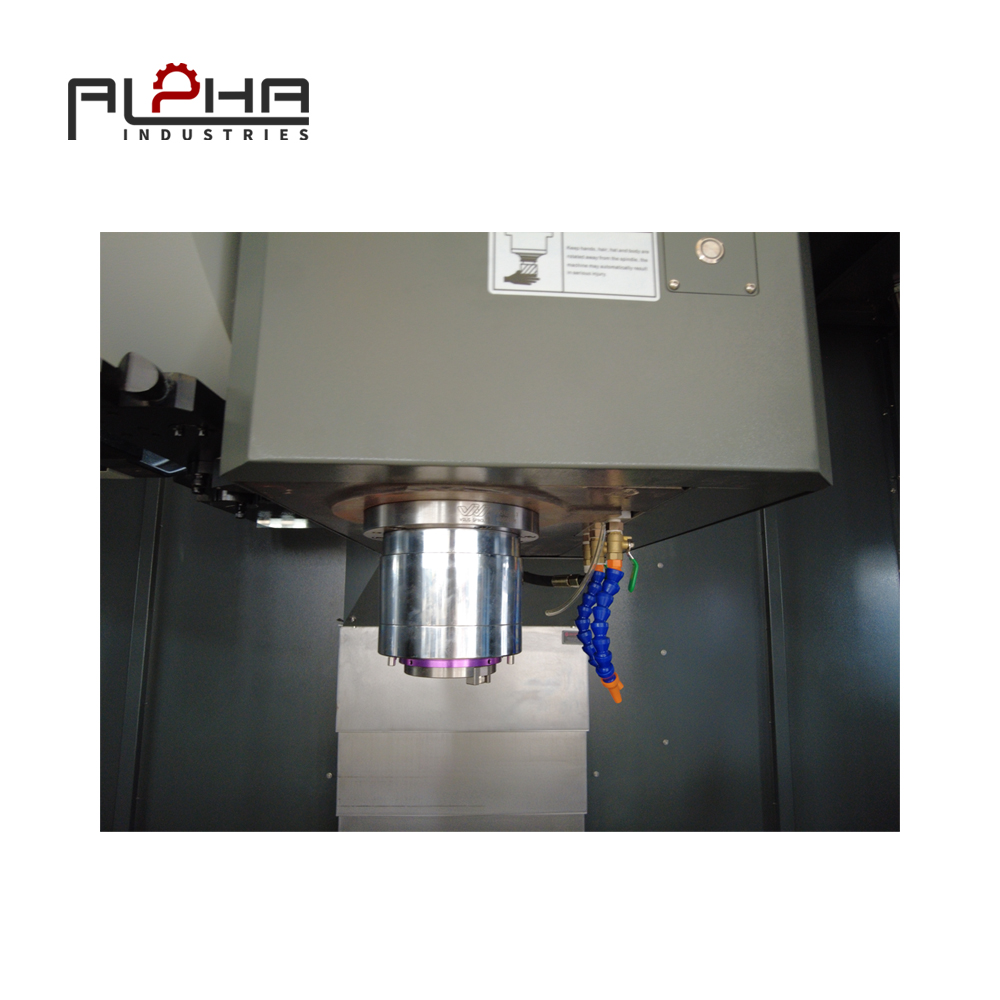
The spindle is one of the most critical systems in a Vertical Machining Center.
It operates at high speed and must maintain stable performance during demanding machining operations.
A spindle problem can immediately stop production.
Therefore, manufacturers should consider:
- Spindle design
- Speed requirements
- Cooling methods
- Bearing quality
- Load capability
- Maintenance requirements
Selecting the correct spindle configuration is important.
A machine should not simply have the highest possible spindle speed.
The spindle should match the actual machining application.
For example, manufacturers performing heavy-duty machining may prioritize torque and cutting stability.
Manufacturers producing high-speed aluminum components may prioritize higher spindle speeds.
Selecting the right spindle for the application can help avoid unnecessary operating stress.
3. Effective Lubrication Helps Protect Critical Components
Guideways, ball screws, and other moving components depend on proper lubrication.
Insufficient lubrication can increase friction and accelerate component wear.
Over time, this can lead to:
- Reduced positioning accuracy
- Increased maintenance requirements
- Component damage
- Unexpected machine stoppages
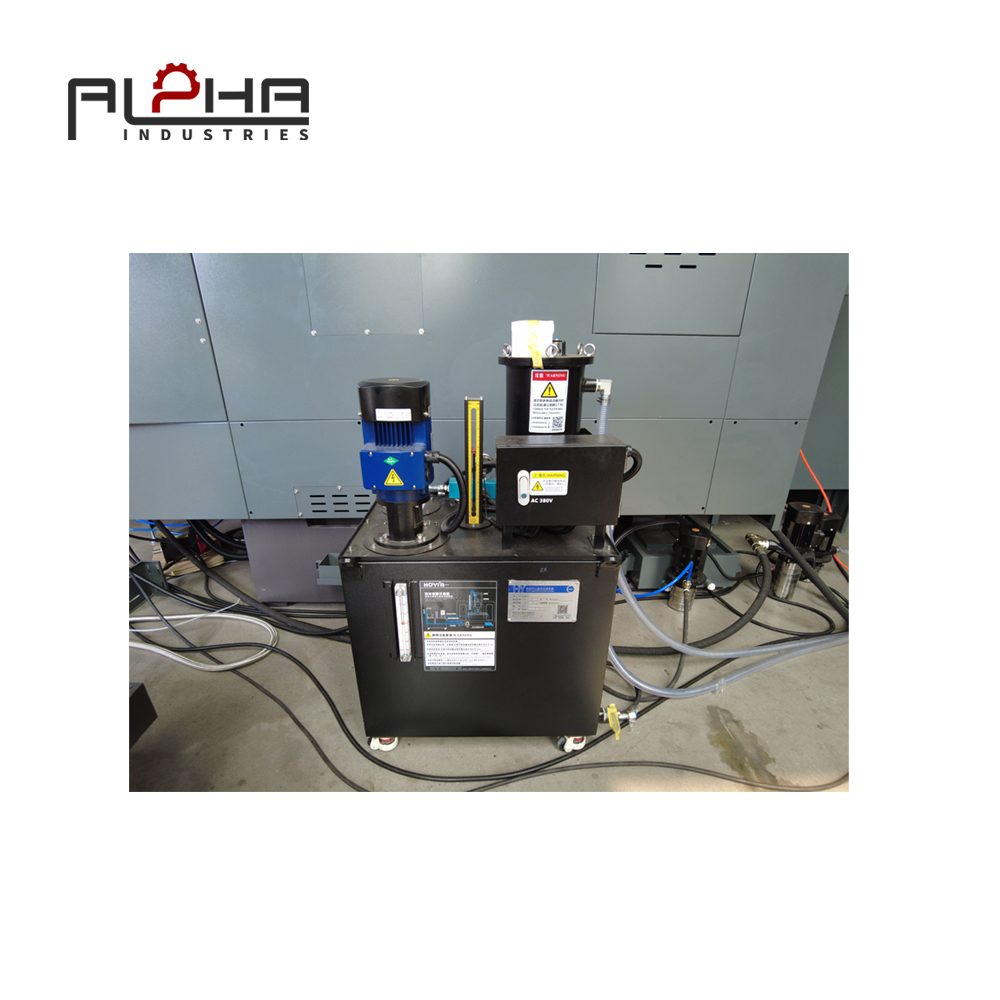
An effective automatic lubrication system helps ensure that critical components receive consistent lubrication.
However, manufacturers should also establish regular maintenance inspections.
Automation reduces the risk of human error, but maintenance procedures remain essential.
A reliable VMC should support easy access to routine maintenance points.
4. Chip Management Can Prevent Unexpected Production Problems
Chip accumulation is often underestimated.
During continuous CNC machining, large quantities of chips can be generated.
If chips are not effectively removed, they may interfere with:
- Tool changes
- Workpiece positioning
- Coolant flow
- Machine operation
In some applications, poor chip management can increase operator workload and create unnecessary production interruptions.
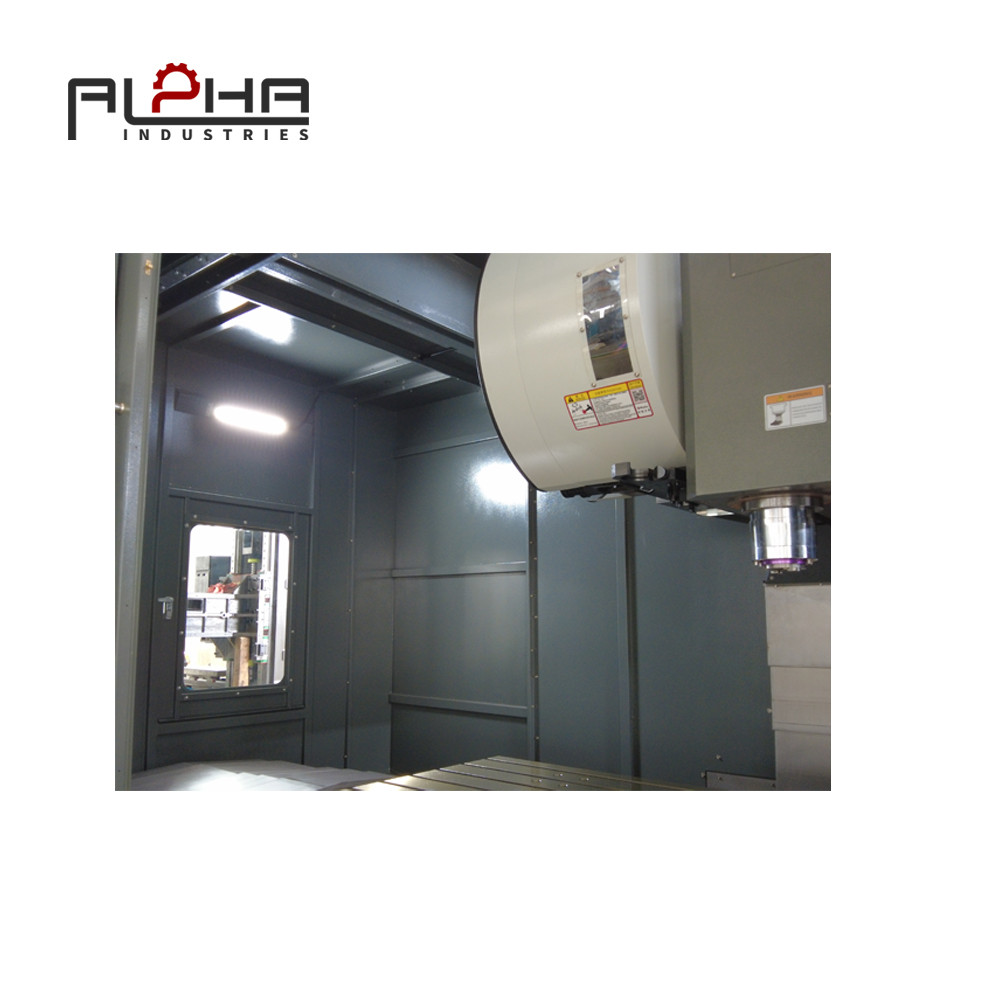
An effective chip removal system helps maintain a cleaner machining environment.
Depending on the application, manufacturers may require:
- Chip conveyors
- Coolant systems
- Chip flushing systems
- High-pressure coolant options
The correct configuration depends on the material and machining process.
5. Reliable CNC Control Systems Improve Troubleshooting Efficiency
Modern CNC controls do more than execute machining programs.
They also help operators monitor machine performance.
A reliable control system can support:
- Alarm management
- Position monitoring
- Program control
- Diagnostic functions
- Production repeatability
When a machine problem occurs, faster diagnosis can reduce downtime.
Manufacturers should therefore consider not only the CNC control itself but also how easily operators and maintenance teams can identify and resolve common issues.
For factories with limited access to highly specialized CNC technicians, user-friendly control and diagnostic functions can provide important operational advantages.
Preventive Maintenance Is More Cost-Effective Than Emergency Repair
One of the most effective strategies for reducing VMC downtime is preventive maintenance.
Instead of waiting for a machine component to fail, manufacturers can establish regular inspection procedures.
A preventive maintenance program may include:
- Checking lubrication levels
- Inspecting coolant systems
- Cleaning chips
- Monitoring spindle performance
- Checking machine alignment
- Inspecting electrical systems
- Reviewing alarms
- Checking air systems
The goal is simple:
Identify small problems before they become major machine failures.
For manufacturers across the Americas, this approach can be especially important when replacement parts or specialized service personnel are not immediately available.
A short inspection can prevent a long production interruption.
The Difference Between Planned Downtime and Unplanned Downtime
Not all downtime is equally damaging.
Planned Downtime
Planned downtime includes:
- Scheduled maintenance
- Regular inspections
- Tool replacement
- Machine cleaning
- Software updates
This downtime can usually be scheduled around production requirements.
Unplanned Downtime
Unplanned downtime may involve:
- Unexpected machine failures
- Emergency repairs
- Component breakdowns
- Electrical problems
- Spindle failures
This type of downtime is more disruptive because it occurs without warning.
The objective for manufacturers should not necessarily be to eliminate all downtime.
Instead, the goal should be to convert as much unplanned downtime into planned maintenance time as possible.
A reliable Vertical Machining Center combined with a structured maintenance strategy can support this objective.
Why Machine Price Alone Can Be a Risky Purchasing Decision
When purchasing a CNC machine, the initial purchase price is easy to compare.
However, the purchase price is only one part of the long-term investment.
Manufacturers should also consider:
- Machine reliability
- Maintenance requirements
- Spare parts availability
- Energy consumption
- Operator efficiency
- Machine lifespan
- Production capacity
- Downtime risk
A lower initial machine price may not always result in a lower long-term operating cost.
If a machine requires frequent maintenance or creates repeated production interruptions, the total cost can increase significantly.
This is why manufacturers should consider the Total Cost of Ownership.
A Vertical Machining Center should be evaluated based on the value it provides throughout its operating life.
How to Select a Vertical Machining Center for Higher Reliability
Before purchasing a VMC, manufacturers should analyze their actual production requirements.
Important questions include:
What Materials Will Be Machined?
Different materials create different machining requirements.
For example:
- Aluminum may require higher-speed machining.
- Steel may require greater cutting stability.
- Harder materials may require stronger machine rigidity.
The machine configuration should match the application.
What Is the Expected Production Volume?
A machine used occasionally has different requirements from a machine operating continuously.
High-volume production requires strong attention to:
- Reliability
- Automation
- Tool capacity
- Chip management
- Maintenance planning
What Are the Required Machining Dimensions?
Manufacturers should evaluate:
- X-axis travel
- Y-axis travel
- Z-axis travel
- Table size
- Maximum workpiece weight
Selecting a machine that properly fits the workpiece reduces unnecessary operational limitations.
What Level of Automation Is Required?
Automation can help manufacturers improve machine utilization.
Depending on production requirements, options may include:
- Automatic tool changers
- Automatic pallet systems
- Robotic loading
- Production monitoring
Automation should be selected based on actual production needs rather than simply adding unnecessary complexity.
How Alpha Helps Manufacturers Build More Reliable CNC Machining Operations
Alpha provides CNC machining solutions designed for manufacturers with different production requirements.
When selecting a Vertical Machining Center, the correct machine should be based on the customer's actual machining application.
Important factors include:
- Workpiece dimensions
- Material type
- Required machining accuracy
- Production volume
- Cutting requirements
- Automation needs
- Factory operating conditions
Alpha focuses on helping customers evaluate equipment as part of a complete production solution.
A CNC machine is not simply a piece of equipment.
It becomes part of the manufacturer's long-term production capacity.
Therefore, selecting the correct Vertical Machining Center requires consideration of both current production requirements and future development plans.
Frequently Asked Questions About Vertical Machining Centers
What is a Vertical Machining Center?
A Vertical Machining Center is a CNC machine that typically uses a vertically oriented spindle to perform operations such as milling, drilling, boring, and precision machining.
What is the difference between a VMC and a traditional milling machine?
A VMC provides CNC-controlled automated machining with programmable multi-axis movement, higher repeatability, and greater efficiency for complex production requirements.
How can manufacturers improve VMC machine life?
Manufacturers can improve machine life through correct operation, regular maintenance, proper lubrication, effective chip management, and selecting suitable cutting parameters.
What industries use Vertical Machining Centers?
VMC machines are widely used in automotive, aerospace, mold manufacturing, machinery manufacturing, energy equipment, electronics, and general precision machining.
How important is machine rigidity?
Machine rigidity is extremely important because it affects machining stability, vibration control, cutting performance, accuracy, and long-term component wear.
Reliable CNC Production Starts with Reducing the Risk of Downtime
For manufacturers across the Americas, machine downtime is becoming an increasingly important operational challenge.
Customer delivery expectations continue to increase.
Production schedules are becoming tighter.
Skilled maintenance resources may be limited.
Under these conditions, CNC reliability has become a competitive advantage.
A well-configured Vertical Machining Center can help manufacturers improve production continuity by providing stable machining performance, easier maintenance, reliable component operation, and consistent production capability.
The goal is not simply to buy a faster CNC machine.
The goal is to build a machining operation that can continue producing reliably.
By focusing on machine reliability, preventive maintenance, correct configuration, and long-term production requirements, manufacturers can reduce the hidden costs associated with unexpected downtime.
For companies planning to improve CNC machining capacity, investing in the right Vertical Machining Center can support higher equipment utilization, more predictable production schedules, and stronger long-term manufacturing performance.
Explore Alpha Vertical Machining Center Solutions
Looking for a reliable Vertical Machining Center for your manufacturing operation?
Alpha can help evaluate CNC machining solutions based on your:
- Workpiece size
- Material requirements
- Machining process
- Accuracy requirements
- Production volume
- Automation goals
Contact Us to discuss your CNC machining requirements and find a suitable Vertical Machining Center solution for your factory.