

Scrap Reduction Has Become a Top Priority for Manufacturers Across the Americas
For decades, manufacturers measured success by increasing production output. Today, however, producing more parts does not necessarily mean generating higher profits.
Across the United States, Canada, Mexico, Brazil, Chile, Colombia, Peru, and other manufacturing economies in the Americas, companies are facing a different challenge: reducing production waste while maintaining precision and delivery performance.
Material costs continue to rise. Customers demand tighter tolerances. OEMs require complete quality documentation. At the same time, manufacturers are expected to shorten lead times without compromising consistency.
Under these conditions, every rejected component represents a direct financial loss.
Unfortunately, many factories still rely on aging machining centers that struggle to maintain stable dimensional accuracy over long production cycles. As machining consistency declines, scrap rates gradually increase, often without management realizing how much profit is being lost.
For many manufacturers, reducing scrap has become one of the fastest ways to improve profitability without expanding production capacity.
Why Scrap Costs Much More Than Raw Material
Many manufacturers only calculate the value of the material that is thrown away.
In reality, the true cost of scrap is significantly higher.
Every rejected workpiece has already consumed valuable production resources, including:
- Machine operating hours
- Cutting tools
- Coolant and lubricants
- Electricity
- Operator labor
- CNC programming time
- Quality inspection
- Internal logistics
- Production scheduling
If a precision aluminum housing or stainless-steel component is rejected after its final machining operation, all previous manufacturing costs are lost.
For suppliers serving aerospace, automotive, energy, medical, and precision engineering industries, excessive scrap also damages customer confidence and supplier performance ratings.
The Main Causes of Machining Inconsistency
Manufacturers often blame operators when parts fail inspection.
However, many quality issues originate from the machine itself.
Machine Structure Deformation
An aging machine loses rigidity over years of heavy production.
Frame deformation and guideway wear gradually reduce machining accuracy, particularly during heavy cutting.
The result is inconsistent dimensions between batches.
Thermal Instability
Continuous machining generates heat throughout the spindle, ballscrews, and machine structure.
Older machining centers struggle to compensate for thermal expansion, causing dimensional drift during long production runs.
Manufacturers frequently discover that the first part passes inspection while later parts fall outside tolerance.
Spindle Vibration
As spindle bearings wear, vibration increases.
Even minor vibration can affect:
- Surface roughness
- Hole roundness
- Circular interpolation
- Cutting stability
- Tool life
These issues contribute directly to higher rejection rates.
Tool Wear Without Monitoring
Many traditional machining centers rely entirely on operator experience to determine when tools should be replaced.
As cutting edges wear, dimensional variation gradually increases until parts fail inspection.
Without intelligent tool management, scrap often occurs before operators recognize the problem.
How Modern VMC Technology Improves First-Pass Yield
Today's Vertical Machining Centers are designed to produce consistent machining results throughout continuous production.
Instead of simply increasing cutting speed, modern VMCs prioritize machining stability.
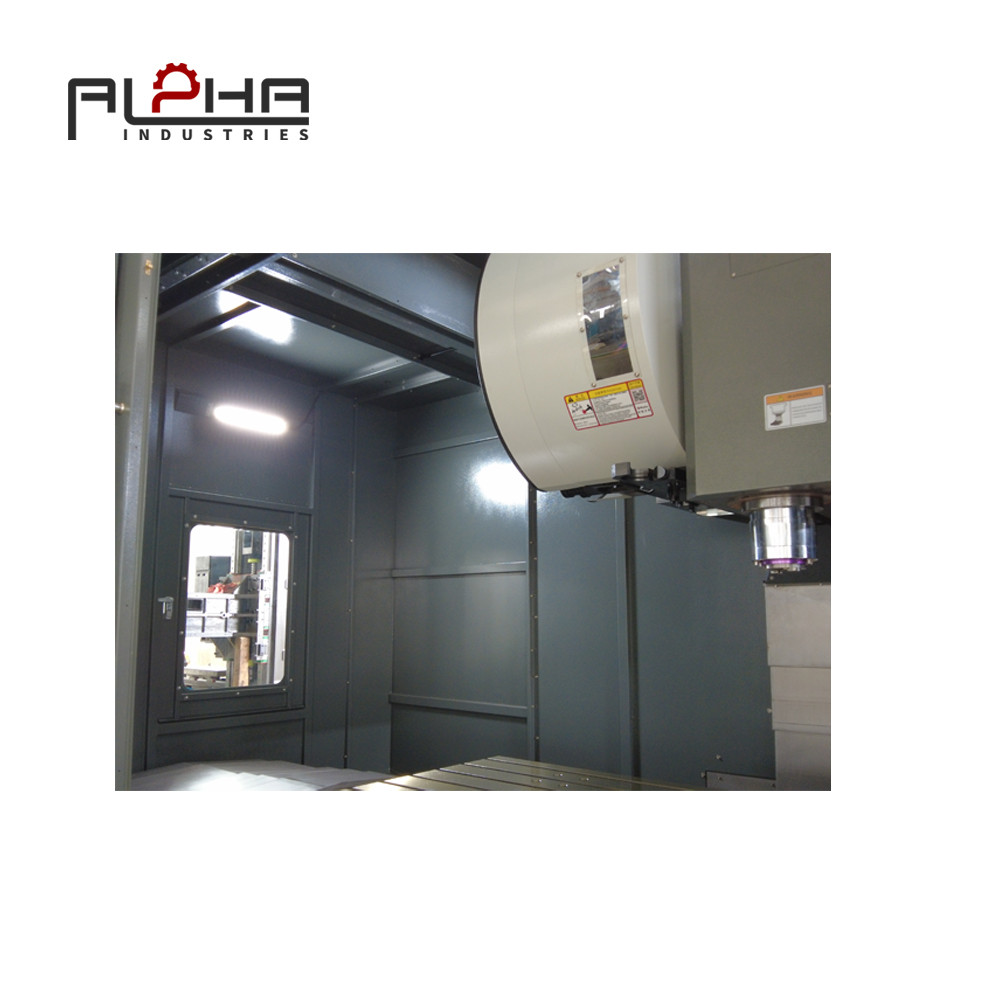
High-Rigidity Machine Construction
A rigid machine base absorbs cutting forces more effectively.
Benefits include:
- Better dimensional stability
- Lower vibration
- Improved surface finish
- Longer tool life
- Consistent machining accuracy
Heavy-duty cast structures maintain precision even during aggressive roughing operations.
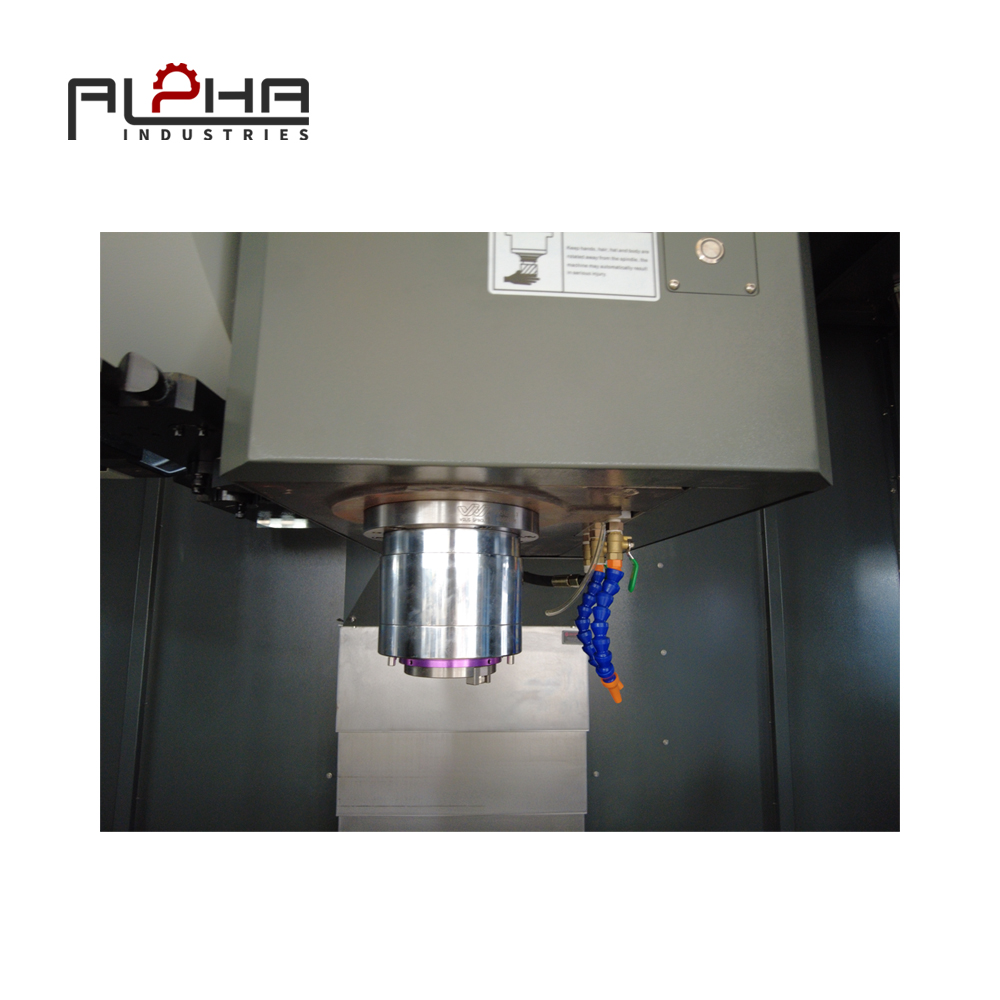
Precision Spindle Systems
Modern spindle technology delivers:
- Stable rotational accuracy
- Reduced thermal growth
- Lower vibration
- High-speed cutting capability
- Extended bearing life
Stable spindle performance ensures every component is machined under consistent cutting conditions.
Intelligent Thermal Compensation
Advanced CNC systems continuously compensate for temperature changes throughout the machine.
This minimizes dimensional drift during long machining cycles and helps maintain precision from the first part to the last.
Automatic Tool Measurement
Many modern VMCs integrate automatic tool setters capable of measuring:
- Tool length
- Tool diameter
- Tool breakage
- Wear compensation
This dramatically reduces human error while maintaining machining consistency.
High-Resolution Feedback Systems
Modern servo systems provide precise position feedback throughout every machining movement.
This improves contour accuracy while ensuring excellent repeatability for complex geometries.
Why Consistency Matters More Than Maximum Cutting Speed
Some manufacturers select machining centers based primarily on spindle RPM or rapid traverse speed.
While these specifications are important, they rarely determine long-term profitability.
Consider two production scenarios:
Machine A: Produces parts 8% faster but rejects 5% of finished components.
Machine B: Produces slightly slower but maintains a first-pass yield above 99%.
Over an entire year, Machine B often generates substantially higher profits because nearly every machined part can be shipped directly to customers.
Reliable quality is ultimately more valuable than short-term machining speed.
Industry 4.0 Is Making Quality More Predictable
Manufacturers throughout the Americas are increasingly adopting digital production management.
Modern VMCs generate valuable production information, including:
- Spindle load history
- Tool usage data
- Alarm records
- Machine utilization
- Temperature trends
- Servo performance
- Maintenance schedules
These data enable engineers to identify process variation before quality issues occur.
Predictive manufacturing replaces reactive troubleshooting.
How Alpha VMC Solutions Help Manufacturers Achieve Stable Quality
At Alpha, we believe precision is measured not by a single perfect component, but by the ability to produce thousands of identical parts with the same accuracy.
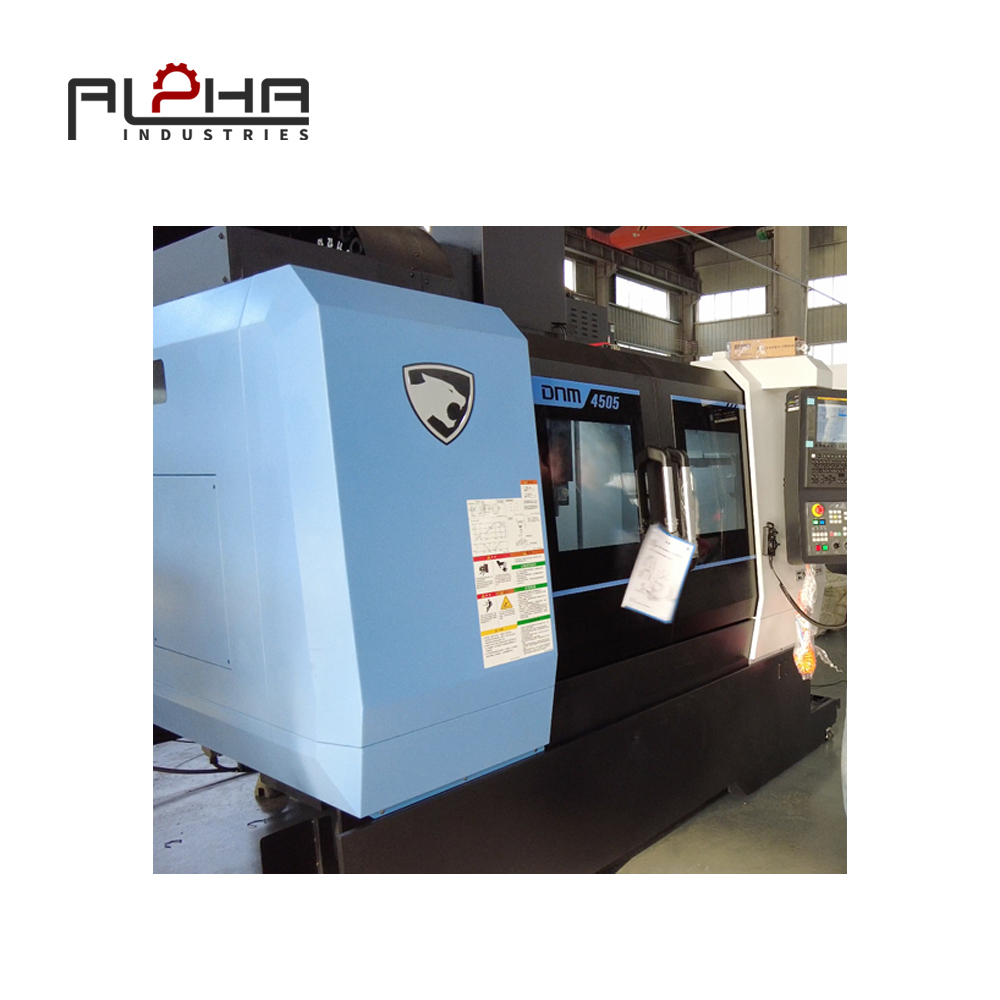
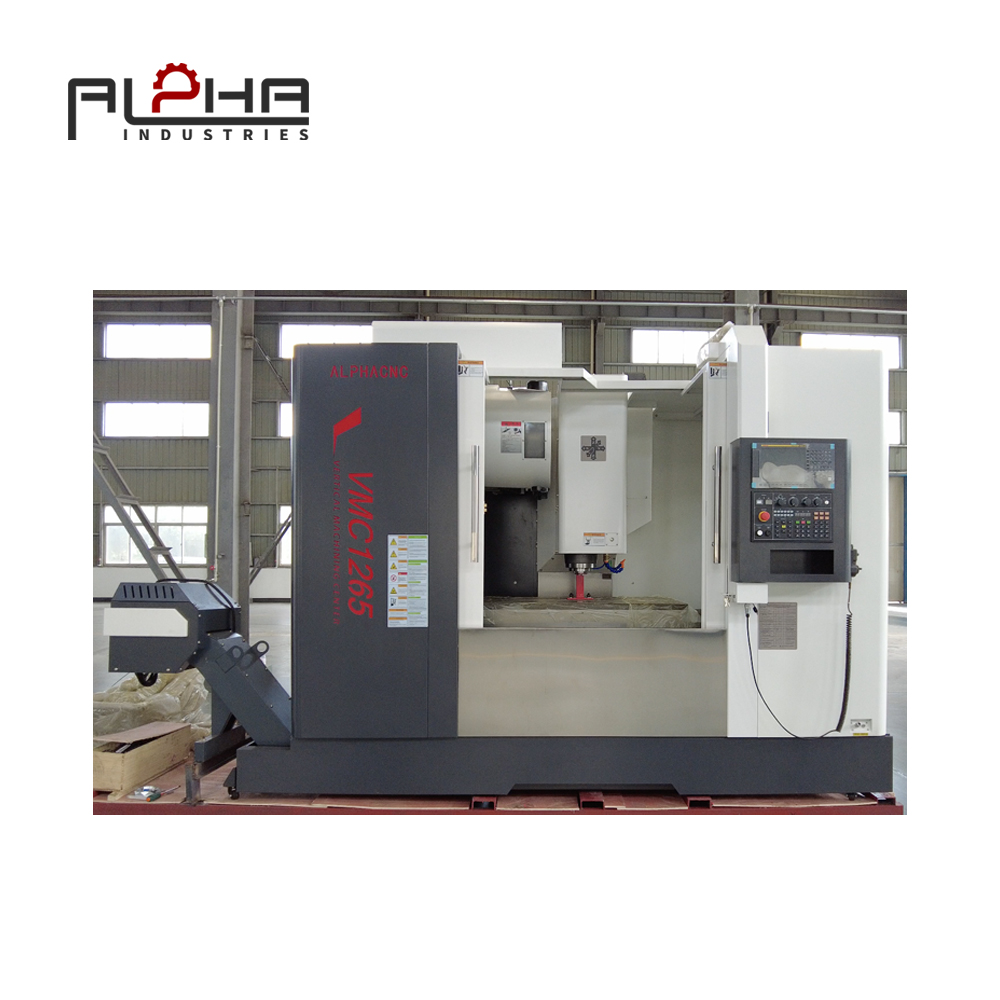
Our Vertical Machining Centers are engineered to support manufacturers seeking higher first-pass yield, lower production waste, and greater machining reliability.
Key advantages include:
- Heavy-duty machine structure for superior rigidity
- Precision spindle systems for stable cutting performance
- High-accuracy linear guideways and ball screws
- Intelligent CNC control compatibility
- Automatic tool changer for efficient production
- Excellent positioning accuracy and repeatability
- Automation-ready configurations
- Reliable technical support and engineering assistance
Whether manufacturing automotive components, hydraulic systems, aerospace structures, industrial valves, molds, or customized mechanical parts, Alpha VMC solutions help reduce machining variation while maximizing production efficiency.
Conclusion
As competition continues to intensify across the Americas, reducing production scrap has become one of the most effective ways to improve manufacturing profitability.
Investing in a modern Vertical Machining Center is no longer simply about increasing machining speed. It is about building a stable production process capable of delivering consistent quality, minimizing waste, lowering operating costs, and satisfying increasingly demanding customers.
Manufacturers that focus on machining consistency today will gain a significant competitive advantage through lower production costs, stronger customer confidence, and higher long-term profitability.
Frequently Asked Questions (FAQ)
1. Why are scrap rates increasing in modern CNC manufacturing?
Higher precision requirements, expensive materials, worn machine components, inadequate thermal stability, tool wear, and outdated CNC equipment all contribute to increased scrap rates.
2. How does a Vertical Machining Center improve first-pass yield?
A modern VMC combines rigid machine construction, precision spindle technology, intelligent thermal compensation, automatic tool measurement, and advanced CNC controls to maintain stable machining accuracy throughout production.
3. Which industries benefit most from low-scrap machining?
Automotive, aerospace, medical devices, mold manufacturing, energy equipment, hydraulic systems, agricultural machinery, and precision engineering industries all benefit from higher machining consistency.
4. Is machining consistency more important than cutting speed?
Yes. A machine producing consistent, high-quality parts with minimal scrap often generates greater annual profitability than a faster machine with frequent quality failures.
5. What should manufacturers evaluate when selecting a VMC?
Beyond spindle speed, manufacturers should consider machine rigidity, thermal stability, positioning accuracy, repeatability, automation compatibility, service support, CNC functionality, and total cost of ownership.
Contact Us
Improve Machining Consistency with Alpha Vertical Machining Centers
If your factory is struggling with excessive scrap, unstable machining quality, or increasing production costs, Alpha can help you find the right Vertical Machining Center solution.
Our engineering specialists will recommend the most suitable VMC based on your materials, precision requirements, production volume, and automation objectives, helping you achieve lower waste, higher first-pass yield, and greater manufacturing efficiency.
Whether you are replacing aging equipment or expanding your production capacity, Alpha is committed to delivering reliable CNC machining solutions for manufacturers across the Americas.
Contact our team today for expert advice and customized machining solutions.
Contact Us: Alpha CNC Contact Us