

Why Winter Preparation Matters for VMC Users in Russia
Russia's manufacturing environment covers a wide range of climates, industrial regions, and workshop conditions. While some production facilities maintain stable indoor temperatures throughout the year, others may experience substantial temperature changes between seasons, shifts, or operating periods.
For manufacturers using a Vertical Machining Center (VMC), these environmental conditions deserve attention.
A VMC is widely used for milling, drilling, tapping, boring, and other precision machining operations. It is commonly applied to the production of mechanical components, industrial equipment parts, molds, fixtures, and metal structures.
However, machining accuracy depends on more than the machine's nominal positioning specifications. The temperature of the machine structure, spindle, workpiece, cutting tools, and surrounding environment can influence dimensional results.
During winter, a machine that has remained idle overnight may start from a significantly different thermal condition than it has during continuous production. The spindle, ball screws, guideways, and cast structure may not have reached a stable operating temperature when the first workpiece is loaded.
If production begins immediately with demanding precision operations, dimensional variation may become more difficult to control.
For Russian manufacturers, the practical challenge is therefore not simply operating a VMC in a cold season. It is establishing a reliable startup and production routine that accounts for temperature differences and protects the consistency of machining results.
A suitable VMC configuration, correct installation, controlled warm-up, and appropriate coolant management can all contribute to a more stable production process.
How Low Workshop Temperatures Can Affect VMC Machining
A vertical machining center consists of multiple mechanical and electrical systems that work together to produce accurate parts.
The machine structure, spindle assembly, linear motion system, ball screws, tool system, and worktable all contribute to the final machining result.
Temperature changes can influence these components in different ways.
Thermal Expansion and Contraction
Most metal machine components expand when heated and contract when cooled.
When the temperature of a VMC changes, its bed, column, spindle housing, ball screws, and other structural elements may experience dimensional changes.
These changes are not necessarily uniform.
For example, the spindle assembly may warm up faster than the machine column. The ball screws may generate heat during axis movement, while the workpiece remains relatively cold.
When different components experience different temperature changes, the relative position between the cutting tool and workpiece may shift.
For precision machining, even a small dimensional change can become important when the part has tight tolerances.
Different Temperatures Between the Machine and Workpiece
The workpiece also needs to be considered.
A metal component brought into a heated workshop from a colder storage area may have a different temperature from the machine table and cutting tools.
As the workpiece gradually warms up, its dimensions may change.
This can affect measurement results and make it difficult to distinguish between machining errors and temperature-related dimensional changes.
For manufacturers producing precision mechanical components, allowing materials to reach a suitable and consistent temperature before critical measurement or machining can improve process control.
Changes Between Shifts
Some factories operate continuously, while others stop machines overnight or during weekends.
A VMC that has been running for several hours may be in a relatively stable thermal condition. After a long shutdown, the machine starts from a different temperature.
The first machining cycle of the day may therefore behave differently from production later in the shift.
This is one reason why a standardized startup routine is important.
According to machine-tool manufacturers' technical guidance, environmental temperature and heat generated during machining can both influence dimensional accuracy. Okuma's thermal management documentation specifically identifies ambient temperature, machine-generated heat, and cutting heat as factors affecting workpiece accuracy.
Reference: Okuma – Thermo-Friendly Concept.
Why Cold Starts Require a Proper VMC Warm-Up Procedure
A common mistake in machine operation is treating startup as a simple power-on procedure.
For a VMC, startup should also prepare the mechanical systems for the intended machining conditions.
A cold machine may have different lubrication conditions and thermal characteristics from a machine that has already been operating.
What Happens During a Cold Start?
After a long shutdown, the spindle, guideways, ball screws, and other moving components may be close to the workshop's overnight temperature.
When the machine begins operating:
-
Spindle bearings generate frictional heat.
-
Axis movement produces heat in the drive and transmission systems.
-
Lubrication conditions change as the machine operates.
-
Structural components gradually respond to temperature changes.
-
The workpiece and tooling may also experience temperature variation.
These processes occur over time rather than instantly.
If the first operation requires demanding dimensional accuracy, starting production without considering the machine's thermal condition may increase the difficulty of maintaining consistent dimensions.
Establish a Controlled Warm-Up Routine
A suitable warm-up procedure should follow the machine manufacturer's operation manual.
Depending on the machine model, the procedure may include:
-
Checking the machine's general condition before startup.
-
Confirming that the lubrication system is operating correctly.
-
Checking the coolant system and other auxiliary equipment.
-
Starting the spindle at a suitable low speed.
-
Increasing spindle speed gradually according to the recommended procedure.
-
Moving the machine axes through appropriate travel ranges.
-
Checking for abnormal noise, vibration, or alarms.
-
Beginning precision machining after the required preparation.
The duration and spindle-speed sequence should not be treated as universal values. They depend on the spindle design, lubrication system, machine configuration, ambient conditions, and manufacturer's recommendations.
An example VMC operation manual recommends a daily warm-up process and explains that temperature differences between machine components can contribute to unstable machining accuracy. It also describes using several spindle-speed stages and axis movement during preparation.
Reference: VMC Operation Manual – Warm-Up Guidance.
Why Automatic Warm-Up Programs Can Help
For workshops with repeated production schedules, a programmed warm-up cycle can make the startup process easier to standardize.
Instead of relying entirely on individual operators to remember each movement, the machine can execute an approved warm-up sequence.
This approach may help:
-
Reduce differences between operator startup habits.
-
Establish a more consistent preparation procedure.
-
Improve production planning at the beginning of a shift.
-
Make it easier to document machine operating routines.
The program must be developed and approved according to the actual machine configuration. It should not exceed the spindle or axis operating limits.
Spindle Temperature Management: An Important Factor in Machining Accuracy
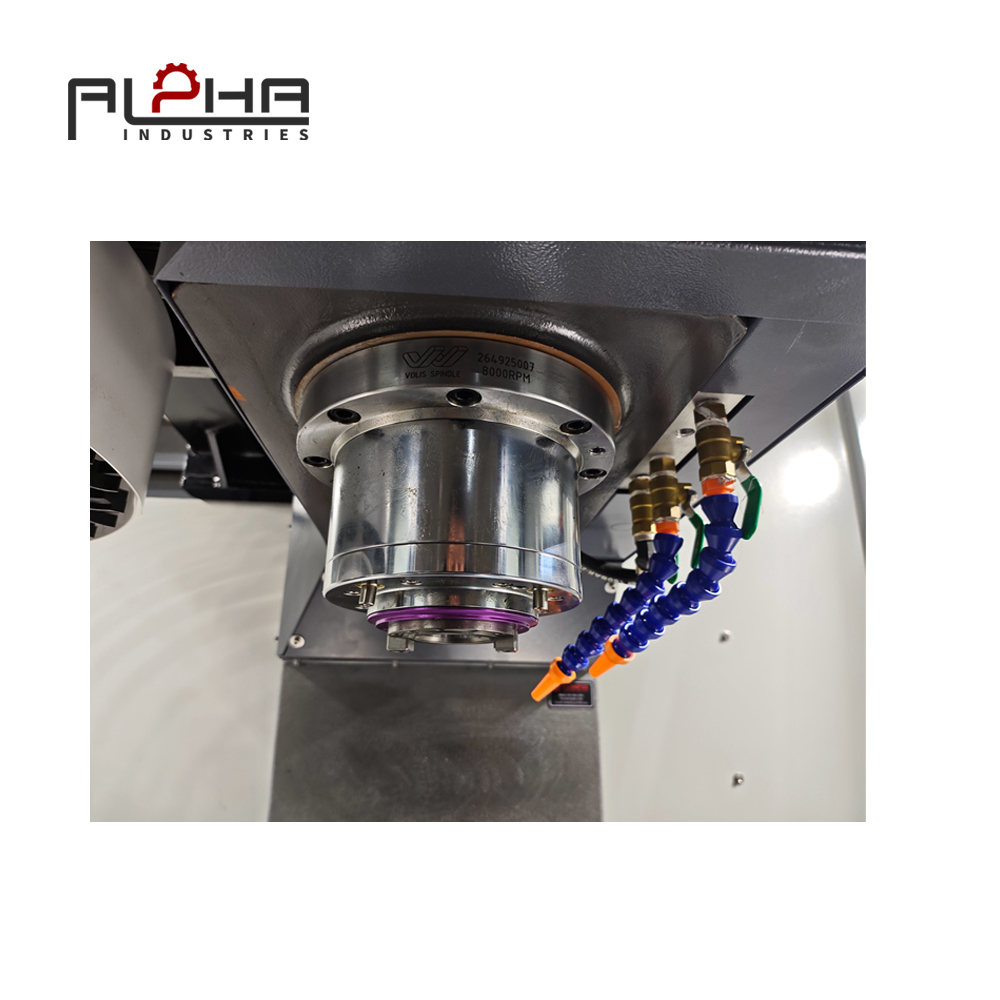
The spindle is one of the most important components of a vertical machining center.
It determines tool rotation and plays a central role in milling quality, drilling accuracy, surface finish, and dimensional consistency.
During operation, heat can be generated by bearing friction, motor activity, and cutting loads.
When the spindle temperature changes, the spindle assembly may expand. This can affect the relative position of the cutting tool and workpiece.
Why Spindle Heating Matters During Winter
During a cold start, the spindle may begin at a lower temperature than it reaches during normal production.
As the spindle rotates, its temperature gradually changes.
This can cause variations in tool position, particularly in operations where depth accuracy and dimensional repeatability are important.
For example, a manufacturer producing precision holes in steel components may need to maintain consistent hole depth across a batch.
If the spindle's thermal condition changes during production, the machining process may require additional checks and offset adjustments.
What Buyers Should Check When Selecting a VMC
Russian buyers evaluating a VMC should pay attention to the spindle configuration.
Important questions include:
-
What spindle speed range is available?
-
What type of spindle drive is used?
-
What bearing arrangement is adopted?
-
Is a spindle cooling system available?
-
What are the recommended warm-up procedures?
-
What maintenance requirements apply to the spindle?
-
Are there any environmental conditions specified by the manufacturer?
A high spindle speed does not automatically mean better performance for every application.
The spindle should be selected according to the materials, cutting tools, machining operations, and accuracy requirements of the workshop.
Spindle Cooling and Temperature Control
Some VMC configurations use cooling systems to manage spindle temperature.
Depending on the design, these systems may use oil or another specified cooling medium.
The purpose is to control heat generation and temperature changes during operation.
However, a cooling system should be selected and operated according to the manufacturer's requirements.
Buyers should confirm whether the proposed machine includes spindle cooling as standard equipment or whether it is an optional configuration.
They should also clarify the permitted operating temperature range of the cooling system and the recommended maintenance procedure.
Coolant Management During Russian Winter Operations
Coolant is essential in many VMC machining applications.
It helps control heat at the cutting area, supports chip removal, and can improve tool and workpiece conditions.
During winter, coolant management requires additional attention, particularly in workshops where temperature control is limited.
Why Coolant Temperature Matters
The cutting fluid interacts with the tool, workpiece, and surrounding machine components.
Large changes in coolant temperature may influence the thermal condition of the machining process.
For precision work, maintaining consistent coolant conditions can help reduce one source of process variation.
The coolant system should therefore be included in the workshop's winter preparation routine.
Check Coolant Specifications
Not all cutting fluids have the same temperature characteristics.
Different products have different recommended operating ranges, concentration requirements, and storage conditions.
Manufacturers should check the cutting-fluid supplier's technical documentation before selecting a coolant for winter operation.
Important points include:
-
Recommended operating temperature range.
-
Minimum storage temperature.
-
Concentration requirements.
-
Compatibility with machine materials and seals.
-
Maintenance and replacement intervals.
-
Compatibility with the workpiece material and machining process.
Do not assume that increasing coolant concentration will automatically solve low-temperature problems. The correct concentration should follow the coolant manufacturer's instructions.
Prevent Inappropriate Coolant Conditions
If a workshop experiences very low temperatures, the coolant system should be protected according to the machine and fluid supplier's recommendations.
Depending on the installation, this may involve maintaining a suitable workshop temperature or using an approved coolant solution.
The objective is to avoid conditions that could affect fluid flow, lubrication, filtration, or machine operation.
Keep the Coolant System Clean
Winter preparation should also include routine inspection of the coolant tank, filters, pumps, and circulation lines.
Accumulated chips and contamination can reduce the effectiveness of the coolant system.
A clean and properly maintained system helps support stable cutting conditions throughout the production shift.
Protecting Machine Accuracy Through Proper Workshop Installation
A VMC should be installed in an environment that meets the manufacturer's requirements.
For Russian factories, this is particularly important when a machine is placed near external walls, loading doors, cold storage areas, or locations exposed to changing air temperatures.
Avoid Direct Cold Airflow
Direct airflow from an open loading door or ventilation outlet can create local temperature differences around the machine.
The machine structure may not warm uniformly if one side is exposed to cold air while another side remains in a heated area.
This can complicate thermal stability.
Whenever possible, the installation layout should avoid direct exposure to strong temperature changes.
Confirm the Required Operating Environment
Buyers should request the machine manufacturer's specifications for:
-
Permitted ambient temperature.
-
Humidity range.
-
Electrical supply conditions.
-
Foundation requirements.
-
Installation clearance.
-
Storage and transportation conditions.
-
Recommended environmental controls.
The required conditions may vary between VMC models and control-system configurations.
A machine designed for a controlled indoor factory should not automatically be assumed suitable for an unheated workshop during severe winter conditions.
Consider Foundation and Floor Conditions
The machine foundation is another important part of installation.
The foundation should meet the manufacturer's requirements for load-bearing capacity, levelness, and stability.
If the workshop floor is exposed to significant temperature variation or structural movement, installation conditions should be evaluated before the machine is commissioned.
The machine should be installed and levelled according to the supplier's instructions.
Plan Electrical Cabinet Protection
The electrical cabinet and CNC control system also require suitable environmental conditions.
Cold-to-warm temperature transitions may create condensation risks in some environments.
This is especially important when equipment has been transported or stored in cold conditions before installation.
The buyer should follow the manufacturer's procedures for acclimatization, cabinet heating where specified, and initial energization.
Electrical cabinets should not be opened or modified by unqualified personnel.
How to Maintain Consistent Machining Quality After Startup
A warm-up procedure is only the beginning of winter production management.
Manufacturers should also establish inspection procedures that help identify temperature-related dimensional changes during actual machining.
Measure the First Workpiece Carefully
After the machine has completed its approved warm-up procedure, produce a first-off component and inspect its critical dimensions.
The inspection should focus on features that are particularly sensitive to thermal changes, such as:
-
Hole depth.
-
Bore diameter.
-
Flatness.
-
Parallelism.
-
Pocket dimensions.
-
Tool-position-related features.
If the part meets the required specifications, the production process can proceed according to the approved inspection plan.
Monitor Dimensions During Longer Production Runs
For extended machining cycles, checking only the first component may not be sufficient.
The spindle and machine structure continue to generate heat during operation.
Depending on the required tolerance and batch size, manufacturers may need periodic inspection to confirm that dimensions remain within the specified range.
The inspection frequency should be based on product requirements and actual process capability.
Check Tool Length and Work Offsets
Tool length and workpiece offsets are essential for accurate machining.
When thermal conditions change, the relationship between the tool, spindle, and workpiece may also change.
Operators should follow the approved tool measurement and offset verification procedures.
Where available, machine probing or tool measurement systems can support more consistent setup and inspection.
Record Production Conditions
A simple production record can help identify patterns.
Useful information includes:
-
Workshop temperature.
-
Machine startup time.
-
Warm-up procedure completed.
-
Spindle operating conditions.
-
Coolant condition.
-
First-part inspection results.
-
Dimensional inspection during production.
-
Any offset adjustments made.
Over time, these records can help the workshop develop more suitable operating procedures for different seasons.
What Russian Manufacturers Should Look for When Buying a VMC
Winter operation should be one part of a broader machine selection process.
A suitable VMC must match the workshop's workpiece dimensions, material requirements, machining operations, and environmental conditions.
Machine Structure and Rigidity
A rigid machine structure supports stable machining under cutting forces.
Buyers should review the machine bed, column, base, and other major structural components.
The machine's casting design and structural configuration should be suitable for the intended cutting load.
Axis Travel and Table Size
Axis travel determines the maximum machining range.
Before purchasing, manufacturers should identify the dimensions of their regular workpieces and confirm that the machine provides sufficient X-, Y-, and Z-axis travel.
Table dimensions and maximum workpiece weight are also important.
A machine with insufficient working space may limit future production opportunities.
Spindle Speed and Power
Spindle speed and motor power should match the intended materials and cutting operations.
For example, machining aluminum components may require a different spindle-speed range from heavy cutting in steel.
Buyers should evaluate spindle torque characteristics, tool interface, and cutting requirements instead of focusing only on maximum RPM.
Tool Magazine Capacity
The automatic tool changer can influence production flexibility.
A larger tool magazine may be useful when a component requires multiple machining operations or when frequent tool changes are involved.
However, the required capacity should be based on actual production needs.
Guideways and Ball Screws
The machine's axis transmission and guiding systems influence movement stability and positioning performance.
Buyers should review the guideway type, ball-screw specifications, lubrication system, and maintenance requirements.
These details should be evaluated together with the machine's structural design and intended workload.
CNC Control and Operator Training
The CNC system should support the machining programs and operations required by the workshop.
Russian manufacturers should also confirm the available control-system interface, documentation, training arrangements, and technical support options.
A machine with suitable mechanical specifications still requires operators who understand its startup, programming, maintenance, and inspection procedures.
A Practical Winter VMC Preparation Checklist
To make winter operation easier to manage, manufacturers can establish a checklist for machine operators and maintenance personnel.
Before the Winter Season
-
Review the machine manufacturer's environmental requirements.
-
Inspect the machine's lubrication system.
-
Check spindle cooling equipment, if fitted.
-
Confirm the coolant product's operating temperature range.
-
Inspect filters, pumps, and coolant circulation lines.
-
Check electrical cabinet environmental conditions.
-
Review the machine's warm-up procedure.
-
Confirm that operators understand the correct startup sequence.
Before the First Production Shift
-
Check the workshop temperature.
-
Inspect the machine for visible abnormalities.
-
Confirm lubrication and auxiliary systems are ready.
-
Follow the approved spindle and axis warm-up procedure.
-
Check coolant condition and circulation.
-
Verify tool and workpiece offsets where required.
-
Inspect the first workpiece before batch production.
During Production
-
Monitor critical dimensions according to the inspection plan.
-
Watch for abnormal spindle noise or vibration.
-
Check coolant flow and filtration.
-
Record significant temperature or operating changes.
-
Investigate repeated dimensional deviations rather than making unexplained offset adjustments.
After a Long Shutdown
-
Follow the manufacturer's restart instructions.
-
Check for abnormal conditions before running the machine.
-
Allow the machine to reach the required operating condition.
-
Reconfirm critical dimensions before demanding precision production.
This checklist should be adapted to the machine model and the workshop's actual environmental conditions.
Frequently Asked Questions About VMC Winter Operation in Russia
Can a VMC Operate in a Cold Russian Workshop?
It depends on the machine's specified operating environment and the actual workshop conditions. Buyers should confirm the permitted ambient temperature and humidity range with the manufacturer. A standard indoor VMC should not be assumed suitable for operation in an unheated environment without checking its technical requirements.
Why Should a VMC Be Warmed Up Before Precision Machining?
Warm-up helps the spindle and moving components approach a more stable operating condition. This can reduce dimensional variation associated with temperature changes during startup. The warm-up procedure and duration should follow the manufacturer's instructions.
Does Cold Weather Affect VMC Spindle Performance?
Temperature changes can influence spindle bearings, lubrication conditions, and the dimensional position of the spindle assembly. A suitable startup procedure and correct maintenance help prepare the spindle for production.
Should Coolant Be Changed for Winter Operation?
Not necessarily. The correct coolant depends on the workshop temperature, machining process, and fluid manufacturer's specifications. Buyers should confirm the coolant's recommended operating and storage temperature ranges before making changes.
How Can a Manufacturer Reduce Dimensional Variation During the First Production Hours?
Use an approved warm-up routine, verify tool and workpiece offsets, inspect the first workpiece, and monitor critical dimensions during production. For demanding tolerances, consider whether the machine and workshop require additional temperature management.
What Should Buyers Ask a VMC Supplier Before Purchasing for Russia?
Buyers should ask about the permitted ambient temperature range, spindle cooling configuration, lubrication requirements, coolant-system recommendations, warm-up procedures, installation conditions, electrical specifications, and available operator training.
Is a High-Speed Spindle Always the Best Choice for Russian Manufacturers?
No. The spindle should match the materials, cutting tools, machining operations, and required accuracy. Maximum speed alone does not determine overall machining performance or suitability for a particular workshop.
Prepare Your VMC for Reliable Production with ALPHA
For manufacturers in Russia, winter operation should be considered during both machine selection and production planning.
Low ambient temperatures, overnight shutdowns, changing workshop conditions, and differences in component temperatures can make startup management especially important.
A suitable VMC should provide the required machining capacity while meeting the environmental and installation conditions of the factory.
Before selecting equipment, manufacturers should evaluate the machine structure, spindle configuration, axis travel, tool magazine, cooling arrangements, CNC system, and maintenance requirements.
It is equally important to understand the machine's operating manual and establish a consistent warm-up and inspection routine.
ALPHA provides metalworking machinery solutions for industrial manufacturing applications. When evaluating a VMC for your workshop, sharing your workpiece dimensions, materials, machining requirements, and expected operating environment can help identify a suitable machine configuration.
Contact ALPHA
Planning to purchase a vertical machining center for your production facility in Russia? Contact ALPHA to discuss your machining requirements and find a suitable VMC solution.
Contact Us: https://alpha-cnc.com/contact-us