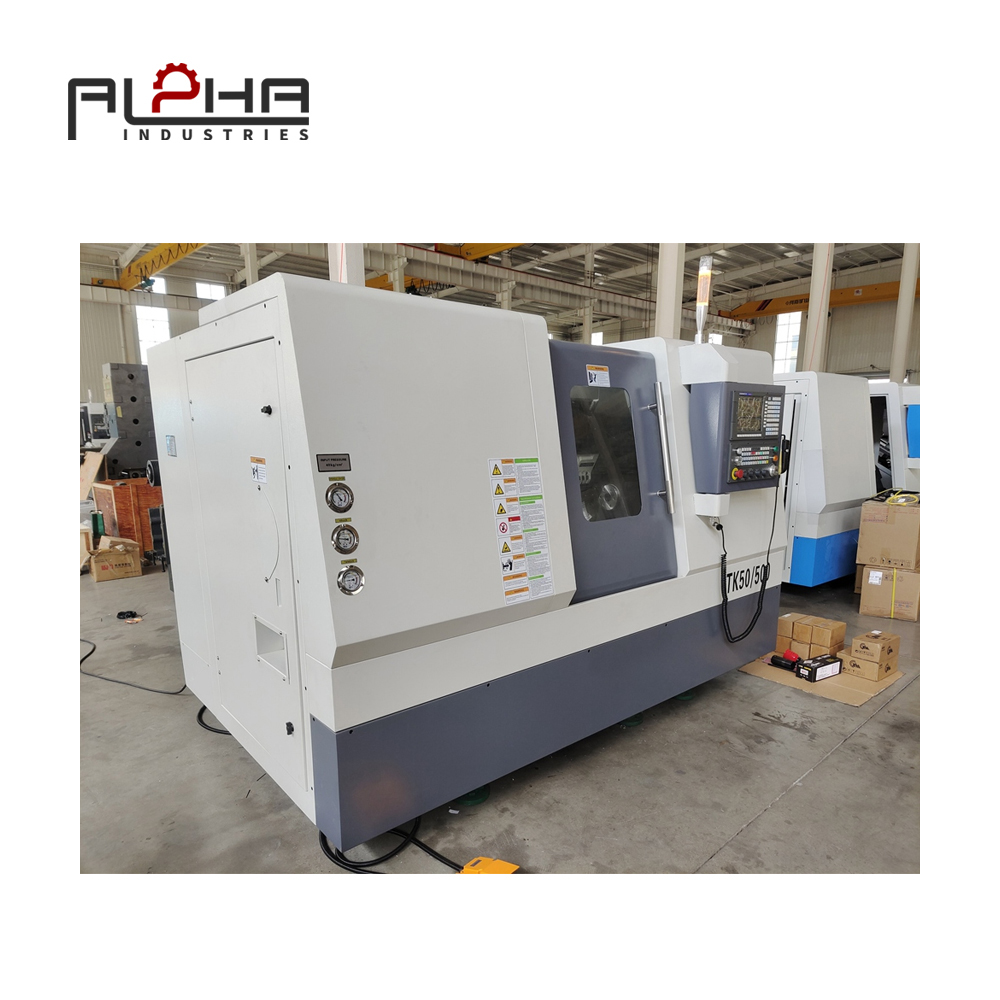


Downtime Is Costing Manufacturers More Than They Realize
In today's manufacturing environment, speed alone is no longer enough to remain competitive. Across Europe and North America, factories are investing millions of dollars in advanced CNC equipment, automation systems, and digital manufacturing technologies. However, one issue continues to undermine production efficiency regardless of industry or machine capability:
Unplanned machine downtime.
Whether a machining center stops for five minutes or five hours, the financial consequences can be significant. Production schedules are interrupted, operators remain idle, customer deliveries are delayed, and urgent orders become difficult to fulfill. In industries such as automotive, aerospace, energy, precision engineering, and heavy equipment manufacturing, even a short production interruption can disrupt an entire supply chain.
As manufacturers pursue lean production and Industry 4.0 strategies, Overall Equipment Effectiveness (OEE) has become one of the most important indicators of manufacturing performance. OEE measures how effectively equipment is utilized by evaluating machine availability, production performance, and product quality.
Modern Horizontal Machining Centers (HMCs) play a crucial role in improving OEE by reducing downtime and ensuring stable, uninterrupted production.
Why Machine Downtime Has Become a Major Challenge in Europe and North America
Manufacturers today face far greater operational pressures than they did a decade ago.
Some of the biggest challenges include:
- Skilled labor shortages leading to slower troubleshooting and machine recovery.
- Rising labor costs that make idle production time increasingly expensive.
- Shorter delivery deadlines from OEM customers.
- Higher production volumes with less available machine capacity.
- Greater demand for customized, high-mix, low-volume manufacturing.
- Increasing maintenance costs for aging equipment.
Because of these factors, machine availability has become just as important as machining speed.
Every unexpected stop reduces equipment utilization while increasing production costs.
Understanding the Hidden Cost of Downtime
Many manufacturers underestimate the true cost of downtime because they only consider lost machine hours.
In reality, downtime affects every stage of production.
Lost Production Capacity
Every hour without machining reduces the number of components produced each shift.
Increased Labor Expenses
Operators, inspectors, and production staff remain on payroll even while machines are idle.
Missed Delivery Deadlines
Production interruptions can delay customer shipments, resulting in contractual penalties or lost business opportunities.
Higher Maintenance Costs
Emergency repairs often require expensive replacement parts and unplanned technician visits.
Reduced Customer Confidence
Frequent delivery delays negatively impact long-term customer relationships.
These indirect costs often exceed the actual repair expense.
The Main Causes of Downtime in Conventional Machining
Many production interruptions originate from preventable mechanical or operational problems.
Common causes include:
- Machine vibration
- Excessive spindle wear
- Manual setup errors
- Chip accumulation
- Tool breakage
- Thermal expansion
- Hydraulic failures
- Poor preventive maintenance
Each of these issues reduces machine availability and overall production efficiency.
How Horizontal Machining Centers Improve Overall Equipment Effectiveness
Horizontal Machining Centers are designed to maximize productive machining time while minimizing unnecessary interruptions.
Their structural advantages directly improve the three core components of OEE:
- Availability
- Performance
- Quality
High-Rigidity Construction Improves Machine Availability
Machine rigidity directly affects long-term reliability.
Heavy-duty cast structures reduce vibration, minimize component wear, and maintain machining stability throughout extended production cycles.
Benefits include:
- Longer spindle life
- Reduced mechanical wear
- Lower maintenance frequency
- Greater machining consistency
Reliable machine structures reduce unexpected breakdowns and increase production uptime.
Automatic Pallet Changers Reduce Idle Time
Traditional machining requires operators to stop production while loading and unloading workpieces.
Horizontal Machining Centers solve this problem through automatic pallet changing.
While one pallet is being machined, another is prepared outside the machining zone.
When machining is complete, pallets exchange automatically in seconds.
This dramatically improves machine availability while reducing non-productive waiting time.
Intelligent Tool Management Prevents Unexpected Interruptions
Modern HMCs continuously monitor cutting tool conditions.
Advanced CNC systems provide:
- Tool life management
- Automatic sister tool replacement
- Tool wear monitoring
- Predictive maintenance alerts
These functions reduce unexpected tool failures that frequently interrupt production.
Efficient Chip Evacuation Supports Continuous Machining
Chip buildup remains one of the most common causes of machining interruptions.
Horizontal spindle orientation allows chips to fall naturally away from the cutting area.
Combined with high-capacity chip conveyors and optimized coolant systems, HMCs maintain clean machining conditions during long production cycles.
Continuous chip removal reduces manual cleaning and improves machine availability.
Predictive Maintenance Minimizes Unexpected Failures
Instead of waiting for components to fail, modern Horizontal Machining Centers utilize predictive maintenance technologies.
Sensors continuously monitor:
- Spindle temperature
- Bearing condition
- Lubrication status
- Servo load
- Machine vibration
Early detection allows maintenance teams to schedule repairs before unexpected breakdowns occur.
This approach significantly increases machine uptime.
Automation Reduces Human Error
Operator-related interruptions remain a common source of downtime.
Horizontal Machining Centers integrate with:
- Industrial robots
- Flexible Manufacturing Systems (FMS)
- Automatic tool presetters
- Manufacturing Execution Systems (MES)
- Smart factory monitoring platforms
Automation reduces manual intervention while improving production consistency.
Higher OEE Creates Long-Term Competitive Advantages
Improving Overall Equipment Effectiveness produces measurable business benefits.
Higher Annual Production Output
Greater machine availability allows more parts to be produced using existing equipment.
Lower Manufacturing Cost Per Component
Reduced downtime spreads fixed operating costs across more finished products.
Improved Delivery Performance
Stable production schedules improve customer satisfaction and reduce late deliveries.
Better Return on Investment
Machines spend more time producing revenue instead of waiting for repairs.
Greater Factory Capacity Without Expansion
Improved equipment utilization often eliminates the need for additional machine purchases.
Why OEE Will Become Even More Important
As digital manufacturing continues evolving, manufacturers increasingly evaluate equipment using real-time production data.
Future factory performance will depend on:
- Predictive maintenance
- AI-assisted diagnostics
- Digital twins
- Remote monitoring
- Smart scheduling
- Industrial IoT integration
Horizontal Machining Centers equipped with intelligent monitoring systems provide the reliability required for these next-generation manufacturing environments.
Why Choose ALPHA Horizontal Machining Centers
At ALPHA, we understand that machine reliability is just as important as machining accuracy.
Our Horizontal Machining Centers are engineered to maximize Overall Equipment Effectiveness through robust machine construction, precision spindle systems, automatic pallet changers, intelligent CNC controls, advanced monitoring technologies, and automation-ready configurations.
Whether producing automotive components, aerospace structures, hydraulic systems, industrial molds, precision mechanical parts, or energy equipment, ALPHA helps manufacturers minimize downtime, improve machine utilization, and achieve consistent long-term productivity.
For factories across Europe and North America seeking dependable machining performance, ALPHA provides reliable solutions built for maximum uptime and sustainable profitability.
Frequently Asked Questions (FAQ)
1. What is Overall Equipment Effectiveness (OEE)?
OEE is a manufacturing performance metric that measures machine availability, production performance, and product quality to evaluate equipment efficiency.
2. Why is machine downtime so expensive?
Downtime reduces production capacity, increases labor costs, delays deliveries, and lowers equipment utilization, directly affecting profitability.
3. How does a Horizontal Machining Center improve OEE?
By reducing setup time, minimizing maintenance, improving machining stability, supporting predictive maintenance, and increasing machine availability.
4. What industries benefit most from high OEE?
Automotive, aerospace, mold manufacturing, energy equipment, heavy machinery, medical devices, and precision engineering all rely on high equipment utilization.
5. Can predictive maintenance reduce unexpected machine failures?
Yes. Intelligent monitoring systems identify potential problems early, allowing maintenance teams to perform planned service before failures occur
Contact Us
Maximize Machine Uptime with ALPHA Horizontal Machining Centers
If your goal is to reduce downtime, improve Overall Equipment Effectiveness, and maximize long-term manufacturing productivity, ALPHA Horizontal Machining Centers deliver the reliability and intelligent automation your factory needs.
Our experienced engineering team can help you select the ideal HMC solution based on your production requirements, factory automation plans, and long-term business objectives.
Website: https://alpha-cnc.com/
Contact Us: https://alpha-cnc.com/contact-us