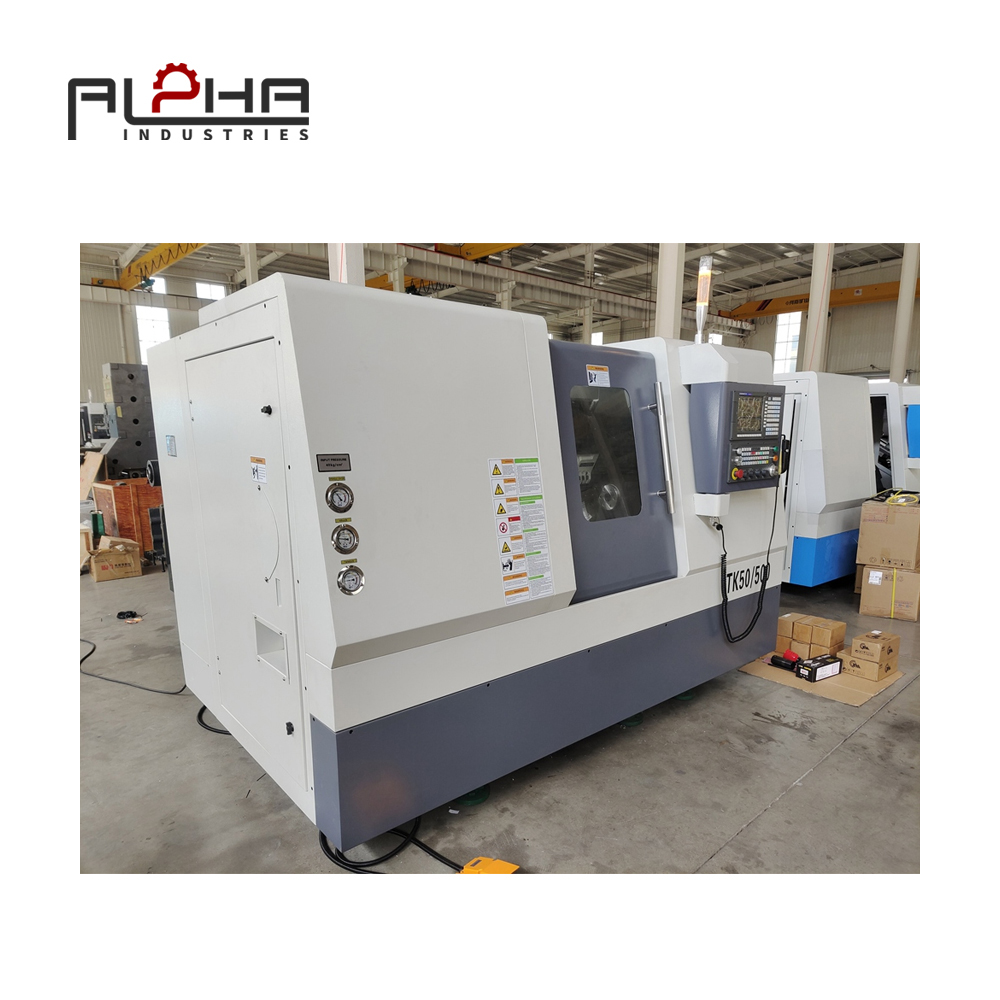


Why Aerospace Manufacturers Are Turning to Horizontal Machining Centers for Precision and Stability
The aerospace industry is one of the most demanding sectors in modern manufacturing. Every machined component—whether an engine housing, landing gear bracket, structural frame, gearbox casing, or hydraulic manifold—must meet extremely tight dimensional tolerances and rigorous quality standards.
Unlike general industrial manufacturing, aerospace machining leaves virtually no room for error. Even a deviation of a few microns can result in assembly issues, expensive rework, or complete part rejection. Since aerospace materials such as titanium, Inconel, and high-strength aluminum alloys are among the most costly engineering materials, every rejected component represents a significant financial loss.
Across Europe and North America, manufacturers also face rising labor costs, increasingly complex part geometries, and stricter compliance with AS9100 quality management systems. These challenges are driving investment in machining solutions that deliver higher process stability, repeatability, and automation.
Among today's machining technologies, the Horizontal Machining Center (HMC) has become a preferred choice for improving precision while minimizing production risks.
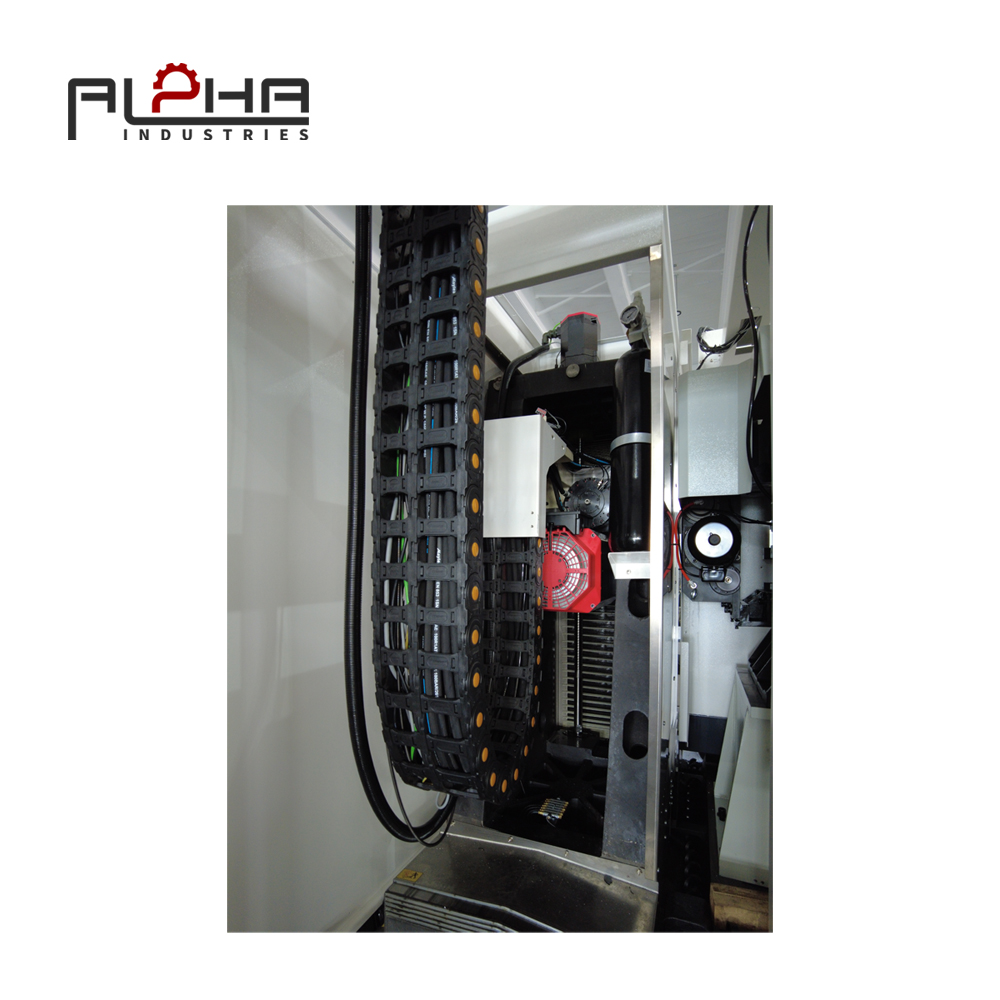
The Biggest Challenge: Maintaining Process Stability During Long Machining Cycles
Unlike standard industrial components, aerospace parts often require machining cycles lasting several hours or even an entire shift.
Large structural components typically involve:
- Deep pocket milling
- Complex contour machining
- Multi-face drilling
- Precision boring
- Thread milling
- High-speed finishing
These extended machining operations place significant demands on:
- Machine rigidity
- Spindle stability
- Thermal control
- Positioning accuracy
Even slight variations during long production runs can cause dimensional drift that exceeds aerospace tolerance requirements.
Why Traditional Machining Methods Increase Manufacturing Risks
Many aerospace suppliers still rely on machining processes that require multiple setups.
Each additional setup introduces variables such as:
- Fixture alignment errors
- Datum reference changes
- Positioning inaccuracies
- Manual measurement variation
- Increased inspection requirements
For high-value aerospace components, these accumulated errors reduce production yield and increase manufacturing costs.
Repeated clamping also raises the risk of cosmetic damage, particularly on lightweight aluminum structures and precision titanium components.
How Horizontal Machining Centers Improve Aerospace Manufacturing
Modern Horizontal Machining Centers are specifically engineered to eliminate many of these production challenges.
Their structural advantages help manufacturers achieve greater consistency throughout every machining operation.
Single-Setup Machining Improves Geometric Accuracy
One of the biggest advantages of an HMC is its ability to machine multiple surfaces during a single clamping operation.
Using a precision rotary table, operators can access several faces of a workpiece without removing it from the fixture.
Benefits include:
- Improved true position accuracy
- Better perpendicularity
- Superior concentricity
- Reduced cumulative tolerance errors
- Higher assembly precision
For aerospace components containing hundreds of critical hole locations, maintaining a single datum throughout machining greatly improves dimensional consistency.
High Structural Rigidity Supports Heavy Cutting
Aircraft components are often machined from solid billets where more than 80% of the material is removed.
This requires prolonged rough machining followed by precision finishing.
Horizontal Machining Centers feature:
- Heavy-duty cast iron structures
- Wide guideways
- High-rigidity spindle systems
- Optimized column design
These features minimize vibration during aggressive cutting while maintaining exceptional machining accuracy.
Thermal Stability Ensures Long-Term Accuracy
Temperature variation remains one of the primary causes of dimensional drift during long machining cycles.
Advanced Horizontal Machining Centers incorporate:
- Spindle cooling systems
- Ball screw temperature management
- Thermal compensation technology
- Symmetrical machine structures
These technologies maintain consistent positioning accuracy during continuous production, making them particularly suitable for aerospace manufacturing.
Superior Chip Evacuation Protects Surface Quality
Machining titanium and aluminum alloys generates substantial chip volumes.
The horizontal spindle orientation allows chips to fall naturally away from the cutting zone.
Advantages include:
- Reduced chip recutting
- Better surface finish
- Lower cutting temperatures
- Longer cutting tool life
- Improved dimensional consistency
Clean machining conditions are especially important for thin-wall aerospace structures that are highly sensitive to heat and vibration.
Automation Improves Traceability and Production Consistency
Modern aerospace manufacturers increasingly rely on automation to maintain quality consistency while reducing labor dependence.
Horizontal Machining Centers integrate seamlessly with:
- Automatic pallet changers
- Flexible Manufacturing Systems (FMS)
- Robotic loading systems
- Tool monitoring systems
- Digital quality management software
Automation reduces operator variability while improving production traceability, an increasingly important requirement under aerospace quality standards.
Supporting Sustainable Aerospace Manufacturing
Sustainability has become a major objective for both aircraft manufacturers and their supply chains.
Improving machining efficiency directly contributes to:
- Lower material waste
- Reduced energy consumption
- Longer tool life
- Improved machine utilization
- Lower carbon emissions
Because aerospace materials are expensive and energy-intensive to produce, higher machining efficiency delivers both environmental and financial benefits.
Why Horizontal Machining Centers Deliver Better Long-Term Value
Although the initial investment in a Horizontal Machining Center may exceed that of simpler machining solutions, the long-term operational advantages are substantial.
Higher First-Pass Yield
Stable machining processes reduce dimensional variation and increase inspection pass rates.
Lower Cost Per Component
Reduced setups, lower scrap rates, and longer tool life help decrease overall manufacturing costs.
Greater Production Flexibility
HMCs easily adapt to different aerospace components with minimal production disruption.
Improved Return on Investment
Higher spindle utilization and reduced downtime maximize machine productivity throughout the machine's service life.
Why Choose ALPHA Horizontal Machining Centers
At ALPHA, we design Horizontal Machining Centers to meet the precision, reliability, and productivity requirements of today's advanced manufacturing industries.
Our HMC solutions combine:
- Rigid machine structures
- High-performance spindle technology
- Precision rotary tables
- Intelligent CNC controls
- Automation-ready configurations
These features deliver outstanding machining stability for demanding aerospace applications.
Whether machining aircraft structural components, engine housings, landing gear parts, hydraulic manifolds, precision molds, or other complex industrial parts, ALPHA provides reliable machining solutions that improve accuracy, reduce production costs, and increase operational efficiency.
With a commitment to engineering excellence and long-term reliability, ALPHA supports manufacturers across Europe and North America in building smarter, more competitive production facilities.
Frequently Asked Questions (FAQ)
1. Why are Horizontal Machining Centers widely used in aerospace manufacturing?
Because they offer higher rigidity, superior thermal stability, multi-face machining capability, and the dimensional consistency required for precision aerospace components.
2. How does single-setup machining improve aerospace part quality?
Maintaining one datum reference throughout machining minimizes positioning errors and improves geometric accuracy.
3. Why is thermal stability important during aerospace machining?
Long machining cycles generate heat that can affect dimensional accuracy. Thermal compensation and spindle cooling systems help maintain precision.
4. Which aerospace components are suitable for Horizontal Machining Centers?
Typical applications include engine housings, gearbox casings, structural frames, hydraulic manifolds, landing gear components, and complex aluminum or titanium parts.
5. Can Horizontal Machining Centers support Industry 4.0 manufacturing?
Yes. Modern HMCs integrate with automation systems, robotic loading, Flexible Manufacturing Systems (FMS), MES platforms, and digital quality monitoring solutions.
Contact Us
Build Aerospace-Level Precision with ALPHA Horizontal Machining Centers
If your business requires exceptional machining accuracy, long-term process stability, and automation-ready production, ALPHA Horizontal Machining Centers provide the performance needed for demanding industrial applications.
Our technical experts are ready to help you identify the right machining solution based on your production requirements, materials, and future expansion plans.
Contact Us:
https://alpha-cnc.com/contact-us