

Why First-Pass Yield Has Become the New Benchmark for Manufacturing Excellence
For years, manufacturers measured productivity by cycle time, spindle speed, and machine utilization. While these indicators remain valuable, another performance metric has become increasingly important across Europe and North America: First-Pass Yield (FPY).
First-Pass Yield measures the percentage of parts that successfully meet all quality requirements without requiring rework, repair, or additional machining.
In today's competitive manufacturing environment, producing a component correctly the first time is no longer simply a quality objective—it has become a fundamental requirement for profitability.
As customer tolerances become tighter and raw material costs continue to increase, every rejected component represents far more than wasted material. It also means lost production capacity, additional labor, increased tooling costs, delayed deliveries, and reduced customer confidence.
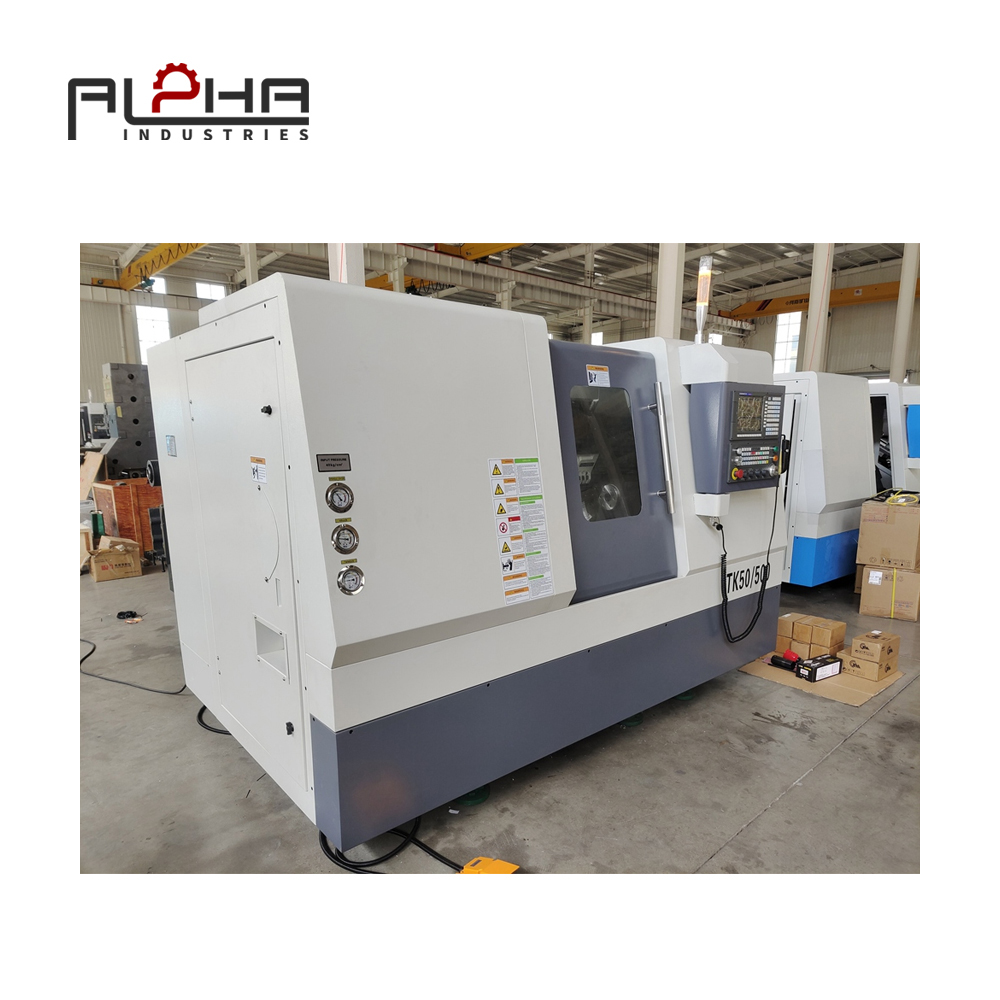
Modern Horizontal Machining Centers (HMCs) help manufacturers significantly improve First-Pass Yield by delivering greater process stability, higher machining consistency, and fewer opportunities for dimensional variation.
Why Low First-Pass Yield Is Becoming More Expensive
Across Europe and North America, manufacturers continue facing rising production costs driven by multiple factors, including:
- Higher labor wages
- Increasing electricity prices
- Expensive alloy materials
- Longer supplier lead times
- Stricter customer quality standards
- More comprehensive documentation requirements
By the time a defective component reaches final inspection, manufacturers have already invested significant resources, including:
- Raw materials
- Cutting tools
- Machine hours
- Operator labor
- Programming time
- Quality inspection
- Coolant consumption
- Energy usage
If the part must be scrapped, these costs cannot be recovered. Even when rework is possible, additional machining consumes valuable machine capacity that could otherwise produce new parts.
The Primary Causes of Poor First-Pass Yield
Manufacturing defects rarely result from a single issue. Instead, they often develop through multiple small process variations that accumulate during production.
Multiple Workpiece Setups
Every time a workpiece is removed and reclamped, positioning errors increase.
This may affect:
- Hole location
- Flatness
- Perpendicularity
- Concentricity
- Surface finish
These accumulated deviations frequently result in inspection failures.
Machine Vibration
Insufficient machine rigidity creates unstable cutting conditions.
Machine vibration can lead to:
- Poor surface quality
- Faster tool wear
- Reduced dimensional consistency
Tool Wear Variation
As cutting tools wear unevenly, machining accuracy gradually changes throughout production.
Without stable machining conditions, maintaining consistent quality becomes increasingly difficult.
Human Error
Manual fixture alignment, offset adjustments, and repeated inspections increase opportunities for operator mistakes.
As skilled machinists become more difficult to recruit across Europe and North America, reducing dependence on manual intervention has become increasingly important.
How Horizontal Machining Centers Improve First-Pass Yield
Horizontal Machining Centers are engineered to minimize many of the variables responsible for production defects. Instead of correcting problems after machining, HMCs improve process stability from the beginning.
Single-Setup Machining Eliminates Positioning Errors
One of the greatest advantages of an HMC is its ability to machine multiple surfaces without removing the workpiece.
Using a precision rotary table, different faces of a component can be machined during one clamping operation.
Benefits include:
- Consistent datum references
- Improved positional accuracy
- Better geometric tolerances
- Reduced inspection failures
- Fewer dimensional variations
For industries such as aerospace, automotive, medical devices, and hydraulic systems, single-setup machining significantly improves First-Pass Yield.
Higher Structural Rigidity Creates Stable Cutting Conditions
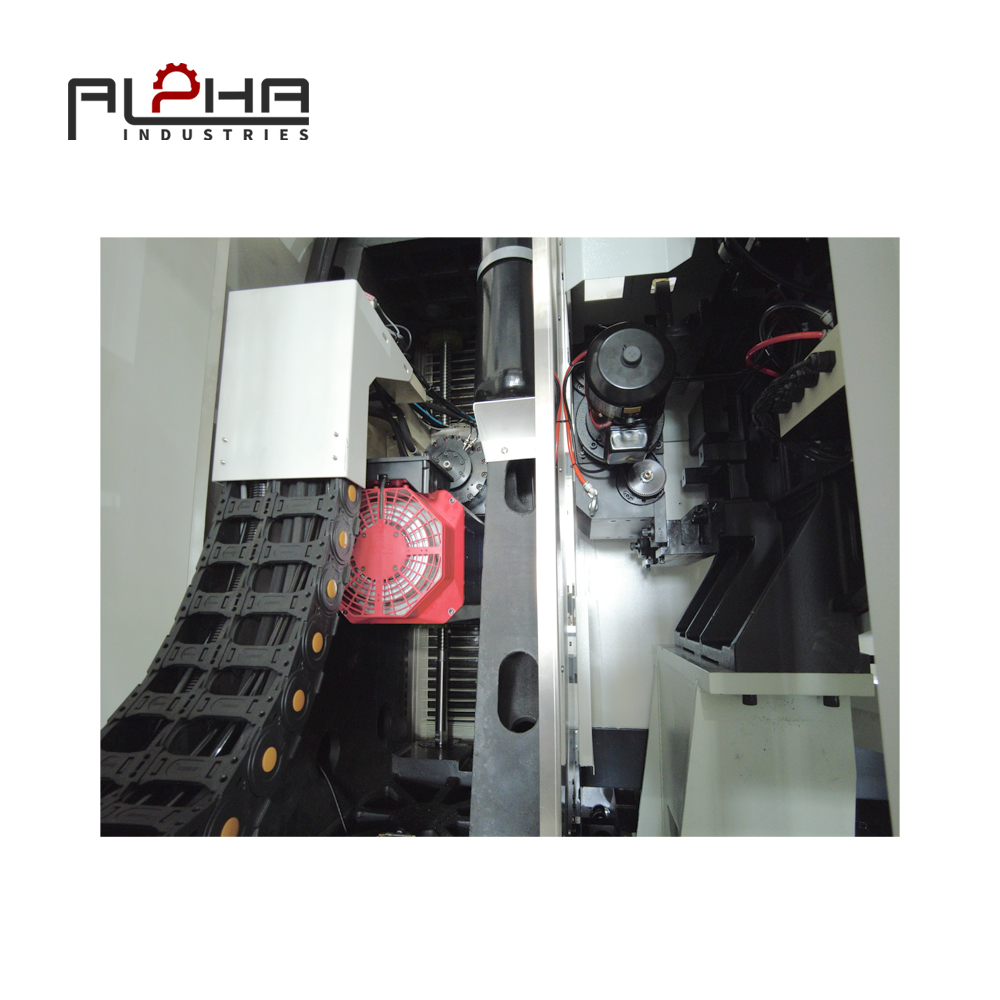
Heavy-duty machine construction minimizes vibration during machining.
Stable cutting conditions provide:
- Better surface finish
- Consistent dimensional accuracy
- Reduced chatter marks
- Lower tool deflection
- More predictable machining performance
Greater consistency throughout the machining cycle directly improves production quality.
Intelligent CNC Systems Improve Process Repeatability
Modern Horizontal Machining Centers incorporate advanced CNC controls that continuously optimize machining performance.
Typical intelligent functions include:
- Tool life management
- Automatic work offset correction
- Thermal compensation
- Collision protection
- Adaptive machining parameters
These technologies reduce process variation while maintaining stable production over extended operating periods.
Automation Reduces Human Variability
Automation has become increasingly important as manufacturers face skilled labor shortages.
Horizontal Machining Centers integrate seamlessly with:
- Automatic pallet changers
- Robotic loading systems
- Flexible Manufacturing Systems (FMS)
- Automated tool management
- Production monitoring software
Reducing manual handling minimizes human error while improving production repeatability.
Better First-Pass Yield Improves Every Business Metric
Improving FPY delivers measurable benefits throughout the manufacturing process.
Lower Scrap Costs
Producing qualified parts on the first attempt reduces material waste and unnecessary machining.
Higher Machine Capacity
Less rework creates more available spindle time for profitable production.
Improved Delivery Performance
Stable production schedules reduce delays caused by rejected components.
Higher Customer Satisfaction
Consistent product quality strengthens customer confidence and encourages repeat business.
Lower Total Manufacturing Costs
Higher FPY reduces inspection costs, warranty claims, corrective actions, and overall production expenses.
Why First-Pass Yield Will Become Even More Important
Industry experts expect manufacturing quality requirements to continue increasing over the coming years.
Key trends include:
- More complex products
- Greater factory automation
- Digital quality traceability
- Sustainable manufacturing initiatives
- Higher-value materials
- Stricter international quality standards
Manufacturers that improve First-Pass Yield today will be better prepared for tomorrow's competitive manufacturing environment.
Future success will depend not only on producing parts faster, but also on producing perfect parts the first time.
Why Choose ALPHA Horizontal Machining Centers
At ALPHA, machining quality begins with machine stability.
Our Horizontal Machining Centers are designed to maximize First-Pass Yield through:
- Rigid machine construction
- Precision rotary tables
- Intelligent CNC controls
- Automation-ready configurations
Whether manufacturing aerospace components, automotive transmission housings, precision molds, hydraulic manifolds, heavy equipment parts, or energy industry components, ALPHA provides machining solutions that improve consistency, reduce scrap, and increase long-term profitability.
For manufacturers across Europe and North America seeking higher production quality with lower operating costs, ALPHA Horizontal Machining Centers provide a dependable foundation for future growth.
Frequently Asked Questions
1. What is First-Pass Yield in CNC machining?
First-Pass Yield (FPY) measures the percentage of parts that meet quality requirements without requiring rework, repair, or additional machining.
2. Why is First-Pass Yield important?
A high FPY reduces scrap, lowers production costs, improves delivery performance, and increases overall manufacturing profitability.
3. How does a Horizontal Machining Center improve First-Pass Yield?
An HMC improves FPY through single-setup machining, greater rigidity, precision positioning, stable cutting conditions, and intelligent automation.
4. Which industries benefit most from high First-Pass Yield?
Industries including aerospace, automotive, medical devices, mold manufacturing, hydraulic systems, energy equipment, and precision engineering all benefit from high FPY.
5. Can automation improve machining quality?
Yes. Automation reduces operator variability, improves process consistency, and supports repeatable production, resulting in higher First-Pass Yield.
Contact Us
Improve Your First-Pass Yield with ALPHA Horizontal Machining Centers
If your factory is looking to reduce scrap, improve machining consistency, and maximize production efficiency, ALPHA Horizontal Machining Centers are engineered to deliver reliable and repeatable performance for demanding industrial applications.
Our experienced engineering team can help you select the right HMC solution based on your production requirements, component complexity, and future automation plans.
Contact Us:
https://alpha-cnc.com/contact-us