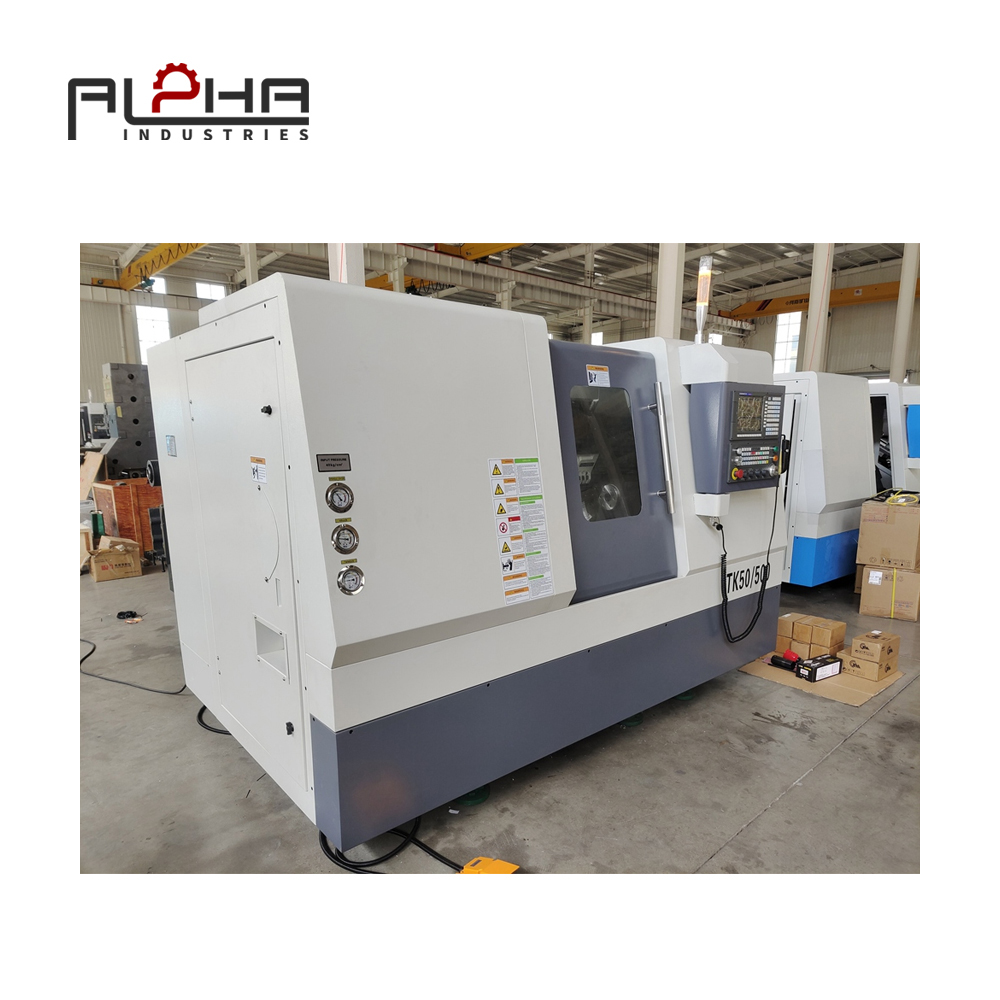


Large-Part Machining Is Becoming One of the Biggest Manufacturing Challenges
Across Europe and North America, manufacturers are producing increasingly larger components for industries such as renewable energy, heavy equipment, railway systems, oil & gas, mining, shipbuilding, and industrial automation.
Unlike small precision parts, large workpieces present an entirely different set of machining challenges. Components weighing hundreds or even thousands of kilograms require exceptional machine rigidity, high spindle torque, stable positioning accuracy, and long-term process consistency.
At the same time, manufacturers must deal with rising labor costs, tighter delivery schedules, higher raw material prices, and increasing customer expectations for precision.
Producing oversized components with conventional machining equipment often results in:
- Longer production cycles
- Repeated setups
- Dimensional inaccuracies
- Excessive rework
This is why more manufacturers are investing in Horizontal Machining Centers (HMCs) specifically engineered for heavy-duty, high-precision machining.
Rather than simply increasing spindle power, modern HMCs improve the entire machining process by combining structural rigidity, intelligent automation, thermal stability, and multi-face machining capabilities.
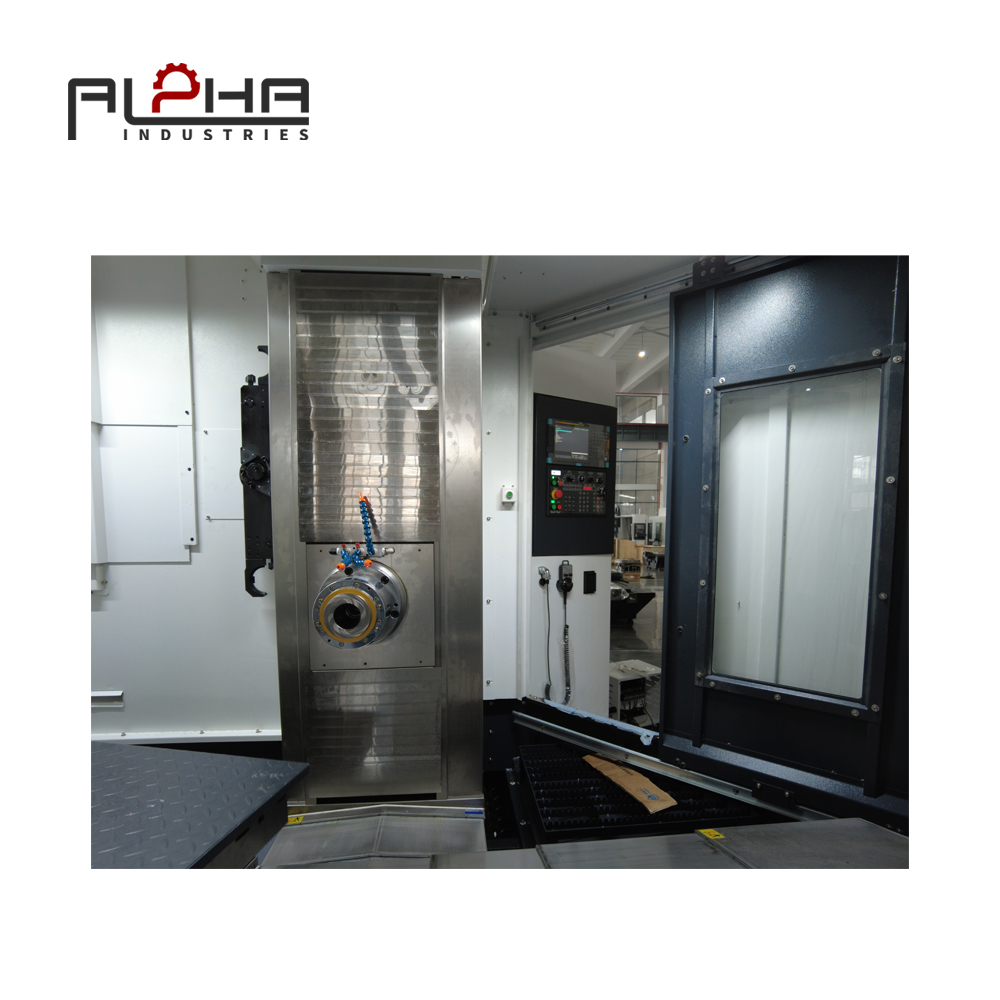
The Hidden Cost of Machining Large Components
Large workpieces naturally amplify machining errors.
A positioning deviation that may be insignificant on a small component can become unacceptable when machining a gearbox housing, wind turbine hub, hydraulic block, or heavy machinery frame.
Manufacturers frequently encounter:
- Fixture deformation caused by heavy workpiece weight
- Increased spindle vibration during rough cutting
- Thermal expansion over long machining cycles
- Repeated repositioning between operations
- Difficulty maintaining geometric tolerances
- Reduced cutting stability when removing large amounts of material
These issues often lead to:
- Increased scrap rates
- Longer inspection times
- Additional manual corrections
- Lower production efficiency
- Higher manufacturing costs
For manufacturers supplying OEM customers, even minor dimensional deviations can result in rejected parts and expensive production delays.
Why Conventional Vertical Machining Becomes Less Efficient for Large Workpieces
Many manufacturers initially process heavy components using conventional machining centers. However, as component size increases, several limitations become apparent.
Multiple Setup Operations
Large workpieces often require repeated repositioning to machine different faces.
Every setup introduces new positioning errors while increasing production time.
Poor Chip Evacuation
Heavy rough machining generates large chip volumes.
Accumulated chips can damage finished surfaces, increase cutting temperatures, and reduce machining quality.
Reduced Machine Stability
Removing large amounts of material generates significant cutting forces.
Insufficient machine rigidity leads to vibration, tool wear, and dimensional variation.
Higher Labor Dependency
Large workpieces typically require additional operators for positioning, alignment, and inspection.
As skilled labor shortages continue across Europe and North America, these manual operations become increasingly expensive.
How Horizontal Machining Centers Improve Large-Part Machining
Modern Horizontal Machining Centers are specifically designed to overcome these manufacturing challenges.
Their engineering architecture provides greater process stability throughout the entire machining cycle.
Heavy-Duty Machine Structures Maintain Rigidity Under Load
Machine rigidity is the foundation of precision machining.
Horizontal Machining Centers feature:
- Massive cast iron bases
- Reinforced columns
- Wide guideways
- High-load roller linear guides
- Optimized structural design
These features minimize machine deformation during heavy cutting, allowing manufacturers to achieve consistent dimensional accuracy even when machining oversized components.
High-Torque Spindles Improve Material Removal Efficiency
Large industrial components often require extensive rough machining before finishing operations begin.
High-torque spindle systems provide:
- Stable low-speed cutting
- Improved heavy milling performance
- Reduced spindle overload
- Better tool life
- Higher metal removal rates
Manufacturers can remove material more efficiently while maintaining excellent machining quality.
Precision Rotary Tables Reduce Positioning Errors
One of the greatest strengths of an HMC is its integrated rotary table.
Instead of manually repositioning heavy workpieces multiple times, operators can machine several sides during a single setup.
Benefits include:
- Improved geometric accuracy
- Better true position tolerance
- Reduced cumulative errors
- Shorter setup time
- Higher production consistency
This capability is particularly valuable for large gearbox housings, engine blocks, pump casings, and structural components.
Thermal Stability Protects Long Machining Cycles
Large components frequently require machining cycles lasting several hours.
During prolonged operation, thermal expansion can gradually affect dimensional accuracy.
Modern Horizontal Machining Centers incorporate:
- Thermal compensation systems
- Temperature-controlled spindle assemblies
- Intelligent CNC correction algorithms
- Symmetrical machine structures
These technologies maintain machining precision even during continuous production.
Intelligent Automation Supports Heavy Component Production
Automation is becoming increasingly important in heavy manufacturing.
Horizontal Machining Centers integrate with:
- Automatic pallet systems
- Overhead cranes
- Industrial robots
- Flexible Manufacturing Systems (FMS)
- MES software
Automation reduces manual handling while improving workplace safety and production efficiency.
Better Precision Creates Better Business Performance
Improving machining accuracy for large components produces benefits beyond quality alone.
Manufacturers typically achieve:
Lower Scrap Rates
Stable machining reduces dimensional defects and expensive material waste.
Reduced Rework
Accurate first-pass machining minimizes secondary operations.
Higher Machine Utilization
Less setup time means more productive spindle hours.
Improved Delivery Performance
Consistent production helps manufacturers meet demanding customer schedules.
Stronger Competitive Position
OEM customers increasingly prefer suppliers capable of machining large precision components with consistent quality.
Why Demand for Large-Part Machining Will Continue Growing
Several industries are driving increasing demand for oversized precision components, including:
- Wind energy
- Electric vehicle manufacturing
- Railway infrastructure
- Construction machinery
- Mining equipment
- Industrial robotics
- Energy generation
- Marine engineering
As these sectors continue expanding, manufacturers capable of producing large, high-precision components efficiently will gain significant competitive advantages.
Horizontal Machining Centers provide the stability, flexibility, and productivity required to meet these future manufacturing demands.
Why Choose ALPHA Horizontal Machining Centers
At ALPHA, we design Horizontal Machining Centers specifically for manufacturers who require exceptional rigidity, precision, and reliability when machining medium and large workpieces.
Our HMC solutions combine:
- Heavy-duty machine structures
- High-torque spindle systems
- Precision rotary tables
- Intelligent CNC controls
- Thermal compensation technology
- Automation-ready configurations
These features ensure consistent machining performance even under demanding production conditions.
Whether producing wind turbine components, industrial gearboxes, hydraulic manifolds, mining equipment, construction machinery, or precision heavy-duty mechanical parts, ALPHA delivers machining solutions that improve productivity while maintaining outstanding machining accuracy.
For manufacturers across Europe and North America, ALPHA Horizontal Machining Centers represent a long-term investment in quality, efficiency, and sustainable production growth.
Frequently Asked Questions
1. Why are Horizontal Machining Centers better for large-part machining?
Their rigid construction, precision rotary tables, and high-torque spindle systems provide superior stability and accuracy when machining heavy components.
2. Which industries commonly machine large workpieces?
Wind energy, mining, construction equipment, railway manufacturing, marine engineering, oil & gas, and industrial machinery manufacturing.
3. How does an HMC reduce positioning errors?
By machining multiple surfaces in one setup using a precision rotary table, eliminating repeated manual repositioning.
4. Why is thermal stability important for large components?
Long machining cycles generate heat that can affect machine geometry and dimensional accuracy. Thermal compensation maintains precision throughout production.
5. Can Horizontal Machining Centers support automated heavy manufacturing?
Yes. Modern HMCs integrate with cranes, robots, pallet systems, Flexible Manufacturing Systems (FMS), and Industry 4.0 manufacturing platforms.
Contact Us
Machine Large Components with Confidence Using ALPHA Horizontal Machining Centers
If your factory needs to machine heavy, oversized, or high-value components with outstanding precision and reliability, ALPHA Horizontal Machining Centers provide the performance required for today's demanding industrial applications.
Our engineering team can recommend the ideal HMC configuration based on your workpiece size, production requirements, and automation objectives.
Contact Us:
https://alpha-cnc.com/contact-us