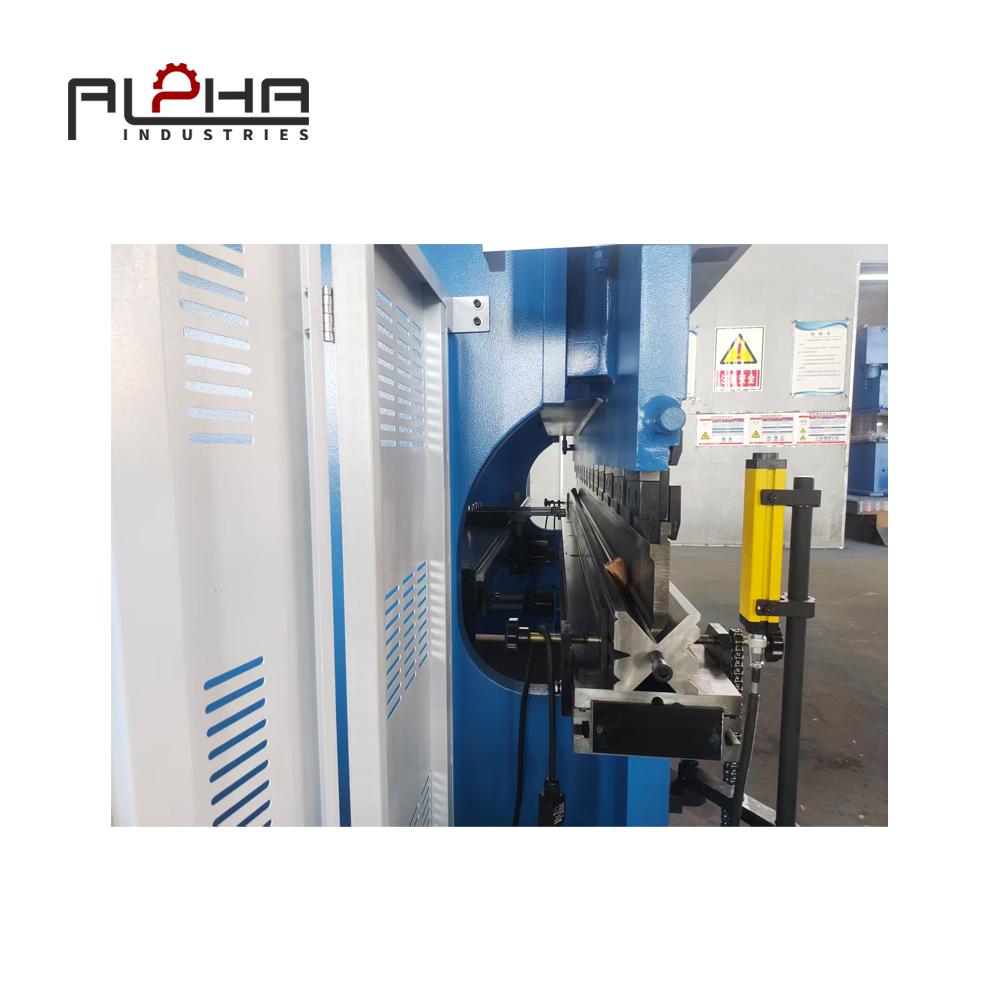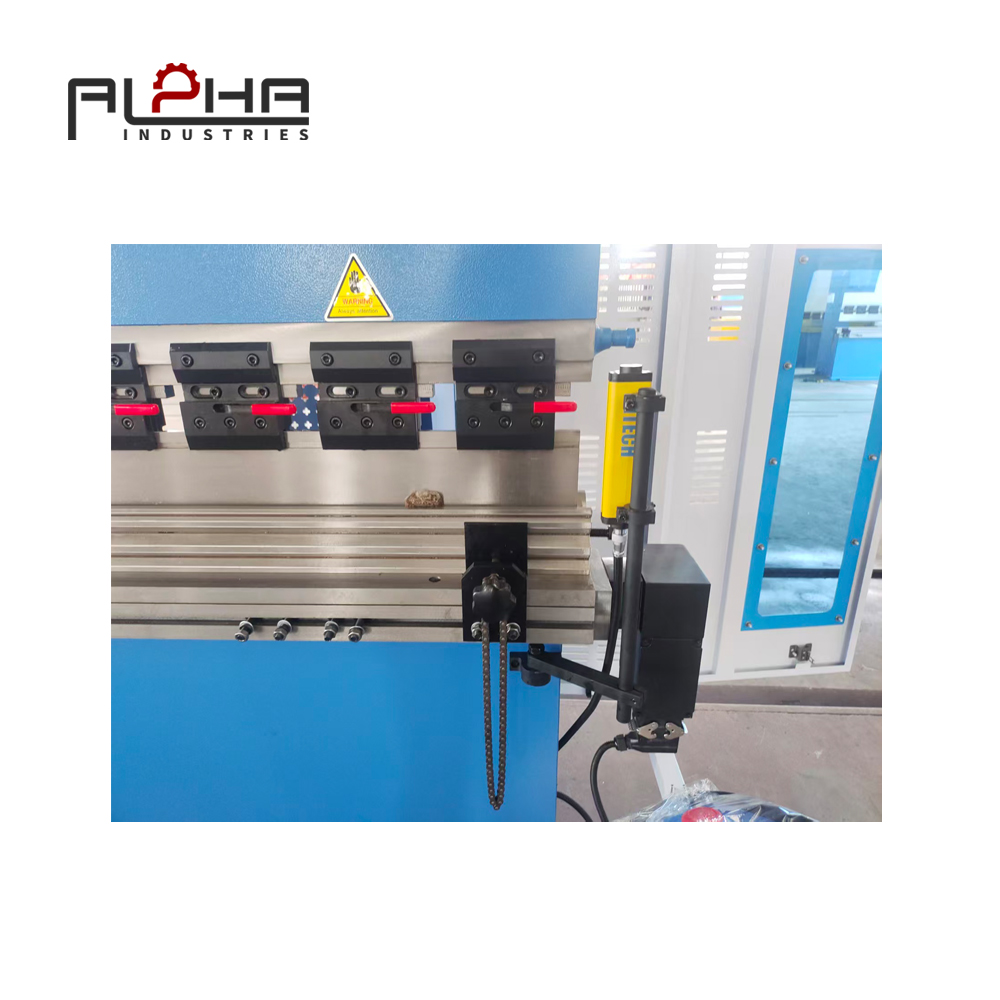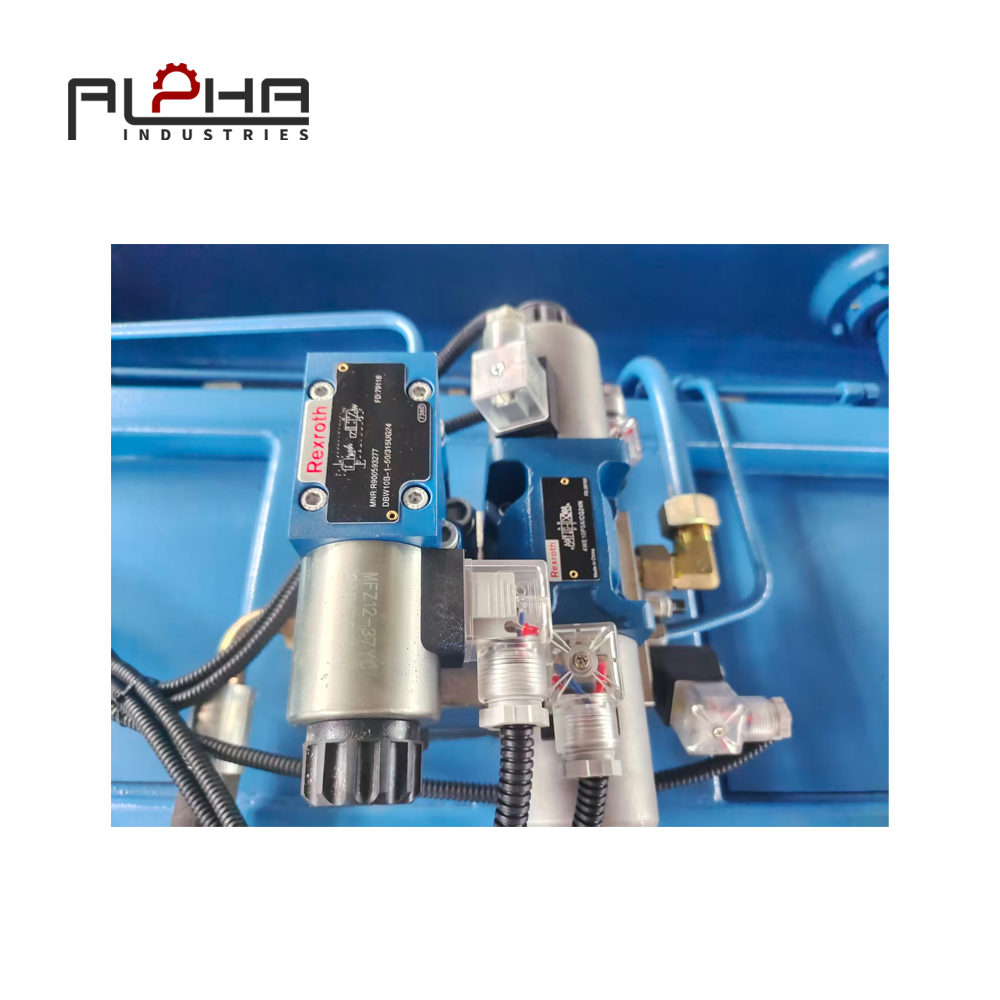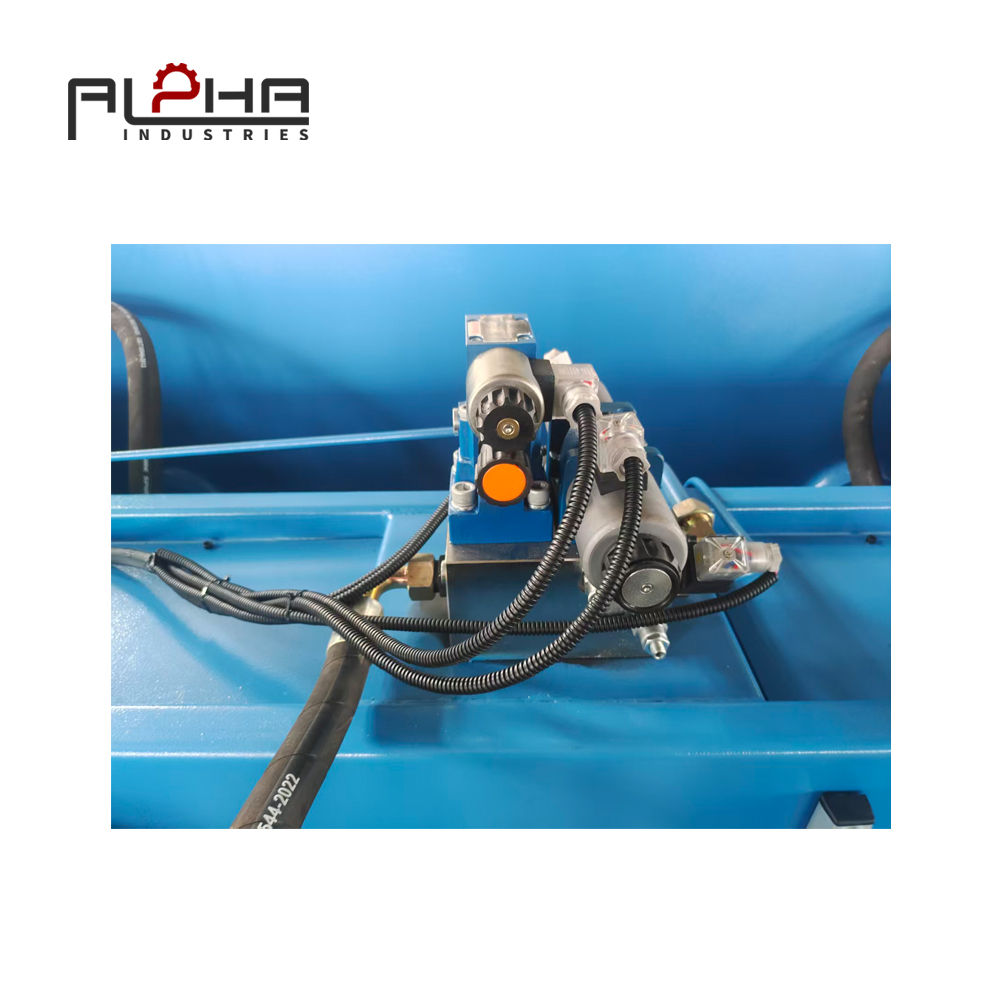


For sheet metal manufacturers in Ukraine, the productivity of a press brake is influenced by much more than its bending force or cycle speed.
A machine may be capable of producing accurate bends at high speed, but if operators spend a significant amount of time lifting, rotating, repositioning, aligning, and supporting large metal sheets, actual production efficiency can be considerably lower than expected.
This is particularly important for manufacturers working with large-format sheet metal. As workpieces become wider, longer, thicker, or heavier, material handling can become one of the most demanding parts of the bending process.
For Ukrainian manufacturers, this challenge can become more significant when production needs to remain stable despite equipment downtime, maintenance requirements, energy cost pressure, supply-chain uncertainty, and changing customer requirements.
The key question is not simply how fast a press brake can bend a sheet. A more useful question is how efficiently the entire workpiece can move through the bending process.
This article explains how better material handling, CNC backgauges, workpiece support, production planning, tooling organization, and selective automation can help Ukrainian manufacturers improve press brake productivity and maintain more stable production.
Why Material Handling Can Become a Hidden Press Brake Bottleneck
The actual bending stroke may take only a short amount of time. However, a large sheet may require much more time to prepare.
Before bending begins, operators may need to move the sheet to the machine, align the workpiece, lift or support one side, position the sheet against the backgauge, rotate the workpiece, and complete the first bend.
After the first bend, the material may need to be repositioned, supported, rotated again, and finally removed from the machine.
For a small bracket, these movements may be simple. For a large sheet, they can become a major part of the production cycle.
This creates an important distinction between machine cycle time and total part handling time.
A manufacturer may reduce the bending cycle by a few seconds, but if the operator spends several minutes handling the workpiece, the overall productivity improvement may be limited.
For Ukrainian manufacturers, unnecessary handling can also increase operator workload and make production more difficult to maintain when skilled labor or equipment availability is limited.
Therefore, material handling deserves attention when manufacturers evaluate a new press brake machine.
Ukraine Market: The Challenge of Stable and Efficient Sheet Metal Production
Manufacturers in Ukraine face a production environment where stability, reliability, and efficient use of resources can be especially important.
Sheet metal companies may need to manage changing customer requirements, customized orders, shorter production runs, equipment maintenance, energy costs, and potential production interruptions.
In this environment, large metal components can create additional challenges during press brake operation.
Construction machinery, agricultural equipment, industrial machinery, electrical cabinets, transportation components, structural parts, and customized sheet metal products may require large or heavy workpieces that are difficult to handle manually.
The challenge becomes more complicated when manufacturers need to produce different components in relatively small quantities.
A large workpiece may need to be repositioned several times during one bending sequence. When material weight, part size, and the number of bends all increase, manual handling becomes more demanding.
For Ukrainian manufacturers, the impact can extend beyond operator workload. Unnecessary material movement can increase setup time, reduce production efficiency, create additional opportunities for positioning errors, and make it more difficult to maintain stable production.
Manufacturers therefore need to consider the relationship between the press brake and the complete material-handling process around it.
A reliable press brake solution should not only provide sufficient bending capacity. It should also support efficient workflow, easier operation, reduced unnecessary handling, and predictable production performance.
Why Machine Capacity Alone Is Not Enough
When selecting a press brake, manufacturers commonly focus on maximum bending length, maximum bending force, stroke, throat depth, opening height, bending speed, and CNC configuration.
These are important specifications, but they do not tell the complete story.
Imagine a press brake capable of bending a very large sheet. If operators struggle to support the sheet during positioning and rotation, the machine may not reach its theoretical production potential.
The machine can have sufficient tonnage, but the workflow around the machine may still be inefficient.
This is why manufacturers should evaluate the complete process:
Material Preparation → Loading → Positioning → Bending → Repositioning → Unloading
Rather than focusing only on the bending operation, Ukrainian manufacturers should also consider equipment reliability, maintenance requirements, energy efficiency, operator workload, production flexibility, and the ability to maintain stable production.
How Workpiece Support Can Improve Operator Efficiency
One practical way to improve large-sheet bending is to provide appropriate workpiece support.
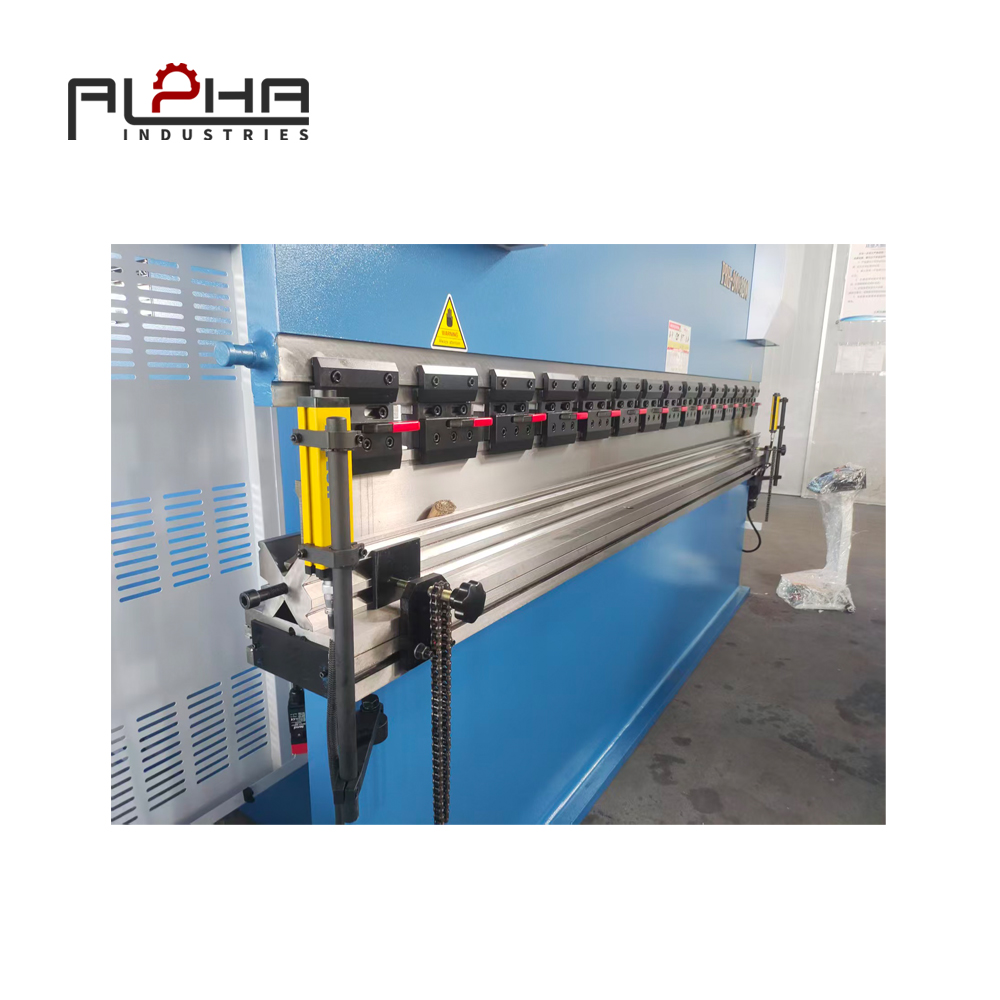
Depending on the machine configuration and application, support equipment can help keep large sheets stable, reduce manual lifting, maintain proper positioning, support long flanges, reduce unnecessary repositioning, and improve operator ergonomics.
The exact support solution should correspond to the dimensions, weight, and geometry of the workpieces.
For example, a long sheet may require different support considerations from a compact rectangular component.
The goal is not simply to make the operator's job easier. Proper support can also contribute to a more consistent bending process because the workpiece can remain better controlled during positioning.
For manufacturers seeking stable production, appropriate workpiece support can help reduce unnecessary handling and make repetitive operations easier to standardize.
Backgauges Do More Than Determine Bend Dimensions
The backgauge is one of the most important components of a modern CNC press brake.
Its primary function is to position the sheet accurately before bending. However, accurate positioning also reduces unnecessary manual measurement and adjustment.
For multi-bend components, the CNC backgauge can move to different programmed positions as the bending sequence progresses. This allows the operator to follow a repeatable process.
Instead of manually measuring every flange:
Position → Measure → Adjust → Bend
The workflow can become:
Program → Position → Bend
This does not eliminate the need for operator verification, especially during setup and first-part inspection. However, it can reduce repetitive positioning tasks during production.
For Ukrainian manufacturers, reducing repetitive manual positioning can be particularly useful when production teams need to process multiple part types while maintaining consistent quality and efficient use of available labor.
Why Large Workpieces Require Better Workflow Planning
Large sheets are not simply oversized versions of small sheets. Their handling behavior can be significantly different.
A large workpiece may flex during positioning, require two-person handling, need additional support, interfere with nearby equipment, require greater floor space, need more time to rotate, and create visibility challenges around the bending area.
Therefore, manufacturers should plan the entire material path before installing or relocating a press brake.
Important questions include where the sheet comes from, how it reaches the press brake, where the operator is standing, how the sheet is supported, how the workpiece is rotated, where the finished part goes, and whether there is enough space around the machine.
These questions can reveal bottlenecks that are not visible when evaluating the press brake specification sheet alone.
For Ukrainian manufacturers, good workflow planning can also help reduce unnecessary movement, improve operator safety, and make better use of limited production space.
Production Layout Can Affect Press Brake Productivity
The physical layout of a fabrication facility can have a major influence on material handling.
If raw material storage is far away from the bending area, operators or material-handling equipment may spend significant time transporting sheets.
Similarly, if finished components have to be moved through a narrow or congested area, production flow can slow down.
A more organized workflow may place:
Raw Material → Cutting → Deburring → Bending → Welding → Assembly
in a logical sequence where practical.
The exact layout depends on the factory and production model.
However, reducing unnecessary transportation can help keep the press brake supplied with material and prevent completed components from accumulating around the machine.
For Ukrainian manufacturers, an organized layout can also help reduce wasted movement and maintain a more predictable workflow when production schedules or order priorities change.
Connect Cutting and Bending Operations
For many sheet metal manufacturers, the press brake does not operate independently.
The material may first pass through laser cutting, plasma cutting, shearing, punching, or deburring before reaching the bending department.
This creates an opportunity for production coordination.
If cutting schedules are not synchronized with bending requirements, the press brake may wait for material. Alternatively, too much material may arrive at once and create storage congestion around the machine.
Better production planning can coordinate cutting and bending schedules according to customer orders, material availability, part priority, production quantity, tooling requirements, and delivery deadlines.
The goal is to keep the bending operation supplied without creating unnecessary work-in-process inventory.
For Ukrainian manufacturers, better coordination can also help reduce the impact of unexpected production changes and improve the utilization of available equipment.
Material Staging Can Reduce Unproductive Press Brake Time
A simple but effective strategy is to prepare material before the press brake becomes available.
For the next production job, the team can verify the correct material grade, thickness, dimensions, quantity, drawing, CNC program, and required tooling.
The material can then be staged close to the machine while maintaining an organized and safe work area.
This can reduce the time between production orders.
The workflow becomes:
Current Job → Next Material Ready → Changeover → Immediate Production
Instead of:
Current Job → Search for Material → Move Material → Verify Material → Prepare Machine
The difference becomes increasingly important when production orders are short and changeovers are frequent.
For Ukrainian manufacturers handling customized orders, reducing unnecessary changeover time can help improve production flexibility and reduce idle machine time.
Material Identification Is Part of Production Efficiency
Material handling is not only about moving metal. It also involves ensuring that the correct material reaches the correct machine.
Mixing different grades or thicknesses can create serious quality problems.
A material management system should help operators identify material grade, thickness, sheet size, quantity, job number, customer order, and production stage.
This information can be connected to the production schedule and CNC program.
For manufacturers producing many customized components, accurate material identification can reduce the risk of processing the wrong sheet.
This is particularly important when production schedules change frequently or when multiple material types are processed in the same workshop.
Why Sheet Thickness Changes the Handling Challenge
A thin sheet can be large but relatively easy to move.
A thicker sheet may be smaller while being considerably heavier.
This means that workpiece dimensions alone are not enough to understand the handling requirements.
Manufacturers should consider:
Length + Width + Thickness + Material Density + Part Geometry
The resulting workpiece weight and flexibility can determine whether manual handling is practical or whether mechanical assistance is appropriate.
This is particularly important for steel and other high-density materials.
For Ukrainian manufacturers, understanding these factors before purchasing a press brake can help prevent situations where the machine has sufficient bending capacity but the surrounding handling process creates a production bottleneck.
Ergonomics and Operator Workload
Material handling also affects operator ergonomics.
Repeated lifting, twisting, reaching, and supporting large workpieces can place additional physical demands on workers.
For manufacturers running multiple shifts, repetitive handling can become a significant operational consideration.
A better press brake workflow may use workpiece supports, mechanical lifting equipment, appropriate material carts, positioning aids, optimized machine height, and better workstation layout.
The exact solution depends on the workpiece and production environment.
The goal is to reduce unnecessary physical effort while maintaining control of the material.
For Ukrainian manufacturers, reducing manual handling can also help improve operational consistency and allow operators to spend more time on setup, quality control, and other value-added tasks.
Selective Automation Can Address Material Handling Problems
Manufacturers do not necessarily need to automate the entire bending process.
Sometimes the most valuable automation target is material handling.
A manufacturer may retain manual operation of the press brake while using equipment to assist with loading, unloading, sheet positioning, workpiece rotation, or part transfer.
This can provide a more gradual path toward automation.
The decision should be based on the actual production bottleneck.
If bending itself is already efficient but operators spend excessive time moving heavy sheets, material-handling automation may offer more value than simply increasing bending speed.
For Ukrainian manufacturers, selective automation can provide a practical way to improve productivity without requiring a complete transformation of the production line.
When Robotic Bending Becomes an Option
For high-volume production with relatively stable part designs, robotic bending cells may provide additional automation.
A typical system may combine:
Material Handling + Robot + CNC Press Brake + Tooling + Part Unloading
This can reduce direct manual handling.
However, robotic bending is not automatically the best solution for every factory.
High-mix job shops may have frequent part changes, tool changes, material changes, drawing changes, and production quantity changes.
In such environments, flexibility can be more important than fully automated throughput.
Therefore, automation should be selected based on production characteristics rather than simply because it is technologically advanced.
For Ukrainian manufacturers, the right level of automation should be determined by production volume, product mix, available labor, investment priorities, and the need for flexible manufacturing.
How CNC Programming Supports Material Handling
CNC programming can contribute to more than bending accuracy.
When bending sequences are standardized, operators can anticipate how the workpiece needs to move throughout the process.
For example, a complex part may require a first flange bend, workpiece rotation, second bend, repositioning, third bend, and final dimensional check.
If the sequence is established and repeatable, operators can prepare the material accordingly.
This can reduce unnecessary trial movements.
The CNC system becomes part of a broader production workflow rather than simply controlling the ram.
For manufacturers dealing with changing production requirements, standardized CNC programs can also help reduce setup variation and improve repeatability between different production batches.
Press Brake Tooling Also Influences Material Movement
Tooling selection can affect how easily a workpiece moves through a bending sequence.
Certain part geometries may require different punch shapes, different die openings, segmented tooling, special tooling, or multiple tool stations.
Poor tooling selection may force unnecessary repositioning or make certain bends difficult to access.
Therefore, tooling should be selected with the entire bending sequence in mind.
The question should not only be:
"Can this tool make the bend?"
It should also be:
"Can the entire part be produced efficiently with this tooling arrangement?"
For Ukrainian manufacturers producing customized or small-batch components, flexible tooling arrangements can help reduce unnecessary setup time and support more efficient production changeovers.
Reducing Repositioning During Multi-Bend Parts
Every additional repositioning step consumes time.
For complex components, operators may need to rotate a sheet multiple times.
Each movement creates another opportunity for positioning errors, surface damage, operator fatigue, and production delays.
A carefully planned bending sequence can reduce unnecessary movements.
This requires consideration of part geometry, bend order, tool accessibility, backgauge position, material support, and finished flange interference.
The best sequence is not always simply the order shown on the drawing.
It should be developed around how the part can be produced efficiently and safely.
For Ukrainian manufacturers, reducing unnecessary repositioning can help improve production efficiency while reducing operator workload and the risk of delays.
Safety Must Remain Central to Material Handling
Large sheets create additional handling considerations around the press brake.
Manufacturers should consider material handling, machine safeguarding, operator training, work area organization, and production procedures together.
Material-handling equipment should also be appropriate for the load and application.
The objective is not simply to move material faster.
It is to move material under controlled and appropriate operating conditions.
For Ukrainian manufacturers, a safe and organized handling process is especially important when working with large, heavy, or difficult-to-position workpieces.
A Practical Material Handling Workflow for Press Brake Production
A standardized workflow can help manufacturers identify unnecessary movement.
Before Production
Confirm material grade.
Confirm sheet thickness.
Verify sheet dimensions.
Prepare the CNC program.
Confirm tooling.
Check production sequence.
Material Preparation
Stage the correct sheets.
Organize material by job.
Keep identification visible.
Prepare appropriate handling equipment.
Press Brake Setup
Verify tooling.
Confirm backgauge configuration.
Confirm machine settings.
Check workpiece support requirements.
First-Part Production
Position the sheet.
Perform the first bend.
Verify dimensions.
Confirm bending angle.
Adjust parameters if necessary.
Continuous Production
Follow the established bending sequence.
Maintain controlled material positioning.
Minimize unnecessary rotation.
Monitor quality.
Finished Part Handling
Remove the finished component safely.
Protect finished surfaces.
Move the part to the next process.
Keep the press brake area clear.
This creates a complete material flow rather than treating bending as an isolated operation.
For Ukrainian manufacturers, a standardized workflow can help improve production consistency and make it easier to respond to changing orders and production priorities.
Five Questions to Ask Before Buying a Press Brake
1. What Is the Largest Typical Workpiece?
The maximum machine capacity is important, but typical production requirements may be more useful for determining the right configuration.
2. How Heavy Are the Most Common Sheets?
Material weight affects handling requirements and operator workload.
3. How Many Times Must the Workpiece Be Repositioned?
Complex parts may require more advanced support and workflow planning.
4. How Much Manual Handling Is Currently Required?
This can reveal whether material-handling assistance would provide meaningful productivity improvements.
5. Can the Machine Support Future Automation?
Manufacturers should consider whether the machine can fit into a more automated production environment as production volume changes.
For Ukrainian manufacturers, it is also useful to consider equipment reliability, maintenance requirements, energy efficiency, technical support, spare parts availability, and the machine's ability to support stable long-term production.
How ALPHA Approaches Press Brake Solutions
At ALPHA, press brake selection is considered as part of the customer's complete manufacturing workflow.
A suitable machine should match not only the required bending force but also the way materials move through production.
For manufacturers in Ukraine, ALPHA can consider requirements such as material type, sheet thickness, sheet dimensions, maximum bending length, part geometry, production volume, number of bends, CNC requirements, backgauge configuration, tooling, workpiece support, material handling, future automation, production stability, energy efficiency, and maintenance requirements.
The objective is to match the press brake configuration to the actual production environment.
For manufacturers producing large components, workpiece handling may be a major consideration.
For high-mix fabrication shops, flexibility and fast setup may be more important.
For manufacturers focused on stable long-term production, reliability, maintenance, and efficient material handling may become a greater priority.
The right press brake should support the complete production process rather than simply meet a basic tonnage requirement.
Frequently Asked Questions
How can a press brake improve material handling efficiency?
A CNC press brake with accurate backgauging, suitable workpiece support, organized tooling, and a planned bending sequence can reduce unnecessary positioning and handling during production.
Why is material handling important for press brake productivity?
Large or heavy sheets can require significant manual effort to load, position, rotate, and remove. This handling time can become a major part of the total production cycle.
Can a CNC press brake reduce manual positioning?
Yes. CNC-controlled backgauges can automatically position the workpiece according to programmed bending operations, reducing repetitive manual measurement and positioning.
Is workpiece support necessary for large sheet metal?
The appropriate support depends on the size, weight, geometry, and handling requirements of the workpiece. Large components may require additional support or material-handling equipment.
Can press brake automation reduce operator workload?
Depending on the application, automation can assist with loading, positioning, bending, unloading, or material transfer. The appropriate level of automation depends on production volume and part characteristics.
Does a faster press brake always improve production efficiency?
Not necessarily. Total productivity also depends on material handling, setup, tooling, inspection, repositioning, and downstream processes.
How can manufacturers reduce material movement during bending?
Manufacturers can optimize bending sequences, organize material staging, use CNC backgauges, select suitable tooling, provide appropriate support, and reduce unnecessary repositioning.
What should Ukrainian manufacturers consider when buying a press brake?
Important factors include bending force, bending length, CNC control, backgauge configuration, tooling, workpiece dimensions, material weight, production volume, material handling, safety, energy efficiency, maintenance requirements, reliability, and future automation requirements.
Conclusion
For many manufacturers in Ukraine, press brake productivity is also a material-handling problem.
The bending operation itself may be highly efficient, but large sheets can require substantial time and effort to load, position, rotate, support, and remove.
This is particularly relevant for manufacturers producing large or customized components while also managing changing production requirements, equipment maintenance, energy costs, and the need for stable production.
A more efficient approach looks at the entire process:
Material Preparation → Machine Setup → Positioning → Bending → Repositioning → Unloading
By improving each stage, manufacturers can make better use of their press brake capacity.
CNC backgauges, workpiece supports, organized tooling, optimized bending sequences, material staging, and selective automation can all contribute to a more efficient workflow.
The goal is not simply to make the press brake move faster.
The goal is to help the entire production process move more efficiently, reliably, and consistently.
For ALPHA, this means considering the press brake as part of a complete sheet metal manufacturing solution. Machine capacity, CNC control, tooling, workpiece handling, operator workflow, production stability, and future automation should all be evaluated together.
If you are planning to purchase a press brake or improve the productivity of your existing sheet metal bending operation, ALPHA can help evaluate the machine and production requirements for your application.
Contact ALPHA to discuss your press brake and sheet metal manufacturing requirements.
Contact Us – ALPHA CNC