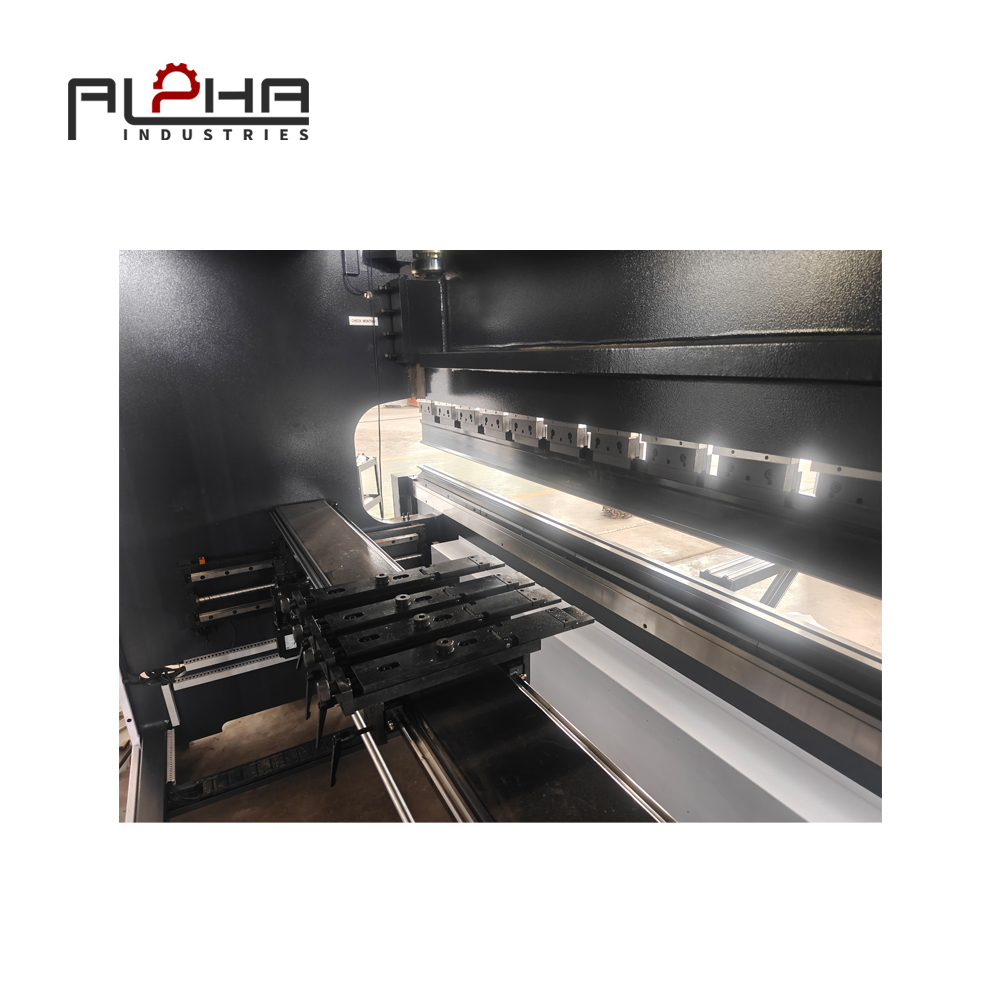


Why Production Flexibility Matters for Ukrainian Sheet Metal Manufacturers
For a sheet metal workshop, productivity depends on more than how quickly a press brake can complete an individual bending operation. The time required to prepare the machine, change tooling, position the workpiece, verify the bend angle, and approve the first finished component can have a significant influence on overall output.
This becomes particularly important when a factory produces different components in relatively small batches.
A manufacturer might process steel brackets in the morning, electrical cabinet panels in the afternoon, and customized equipment covers the following day. Each product may require a different tooling arrangement, backgauge position, bending sequence, or setup procedure.
When changeovers are poorly managed, operators spend valuable production time adjusting the machine rather than producing saleable parts. Incorrect initial settings can also result in rejected components, additional material consumption, and delays in downstream assembly.
For Ukrainian manufacturers facing pressure from energy expenses, supply-chain uncertainty, and changing customer requirements, improving the efficiency of each production run can be a practical way to make better use of existing resources.
Recent reporting on Ukraine's industrial sector has highlighted continuing pressure from energy costs, logistics, and wider disruptions to manufacturing. These challenges reinforce the importance of equipment utilization and disciplined production planning.
The central question is therefore not simply how to buy a faster press brake. It is how to configure the bending process so that different products can be manufactured efficiently, accurately, and with less unnecessary setup work.
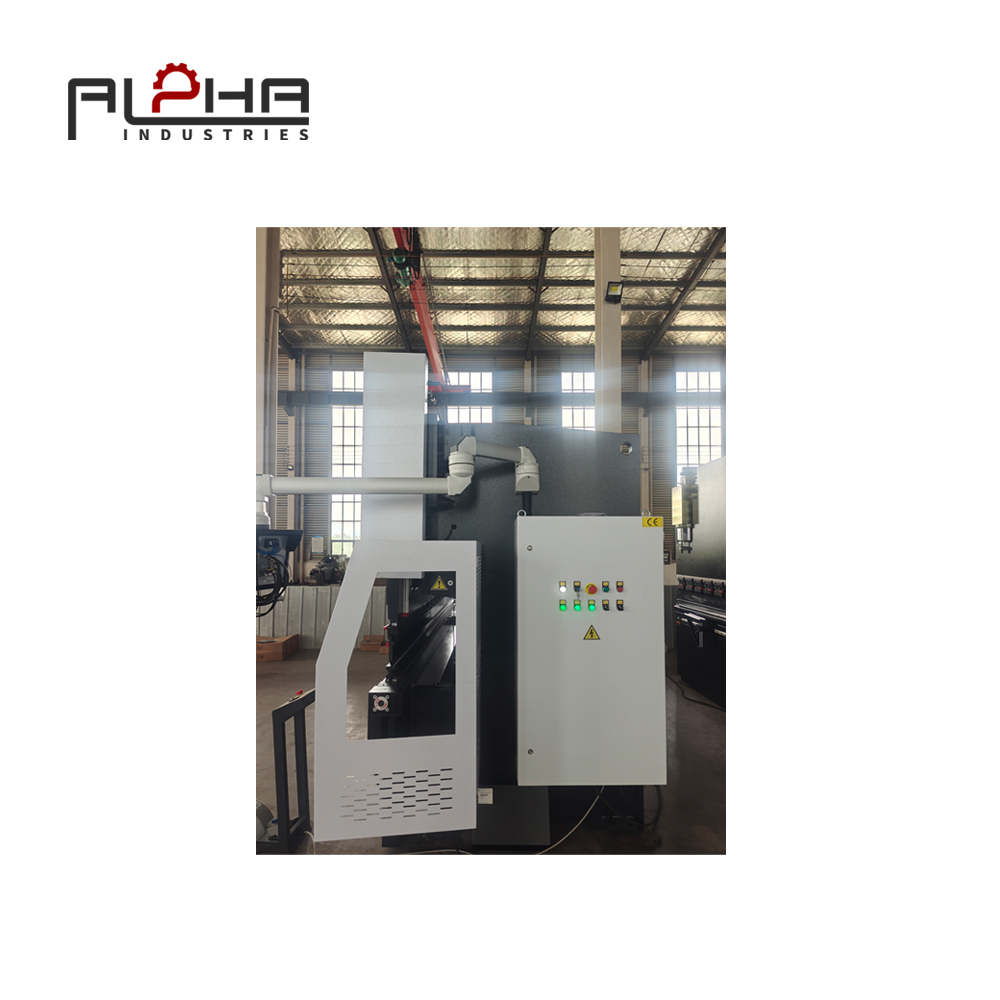
The Real Cost of Frequent Press Brake Changeovers
A changeover includes every activity needed to move the press brake from one production job to another. Depending on the component, this may involve removing existing tools, installing a different punch and die, adjusting the backgauge, selecting a bending program, checking material data, and performing test bends.
Each individual task may appear minor, but the cumulative effect can be substantial when the factory changes products several times per shift.
Consider a workshop producing custom metal enclosures. One order requires narrow flanges, another involves deeper components, and a third requires a different material thickness. If every job begins with manual adjustments and repeated trial bending, the time spent preparing the machine can become a major source of lost productivity.
Setup problems can also affect quality. A tool installed incorrectly, an unsuitable die opening, or an incorrect backgauge setting may cause the first several components to be rejected before the operator identifies the problem.
The cost extends beyond the wasted sheet metal. Operators must spend additional time measuring, correcting, and repeating the process. Production schedules become less predictable, and other departments may wait for the required components.
Improving changeover performance requires attention to the entire workflow rather than focusing on one machine feature.
A suitable press brake, organized tooling, verified programs, and a consistent setup procedure work together to reduce unnecessary adjustments.
How to Choose a Press Brake for Mixed-Batch Production
The best press brake for a factory producing different components is not necessarily the machine with the highest bending force or the most advanced controller. It is the configuration that can handle the required workpieces while keeping setup procedures practical and repeatable.
Before purchasing equipment, manufacturers should review their product range and identify the main causes of changeover time.
These may include frequent tooling changes, inconsistent material thickness, complicated bending sequences, limited backgauge flexibility, or insufficient operator familiarity with the controller.
Once these factors are understood, buyers can evaluate which machine features will deliver meaningful benefits.
Select the Right Working Length and Bending Capacity
The press brake must accommodate the dimensions and material characteristics of the intended workpieces.
Working length determines the available bending width, while bending force depends on material strength, thickness, bend length, die opening, and the forming method.
A factory producing small brackets and mounting plates may not need the same configuration as a manufacturer producing long equipment covers or wide sheet metal panels.
However, selecting a machine based only on the most common product can create problems when a larger order arrives. Buyers should assess representative parts across the full production range, including the most demanding bending applications.
Relevant specifications include working length, rated force, ram stroke, open height, throat depth, backgauge travel, and tooling load limits.
These parameters should be checked against actual drawings rather than estimated from product descriptions.
The objective is to provide enough capacity for the required work without unnecessarily increasing the investment or complicating workshop installation.
Evaluate CNC Programming for Repeated Jobs
A CNC press brake can be valuable when a workshop regularly manufactures different parts and needs to reproduce previously completed jobs.
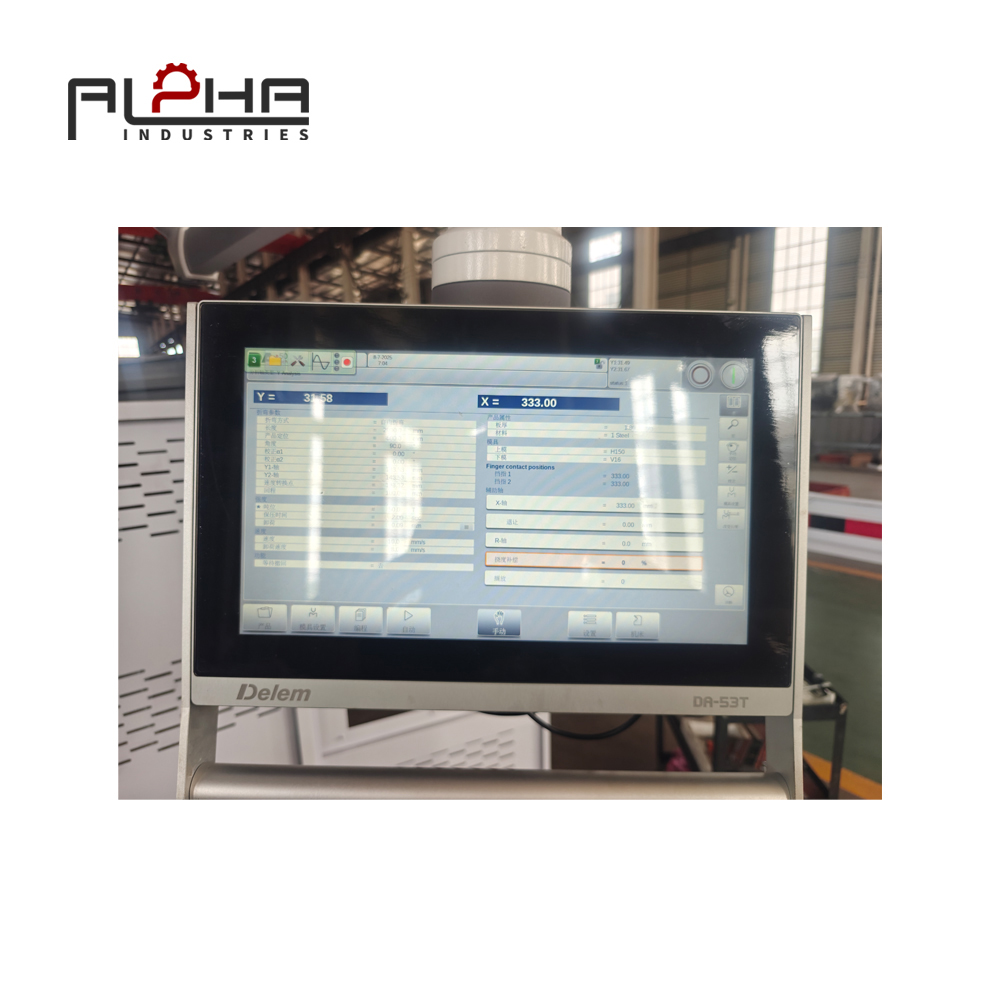
Depending on the controller, operators may be able to save programs, define bending sequences, configure backgauge movements, and retrieve settings for repeat orders.
This reduces reliance on handwritten notes and individual operator memory.
For example, a factory producing several models of electrical cabinets may receive repeat orders for products manufactured weeks or months earlier. A properly documented and verified program can help the operator restore the required setup more efficiently.
However, a stored program should not be treated as a guarantee that the finished part will always be correct. Material grade, thickness, tooling condition, and batch variation can influence the result.
Operators should verify the material and tooling before running a saved program, then confirm the first component against the required dimensions.
Buyers should evaluate programming convenience, memory capacity, interface usability, supported axes, and training requirements when comparing controllers.
The most useful system is one that operators can use confidently and consistently within the factory's actual production workflow.
Consider Backgauge Flexibility
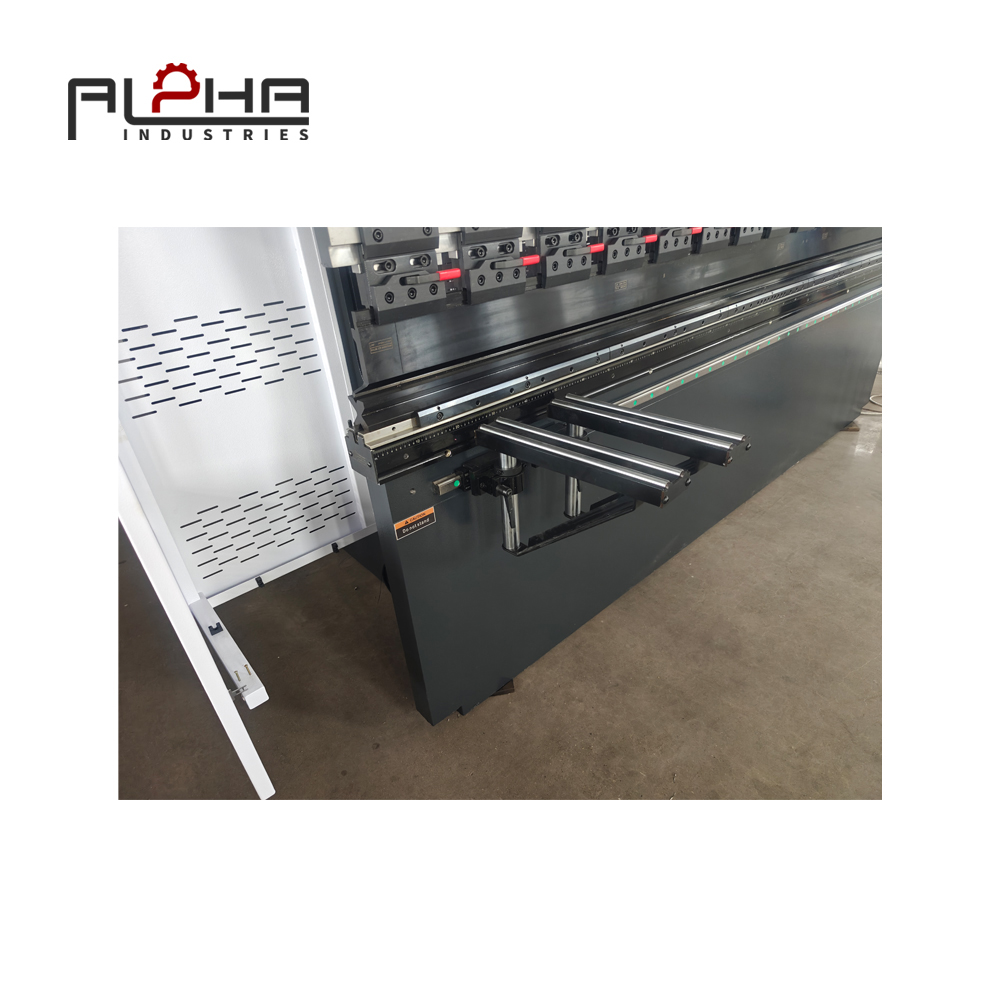
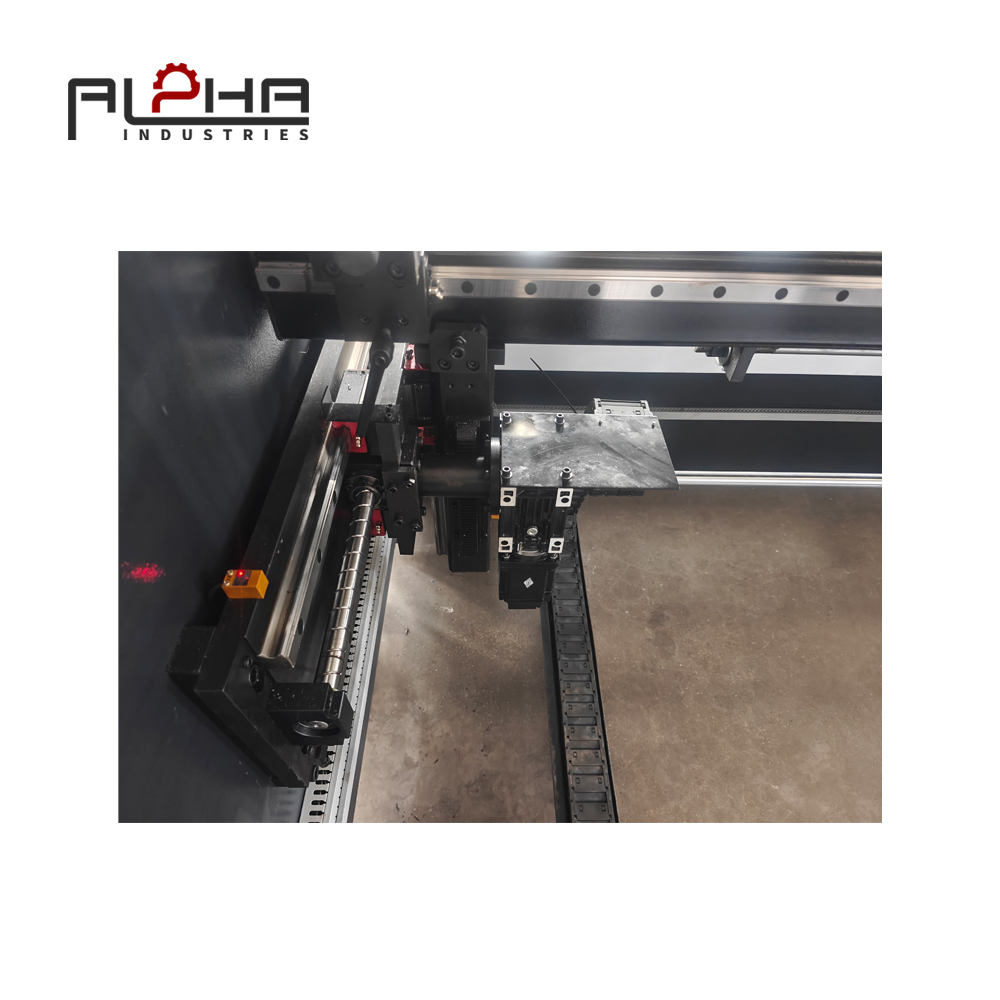
The backgauge helps position sheet metal before bending. Its configuration influences the range of parts that can be positioned and the ease with which different flange dimensions can be produced.
For simple brackets, a basic arrangement may be sufficient. For more complex enclosures, panels, or parts with several bends, additional controlled axes may provide greater flexibility.
The appropriate configuration depends on the geometry of the workpieces and the sequence in which they must be bent.
A buyer should examine actual component drawings and consider whether the proposed backgauge can position the parts without awkward handling or repeated manual adjustments.
It is also important to consider finger arrangement, positioning range, accessibility, and the available space around the machine.
Selecting a suitable backgauge can improve workflow, but it should be part of a complete machine assessment rather than an isolated specification decision.
Tooling Standardization: A Practical Way to Reduce Setup Time
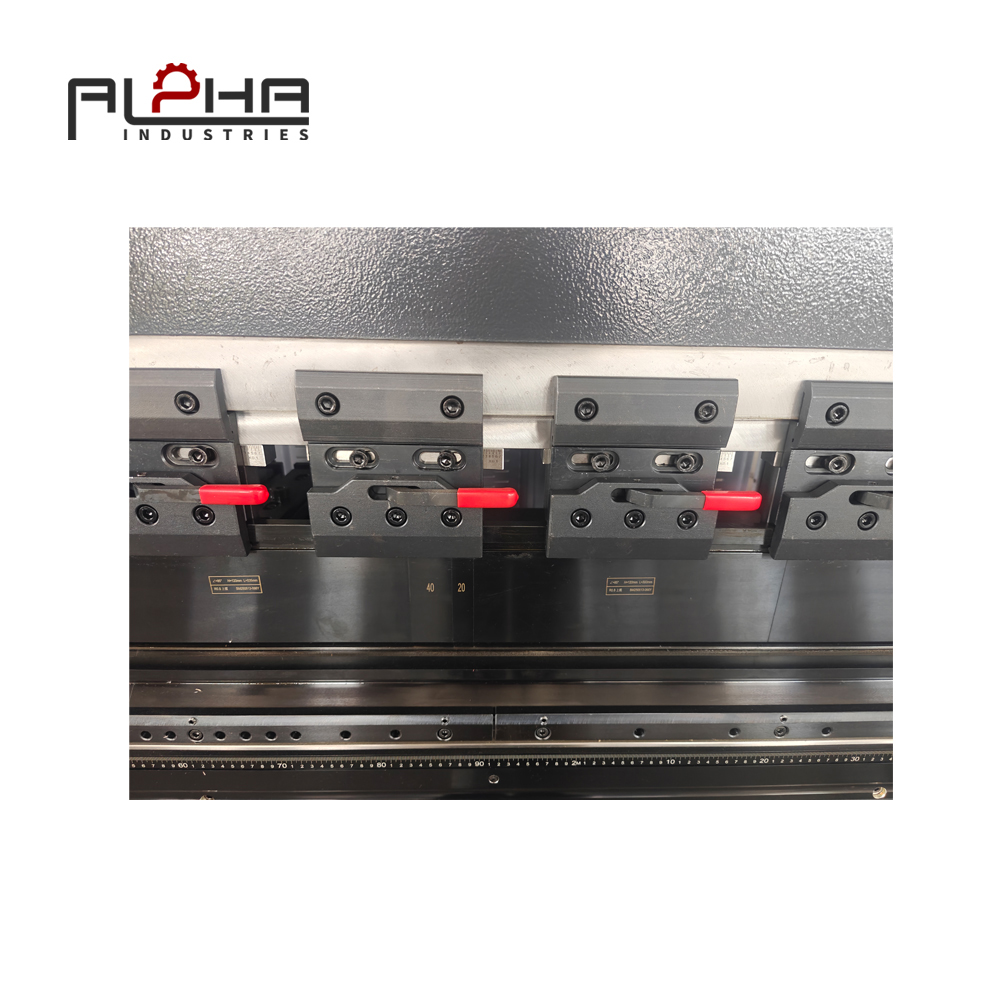
Tooling changes are a common source of delay in mixed-batch production. When punches, dies, holders, and storage locations are poorly organized, operators may spend considerable time searching for tools or checking compatibility.
Standardizing tooling where practical can simplify this process.
A manufacturer should first identify the punch profiles, die openings, and special tooling combinations used most frequently. The factory can then organize these tools into clearly identified groups based on their application, dimensions, and compatibility.
Frequently used tooling should be easy to identify and access, while less common tools can be stored separately with clear identification.
This reduces unnecessary handling and makes it easier to prepare the next job while the current production run is still underway, provided the preparation can be performed safely and does not interfere with machine operation.
Match Punch and Die Combinations to the Product Range
Different parts may require different punch profiles, die openings, and tooling arrangements.
A tooling combination suitable for a simple open bend may not be appropriate for a deep box or a narrow flange. Incorrect selection can affect the bend radius, required force, surface condition, and final geometry.
The manufacturer should establish a documented relationship between common components and their approved tooling combinations.
This record can include the punch identification, die opening, material thickness, bending sequence, and relevant setup instructions.
Operators should still verify that the selected tools are suitable for the material and application before starting production.
Tooling must also remain within the rated load limits of the machine and the tools themselves. Standardization should never mean using one tooling combination for applications it was not designed to handle.
Check Clamping Compatibility Before Purchasing
When replacing an older press brake, buyers may hope to reuse existing punches and dies. This can reduce initial tooling expenditure, but compatibility must be verified.
The clamping arrangement, tool dimensions, load ratings, and condition of existing tooling should be reviewed before assuming that reuse is possible.
If the new machine requires a different interface, adapters or replacement tooling may be necessary.
Discussing these requirements before ordering can prevent unexpected costs and installation delays.
For factories planning to expand their product range, it may also be worthwhile to compare the cost of retaining the existing tooling system against the longer-term benefits of a different arrangement.
How Standardized Setup Procedures Improve Repeatability
A well-configured press brake can still produce inconsistent results if every operator uses a different setup method.
Standard operating procedures help reduce variation by establishing a consistent sequence for preparing the machine, verifying settings, and approving the first component.
A practical setup process begins with confirming the work order and identifying the material. The operator then verifies the tooling, selects the appropriate program, checks the backgauge configuration, and prepares the work area.
Before full production begins, a test component should be formed and inspected against the drawing.
The operator should check the bend angle, flange dimensions, overall geometry, and any other critical requirements. If adjustments are necessary, they should be made according to the machine manufacturer's instructions and the approved production procedure.
Once the part meets the requirements, the verified setup information can be recorded for future use.
This record should be sufficiently clear that another trained operator can reproduce the process without relying entirely on verbal instructions.
Standardization is particularly useful when factories operate multiple shifts or experience changes in staffing.
It also helps supervisors distinguish between a machine problem, a material variation, and an incorrect setup.
Controlling Springback During Product Changeovers
Springback is an important consideration when switching between materials, thicknesses, or component geometries.
After the bending force is removed, the workpiece may partially return toward its original shape. The amount of recovery depends on the material's mechanical properties, thickness, bend geometry, and forming conditions.
As a result, a program that works for one material batch may require verification when the material changes.
This does not necessarily indicate that the machine is inaccurate. It may reflect differences in the material or the bending conditions.
To reduce unnecessary trial bending, manufacturers should record the material specifications associated with each approved program.
Operators should not rely on nominal thickness alone when material strength or grade may differ.
For critical components, angle measurement and first-piece inspection should remain part of the production process. Where the application justifies it, buyers can evaluate suitable angle measurement or compensation features offered with the press brake.
The goal is to make the process predictable while recognizing that material variation cannot always be eliminated by the machine alone.
Managing Long Bends and Complex Components
Long panels and wide sheet metal parts introduce additional challenges because machine and tooling deflection can affect the final bend angle along the workpiece.
A suitable crowning or deflection-compensation system can help address these effects. The appropriate solution depends on the machine design, bending length, material range, and required accuracy.
Complex components can also require careful planning of the bending sequence.
For example, a deep enclosure may need several bends in a particular order to avoid interference between the workpiece, punch, tooling, and machine structure.
If the sequence is poorly planned, the operator may need to reposition the part repeatedly or discover that a later bend is difficult to complete.
Manufacturers should therefore review the complete component geometry rather than evaluating each bend independently.
For frequently produced complex parts, verified programs and documented setup instructions can reduce the risk of repeated programming and trial-and-error adjustments.
When selecting a new press brake, buyers should share representative drawings of their most complicated components with the supplier. This allows the proposed machine configuration to be assessed against the actual production requirements.
Reducing Material Waste During First-Piece Approval
The first component produced after a changeover is especially important. If its dimensions or bend angles are incorrect, subsequent parts may reproduce the same defect.
A clear first-piece approval process can help identify problems before a full batch is manufactured.
The inspection method should be based on the component drawing and its critical dimensions. Depending on the application, checks may include bend angles, flange lengths, overall dimensions, hole-to-bend relationships, and visible surface defects.
The operator should confirm that the correct material, tooling, program, and setup parameters have been used.
If a defect is identified, the cause should be investigated rather than corrected through uncontrolled adjustments.
For example, an incorrect flange dimension could result from backgauge positioning, material movement, an incorrect program, or a mismatch between the intended tooling and the actual setup.
Understanding the cause helps prevent the same issue from recurring in later batches.
Recording first-piece approval results can also provide useful information when repeat orders arrive.
Over time, these records can help the factory identify which jobs require additional preparation and which tooling combinations consistently produce acceptable results.
Planning Production Around Energy and Scheduling Constraints
Energy costs and supply interruptions can complicate manufacturing schedules. Ukrainian industrial businesses have faced significant energy-related pressures, with sector reporting describing how unstable power availability and rising operating costs affect production planning.
For a press brake workshop, the practical response should focus on safe, flexible production planning rather than assuming that a particular machine can eliminate electricity-related risks.
Factories can review the order in which jobs are scheduled, prepare tooling and materials in advance, and reduce unnecessary setup repetition.
Where several jobs use the same tooling arrangement, grouping them may reduce the number of changeovers. However, scheduling must still account for delivery deadlines, material availability, part priorities, and downstream manufacturing requirements.
Manufacturers should also confirm the press brake's electrical specifications and any installation requirements before delivery.
If power protection or backup arrangements are being considered, these should be assessed with qualified technical personnel and in accordance with the machine manufacturer's instructions.
The goal is to reduce avoidable idle time and make better use of available production windows while maintaining safe operating practices.
Choosing a Supplier That Understands Your Production Requirements
Machine specifications are important, but the quality of the purchasing process also influences the final result.
A supplier should understand the intended workpieces, materials, production quantities, and accuracy requirements before recommending a configuration.
For Ukrainian buyers, clear communication is particularly important when purchasing machinery internationally.
Before placing an order, manufacturers should clarify the machine model, bending force, working length, controller, included tooling, optional equipment, warranty terms, delivery arrangements, and technical support responsibilities.
They should also confirm the availability of operating manuals, electrical drawings, maintenance instructions, and relevant training materials.
Where the application requires particular accuracy, acceptance criteria should be agreed upon in advance. Representative sample parts may be used to evaluate the machine under defined material and operating conditions.
Buyers should also discuss how technical questions will be handled after installation and what information is needed when requesting troubleshooting assistance.
A supplier who understands the application can help identify essential specifications and reduce the risk of paying for functions that do not support the factory's actual needs.
How Alpha CNC Can Help Manufacturers Evaluate Press Brake Options
Alpha CNC provides metalworking machinery solutions for industrial customers seeking equipment suited to their manufacturing processes.
For a Ukrainian sheet metal workshop, the most effective press brake selection process starts with the product range and the reasons behind current production delays.
If excessive setup time is the main concern, the evaluation may focus on tooling arrangements, controller functionality, backgauge configuration, and operator workflow.
If bending quality varies between batches, material consistency, tooling suitability, positioning, and the inspection process may deserve greater attention.
If the factory plans to expand into more complicated components, working dimensions, machine capacity, bending sequences, and future tooling requirements should be reviewed together.
Alpha encourages buyers to prepare representative drawings, material specifications, and production information before requesting a quotation. These details make it easier to compare machine configurations against practical manufacturing requirements.
The objective is to select equipment that supports efficient setup, repeatable bending, and manageable operating costs rather than choosing a machine based on one specification alone.
For manufacturers upgrading an existing workshop or planning new sheet metal production capacity, a structured technical discussion can help establish priorities before the investment decision is finalized.
Contact Alpha CNC to discuss your bending requirements and explore suitable press brake configurations.
Frequently Asked Questions About Press Brake Setup and Productivity
How Can a Press Brake Reduce Setup Time?
A press brake can support faster changeovers when its controller, backgauge, and tooling arrangement match the factory's production requirements. Standardized tooling, saved programs, organized tool storage, and documented setup procedures can reduce repeated adjustments and help operators prepare different jobs more consistently.
Is a CNC Press Brake Suitable for Small-Batch Production?
Yes. A CNC press brake can be useful for small-batch production when the workshop handles many different parts, frequent job changes, or complex bending sequences. Saved programs and programmable positioning may reduce repetitive setup work. The actual benefit depends on the controller, operator skills, tooling, and production mix.
How Does Tooling Selection Affect Bending Quality?
The punch and die influence bend geometry, inside radius, required force, and the finished workpiece. Incorrect tooling can lead to dimensional errors, surface damage, or unsuitable bending conditions. Tooling should be selected according to material properties, thickness, part geometry, and the machine's rated capacity.
How Can Manufacturers Reduce Scrap During Press Brake Changeovers?
Manufacturers can verify the material and tooling before production, use approved programs, inspect the first component, and document successful settings. A clear inspection process helps identify errors before they affect an entire batch.
What Should Ukrainian Buyers Consider When Purchasing a Press Brake?
Important factors include bending force, working length, material range, controller functionality, backgauge configuration, tooling compatibility, electrical requirements, maintenance arrangements, warranty coverage, and technical support. Buyers should compare these factors against representative part drawings and actual production requirements.
Does a More Advanced Press Brake Always Improve Productivity?
No. Additional axes, automation, or advanced control features are useful only when they address a real production need. For some factories, better tooling organization and standardized operating procedures may deliver meaningful improvements without requiring the most complex machine configuration.
How Can a Factory Maintain Consistent Bending Angles Between Material Batches?
Operators should verify material grade and thickness, use suitable tooling, check the first component, and follow an established inspection procedure. Differences in material strength can affect springback, so previously saved programs may require verification when a new material batch is introduced.
What Information Should Be Provided When Requesting a Press Brake Quotation?
Provide representative part drawings, material grades, thickness range, maximum bending length, required bend angles, production quantities, and accuracy requirements. Information about existing tooling, preferred controls, workshop conditions, delivery arrangements, and after-sales support will also help the supplier recommend an appropriate configuration.
Conclusion: Make Every Press Brake Changeover More Productive
For Ukrainian sheet metal manufacturers, reducing setup waste can be a practical way to improve productivity without focusing exclusively on higher machine speed or greater bending force.
The combination of suitable machine configuration, compatible tooling, reliable CNC programs, standardized procedures, and first-piece inspection can help reduce unnecessary adjustments and improve production consistency.
The most effective solution depends on the factory's actual products, materials, production volumes, and operational constraints. A press brake should therefore be evaluated as part of the complete manufacturing process.
Alpha CNC encourages manufacturers to identify their main production challenges before selecting equipment. With clear technical requirements and a well-planned configuration, businesses can make more informed investment decisions and establish a stronger foundation for efficient sheet metal bending.
If you are planning to upgrade your bending equipment, improve changeover efficiency, or expand your sheet metal production capabilities, contact Alpha CNC to discuss your application.