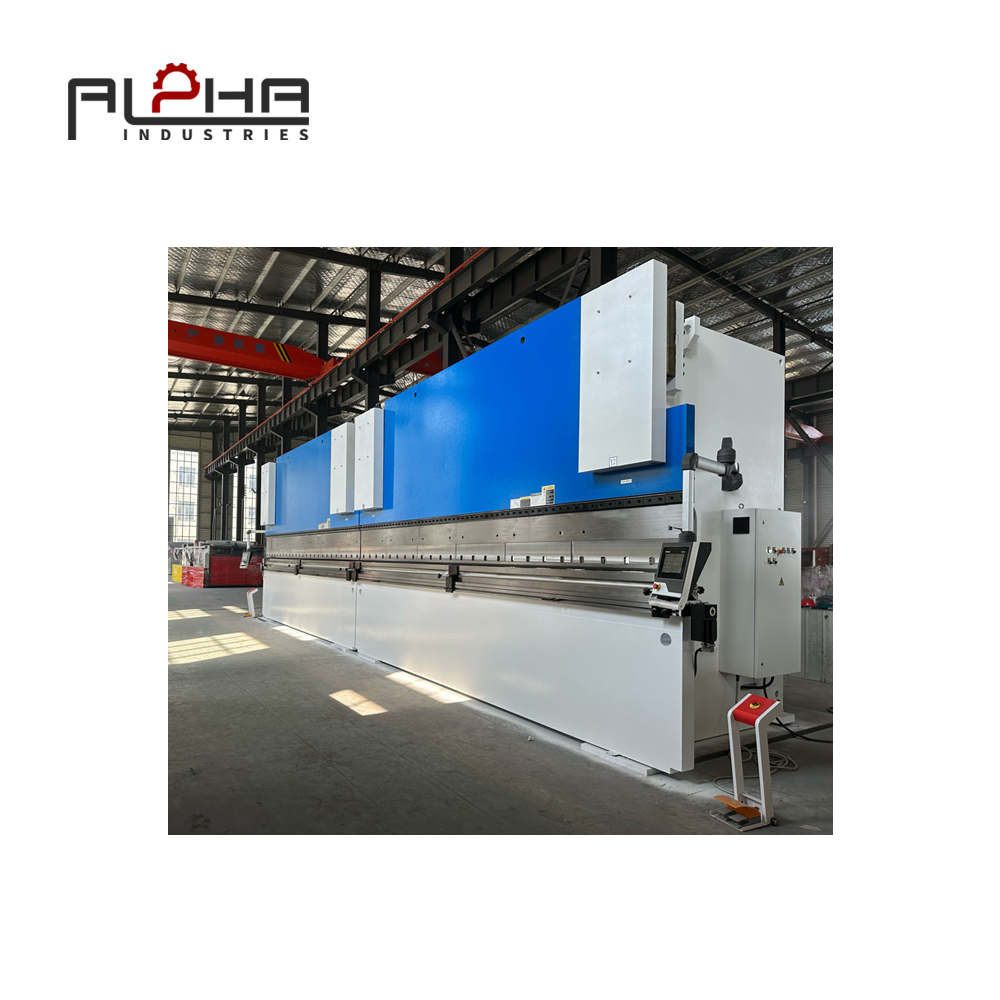


Press Brake Workforce Efficiency: How Smarter Bending Technology Helps Americas Manufacturers Reduce Labor Pressure
For sheet metal manufacturers across the Americas, production efficiency is increasingly connected to one issue that cannot be solved simply by purchasing more raw material or increasing machine speed:
How can a manufacturer maintain consistent bending production when experienced operators are difficult to find and train?
The press brake remains one of the most important machines in a sheet metal fabrication workflow. It transforms flat metal blanks into brackets, frames, enclosures, panels, structural components, machine covers, HVAC components, and many other finished products.
Yet the machine itself is only one part of the process.
A traditional bending operation can require substantial operator involvement. The operator may need to interpret drawings, select tooling, position the workpiece, adjust the backgauge, establish the bending sequence, compensate for material behavior, inspect the first part, and make corrections during production.
When experienced operators are available, this process can work extremely well.
The challenge appears when a fabrication company is growing faster than its skilled workforce.
This is where modern CNC press brake technology can play an important role.
The objective is not to remove skilled people from the manufacturing process.
Instead, it is to make each skilled operator more productive and make the bending process easier to standardize.
Industry research has also documented the workforce challenge in metal fabrication. One fabrication-industry survey reported that 66% of respondents said job applicants had less previous metal-fabrication experience than five years earlier. The same research found that automation could shift some skill requirements toward software and programming rather than eliminate the need for expertise altogether.
For manufacturers in the United States, Canada, Mexico, and other parts of the Americas, this distinction is important.
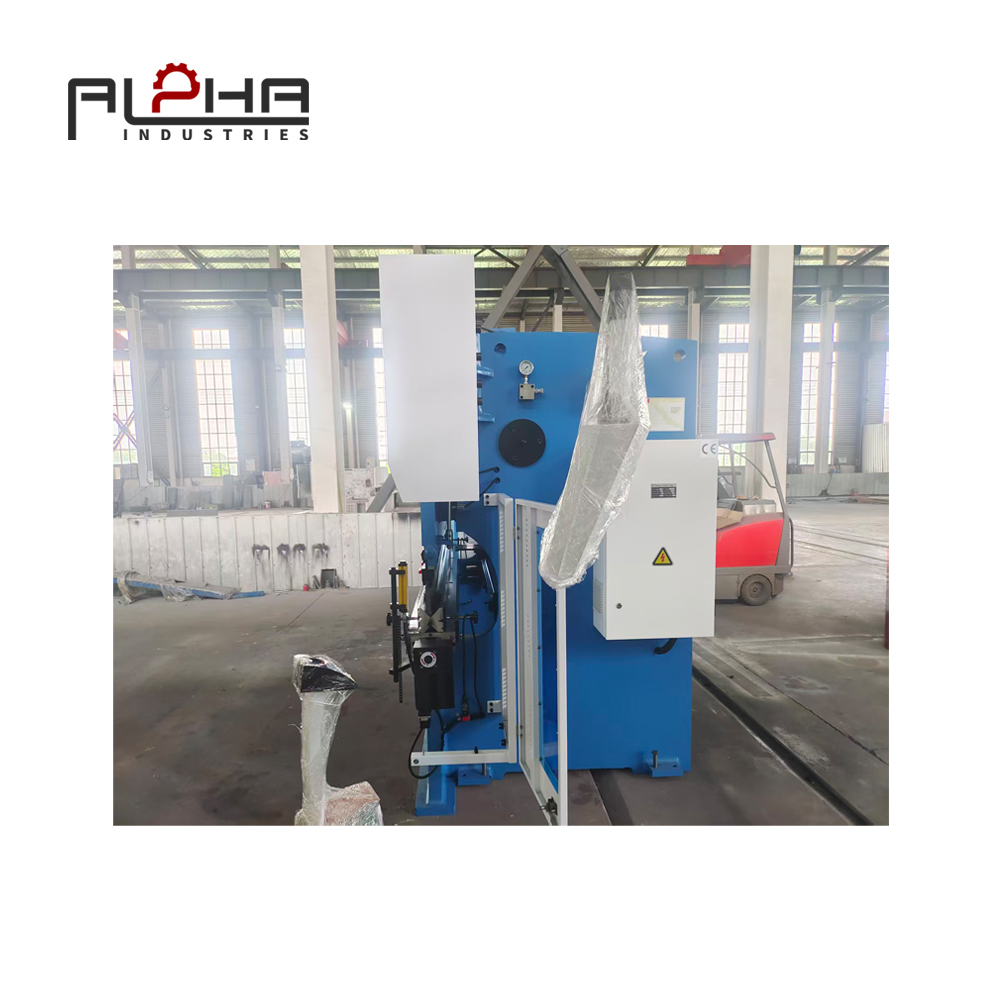
Why Skilled Press Brake Operators Are So Important
Operating a press brake is not simply a matter of pressing a button.
Experienced operators develop knowledge about:
-
Material behavior
-
Springback
-
Tool selection
-
Bend sequencing
-
Workpiece positioning
-
Part deformation
-
Bending force
-
Material thickness
-
Grain direction
-
Measurement
-
Troubleshooting
Two parts may appear similar on a drawing but behave differently during production.
An experienced operator can recognize these differences and adjust the process.
This practical knowledge has considerable value.
However, relying exclusively on individual experience creates another problem.
If the production process depends heavily on one or two highly experienced operators, production knowledge may become difficult to transfer to new employees.
This becomes especially challenging when a manufacturer is:
-
Increasing production volume
-
Adding new product lines
-
Running multiple shifts
-
Expanding into new markets
-
Hiring less-experienced workers
-
Producing more customized parts
A modern press brake can help address part of this challenge by transferring repeatable process information from individual operator experience into the machine's control and production workflow.
The Real Workforce Problem Is Often Repetitive Setup Work
When discussing labor shortages, manufacturers often focus on finding more experienced workers.
But another question deserves attention:
How much of an experienced operator's time is spent on repetitive tasks?
Consider a typical job change. The operator may need to:
-
Review the drawing
-
Select tooling
-
Install the tooling
-
Set the backgauge
-
Position the first sheet
-
Perform the first bend
-
Measure the part
-
Adjust the parameters
-
Complete additional bends
-
Verify the finished component
For complex components, this process may require considerable judgment.
But some steps are repetitive and programmable.
This is where a CNC press brake can provide value.
If backgauge positions, bending sequences, and other process parameters can be programmed and recalled, the operator can spend less time repeating basic adjustments and more time managing the overall production process.
CNC Programming Can Turn Experience Into a Repeatable Process
One of the most important advantages of a CNC press brake is the ability to store production programs.
Suppose a manufacturer produces the same machine enclosure every month.
The first production run may require substantial setup and verification.
Once the correct bending sequence has been established, the parameters can be saved.
When the next order arrives, the operator does not necessarily need to recreate the entire process manually.
The workflow becomes:
Select Program → Verify Tooling → Load Material → First-Part Check → Production
rather than:
Read Drawing → Calculate Setup → Adjust Machine → Test Bend → Recalculate → Test Again → Production
This distinction becomes increasingly valuable as product variety increases.
Why This Matters for High-Mix Manufacturing
Many sheet metal fabrication companies do not operate as pure mass-production factories.
Instead, they produce a wide range of components in relatively small batches.
A single production schedule may include:
-
Electrical cabinets
-
HVAC panels
-
Machine guards
-
Agricultural equipment parts
-
Construction components
-
Automotive brackets
-
Custom enclosures
-
Structural sheet metal
-
Replacement components
Each job may have different dimensions, materials, thicknesses, and bending sequences.
For this type of production, flexibility is often more valuable than simply maximizing the speed of one repetitive bending operation.
A programmable press brake machine can make it easier to move between different jobs while maintaining a structured process.
Automatic Backgauging Reduces Manual Positioning
Backgauge positioning is another area where CNC technology can reduce repetitive operator work.
The backgauge determines the position of the sheet before bending.
In a manual process, the operator may need to measure or manually position the workpiece for each bend.
With a CNC-controlled backgauge, programmed positions can be automatically established.
This can help improve:
-
Repeatability
-
Production consistency
-
Multi-bend positioning
-
Setup efficiency
-
Operator productivity
For complex parts with multiple flange dimensions, accurate backgauge positioning can be especially valuable.
The operator still needs to load and orient the workpiece correctly, but the machine can take responsibility for repeatable positioning movements.
Tooling Management Can Also Reduce Labor Pressure
Tool changes can consume more production time than manufacturers initially expect.
A press brake operator may need to select different punches and dies for different applications.
If tooling is poorly organized, the operator can spend significant time searching, transporting, installing, aligning, and checking tools.
A more structured tooling system can reduce this wasted effort.
Manufacturers can consider:
-
Standard tooling sets
-
Quick clamping systems
-
Segmented tooling
-
Dedicated tools for repeat products
-
Clearly organized storage
-
Standard tool-selection procedures
The objective is not simply to change tools faster.
It is to make the entire setup process predictable and repeatable.
Standardized Processes Help New Operators Learn Faster
Training remains essential.
A manufacturer should not expect technology to replace operator education.
However, technology can help organize the knowledge that new employees need to learn.
Instead of teaching every job from scratch, manufacturers can establish standard operating procedures around:
-
Material identification
-
Tool selection
-
Program selection
-
Machine setup
-
First-part inspection
-
Quality verification
-
Safe operation
-
Troubleshooting
This creates a more structured learning environment.
A new operator can gradually develop deeper technical skills while following established procedures for common production tasks.
Over time, the operator can move from basic program execution toward more advanced process optimization.
Automation Does Not Mean Eliminating Skilled Workers
Automation is sometimes described as a replacement for human labor.
For press brake manufacturing, the reality is more nuanced.
Automation can move certain tasks away from manual execution and toward programming, process planning, monitoring, and maintenance.
For example, an automated bending cell may reduce manual material handling while increasing the importance of:
-
Programming
-
Production planning
-
Robot setup
-
Tool management
-
Process monitoring
-
Maintenance
-
Quality control
Industry research has similarly noted that automation can shift where skills are required rather than simply eliminating the need for skill.
For manufacturers facing workforce constraints, this can be an important distinction.
The objective should be to use technology to increase the output of available skilled workers.
Press Brake Automation Should Match the Production Model
Not every manufacturer needs a fully automated bending cell.
The appropriate level of automation depends on production requirements.
Low-Volume Custom Fabrication
A flexible CNC press brake with an intuitive control system may provide sufficient productivity improvement.
Medium-Volume Production
CNC programming, automatic backgauging, efficient tooling, and standardized programs may provide greater benefits.
High-Volume Production
Robotic loading, unloading, automated tool management, and integrated production systems may become more attractive.
The correct approach is therefore not:
"How much automation can we buy?"
It is:
"Which production tasks are consuming the most labor, and which of those tasks can be automated or standardized?"
This approach can help manufacturers invest in technology based on actual production bottlenecks.
Reducing Operator Dependence Can Improve Production Continuity
A fabrication company can face significant disruption when only one person knows how to produce a particular part.
Imagine a customer requires a repeat order, but the operator who originally developed the bending process is unavailable.
If all process knowledge exists only in that person's experience, another operator may need to recreate the setup.
This can lead to:
-
Longer setup time
-
Additional trial bends
-
More scrap
-
Increased measurement
-
Production delays
Stored CNC programs and documented tooling configurations can help preserve production knowledge.
This does not eliminate the need for experienced operators.
Instead, it creates a shared production knowledge base.
Consistency Is Especially Important for Multi-Shift Production
Manufacturers running multiple shifts face another challenge.
Different operators may interpret the same drawing differently.
They may use different setup methods, tooling combinations, or bending sequences.
This can create variation between shifts.
A standardized CNC program can provide a common starting point.
The process becomes less dependent on who happens to be operating the machine.
For manufacturers trying to maintain consistent quality across multiple shifts, this can be an important advantage.
Press Brake Productivity Should Include Quality Costs
Manufacturers sometimes measure productivity by parts per hour.
This is useful, but incomplete.
A more comprehensive measurement should also consider:
Good Parts Per Shift
rather than simply:
Parts Produced Per Shift
If a machine produces 500 components but 30 require rework, the effective output is different from producing 500 acceptable components.
Quality-related labor can include:
-
Inspection
-
Rework
-
Rebending
-
Sorting
-
Scrap handling
-
Customer-return processing
A stable CNC bending process can help reduce some of these sources of inefficiency by improving repeatability.
Safety Must Be Integrated Into Press Brake Productivity
Workforce efficiency cannot be separated from safe operation.
Press brakes create significant point-of-operation hazards, and OSHA specifically identifies guarding as an important requirement for powered press brakes.
Recent OSHA records also document press brake incidents involving unguarded or inadequately guarded points of operation, including a 2026 case involving an improperly guarded press brake.
This means manufacturers should evaluate safety systems alongside productivity features.
Depending on the machine and application, considerations can include:
-
Point-of-operation safeguarding
-
Presence-sensing devices
-
Appropriate controls
-
Safe operating procedures
-
Operator training
-
Emergency-stop systems
-
Maintenance procedures
A productive press brake is not simply one that bends parts quickly.
It should support a production environment where operators can work consistently and safely.
What Should Americas Manufacturers Look for in a Modern Press Brake?
When evaluating a new press brake, manufacturers should consider the complete workflow rather than one specification.
CNC Control
Is the control system intuitive enough for daily operation and flexible enough for future production requirements?
Backgauge
Does the configuration provide the positioning capability required by the actual part geometry?
Tooling
Can the machine accommodate the tooling strategy required for current and future products?
Programming
Can frequently produced parts be stored and recalled efficiently?
Operator Interface
Can operators understand and manage the machine without unnecessary complexity?
Production Flexibility
Can the machine efficiently handle both repeat production and customized jobs?
Safety
Does the machine configuration support the applicable safety requirements and the manufacturer's safety procedures?
Future Automation
Can the machine become part of a more automated production system if production volume increases?
How ALPHA Approaches Press Brake Solutions
At ALPHA, we understand that purchasing a press brake is not simply a matter of selecting a tonnage and bending length.
The machine needs to fit the customer's production model.
For manufacturers across the Americas, ALPHA can evaluate requirements including:
-
Material type
-
Material thickness
-
Bending length
-
Bending force
-
Part geometry
-
Production volume
-
Product variety
-
CNC requirements
-
Backgauge configuration
-
Tooling
-
Operator workflow
-
Automation potential
For a high-mix fabrication shop, flexibility and ease of setup may be critical.
For a high-volume manufacturer, automation and repeatability may be more important.
For a growing company, the ability to standardize production and prepare for future automation may be a major consideration.
The goal is to match the press brake solution to the actual production problem.
Frequently Asked Questions
How can a press brake help manufacturers deal with labor shortages?
A modern CNC press brake can automate repetitive positioning and store bending programs, allowing operators to spend less time on repetitive setup tasks and more time managing production and quality.
Does a CNC press brake replace an experienced operator?
No. CNC technology can standardize repeatable tasks, but experienced personnel remain important for tooling decisions, process optimization, quality control, troubleshooting, and production planning.
Can a press brake make it easier to train new operators?
A standardized CNC workflow can make common jobs more structured and repeatable. Training is still necessary, particularly for tooling, material behavior, quality inspection, and safe operation.
Why is CNC programming important for sheet metal bending?
CNC programming allows manufacturers to store and reuse bending parameters, positioning information, and sequences for repeat production. This can reduce the need to recreate setups manually.
Is automation suitable for every press brake application?
No. The appropriate level of automation depends on production volume, product variety, part geometry, material handling, labor availability, and return-on-investment considerations.
How does a backgauge improve press brake productivity?
A CNC backgauge can automatically position the workpiece for programmed bends, reducing repetitive manual measurement and positioning tasks while improving repeatability.
What is the biggest advantage of press brake automation?
One major advantage is the ability to reduce repetitive manual work and make production processes more consistent. The exact benefit depends on the application and level of automation.
What should manufacturers consider before buying a press brake?
Manufacturers should consider bending capacity, CNC control, backgauge configuration, tooling, production volume, product variety, operator workflow, safety, maintenance, and future automation requirements.
Conclusion
For manufacturers across the Americas, the challenge is not simply producing more sheet metal parts.
The challenge is producing more consistent parts with the workforce and production resources available.
A modern press brake can contribute to this goal by reducing repetitive setup work, storing production programs, automating backgauge positioning, improving process repeatability, and creating a more standardized bending workflow.
The most valuable role of CNC and automation is not necessarily to remove people from the process.
It is to allow skilled workers to focus on the tasks where human experience creates the most value.
For growing manufacturers, this can create a more scalable production model:
Skilled People + CNC Technology + Standardized Processes + Appropriate Automation = More Sustainable Bending Production
For companies in the Americas evaluating a new press brake, the right solution should be based on the actual production challenge—not simply the largest tonnage, fastest speed, or highest level of automation.
ALPHA can work with manufacturers to evaluate their material, part geometry, production volume, bending requirements, CNC configuration, tooling, and future automation plans.
Learn more about ALPHA and discuss your press brake requirements: