

CNC Lathe Machines and Production Capacity: The Challenge of Making More Parts With the Same Factory Space
Manufacturers across North America, Central America, and South America are facing a familiar problem.
Customer demand is increasing, production schedules are becoming tighter, and delivery expectations are becoming more demanding.
The traditional solution would be simple:
Buy more machines and expand production capacity.
However, for many manufacturers, this is no longer easy.
Adding more equipment may require:
-
Additional factory floor space
-
New electrical infrastructure
-
More operators
-
Higher facility costs
-
Increased maintenance resources
-
Additional material handling systems
In industrial regions where factory expansion is expensive or difficult, simply increasing the number of machines may not be the best solution.
This creates an important manufacturing question:
How can a company produce more parts without significantly increasing its factory footprint?
For turning operations, the answer often begins with improving the productivity of each individual lathe machine.
A modern CNC lathe can help manufacturers increase output not simply by cutting faster, but by reducing the amount of time the machine is not producing parts.
This article focuses on one major pain point affecting manufacturers across the Americas:
Limited Production Capacity Caused by Poor Machine Utilization
The Real Problem Is Often Not Too Few Machines
When production capacity becomes limited, many companies immediately consider purchasing additional equipment.
However, before investing in more machines, manufacturers should examine how efficiently their existing equipment is being used.
A CNC lathe may spend significant time:
-
Waiting for an operator
-
Waiting for material
-
Being set up for a new job
-
Waiting for tool changes
-
Waiting for inspection
-
Sitting idle between shifts
During these periods, the machine occupies valuable factory space but does not produce parts.
This is the hidden capacity problem.
The question is not only:
How many machines does the factory have?
The more important question is:
How much productive machining time does each machine actually generate?
A manufacturer with fewer highly utilized machines may produce more than a company with many machines operating inefficiently.
Understanding Machine Utilization in CNC Turning
Machine utilization measures how effectively equipment is used during available production time.
A lathe that is powered on for ten hours does not necessarily produce parts for ten hours.
Some of that time may be lost to:
-
Setup
-
Material loading
-
Tool preparation
-
Program changes
-
Operator breaks
-
Inspection
-
Unplanned downtime
For example, a factory may operate a CNC lathe for ten hours per day.
If the machine actually cuts parts for only five hours, productive utilization is limited.
Improving this utilization can increase production capacity without purchasing another machine.
This is one of the biggest advantages of modern CNC automation.
The Biggest Capacity Loss: Non-Cutting Time
Manufacturers often focus heavily on cutting speed.
However, non-cutting time can consume a large percentage of the production day.
Non-cutting time may include:
Workpiece Loading
The machine waits while the operator removes a finished part and loads a new workpiece.
Tool Changes
The machine pauses while tools are manually changed or repositioned.
Machine Setup
Production stops while operators prepare for a new part.
Program Adjustment
Operators may spend time modifying programs and verifying machining parameters.
Inspection
The machine may wait while parts are measured and approved.
Reducing these interruptions can significantly increase the number of finished components produced each day.
How Modern CNC Lathe Machines Increase Production Capacity
A high-efficiency CNC lathe machine helps manufacturers convert more available time into productive machining time.
Several technologies can support this goal.
1. Automatic Tool Turrets Reduce Production Interruptions
Many CNC lathes use tool turret systems.
Multiple cutting tools can remain installed on the machine.
During the machining cycle, the CNC system automatically indexes the required tool.
This reduces manual intervention for operations such as:
-
Facing
-
Rough turning
-
Finish turning
-
Grooving
-
Threading
-
Drilling
-
Boring
The result is a more continuous machining process.
For parts requiring multiple operations, automatic tool indexing can significantly reduce non-cutting time.
2. Automation Keeps the Machine Working
One of the most effective ways to increase production capacity is to reduce the time the machine waits for operators.
Automation options may include:
-
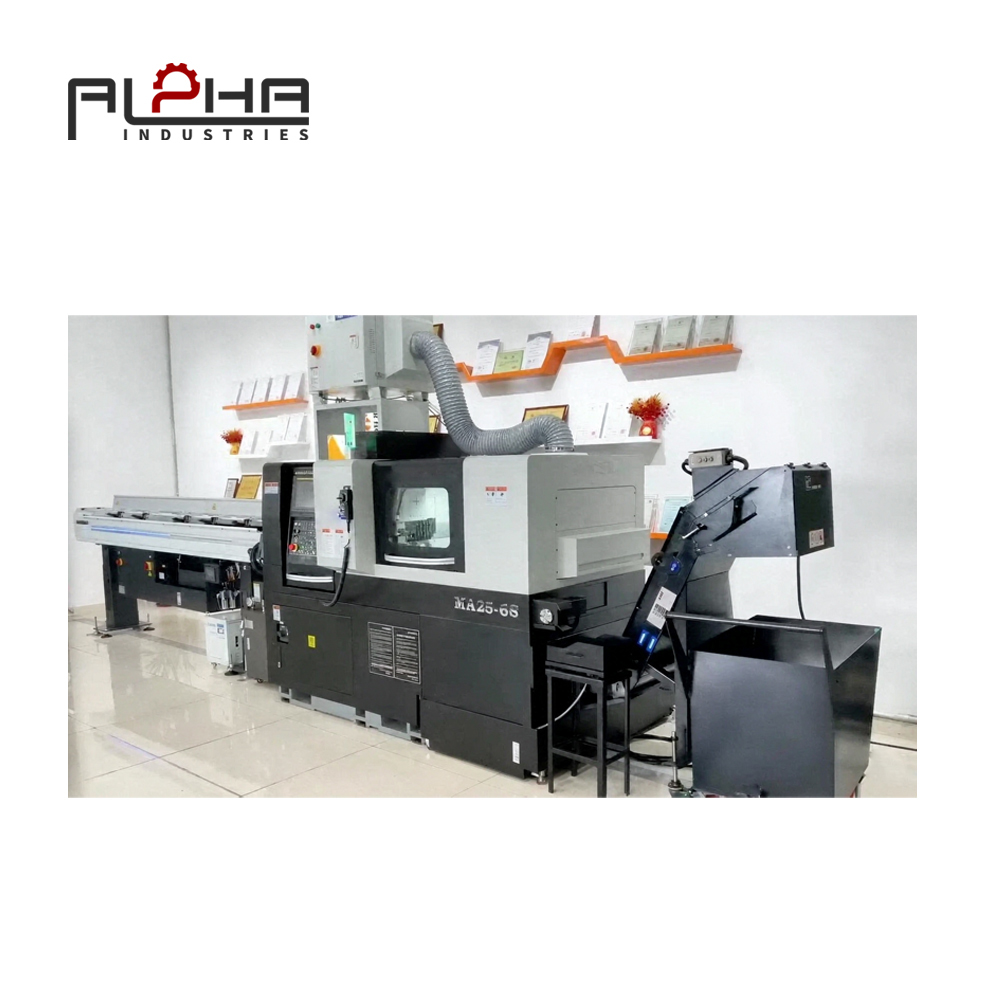
Bar feeders
-
Automatic loaders
-
Robotic loading systems
-
Automatic unloading systems
-
Part catchers
For bar stock production, a bar feeder can continuously supply material to the lathe.
For larger components, robotic loading systems may be considered.
The correct solution depends on:
-
Workpiece size
-
Production volume
-
Part geometry
-
Budget
Automation should be selected based on actual production requirements.
The goal is not simply to add technology.
The goal is to increase productive machine time.
3. Faster Changeovers Improve High-Mix Production Capacity
Manufacturers across the Americas are increasingly handling a wider variety of customer orders.
Instead of producing one component for several weeks, a factory may need to process:
-
Small batches
-
Customized parts
-
Multiple component sizes
-
Frequent design changes
This creates a high-mix production environment.
In high-mix manufacturing, setup efficiency becomes critical.
A machine that requires several hours to change from one part to another can lose significant production capacity.
Modern CNC lathes can help improve changeovers through:
-
Stored CNC programs
-
Standardized tooling
-
Repeatable workholding
-
Documented setup procedures
Reducing setup time allows manufacturers to spend more time producing parts.
4. Improved Chip Management Supports Continuous Production
Continuous machining generates large quantities of chips.
If chips are not removed effectively, they can create:
-
Machine interruptions
-
Operator cleaning requirements
-
Workpiece handling problems
-
Safety concerns
A properly configured chip management system can support longer periods of continuous operation.
Depending on the application, manufacturers may require:
-
Chip conveyors
-
Coolant systems
-
Chip collection systems
Effective chip management is particularly important for manufacturers seeking higher machine utilization.
Increasing Capacity Does Not Always Mean Increasing Spindle Speed
It is easy to assume that faster spindle speeds automatically produce more parts.
However, increasing cutting speed alone may not solve capacity problems.
Excessive cutting parameters can lead to:
-
Faster tool wear
-
Reduced surface quality
-
Increased vibration
-
More rejected parts
The best approach is to optimize the complete machining process.
Manufacturers should consider:
-
Cutting time
-
Setup time
-
Tool changes
-
Loading time
-
Inspection time
-
Machine downtime
The goal is to increase good parts produced per hour.
The Importance of OEE in Lathe Production
Manufacturers seeking higher capacity often use Overall Equipment Effectiveness (OEE) to evaluate production performance.
OEE considers three important factors:
Availability
How much time is the machine available for production?
Performance
How efficiently does the machine operate compared with its expected capability?
Quality
How many acceptable parts are produced?
These factors demonstrate why machine speed alone is not enough.
A very fast machine with frequent downtime or high scrap rates may have lower overall productivity.
A reliable CNC lathe with stable performance can provide greater long-term production value.
The Americas Manufacturing Challenge: Rising Costs of Factory Expansion
Across many industrial markets, expanding a factory can require significant investment.
Manufacturers may face:
-
Higher construction costs
-
Increased energy requirements
-
Additional labor needs
-
Higher equipment investment
-
Increased facility expenses
For small and medium-sized manufacturers, factory expansion may not be immediately possible.
Improving the productivity of existing equipment can therefore be a more practical strategy.
By increasing machine utilization, a manufacturer may be able to increase output before investing in:
-
Additional production buildings
-
More machines
-
Larger facilities
This can improve the return on existing equipment investments.
How Automation Helps Address Labor Constraints
Increasing production capacity traditionally requires more workers.
However, many manufacturers across the Americas face challenges recruiting experienced machine operators.
Automation can help existing employees manage more productive equipment.
Instead of continuously performing repetitive loading and unloading tasks, operators can focus on:
-
Monitoring multiple machines
-
Quality control
-
Tool management
-
Production planning
This can help manufacturers increase output without requiring a proportional increase in labor.
Automation does not remove the need for skilled workers.
It allows skilled employees to focus on higher-value activities.
Choosing the Right CNC Lathe for Higher Production Capacity
Not every lathe is designed for the same type of production.
Manufacturers should evaluate their actual requirements.
Production Volume
High-volume production may benefit from:
-
Automation
-
Bar feeders
-
Fast tool indexing
-
Automatic part handling
Lower-volume production may require greater flexibility.
Workpiece Size
Manufacturers should consider:
-
Maximum turning diameter
-
Maximum turning length
-
Chuck size
-
Bar capacity
The machine should support the actual component range.
Number of Required Operations
A part requiring multiple operations may benefit from a machine with:
-
Tool turret capacity
-
Live tooling options
-
Additional machining capability
Reducing the number of separate setups can improve capacity.
Required Automation Level
Automation should match production needs.
A highly automated system may not be necessary for low-volume production.
For repetitive high-volume components, automation can provide significant benefits.
Flat Bed CNC Lathe and Slant Bed CNC Lathe: Capacity Considerations
Different machine structures can support different production strategies.
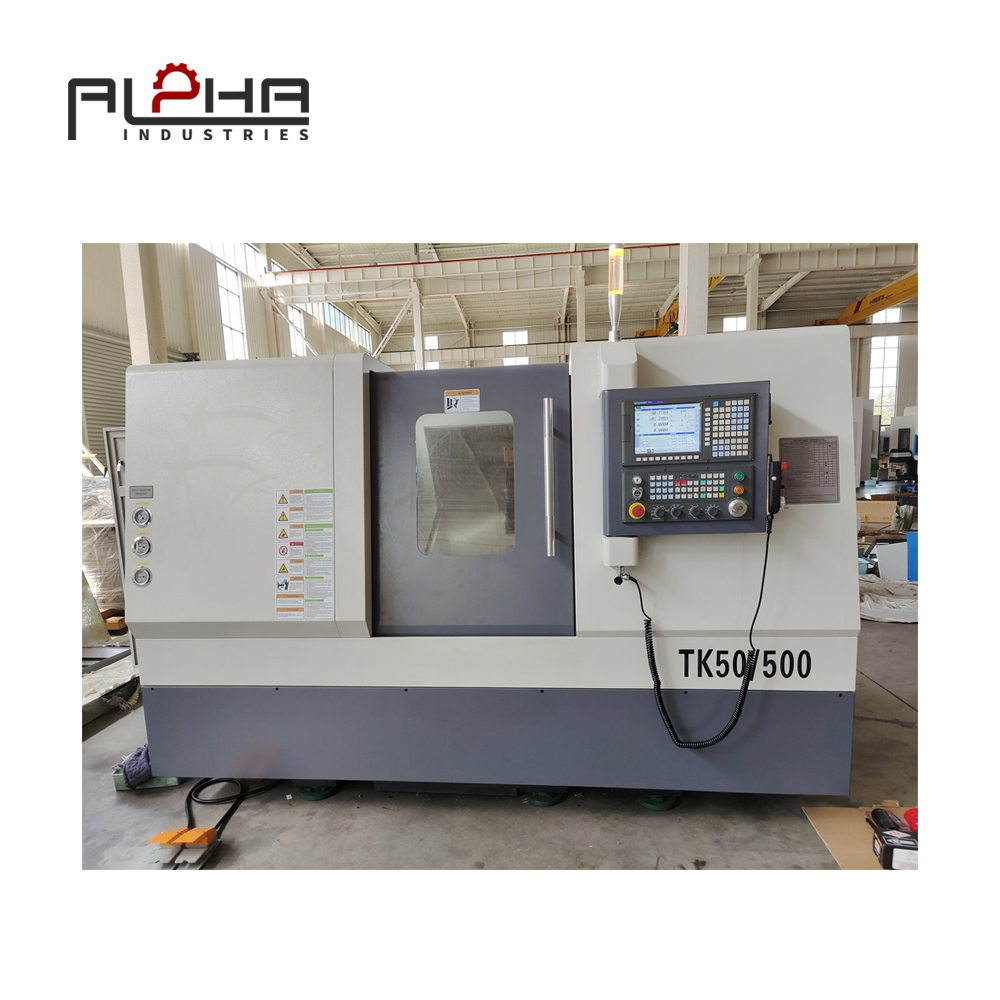
Flat Bed CNC Lathe
A flat bed CNC lathe may be suitable for manufacturers requiring:
-
Flexible machining
-
Larger workpiece capacity
-
General-purpose turning
It can be a practical solution for a wide range of applications.
Slant Bed CNC Lathe
A slant bed CNC lathe is commonly associated with more automated production.
Potential advantages include:
-
Efficient chip evacuation
-
Tool turret integration
-
Compact production layout
-
Automation compatibility
The correct machine depends on the workpiece and production requirements.
How Alpha Helps Manufacturers Increase Turning Capacity
Alpha provides lathe and CNC turning solutions designed around different production requirements.
Increasing capacity is not always about purchasing the largest possible machine.
The best solution depends on:
-
Workpiece dimensions
-
Material type
-
Production volume
-
Required accuracy
-
Number of machining operations
-
Automation requirements
-
Factory layout
Alpha can help manufacturers evaluate a turning solution based on the complete production process.
For companies with limited factory space, the focus should be on increasing the productivity of every square meter.
A properly configured CNC lathe can help improve:
-
Machine utilization
-
Production continuity
-
Automation capability
-
Changeover efficiency
The result can be greater production capacity without immediately requiring additional floor space.
Frequently Asked Questions About Lathe Machines
What is a CNC lathe machine used for?
A CNC lathe is used to perform automated turning operations such as facing, turning, threading, grooving, drilling, and boring.
What is the difference between a CNC lathe and a manual lathe?
A CNC lathe uses programmed instructions to control machining movements, while a manual lathe relies more heavily on direct operator control.
How does a bar feeder improve CNC lathe productivity?
A bar feeder automatically supplies bar stock to the machine, reducing the amount of manual material loading required during repetitive production.
What is OEE in manufacturing?
OEE, or Overall Equipment Effectiveness, is a measurement that considers machine availability, production performance, and quality output.
How do manufacturers improve CNC machine utilization?
Manufacturers can improve utilization by reducing setup time, minimizing machine idle time, improving automation, maintaining equipment properly, and optimizing production scheduling.
More Production Capacity Starts With Better Machine Utilization
For manufacturers across the Americas, increasing output is becoming increasingly difficult.
Factory space is expensive.
Labor resources are limited.
Customer expectations continue to increase.
However, purchasing more machines is not always the first solution.
Before expanding a factory, manufacturers should examine how much productive capacity is already available inside their existing operation.
A modern CNC lathe machine can help manufacturers produce more by:
-
Reducing non-cutting time
-
Supporting automatic tool changes
-
Improving changeover efficiency
-
Increasing machine utilization
-
Supporting automation
-
Reducing unnecessary production interruptions
The objective is simple:
Make every available production hour more productive.
For manufacturers with limited floor space, improving the efficiency of existing turning operations can provide a practical path toward higher production capacity and stronger long-term competitiveness.
Explore Alpha Lathe Machine Solutions
Looking for a Lathe Machine or CNC Lathe to increase production capacity without expanding your factory?
Alpha can help evaluate a turning solution based on your:
-
Workpiece size
-
Material type
-
Production volume
-
Required accuracy
-
Machining operations
-
Automation goals
-
Factory space requirements
Contact Us to discuss your CNC turning application and explore a suitable lathe solution for increasing production capacity.