

For sheet metal manufacturers in Ukraine, maintaining reliable production has become an important part of meeting customer expectations and controlling manufacturing costs.
Fabricators need to manage changing order volumes, customized components, material expenses, labor availability, and strict quality requirements. At the same time, production planning may need to account for equipment availability, supply chain uncertainty, and unexpected interruptions.
Under these conditions, the press brake remains one of the most important machines in a sheet metal production line.
However, improving bending productivity involves more than increasing machine speed or selecting a higher-tonnage press brake.
A more important question is:
How can Ukrainian manufacturers maintain safe, consistent, and efficient bending operations when production requirements change frequently?
The answer depends on the complete manufacturing process, including machine configuration, safeguarding, CNC control, tooling, operator training, material handling, and standardized procedures.
A well-planned CNC press brake workflow can reduce unnecessary manual adjustments, improve repeatability, and help manufacturers manage different products more efficiently.
This article focuses on one specific challenge: how Ukrainian manufacturers can improve press brake productivity by establishing a safer and more standardized bending process.
Why Press Brake Safety Is Also a Productivity Issue
Safety and productivity are closely connected in sheet metal manufacturing.
When operators lack clear procedures, production can become inconsistent. Frequent manual adjustments, repeated measurements, incorrect tooling selection, and unclear setup instructions can increase production time and create additional operational risks.
During a typical bending operation, an operator may need to position the workpiece, verify tooling, select the correct CNC program, check dimensions, and manage finished parts.
When these activities are not standardized, the production process may depend too heavily on individual experience.
This creates several challenges for Ukrainian manufacturers:
Inconsistent setup procedures can increase preparation time.
Repeated manual corrections can delay order completion.
Insufficient operator training can make production less predictable.
Unclear inspection requirements can increase scrap and rework.
Inadequate safeguarding can expose workers to serious machine hazards.
A reliable press brake solution should therefore address two questions simultaneously: how efficiently the machine produces parts and how safely and consistently operators perform their work.
The objective is not simply to accelerate bending. It is to create a production process that can be repeated reliably across different orders, operators, and shifts.
The Challenges of Flexible Sheet Metal Production in Ukraine
Many Ukrainian fabrication businesses process a wide range of components rather than producing one part continuously.
Typical applications include electrical cabinets, agricultural machinery components, construction products, HVAC panels, industrial enclosures, equipment frames, and customized metal brackets.
Each order may involve different material grades, sheet thicknesses, bending lengths, bend angles, tooling requirements, and production quantities.
This creates a high-mix manufacturing environment.
For smaller fabrication shops, the ability to switch between jobs efficiently can be more important than achieving the highest possible production speed on a single component.
However, frequent job changes can also increase setup complexity. Operators must identify the correct tools, load suitable programs, adjust positioning, and verify the first part before continuing production.
When setup procedures rely primarily on memory, changing shifts or introducing new operators can lead to inconsistent results.
A CNC press brake with suitable programming capabilities, together with documented setup procedures, can help manufacturers manage these changes more systematically.
The key is to select equipment that matches the actual production mix instead of focusing exclusively on maximum bending force.
Why Manual Adjustments Can Become a Production Bottleneck
Manual adjustment is a normal part of many bending operations. Experienced operators can make valuable decisions based on material properties, workpiece geometry, and production requirements.
The difficulty arises when too many production decisions depend entirely on individual operator experience.
An operator may need to remember which punch and die to use, which program to select, how to position the material, and which dimensions require inspection.
If this information is not documented, the company may struggle to reproduce successful results consistently.
For Ukrainian manufacturers dealing with changing production schedules or limited access to experienced personnel, this can make training and production planning more difficult.
A standardized workflow can transfer important production knowledge into CNC programs, tooling records, setup instructions, and inspection procedures.
This approach helps reduce unnecessary variation without eliminating the value of operator expertise.
How CNC Press Brake Technology Supports a Standardized Workflow
A CNC press brake can manage multiple aspects of the bending operation, depending on the machine configuration.
These may include bend sequencing, backgauge positioning, ram movement, programmed bending parameters, and production program storage.
For repeat orders, operators can retrieve an established program instead of recreating the entire bending sequence.
This can reduce repetitive setup activities and improve consistency between production runs.
For manufacturers processing customized orders, CNC programming also provides greater flexibility when switching between components.
However, CNC control alone does not guarantee accurate or safe production. Programs must be appropriate for the material, tooling, machine configuration, and workpiece geometry. Operators must also follow the manufacturer's operating and safeguarding instructions.
When these elements are coordinated, CNC technology can support a more predictable bending process.
Backgauge Positioning and Production Consistency
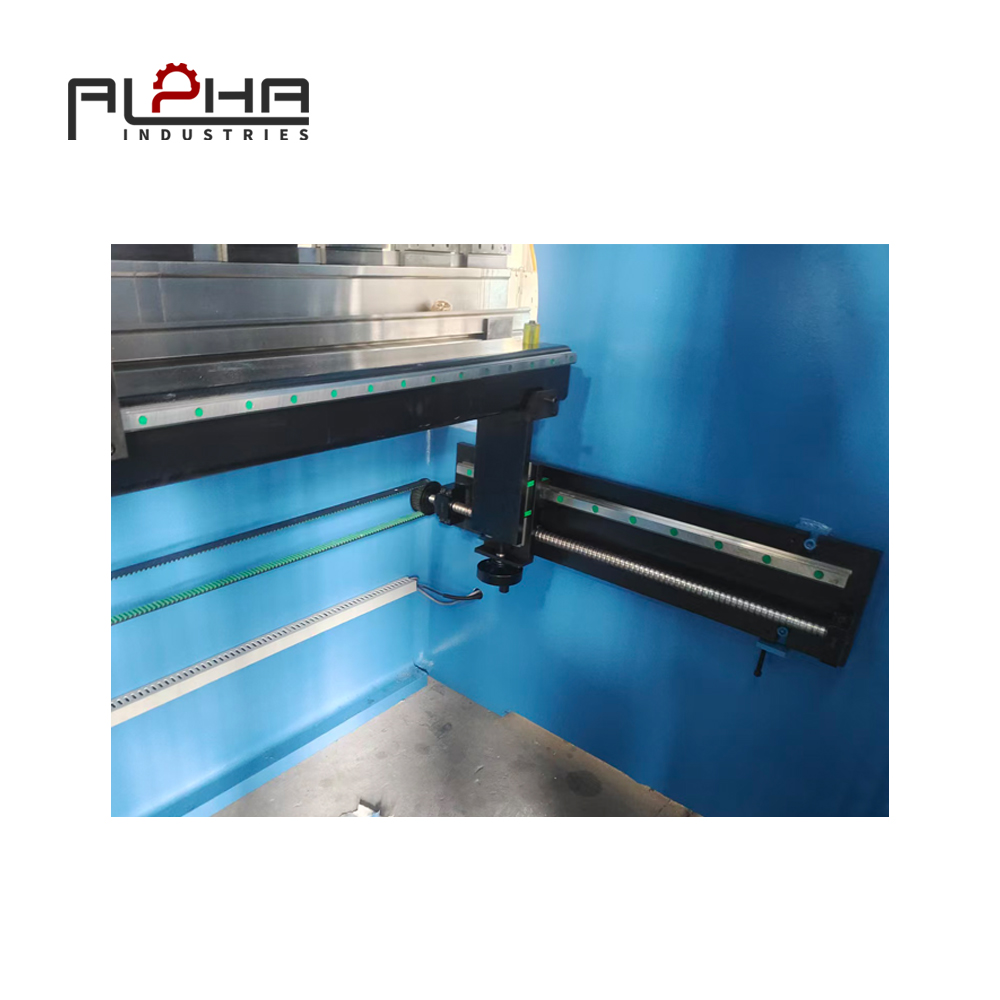
The backgauge is an important component of a CNC press brake because it helps position the workpiece before each bend.
Simple components may require only a few positioning steps, while complex parts may involve several programmed positions.
Accurate and repeatable positioning can reduce repeated manual measurement and help maintain consistent flange dimensions.
For Ukrainian manufacturers producing different components in small and medium batches, suitable backgauge configuration can improve flexibility while reducing unnecessary setup work.
The required number of axes depends on part geometry, bending sequence, production volume, and the level of automation required.
A machine should be selected according to these application requirements rather than choosing the most advanced configuration by default.
Backgauge operation must always follow the equipment manufacturer's procedures, with appropriate attention to pinch points and workpiece movement.
Tooling Selection Is Essential for Reliable Bending
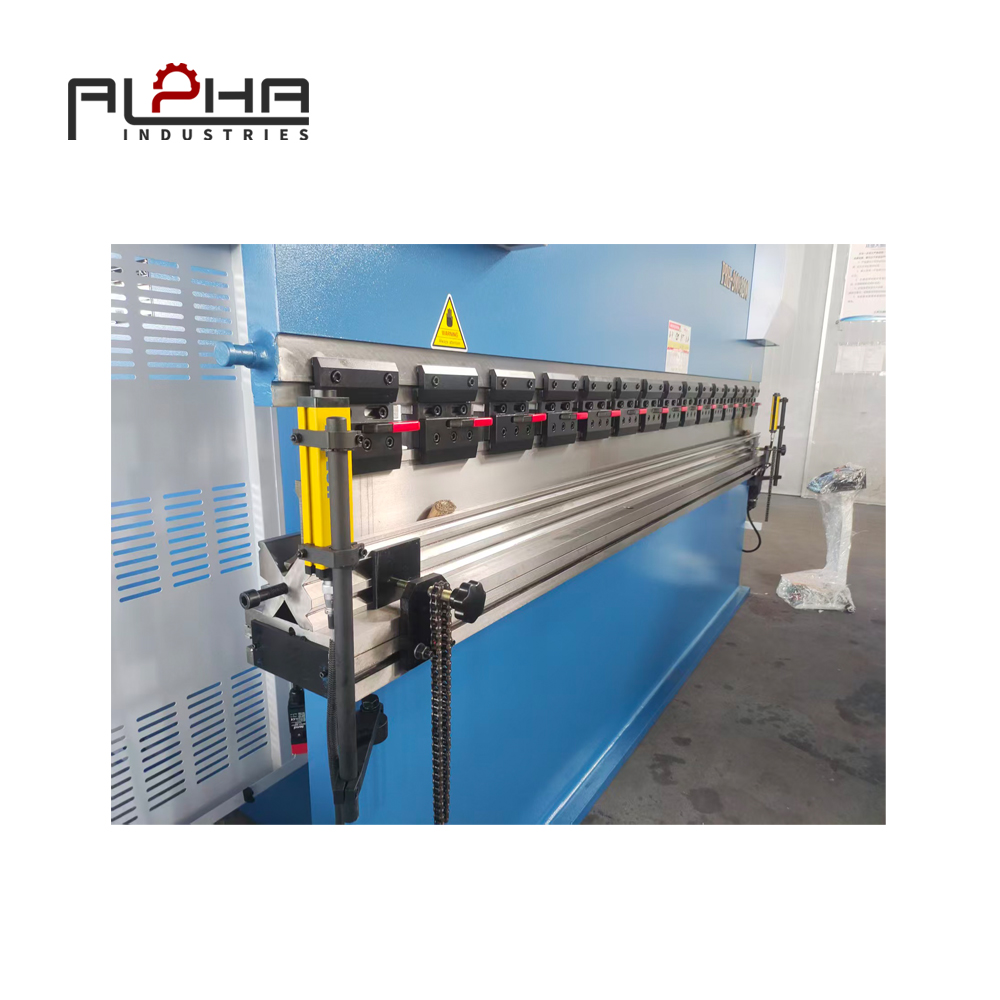
Press brake tooling has a direct influence on bending quality, setup time, and process consistency.
Incorrect punch or die selection can result in dimensional problems, poor bending results, additional adjustments, and unnecessary production delays.
A standardized tooling system helps operators identify the appropriate tools for each job.
For frequently manufactured components, production records can specify the punch type, die type, die opening, tool position, material range, and bending sequence.
These records make it easier to reproduce a successful setup when the same order returns.
Tooling should also be inspected for wear, deformation, or damage. Operators should not attempt to compensate indefinitely for damaged tools by making repeated machine adjustments.
For Ukrainian fabrication shops working to tight delivery schedules, proper tooling preparation can help reduce avoidable interruptions and improve production reliability.
Handling Large Sheet Metal Components Safely
Large sheet metal components introduce additional challenges beyond the required bending force.
Operators may need to manage workpiece weight, length, flexibility, rotation, positioning, and the movement of finished flanges.
If a large sheet is difficult to support, positioning can become less predictable and the operator's workload can increase.
The press brake layout should provide sufficient space for the intended operation. Appropriate sheet supports, lifting equipment, or other material-handling solutions may be necessary depending on the size and weight of the workpiece.
This is particularly relevant when manufacturers process long panels, equipment covers, structural components, or large industrial enclosures.
The goal is to maintain control of the workpiece throughout the bending process while minimizing unnecessary manual handling.
Small Parts Require Careful Safeguarding
Large sheets are not the only source of operational risk.
Small components can bring an operator's hands closer to the point of operation, depending on the part geometry, tooling, and bending sequence.
The appropriate safeguarding method must be evaluated for the specific machine and application.
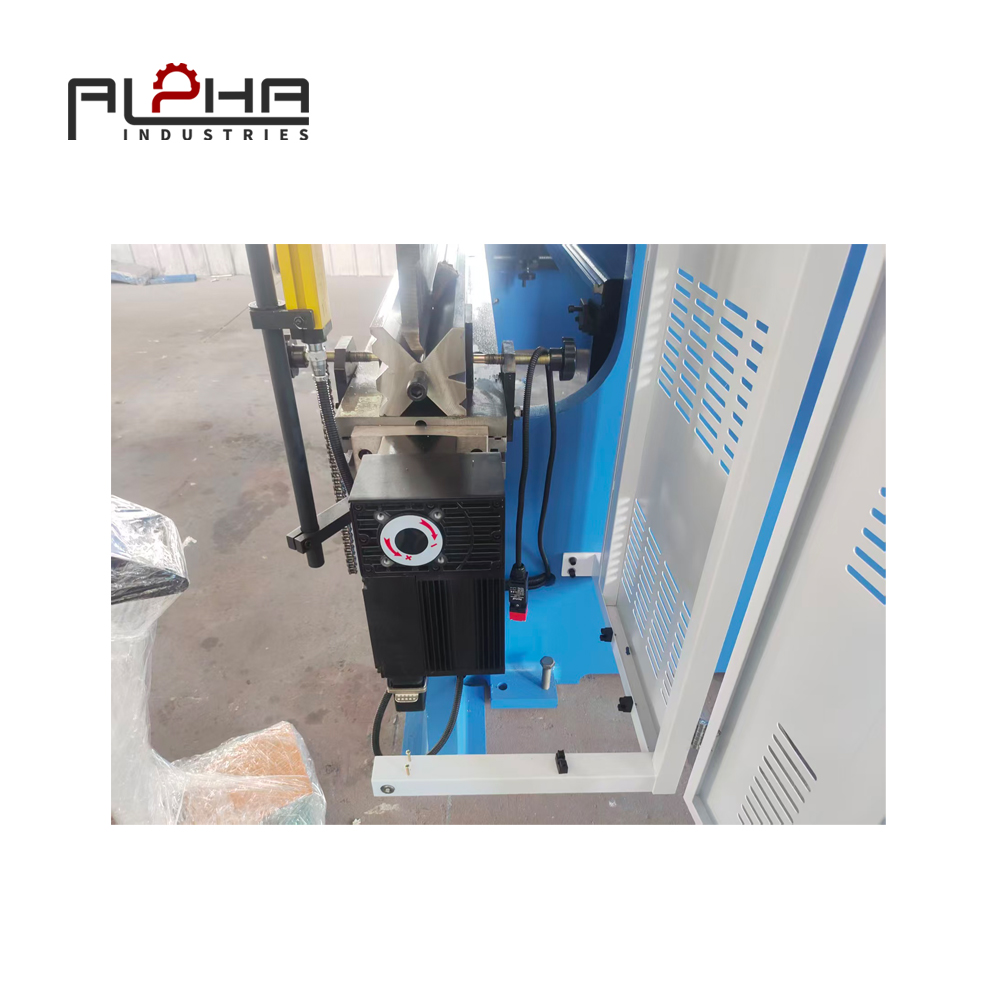
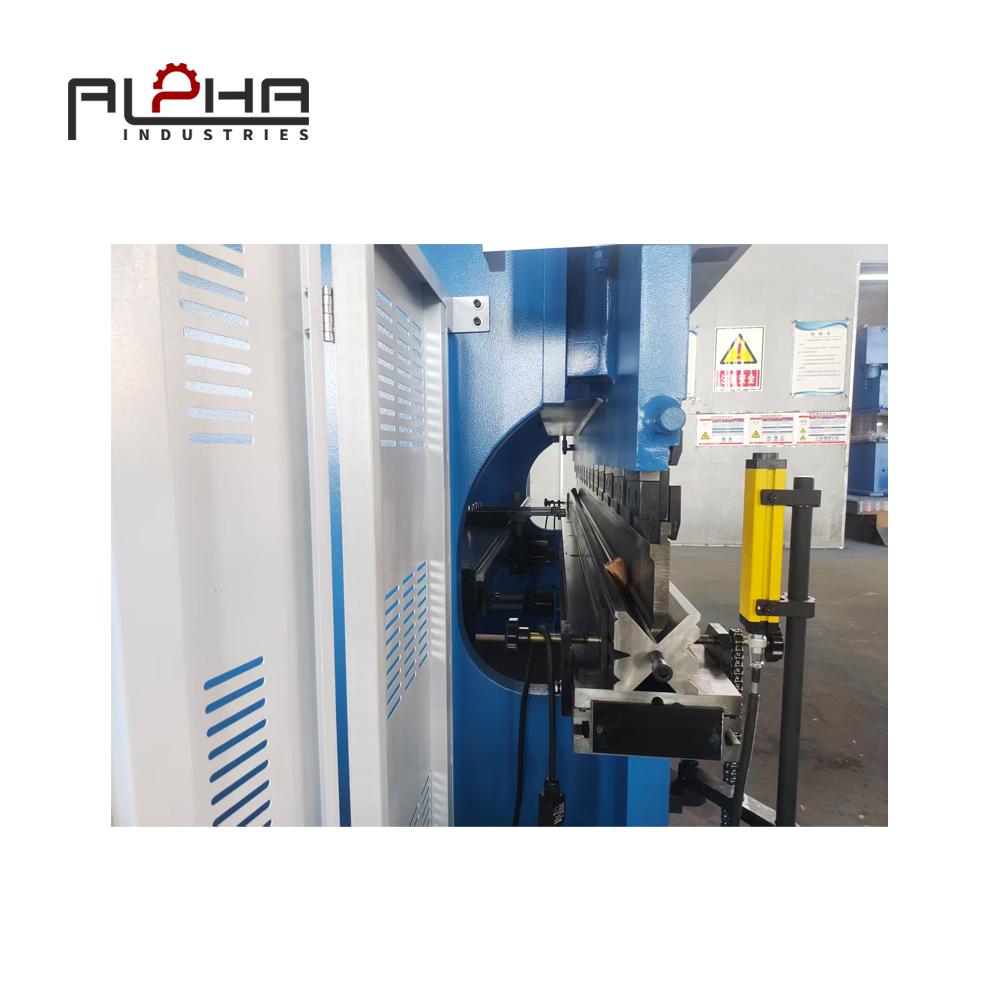
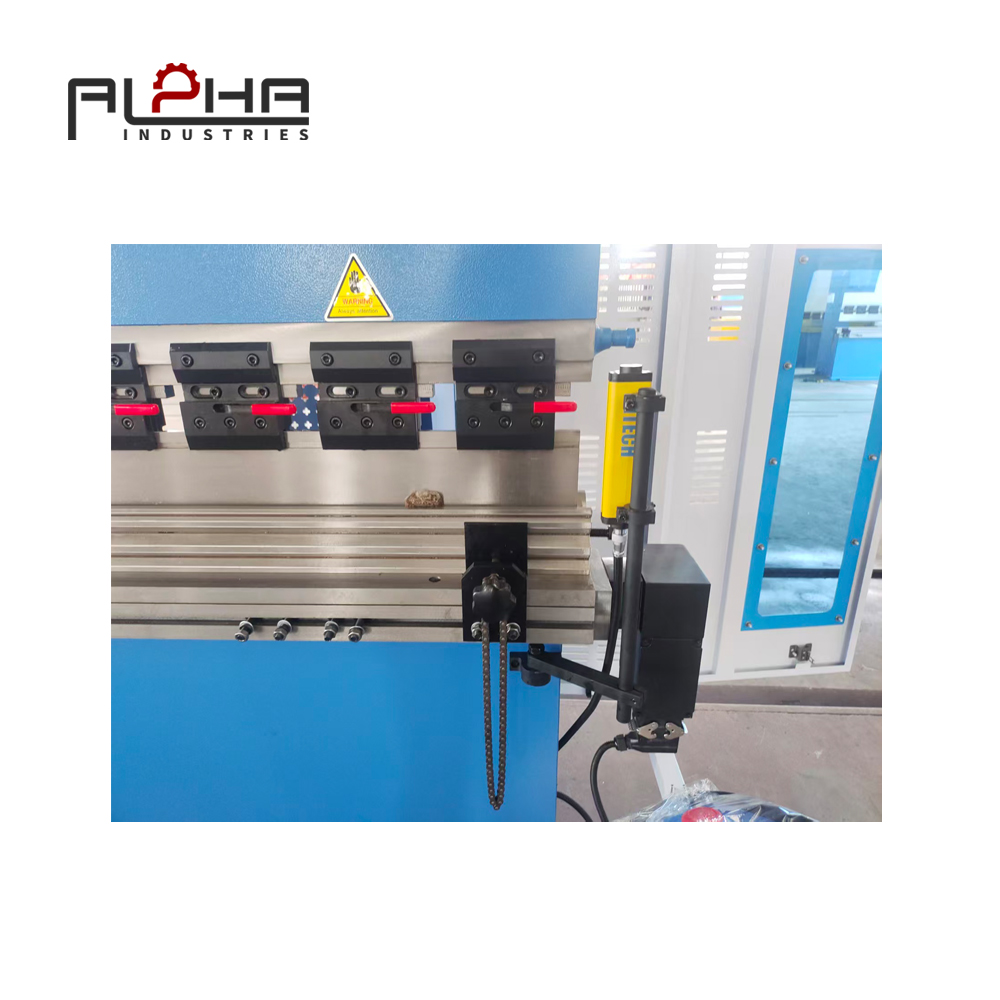
Depending on the equipment and operation, safeguarding may involve physical guards, presence-sensing devices, restraint systems, pullback devices, or other suitable protective measures.
A workflow that is appropriate for a large panel may not be suitable for a small bracket.
Manufacturers should therefore assess part dimensions, tooling, operator position, machine configuration, and safeguarding together.
Production efficiency should never depend on bypassing or disabling safety devices.
If a particular job is difficult to perform with the intended safeguards, the correct response is to review the tooling, workpiece handling, machine configuration, and operating procedures with appropriately qualified personnel.
Why Machine Guarding Must Be Part of the Production Plan
Machine guarding is an essential consideration when evaluating a press brake.
The point of operation can present serious hazards, particularly during bending, setup, adjustment, and workpiece handling.
For Ukrainian manufacturers, establishing clear operating procedures and selecting suitable safeguarding can help create a more controlled production environment.
Safety measures should be appropriate for the specific press brake and its intended use. Operators must understand how the protective systems work and what actions are permitted during normal operation and setup.
Manufacturers should also ensure that maintenance and inspection procedures address safety devices and that any faults are handled by qualified personnel.
A productive bending process is one in which machine protection, operator workflow, and production requirements are designed to work together.
Operator Training Becomes More Important as Production Changes
A flexible CNC press brake can process many different components, but flexibility also increases the number of variables operators must understand.
Training should cover machine operation, CNC program selection, tooling identification, workpiece positioning, safeguarding, setup procedures, material handling, inspection requirements, and emergency procedures.
Training should reflect the actual machine configuration and the components being manufactured.
New operators should not be expected to learn solely through trial and error on an active production line.
For companies experiencing staff changes or introducing new products, documented training materials can help preserve production knowledge and reduce dependence on a small number of experienced employees.
Consistent training also helps operators recognize abnormal machine behavior and report potential problems before they affect production.
Standardized Setup Can Reduce Operator Variation
A standardized setup procedure helps make production more predictable, particularly when different operators work on the same machine.
A practical workflow can include the following stages.
Verify the production order
Confirm the current drawing, revision, required quantity, and applicable quality requirements.
Verify the material
Check the material type, thickness, and relevant specifications.
Prepare the tooling
Confirm the correct punch, die, die opening, and tool condition.
Load the CNC program
Select the approved program and verify that it matches the workpiece and machine configuration.
Check the machine setup
Confirm the required settings and protective measures according to established procedures.
Produce the first part
Perform the initial bending operation under the approved operating procedure.
Inspect critical dimensions
Check the bend angle, flange dimensions, bend positions, and other specified characteristics.
Begin repeat production
Continue production only after the required first-part verification has been completed.
This approach helps reduce avoidable variation between operators and shifts while providing a clear reference for troubleshooting.
First-Part Inspection Helps Prevent Scrap and Rework
First-part inspection is both a quality-control activity and a production-control measure.
If the initial component does not meet specifications, the problem can be investigated before a larger batch is produced.
Depending on the component, inspection may include bend angles, flange dimensions, bend positions, overall dimensions, and critical assembly features.
The inspection criteria should be defined by the product drawing and customer requirements.
For Ukrainian manufacturers managing customized orders, first-part verification can be particularly valuable because different jobs may require different programs, materials, and tooling combinations.
The principle is simple: identify problems early instead of discovering them after an entire batch has been processed.
This can help reduce wasted material, repeated operations, and avoidable delays.
Press Brake Maintenance and Equipment Reliability
A press brake is a precision manufacturing system, and its condition can influence bending consistency and production availability.
Preventive maintenance should follow the machine manufacturer's documentation and address the relevant hydraulic, electrical, mechanical, CNC, backgauge, lubrication, and safety systems.
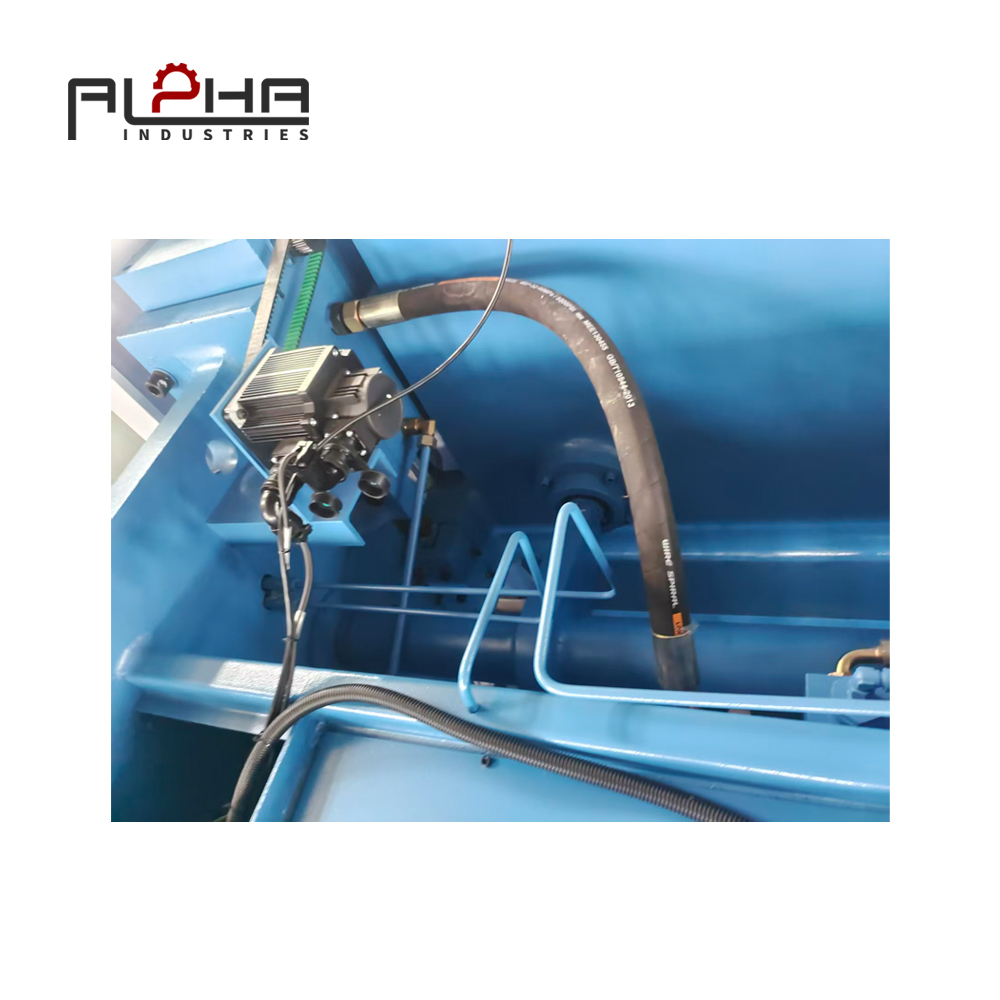
For hydraulic press brakes, maintenance requirements may include monitoring hydraulic oil condition, leakage, seals, filters, pressure stability, temperature, and pump performance.
The exact requirements depend on the machine design and operating conditions.
Manufacturers should maintain appropriate service records and investigate changes in machine behavior rather than relying on repeated manual corrections.
For Ukrainian businesses seeking to control operating costs, a planned maintenance approach can help identify developing problems before they cause more disruptive failures.
However, maintenance cannot eliminate every unexpected interruption. Production planning should also account for spare parts, technical support, and the supplier's ability to assist throughout the machine's operating life.
Hydraulic Press Brake Considerations for Ukrainian Manufacturers
Hydraulic press brakes remain widely used in industrial sheet metal forming because they can be configured for a broad range of bending forces and workpiece dimensions.
When evaluating a hydraulic press brake, manufacturers should consider the required bending force, working length, material properties, expected production volume, and machine control configuration.
Energy consumption and maintenance requirements should also be considered as part of the total operating cost.
For example, a machine that meets the required tonnage but is poorly matched to the typical workpiece may not deliver the most practical production solution.
Similarly, an unnecessarily complex configuration may increase the initial investment without providing meaningful benefits for the intended application.
The most suitable machine is the one that balances production capability, operational requirements, reliability, and long-term cost.
Production Pressure Should Not Compromise Safety
Urgent orders and changing delivery dates can place pressure on manufacturing teams.
Under these circumstances, operators may be tempted to shorten setup procedures or skip inspection steps to increase output.
However, production urgency should not become a reason to bypass established safety requirements.
A reliable production system should allow operators to follow the required procedures even when workloads increase.
Standardized setup instructions, clear work orders, suitable tooling preparation, and appropriate machine configuration can help reduce avoidable delays without compromising safeguarding.
For Ukrainian manufacturers facing unpredictable production schedules, this balance between flexibility and procedural discipline is essential to sustainable productivity.
How Automation Can Improve Press Brake Production
Automation can reduce certain repetitive activities, depending on the production application.
A bending cell may include a CNC press brake, automated material loading, robotic workpiece handling, automatic unloading, tooling management, or production monitoring.
These solutions can be valuable for manufacturers processing large quantities of standardized components.
However, automation is not automatically the best choice for every Ukrainian fabrication business.
The investment should reflect the actual production volume, part geometry, available floor space, labor requirements, and expected return.
A company producing frequent small batches of customized components may benefit more from flexible CNC programming and faster setup than from a fully robotic bending cell.
The right automation strategy should support the company's production model rather than add unnecessary complexity.
High-Mix Production Requires Flexible Equipment
Job shops often process dozens or hundreds of different components, with relatively small quantities of each part.
In this environment, flexibility and quick changeovers can be more important than maximum automation.
A suitably configured CNC press brake can help operators switch between programs, tooling arrangements, and workpiece dimensions while maintaining controlled production parameters.
For these manufacturers, the priorities may include fast setup, flexible programming, repeatable positioning, practical tooling options, and straightforward operator interaction.
For higher-volume production, automated material handling or robotic bending may provide additional advantages.
Understanding the production mix is therefore essential when deciding which press brake configuration offers the best long-term value.
Press Brake Selection for the Ukrainian Market
When Ukrainian manufacturers evaluate a new press brake, the decision should be based on their actual production requirements.
Bending length: What are the typical and maximum dimensions of the workpieces?
Bending force: Which material types and thicknesses must be processed?
CNC control: How complex are the components and bending sequences?
Backgauge configuration: How many axes are needed for the intended workpieces?
Tooling: Which tooling system supports the required range of products?
Safeguarding: What protective measures are appropriate for the machine and application?
Operator workflow: How easily can operators prepare and switch between jobs?
Automation: Is future robotic bending or automated material handling likely to be necessary?
Maintenance and service: What technical support, spare parts, and maintenance resources are available?
Operating costs: How will energy use, maintenance, setup time, and production performance affect the total cost of ownership?
These considerations provide a more practical basis for equipment selection than maximum tonnage alone.
For manufacturers operating under budget constraints, evaluating the complete production process can help avoid investing in capabilities that do not address their main bottlenecks.
Building a More Reliable Bending Workflow
A reliable press brake process can be organized into connected production stages.
Material preparation
Identify the correct material and prepare it for the scheduled job.
Tooling preparation
Verify the required tooling and inspect its condition.
CNC program preparation
Select and verify the appropriate bending program.
Machine setup
Configure the machine according to the approved procedure.
First-part verification
Inspect the initial component against the specified requirements.
Controlled production
Repeat the approved bending process while monitoring critical characteristics.
Finished-part handling
Move completed components safely to the next production stage.
Production recordkeeping
Record relevant inspection results, production quantities, and any process adjustments required by the quality system.
This structured workflow helps connect operator safety, quality assurance, and production efficiency.
It also provides a clearer basis for identifying the causes of delays, setup problems, and recurring quality issues.
The Role of Digital Production Information
CNC programs are valuable, but production information can extend beyond the machine itself.
Manufacturers can organize drawings, job numbers, tooling information, material specifications, inspection criteria, production quantities, and setup instructions into a consistent information system.
This makes it easier to reproduce a successful production process when the same component returns weeks or months later.
For Ukrainian manufacturers working with repeat customers alongside customized orders, organized production records can reduce the need to recreate setup information from the beginning.
Digital production information can also support communication between programming, production, and quality-control teams.
The goal is to make reliable production knowledge accessible to the people who need it.
Press Brake Safety and Total Production Cost
Machine safety should be considered part of long-term production reliability rather than simply a compliance expense.
A serious incident or avoidable equipment problem can disrupt production schedules, reduce equipment availability, affect workforce planning, and delay customer deliveries.
Similarly, inconsistent bending procedures can increase scrap, rework, setup time, and inspection costs.
A well-planned press brake solution considers these factors together.
Appropriate safeguarding, operator training, preventive maintenance, standardized setup procedures, and first-part inspection can all contribute to a more controlled production environment.
For Ukrainian manufacturers balancing equipment investment with operating expenses, evaluating these factors can provide a more complete picture of the machine's long-term value.
How ALPHA Approaches Press Brake Solutions
At ALPHA, press brake selection begins with understanding the customer's manufacturing application.
Different businesses require different machine configurations.
A fabrication shop producing customized components may prioritize flexible CNC programming, practical tooling, fast setup, accurate backgauging, and straightforward operation.
A high-volume manufacturer may require automated material handling, robotic bending, production monitoring, and high repeatability.
A heavy fabrication business may focus on bending force, working length, machine construction, and suitable support for large workpieces.
For Ukrainian manufacturers, evaluating these requirements together helps identify a press brake configuration suited to the actual production environment.
The objective is to match machine capabilities to the customer's workpieces, production volume, operating conditions, and long-term plans.
Whether the priority is greater flexibility, more consistent bending results, reduced manual work, or preparation for future automation, equipment selection should begin with the application rather than a specification alone.
Frequently Asked Questions
1. What Is a Press Brake Used For?
A press brake is used to bend and form sheet metal by pressing a workpiece between a punch and a die. It is widely used to manufacture metal enclosures, panels, brackets, equipment frames, and other fabricated components.
2. What Is a CNC Press Brake?
A CNC press brake uses computer numerical control to manage programmed bending operations. Depending on the machine configuration, it can control bending sequences, backgauge positioning, and other operating parameters.
3. Is a Hydraulic Press Brake Suitable for Heavy Sheet Metal?
Yes. Hydraulic press brakes can be configured for substantial bending forces and a wide range of workpiece dimensions. The appropriate machine depends on material type, thickness, bending length, and production requirements.
4. How Can Ukrainian Manufacturers Improve Press Brake Productivity?
Manufacturers can improve productivity through suitable CNC programming, accurate backgauging, standardized tooling, efficient setup procedures, first-part inspection, and appropriate preventive maintenance.
5. Why Is Press Brake Safeguarding Important?
The point of operation and related machine movements can expose workers to serious hazards. Appropriate safeguarding, operating procedures, and operator training help reduce these risks.
6. Can Press Brake Automation Reduce Operator Workload?
Depending on the application, automation can assist with material loading, workpiece handling, unloading, and repetitive bending tasks. The appropriate solution depends on production volume, part geometry, and investment requirements.
7. How Can Manufacturers Improve Press Brake Accuracy?
Manufacturers can improve consistency by controlling material specifications, selecting suitable tooling, verifying CNC programs, maintaining accurate backgauge positioning, inspecting the first part, and maintaining the machine according to the manufacturer's requirements.
8. Should a Press Brake Be Selected Based Only on Tonnage?
No. Manufacturers should also consider bending length, CNC control, backgauge configuration, tooling, safeguarding, operator workflow, maintenance, energy consumption, and future production requirements.
9. What Should a Ukrainian Job Shop Look for in a CNC Press Brake?
A job shop may benefit most from flexible programming, efficient setup, adaptable tooling, accurate positioning, and the ability to process different components in small batches.
10. How Can Manufacturers Reduce Press Brake Downtime?
Preventive maintenance, suitable spare-parts planning, operator training, standardized setup procedures, and timely technical support can help reduce avoidable downtime. The actual results depend on machine condition and operating practices.
Conclusion
For Ukrainian manufacturers, improving press brake productivity is not simply about increasing bending speed. It is about creating a reliable production process that can accommodate changing orders, maintain consistent quality, and protect operators.
A modern press brake should work together with CNC control, accurate backgauging, suitable tooling, machine safeguarding, operator training, material handling, preventive maintenance, and standardized production procedures.
When these elements are coordinated, manufacturers can reduce avoidable variation, improve production repeatability, and manage high-mix manufacturing more effectively.
At ALPHA, the right press brake solution starts with understanding the customer's actual manufacturing requirements. Whether the goal is to improve production flexibility, process large sheet metal components, achieve more consistent bending results, or prepare for future automation, machine configuration should be matched to the application.
If your company is evaluating a new press brake or looking to improve an existing sheet metal bending process, contact ALPHA CNC to discuss a suitable machine configuration for your production needs.
Contact ALPHA CNC: Contact Us – ALPHA CNC