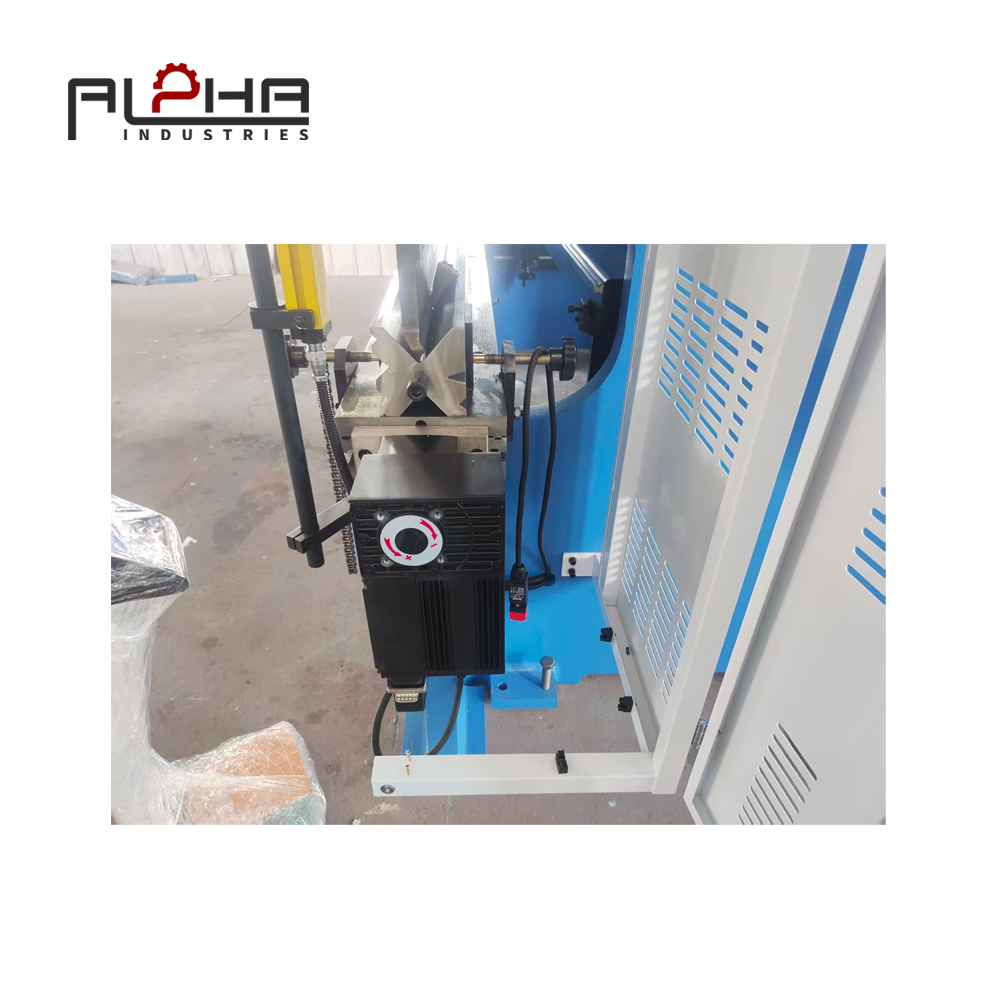


Why Energy Efficiency Deserves More Attention in Ukraine's Sheet Metal Industry
For Ukrainian metalworking manufacturers, controlling production costs involves more than purchasing raw materials at a competitive price or reducing labor hours. Electricity consumption, equipment utilization, maintenance planning, and the stability of production operations can also influence the cost of every finished component.
A press brake is an essential machine in many sheet metal fabrication workshops. It forms panels, brackets, enclosures, structural components, equipment housings, and other parts used in industrial manufacturing.
Although bending may appear to be a straightforward mechanical operation, the machine can consume energy throughout a wider operating cycle. Depending on the design, electricity may be required for hydraulic pumps, servo motors, CNC controls, backgauge movements, cooling systems, and other auxiliary components.
The energy required to form a particular part is only one part of the calculation. The time spent preparing jobs, waiting for materials, changing programs, and leaving equipment running between production cycles also influences total consumption.
For manufacturers in Ukraine, these factors deserve careful consideration when electricity costs and supply conditions create additional uncertainty for production planning.
A machine that consumes less energy during a particular operating cycle may not automatically deliver the lowest cost per finished part. The result depends on how the machine is configured and used, how many acceptable components it produces, and how effectively it fits into the factory's production schedule.
The more useful question is therefore:
How can Ukrainian manufacturers select and operate a press brake to reduce energy cost per finished part without compromising bending quality or production requirements?
Answering this question requires looking beyond the machine's rated power and examining its complete working cycle.
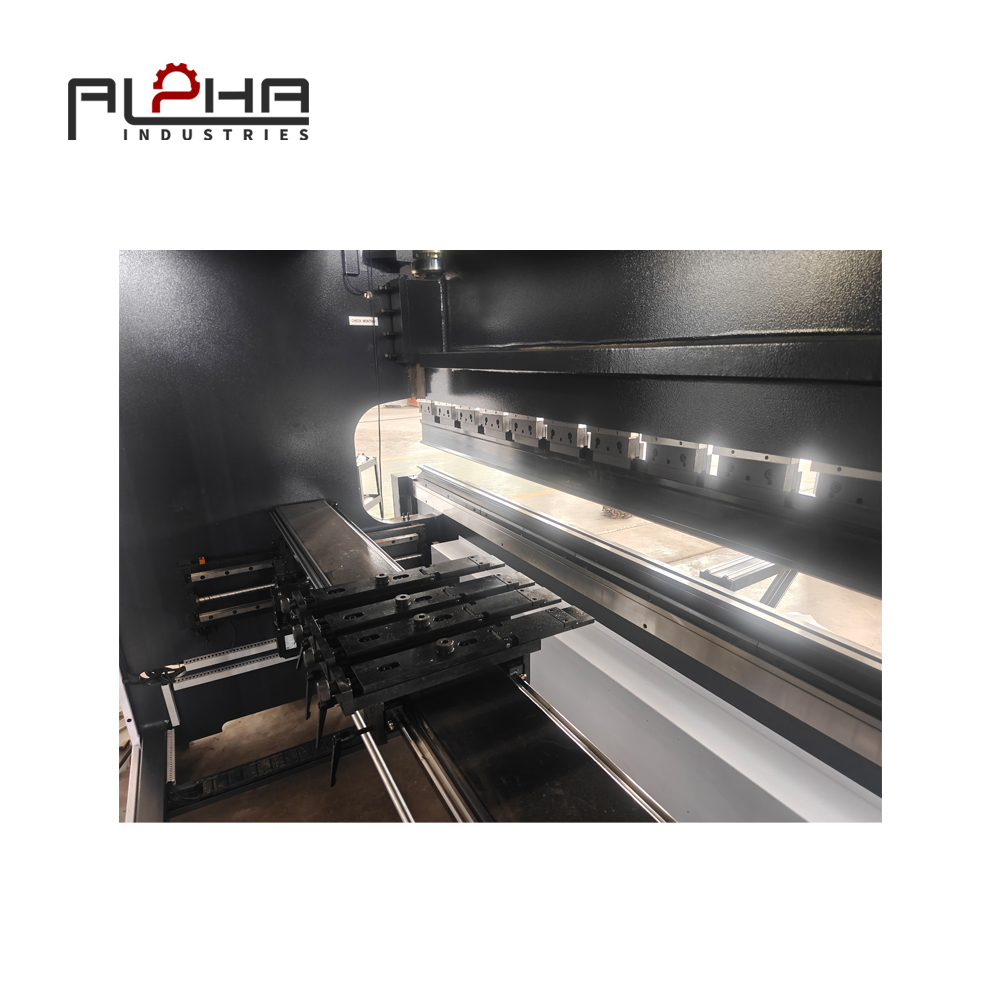
Understanding Where a Press Brake Uses Electricity
Before comparing machines, manufacturers should understand the main factors that influence energy consumption during bending operations.
Different press brake designs use different drive technologies, and their consumption patterns can vary according to machine size, operating conditions, and application.
Hydraulic System Energy Consumption
A conventional hydraulic press brake uses an electric motor to drive a hydraulic pump. The hydraulic system generates and controls the pressure required to move the machine's ram and perform bending operations.
The motor and pump arrangement, hydraulic circuit design, control strategy, and operating cycle all influence energy use.
On some conventional hydraulic machines, the pump motor may continue running during periods when the machine is not actively bending. The actual energy consumed during these periods depends on the system design and control method.
This means manufacturers should not assess a hydraulic press brake solely by its maximum motor rating. They should understand how the hydraulic system behaves during bending, standby, setup, and idle periods.
Questions worth asking include:
-
Does the hydraulic pump operate continuously or according to a demand-based control strategy?
-
Does the machine have an energy-saving standby function?
-
How does the machine manage hydraulic pressure when it is not bending?
-
What maintenance is required to keep the hydraulic system operating correctly?
-
What energy consumption information can the supplier provide for the intended application?
These details help buyers understand the practical operating characteristics of the proposed machine.
Servo-Hydraulic and Hybrid Drive Systems
Some press brakes use servo-controlled hydraulic systems or hybrid drive arrangements designed to adjust energy use according to machine demand.
Depending on the design, the system may reduce unnecessary pump operation or control motor output more closely in line with the required movement.
However, the term "hybrid" can describe different configurations. Manufacturers should confirm the actual drive arrangement and energy-saving functions rather than assuming all hybrid press brakes operate in the same way.
When comparing a hybrid press brake with a conventional hydraulic machine, buyers should request information about energy consumption under comparable operating conditions.
The comparison should consider the intended material thickness, bending length, production cycle, standby time, and daily operating schedule.
A system that performs efficiently under one production pattern may deliver a different result under another.
Electric Press Brake Technology
An electric press brake typically uses an electric drive system to produce the ram movement rather than relying on a conventional hydraulic circuit for the main bending motion.
Depending on the machine design, this may eliminate some hydraulic-system energy requirements and change the machine's consumption pattern during production and standby.
Electric press brakes may be attractive for applications involving particular combinations of bending accuracy, operating speed, production volume, and energy-management priorities.
However, an electric design is not automatically the best choice for every factory. Available bending capacity, working length, material requirements, application complexity, initial investment, maintenance arrangements, and local service considerations all need to be evaluated.
For manufacturers producing heavy or demanding components, the practical suitability of the machine must be confirmed against the actual workload.
The correct comparison is not simply hydraulic versus electric. It is the total operating cost and production capability of each machine for the work the manufacturer needs to complete.
Why Rated Motor Power Does Not Tell the Whole Story
One of the most common mistakes in equipment evaluation is treating the machine's rated power as a direct measure of its actual electricity consumption.
Rated power helps describe the electrical requirements or capacity of particular machine components. It does not, by itself, establish how much electricity the complete press brake will consume during a normal production shift.
A machine may use different amounts of energy during bending, ram return, backgauge movement, setup, standby, and other operating states.
Actual consumption also depends on the number of cycles completed, the complexity of the parts, and the time the machine remains energized without producing components.
Understand the Complete Operating Cycle
A production cycle can include several stages:
-
Loading and positioning the workpiece
-
Moving the ram into position
-
Performing the bend
-
Returning the ram
-
Repositioning the backgauge
-
Rotating or repositioning the part
-
Inspecting dimensions
-
Preparing for the next operation
Not all these stages have the same energy requirements.
The machine's drive system may consume energy during ram movement, while CNC controls and other components may remain energized throughout the cycle.
The operator may also spend considerable time handling the workpiece between bends. During that time, the machine may be waiting even though the production process has not yet finished.
Manufacturers should therefore examine energy use over a representative production period rather than estimating total consumption from a single machine specification.
Measure Energy per Finished Part
For a useful comparison, calculate the electricity consumed over a defined production run and divide it by the number of acceptable finished parts.
The basic formula is:
Energy per part (kWh) = Total electricity consumed (kWh) ÷ Number of acceptable parts
For example, if a press brake consumes 12 kWh during a production run and produces 300 acceptable parts, the measured energy consumption is:
12 ÷ 300 = 0.04 kWh per part
This is an illustrative calculation, not a performance claim for any specific press brake.
The same method can be used to compare two machines processing the same or closely comparable work under documented conditions.
For mixed production, manufacturers may find it more useful to measure energy consumption by product family or job type. A complex enclosure and a simple bracket may require very different bending sequences, making a single average less informative.
The Hidden Cost of Leaving a Press Brake Idle
Energy consumption does not stop being relevant when production pauses.
A machine may remain powered during tooling preparation, drawing checks, material shortages, quality inspections, shift changes, or waiting periods between orders.
The amount of energy consumed during these periods depends on the machine's design and operating state. Nevertheless, unnecessary idle time can affect the total electricity used per finished component.
For Ukrainian manufacturers working to control production costs, reducing avoidable idle time is a practical starting point.
Separate Productive Time From Waiting Time
Production managers should identify how much time the press brake spends actively processing parts and how much time it spends waiting.
A machine may have a high level of scheduled operating time but still produce relatively few components if operators frequently wait for materials, drawings, tooling, or quality approval.
The solution is not necessarily to keep the machine bending continuously. Some pauses are necessary for safe handling, inspection, and correct setup.
Instead, manufacturers should distinguish essential process time from avoidable waiting.
For example, preparing the next job's drawings and confirming the required tooling before the current batch finishes may reduce the interval between jobs.
Organizing materials near the workstation, where safe and practical, can also reduce delays associated with retrieving components or identifying the next order.
Use Standby Functions Appropriately
Some machines offer standby or energy-saving functions that reduce energy consumption during periods of inactivity.
Manufacturers should check which functions are available on the proposed machine and understand the conditions under which they operate.
A standby mode should not interfere with safe operation, required machine readiness, or the production process.
Operators should follow the manufacturer's instructions for entering and leaving standby and should avoid unnecessary shutdown and restart cycles unless the machine's operating guidance supports them.
A consistent operating procedure can help reduce avoidable energy use without introducing additional production risks.
Coordinate Jobs Before They Reach the Machine
A press brake may experience unnecessary idle time when production orders are released without confirming that materials, drawings, and tooling are ready.
A more coordinated workflow verifies the key requirements before scheduling the job.
These may include material specification, sheet thickness, drawing revision, tooling availability, bending program, inspection requirements, and downstream delivery priorities.
Better preparation can help the machine move between jobs more smoothly while reducing unnecessary powered waiting periods.
Choosing an Energy-Efficient Press Brake for Ukrainian Production
The most appropriate press brake depends on the actual parts being manufactured, the required bending force, production volume, operating schedule, and factory conditions.
Energy efficiency should be considered alongside these requirements rather than used as the only selection criterion.
Match Bending Capacity to Actual Requirements
Manufacturers should evaluate material type, thickness, bending length, bend geometry, and expected production volume before selecting a machine.
An undersized machine may not be suitable for the intended work, while a machine with significantly more capacity than required may increase the initial investment without providing a corresponding production benefit.
The objective is to select a configuration that safely handles the intended applications and supports expected future requirements.
Suppliers should review representative part drawings and material specifications when recommending a machine. This provides a more meaningful basis for selection than relying on maximum tonnage alone.
Compare Drive Technologies Under Similar Conditions
When comparing conventional hydraulic, servo-hydraulic, hybrid, and electric press brakes, manufacturers should request energy information under operating conditions that reflect their production.
Useful comparison details include:
-
Material and thickness
-
Bending length and part geometry
-
Number of bends per component
-
Production batch size
-
Machine cycle and standby time
-
Expected operating hours
-
Required quality and dimensional tolerances
-
Available energy-saving functions
Where possible, compare measured electricity consumption for representative jobs.
If the supplier provides only rated power or general efficiency claims, ask what measurement conditions support those claims. This helps prevent comparisons based on different assumptions.
Consider the Production Mix
A factory producing repeat components in large batches may have a different energy-use profile from a workshop that handles many small customized orders.
Repeat production can allow programs and tooling arrangements to be reused, reducing unnecessary preparation time.
High-mix production may involve more frequent changes between materials, part dimensions, and bending sequences. In that environment, job preparation and scheduling can have a greater influence on total operating time.
The selected press brake should match the actual production pattern rather than an idealized scenario.
Evaluate Available Control Functions
CNC functions can help standardize bending operations, store programs, and coordinate machine movements.
Depending on the configuration, the control system may support programmable backgauge positions, stored parameters, and other functions that reduce repeated manual adjustments.
These capabilities can contribute indirectly to energy efficiency by helping manufacturers prepare jobs more consistently and reduce unnecessary machine time.
However, the benefits depend on the control system, operator training, and how production is organized. Manufacturers should confirm which functions are included in the quoted machine and whether additional software or accessories are required.
Energy Management When Power Supply Conditions Are Uncertain
For Ukrainian manufacturers, evaluating equipment under realistic factory conditions is particularly important when the availability or stability of electricity may affect production planning.
The machine's energy requirements are only one part of the issue. Its electrical installation, restart procedures, control systems, and compatibility with the factory's power infrastructure also deserve attention.
Confirm Electrical Requirements Before Installation
Before ordering a press brake, manufacturers should confirm the required supply voltage, frequency, connected load, protective devices, grounding arrangements, and other installation requirements specified by the manufacturer.
The factory's electrical infrastructure should be assessed by qualified personnel to establish whether it can support the proposed machine safely.
This review can identify additional requirements before delivery and reduce the risk of unexpected installation work.
Assess Power Quality and Protection Needs
Industrial machinery may require suitable protection against electrical conditions that fall outside the manufacturer's specified operating range.
The appropriate solution depends on the machine's electrical design, the factory's supply characteristics, and applicable installation requirements.
Manufacturers should ask the supplier which power-quality conditions the machine is designed to tolerate and what protective arrangements are recommended.
If backup power is being considered, compatibility must be evaluated carefully. The equipment's connected load, startup requirements, control electronics, and operating conditions may influence the suitability of a backup solution.
A backup system should not be selected based only on the machine's nominal motor rating.
Establish Safe Procedures for Unexpected Interruptions
An unexpected power interruption can interrupt a bending cycle or leave a workpiece in an unfinished state.
Operators should understand the machine manufacturer's procedures for stopping, recovering, and restarting production after an interruption.
These procedures should address workpiece removal, machine status checks, program verification, and inspection of any affected components, as applicable to the machine design.
Manufacturers should not assume that a program can always resume automatically from the point where power was lost.
Clear recovery procedures help operators return to production in a controlled manner while protecting equipment, workpieces, and personnel.
Avoid Oversizing Backup Power Without an Engineering Review
Backup power can be an important consideration for some factories, but supplying an industrial press brake may involve more than matching a generator or inverter to the machine's rated power.
The electrical characteristics of the machine and the proposed backup equipment must be compatible.
Before making an investment, manufacturers should consult qualified electrical professionals and the machine supplier to determine the required capacity, protection, and operating arrangements.
The best approach is to establish the actual electrical requirements first, then evaluate whether backup power or other measures are justified by the production risk.
Reducing Energy Consumption Through Better Bending Process Planning
Machine technology matters, but process planning can also influence how much electricity is consumed for each completed order.
A well-organized bending process reduces unnecessary waiting, repeated setup work, and avoidable production cycles.
Group Compatible Jobs Where Practical
When production schedules allow, grouping similar jobs can reduce the number of changes between tooling arrangements, materials, and programs.
For example, jobs using the same tooling configuration may be scheduled together when their delivery priorities permit.
However, grouping jobs should not override urgent customer commitments or create excessive work-in-progress. Production planning needs to balance setup efficiency with delivery requirements.
The aim is to avoid unnecessary changes while maintaining a practical flow of work.
Verify the First Part Before Releasing a Full Batch
Incorrect settings or unsuitable tooling can lead to repeated trial bending, additional machine cycles, and rejected parts.
Before processing a large batch, manufacturers should confirm that the first component meets the required dimensions and angles.
The verification process may include checking material thickness, confirming the drawing revision, inspecting the bend sequence, and measuring critical dimensions.
Once the process is approved, the relevant settings and program information can be documented for repeat production.
This approach can reduce avoidable rework and the energy consumed producing unacceptable parts.
Keep Tooling and Programs Organized
Searching for tooling or reconstructing a previously used program can delay production.
A structured tooling storage system, clear tool identification, and consistent program naming can help operators prepare jobs more efficiently.
For repeat components, approved programs should be associated with the correct drawing revision, material requirements, and tooling configuration.
This helps reduce the risk of using an incorrect program that requires additional testing or produces rejected parts.
Include Maintenance in Energy Management
The condition of a press brake's mechanical, hydraulic, electrical, and control systems can influence its performance and reliability.
Manufacturers should follow the maintenance schedule specified by the equipment supplier and investigate abnormal operation rather than relying on unplanned repairs.
For hydraulic machines, maintenance may include inspections of relevant hydraulic components, fluid condition, filters, seals, and other items identified in the manufacturer's instructions.
For electric or hybrid systems, maintenance requirements depend on the actual drive and machine design.
Energy efficiency should never be pursued by skipping required maintenance or operating the machine outside its specified conditions.
Calculating the Financial Value of Energy Savings
An energy-saving improvement is easier to evaluate when manufacturers translate consumption into operating cost.
The basic relationship is:
Electricity cost = Energy consumed (kWh) × Electricity price per kWh
For example, if a machine consumes 100 kWh over a defined production period and the applicable electricity price is €0.20 per kWh, the electricity cost for that period is €20.
This is an illustrative calculation only. Actual electricity prices, billing arrangements, taxes, and other charges vary by location and contract.
To evaluate two machines, manufacturers should compare energy consumption for comparable jobs and multiply the difference by the relevant electricity price.
They should also consider differences in production output, maintenance, initial purchase price, tooling, and other operating expenses.
Compare Annual Operating Costs
Annual energy cost depends on consumption, operating hours, production patterns, and the applicable electricity tariff.
A useful evaluation should consider typical production days rather than assuming the machine operates at full load throughout every scheduled hour.
Where a factory produces several product families, manufacturers can estimate consumption using representative jobs and expected annual quantities.
The resulting estimate will not predict every operating condition, but it can provide a more realistic basis for comparing alternatives.
Evaluate Payback Carefully
A higher-priced press brake may offer energy-related advantages, but the investment decision should be based on the total economic effect.
A simplified payback calculation is:
Payback period = Additional initial investment ÷ Annual net cost savings
Annual net savings should reflect the difference in operating costs, not just electricity consumption. Depending on the application, this may include maintenance, production time, tooling, and other relevant factors.
The calculation should also account for uncertainty in electricity prices and future production volumes.
If annual savings are small or highly uncertain, a more expensive machine may not provide an attractive financial return. Conversely, a machine that fits a high-volume production application may justify a higher initial investment if its verified operating benefits are meaningful.
Manufacturers should use supplier data, representative production measurements, and realistic financial assumptions rather than relying solely on general claims about energy efficiency.
A Practical Checklist for Selecting an Energy-Efficient Press Brake
Before purchasing a press brake, Ukrainian manufacturers can use the following checklist to structure their evaluation.
Production Requirements
-
Identify the materials, thicknesses, bending lengths, and component geometries to be processed.
-
Estimate the number of bends per part and expected production quantities.
-
Identify typical batch sizes and the frequency of job changes.
-
Define the required dimensional accuracy and finished-part quality.
Energy Performance
-
Confirm the drive technology and its actual operating characteristics.
-
Request energy-consumption information for representative applications.
-
Ask how the machine behaves during standby and idle periods.
-
Compare machines using similar production conditions.
-
Determine whether energy monitoring or relevant operating data is available.
Electrical Installation
-
Verify the machine's electrical supply and connected-load requirements.
-
Review the factory's electrical infrastructure with qualified personnel.
-
Clarify recommended protection and power-quality requirements.
-
Establish safe procedures for unexpected power interruptions.
Operating Costs
-
Estimate electricity costs using realistic operating hours and tariffs.
-
Compare maintenance and consumable requirements.
-
Consider the cost of tooling, installation, and operator training.
-
Evaluate expected production output and energy cost per acceptable part.
Supplier Evaluation
-
Confirm the proposed machine configuration and included functions.
-
Ask which energy-saving features are standard and which are optional.
-
Request documentation explaining operating and maintenance requirements.
-
Clarify available technical support and spare parts arrangements.
This structured evaluation helps manufacturers compare equipment based on real production needs rather than relying on a single specification.
How ALPHA Helps Manufacturers Evaluate Press Brake Solutions
ALPHA provides metalworking machinery solutions for industrial manufacturing and sheet metal processing.
For Ukrainian manufacturers evaluating a press brake, the selection process should begin with the actual bending application. Material type, thickness, working length, part geometry, production volume, and operating schedule all influence the appropriate machine configuration.
When energy efficiency is a priority, buyers should also discuss the drive system, expected operating conditions, standby behavior, available control functions, and the information that can be provided to support an energy-cost comparison.
Representative part drawings and production estimates can help establish a more practical basis for evaluating machine suitability.
Manufacturers should also consider installation requirements, maintenance arrangements, operator training, and the relationship between bending operations and the wider production process.
The objective is to select equipment that matches the factory's technical requirements while supporting predictable operating costs and reliable production.
Frequently Asked Questions
Which press brake uses less electricity: hydraulic, hybrid, or electric?
There is no universal answer. Energy consumption depends on the specific machine design, drive system, production cycle, standby behavior, and application. Manufacturers should compare measured or supplier-documented consumption under similar operating conditions.
Does a higher motor rating mean a press brake consumes more electricity?
Not necessarily. Rated power indicates the capacity or electrical requirements of a component, but actual consumption depends on operating conditions and how the machine is used. A representative energy measurement provides a more useful basis for comparing machines.
How can I calculate the energy cost of a press brake?
Measure the electricity consumed over a defined production period and multiply the kWh figure by the applicable electricity price. To calculate energy cost per part, divide the measured consumption by the number of acceptable finished parts produced during the same period.
Can a CNC press brake reduce electricity costs?
A CNC press brake may help reduce unnecessary machine time through stored programs, repeatable positioning, and more consistent job preparation. The resulting energy savings depend on the machine's design and how effectively these functions are used in production.
Is an electric press brake always more efficient than a hydraulic press brake?
Not in every application. Electric press brakes use a different drive arrangement, but the actual energy and operating-cost comparison depends on machine configuration, capacity, production requirements, and operating conditions. Buyers should compare suitable models using comparable workloads.
How can Ukrainian manufacturers reduce press brake energy consumption without buying a new machine?
Start by measuring consumption, reducing avoidable idle time, preparing jobs before they reach the machine, organizing tooling, verifying first-piece quality, and following the recommended maintenance schedule. These measures can help identify opportunities before a major equipment investment is considered.
What should manufacturers consider when using a press brake during unstable power conditions?
They should confirm electrical requirements, review power-quality and protection needs, follow manufacturer instructions for interruption recovery, and consult qualified professionals before selecting backup power. The suitability of a backup system depends on the machine's electrical characteristics and the factory's requirements.
What information should I provide when requesting a press brake quotation?
Provide material type and thickness, maximum bending length, representative part drawings, production quantities, required accuracy, expected operating schedule, and any specific energy-efficiency objectives. This information helps the supplier evaluate a suitable configuration and clarify the relevant operating requirements.
Contact ALPHA for Press Brake Information
Energy efficiency is not determined by drive technology alone. It also depends on machine configuration, production planning, operating conditions, maintenance, and the number of acceptable components produced.
For Ukrainian manufacturers, evaluating these factors together can support a more informed equipment investment and a clearer understanding of long-term bending costs.
Explore ALPHA's website to learn more about metalworking machinery and available solutions.
Website: https://alpha-cnc.com/
Contact Us: https://alpha-cnc.com/contact-us