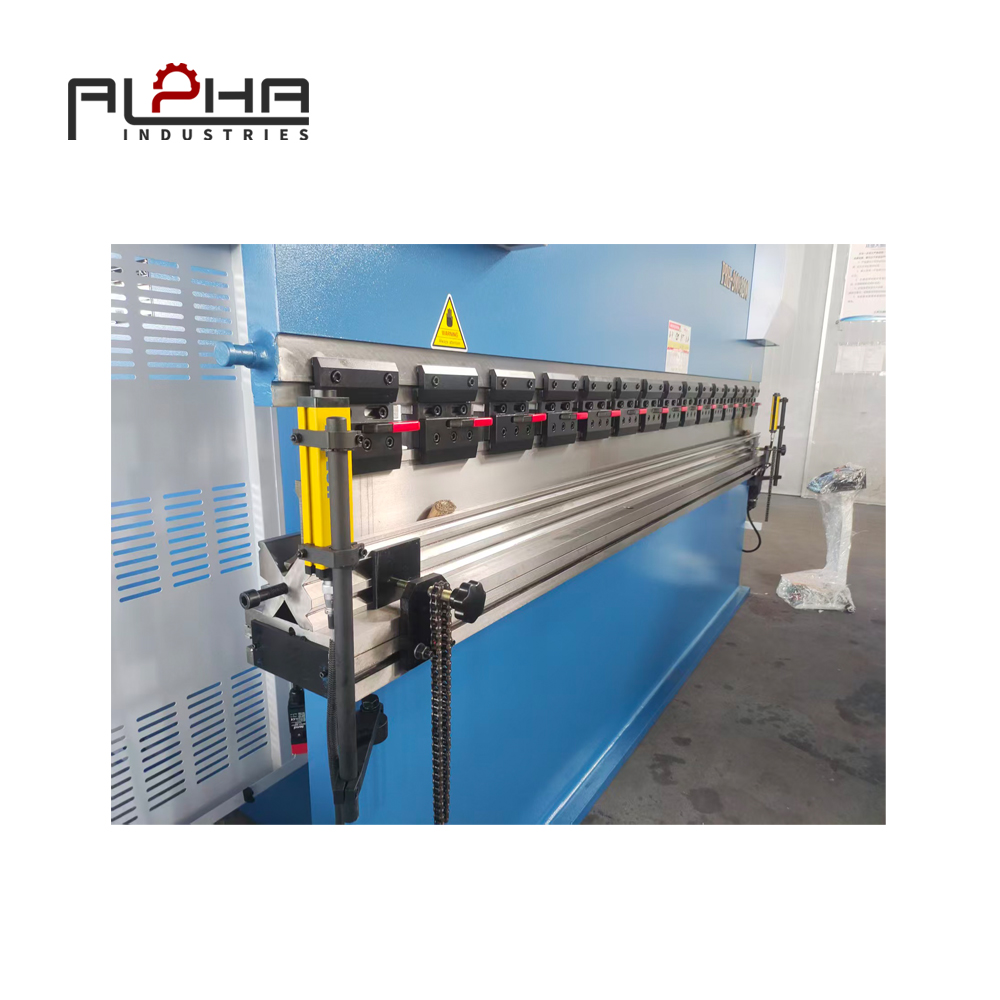


When purchasing a press brake, manufacturers often begin by comparing tonnage, working length, CNC functions, and machine price. These specifications are important, but selecting a machine based on only one or two numbers can lead to an unsuitable investment.
A press brake with insufficient capacity may struggle to process certain materials, thicknesses, or workpiece lengths. A machine that is substantially larger than the workshop's actual requirements may require unnecessary capital investment, take up valuable floor space, and introduce operating costs that are difficult to justify.
For Ukrainian metalworking companies, this decision deserves careful consideration. Fabrication businesses may serve customers in construction, agricultural machinery, industrial equipment, transportation, electrical enclosures, and general engineering. Their production requirements can vary considerably, from small brackets and short flanges to large panels and long structural components.
At the same time, manufacturers need to make equipment investments that support dependable production without tying up capital in capabilities they rarely use.
The objective is not to buy the smallest press brake possible or the largest machine the budget allows. It is to identify the machine configuration that can handle the required workload safely, accurately, and economically.
A practical selection process starts with the parts a business produces today, the materials it regularly processes, and the orders it realistically expects to manufacture in the future.
Why Press Brake Capacity Matters in the Ukrainian Market
The Ukrainian sheet metal fabrication market includes manufacturers with very different production profiles. Some workshops specialize in customized components and small batches, while others produce repetitive parts or larger assemblies for industrial and construction applications.
This diversity makes a standardized machine recommendation unsuitable for every manufacturer.
A workshop mainly producing thin sheet metal enclosures may not need the same bending force as a company processing thick steel plates. A manufacturer working with long panels may prioritize working length and deflection compensation, while a business producing compact components may place greater emphasis on flexibility and tooling compatibility.
Several business considerations make correct capacity planning especially important.
Capital Must Support Productive Capability
Machine purchases are long-term decisions. Money invested in excessive capacity may not be available for other priorities, such as tooling, material inventory, quality control, production planning, or business development.
Conversely, buying a machine that cannot handle common customer requirements may force the company to outsource certain jobs, reject profitable orders, or consider another equipment purchase earlier than planned.
For manufacturers managing capital carefully, the best investment is the one that supports the required work while leaving room for sustainable business development.
Customer Orders May Require Different Bending Configurations
A fabrication company may process thin panels one week and thicker brackets or structural parts the next. Different orders can require different bending lengths, punch and die configurations, clearances, and force levels.
The press brake should therefore be selected according to a representative range of real components rather than one unusually simple or unusually demanding part.
Future Flexibility Must Be Balanced Against Current Needs
Buying for future growth is sensible, but future capacity should be based on a credible production plan.
If a company expects to expand into thicker materials or larger components, it should assess the likelihood and timing of that change. A potential future application should not automatically justify purchasing the largest machine available.
A well-planned investment balances present production requirements with realistic expansion opportunities.
What Does Press Brake Tonnage Actually Mean?
Press brake tonnage describes the machine's bending force capacity. It indicates how much force the press brake can apply during the forming process, subject to the machine's specifications and operating limits.
However, tonnage alone does not determine whether a machine can successfully bend a particular workpiece.
The force required depends on several interacting variables, including:
-
Material type and mechanical properties
-
Material thickness
-
Bending length
-
V-die opening
-
Bending method
-
Required bend geometry
-
Tooling configuration
-
The machine manufacturer's rated capacity and operating limitations
Two workpieces with the same thickness may require different bending forces if they use different materials or have different bending lengths.
Similarly, a machine that can bend a certain thickness over a short distance may not be capable of bending the same thickness across the full working length.
This is why manufacturers should evaluate tonnage in relation to the actual application.
Material Strength Influences Required Force
Different materials have different mechanical properties. Higher-strength materials generally require more bending force than lower-strength materials of comparable thickness under otherwise similar conditions.
Mild steel, stainless steel, and high-strength steel should not automatically be treated as interchangeable when calculating press brake capacity.
The specific grade and material condition matter. Manufacturers should use appropriate technical data and the tooling and machine manufacturer's guidance rather than relying on a single generic tonnage chart.
Thickness Has a Strong Effect on Bending Force
Increasing sheet thickness can substantially increase the force required for bending. The relationship is not necessarily a simple linear increase because tooling geometry and other process variables also influence the result.
A capacity calculation should therefore reflect the thickest materials the business expects to process regularly, not just the thickness used most frequently.
If occasional thick-plate work is part of the business plan, manufacturers should determine whether the investment is justified by the expected demand.
Bending Length Changes the Load Requirement
Longer bends generally require more total force than shorter bends when other relevant conditions are comparable.
For example, bending a long panel may require significantly more force than bending a small bracket made from the same material and thickness.
Manufacturers should calculate or verify the force requirement for the actual bending length. They should also confirm that the intended load distribution is permitted by the machine and tooling specifications.
A press brake should never be operated beyond its rated capacity simply because the same material thickness can be processed on a shorter workpiece.
How to Select the Right Press Brake Working Length
Working length is the maximum bending length supported by the machine's design. It is one of the key dimensions to evaluate when selecting a press brake.
The appropriate working length depends on the size of the parts the workshop needs to produce and the geometry of their bends.
A machine with insufficient working length may not accommodate a required component in one operation. Depending on the part and process, this can limit production options or require an alternative manufacturing method.
However, selecting a much longer machine than necessary may increase the initial investment and occupy more factory space without providing a meaningful benefit for the current product range.
Start with the Longest Regularly Produced Workpiece
Manufacturers should review representative production drawings and identify the longest bending lines in their regular orders.
The analysis should distinguish between:
-
Components produced frequently
-
Components produced occasionally
-
Special projects with unusual dimensions
-
Potential future products that are not yet confirmed
This distinction helps determine whether the machine should be optimized for recurring work or configured to accommodate a wider range of applications.
The longest component is not always the only important factor. The part's shape, required clearance, bending sequence, and positioning requirements may also affect whether it can be processed effectively.
Consider the Full Part Geometry
A workpiece may fit within the nominal working length but still be difficult to manufacture because of its flanges, return bends, side walls, or other formed features.
For complex parts, manufacturers should assess the complete bending sequence and the clearances required between the workpiece, punch, die, and machine structure.
The supplier should review representative drawings where part geometry is complicated or the application falls near the machine's capacity limits.
Think About Handling and Factory Layout
Large workpieces may require more than sufficient machine length. They may also need adequate space for loading, positioning, supporting, rotating, and unloading the material.
The available factory layout should be reviewed before selecting a large press brake.
Manufacturers should consider the machine footprint, operator access, material storage, movement routes, and any required supporting equipment.
The goal is to select a configuration that fits the production environment, not just the workpiece dimensions.
How to Match Tonnage and Working Length
Tonnage and working length must be evaluated together.
A long press brake with insufficient bending force may not meet the requirements for thick material across its full working length. A high-tonnage machine with a short working length may be unsuitable for long panels, even if its force capacity is more than adequate for shorter parts.
The correct configuration is determined by the combination of material, thickness, bending length, tooling, and geometry.
Build a Representative Part List
Before requesting a quotation, prepare a list of typical components.
Useful information includes:
-
Material grade
-
Material thickness
-
Maximum bending length
-
Required bend angles
-
Approximate part dimensions
-
Number of bends per component
-
Production quantity
-
Dimensional and surface-finish requirements
If possible, include technical drawings for several representative parts.
The list should cover both common jobs and the most demanding applications the machine is expected to handle.
Identify the Most Demanding Production Cases
The most demanding job may not be the thickest material or the longest component considered separately.
A relatively long bend in a high-strength material may require a different capacity assessment from a short bend in mild steel. Complex geometry can also create additional tooling and clearance requirements.
Each critical application should be assessed according to its actual process conditions.
The machine supplier can then help verify whether the proposed tonnage, working length, tooling, and configuration are suitable.
Confirm Capacity Across the Intended Working Length
Manufacturers should verify the rated bending force and the permissible distribution of that force along the machine.
Some applications may concentrate load over a shorter area, while others distribute the bending force across a longer workpiece. The machine and tooling specifications determine what is permitted.
It is important to review the manufacturer's technical limits rather than assume that the maximum rated force can be applied in every possible configuration.
Leave an Appropriate Planning Margin
A machine should not be selected so close to its limits that minor changes in material, tooling, or product requirements immediately create capacity problems.
However, the required margin should be determined from the application and technical specifications rather than from an arbitrary percentage.
Discuss likely variations in material grade, thickness, bending length, and future production requirements with the supplier before finalizing the machine configuration.
The Risks of Buying an Undersized Press Brake
An undersized press brake may appear attractive because of its lower purchase price, but it can restrict production flexibility.
Limited Material Capability
If the machine cannot safely process the required thickness or material grade, certain orders may have to be declined or outsourced.
This can reduce the range of products the business can manufacture independently.
Restrictions on Part Dimensions
A machine with insufficient working length may not accommodate important components. This can create manufacturing limitations even if the machine has adequate force for shorter parts.
Less Flexibility for New Orders
A workshop may discover that the machine can handle its current standard products but cannot support a new customer requirement.
If the business intends to expand into different industries or more demanding components, this limitation should be considered before purchase.
Additional Investment May Become Necessary
If production requirements grow beyond the machine's capability, the company may eventually need another press brake or an alternative production arrangement.
The initial saving must therefore be evaluated against the potential cost of restricted capacity and future equipment needs.
The solution is not automatically to purchase a larger machine. It is to identify the actual capacity range required by the business and choose a suitable configuration.
The Risks of Buying an Oversized Press Brake
Oversizing can also create economic and operational disadvantages.
Unnecessary Capital Investment
A machine with capacity far beyond the workshop's regular requirements may increase the initial investment without generating a corresponding production benefit.
That capital may be more useful when allocated to other equipment, tooling, workforce development, or production improvements.
Larger Space Requirements
A larger machine may require more floor space and additional planning for material handling and access.
For workshops with limited production space, these requirements can affect the layout of other manufacturing operations.
Specifications May Not Match the Real Bottleneck
A press brake with greater tonnage does not automatically solve problems related to programming, material flow, tooling, inspection, or order planning.
If the actual production bottleneck lies elsewhere, buying a larger machine may not provide the expected improvement.
More Capacity Does Not Automatically Mean Better Quality
Bending quality depends on the entire process, including machine condition, tooling, CNC configuration, material properties, setup, and inspection.
A higher-tonnage press brake is not inherently more accurate for every application. Manufacturers should evaluate the accuracy specifications and configuration relevant to their work rather than use tonnage as a proxy for quality.
How Production Mix Should Influence Machine Selection
Production mix describes the variety of products, materials, thicknesses, and quantities processed by a workshop.
It is an important factor because two manufacturers with similar annual production volumes may need different press brake configurations.
Workshops Producing Standard Components
A business producing a relatively narrow range of recurring parts can often define its equipment requirements using historical production data.
The most common material thicknesses, bending lengths, and component geometries provide a useful foundation for machine selection.
The objective is to support regular production efficiently while retaining enough flexibility for the less frequent jobs that remain commercially important.
Workshops Handling Customized Orders
A high-mix fabrication workshop may process many different components in smaller batches.
In this environment, flexibility can be as important as maximum force. The machine should accommodate the expected range of workpieces, tooling arrangements, bend sequences, and positioning requirements.
Manufacturers should also consider the CNC system, backgauge configuration, tooling compatibility, and ease of programming.
A suitable machine is one that can handle the workshop's product range, rather than simply maximize one specification.
Manufacturers Planning to Expand
A company expecting to enter new markets or manufacture larger products should estimate the requirements of those products before buying equipment.
Potential expansion should be translated into measurable specifications, such as the expected material range, maximum bending length, part geometry, and anticipated production volume.
This makes it easier to distinguish a genuine future requirement from an uncertain possibility.
Why CNC Configuration Matters Alongside Capacity
A press brake's mechanical capacity is only one part of the purchasing decision.
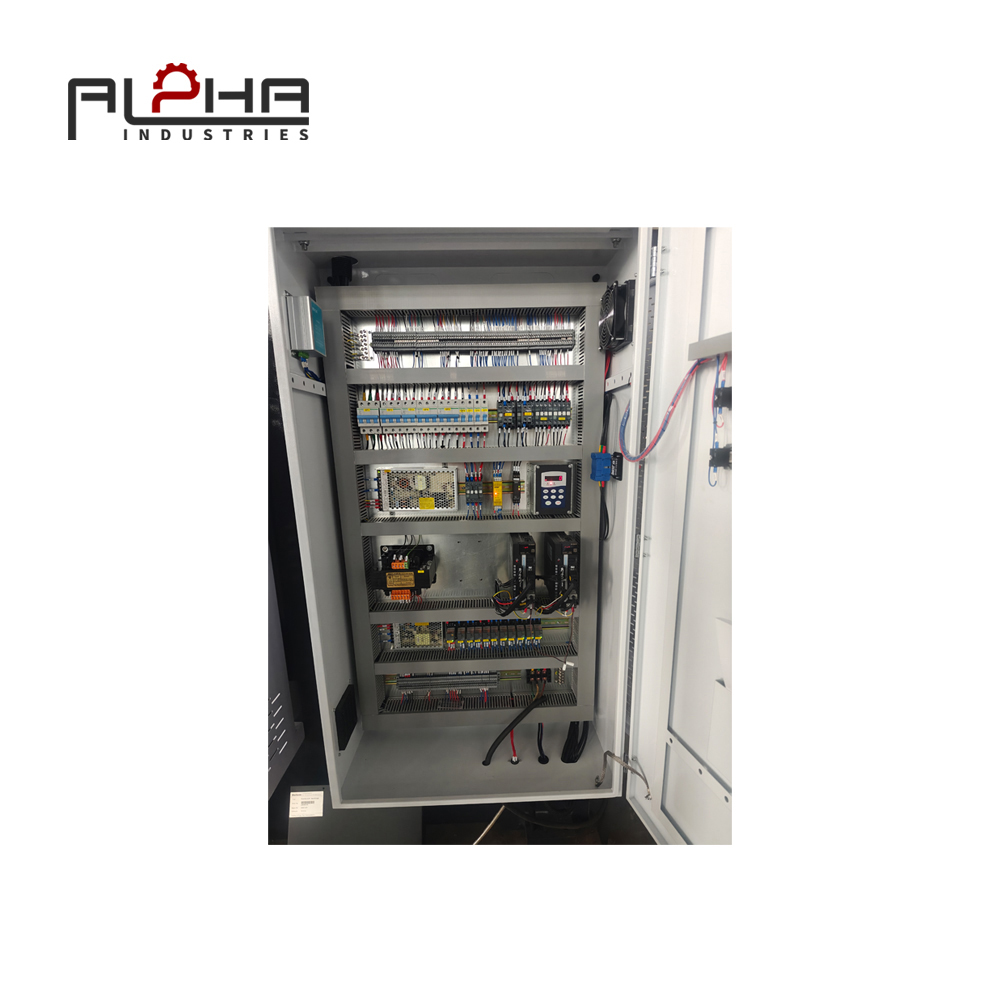
The CNC system, backgauge configuration, and available control functions also influence how effectively the machine can produce the required components.
CNC Programming and Repeatability
A suitable CNC system can store bending programs and control relevant machine movements according to the machine's configuration.
For repeat production, this can make established jobs easier to reproduce and help reduce the need to recreate programs from the beginning.
The value of these functions depends on the complexity of the parts and the way the workshop organizes its production.
Backgauge Configuration
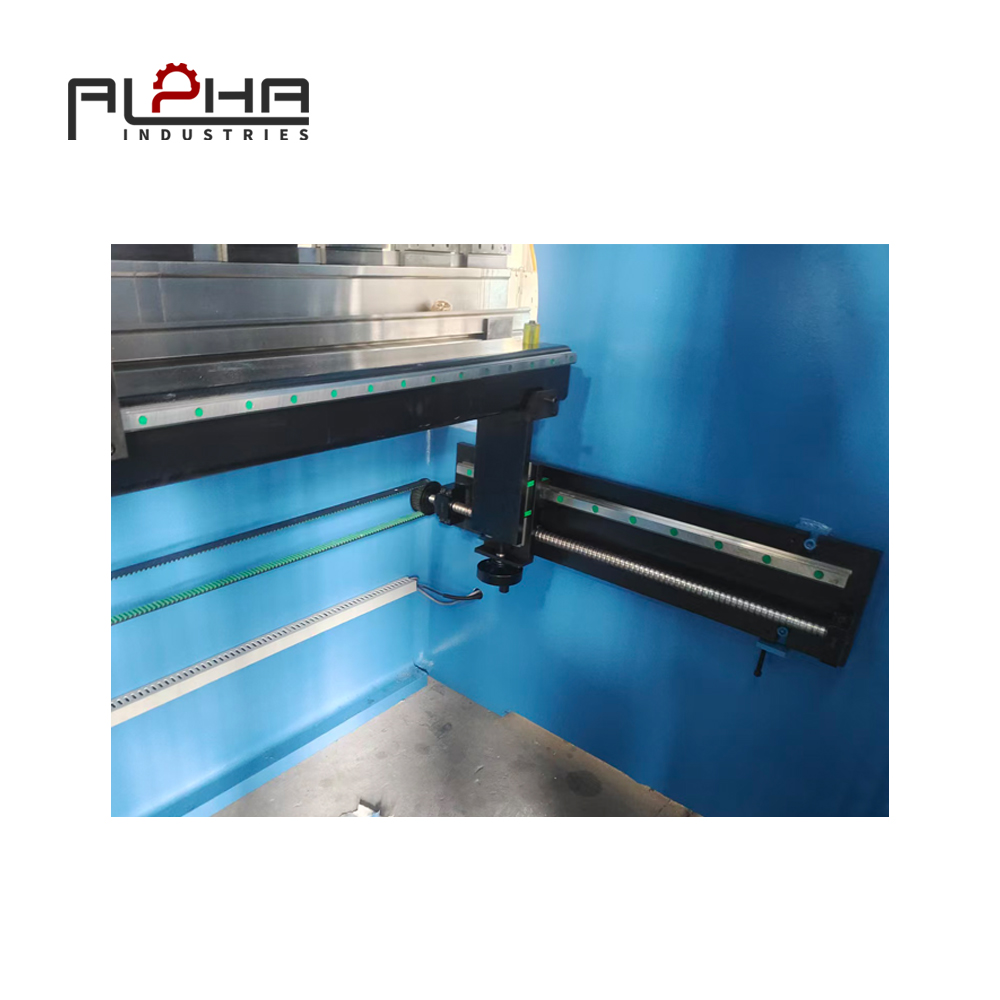
The backgauge positions the workpiece for bending. The number of axes and the available positioning range can affect the types of components the machine can handle efficiently.
For simple parts, a basic configuration may be sufficient. More complex workpieces may benefit from additional positioning flexibility.
Manufacturers should evaluate the actual part drawings and bending sequences to determine the appropriate configuration.
Crowning and Long Bends
During bending, machine structures can deflect under load. For certain applications, especially long workpieces, this can affect the consistency of the bend along the working length.
Depending on the machine design, a crowning system can compensate for deflection and help maintain more consistent bending conditions.
Whether a particular crowning configuration is required depends on the machine, bending length, force, and accuracy requirements.
Safety and Practical Operation
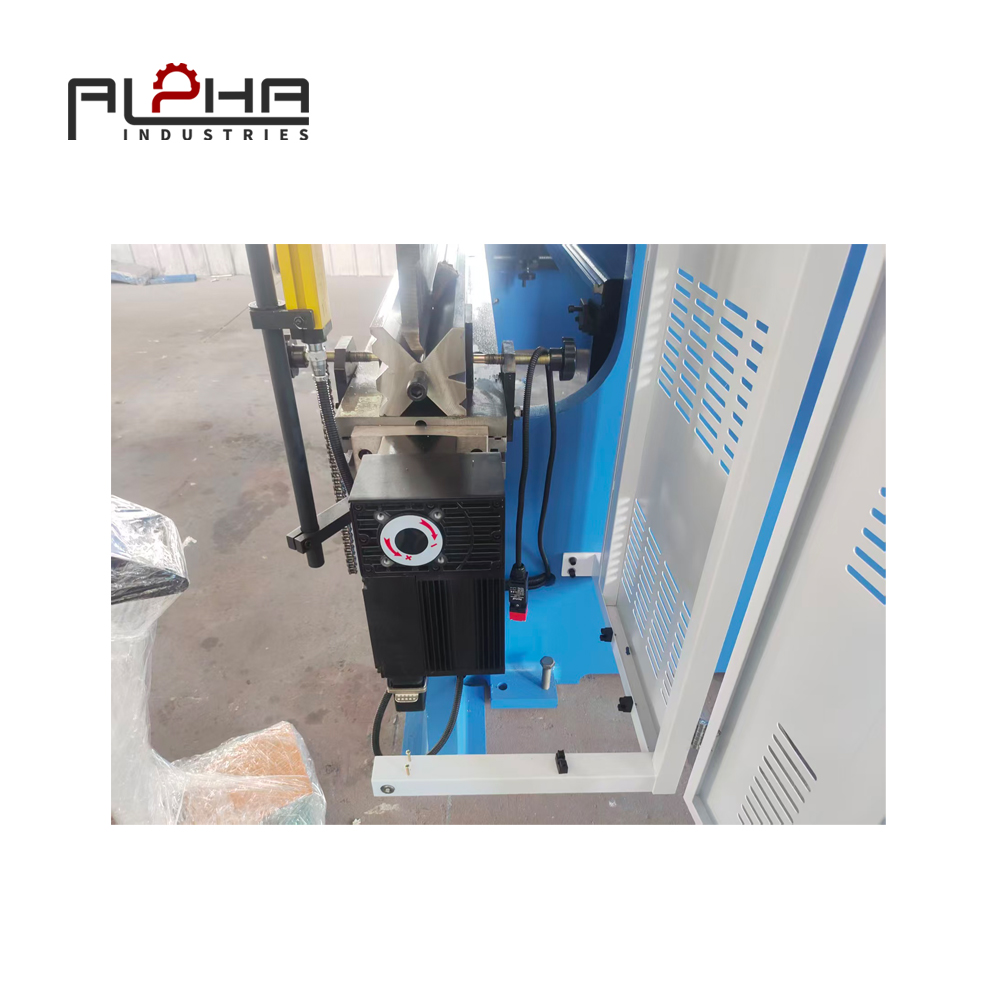
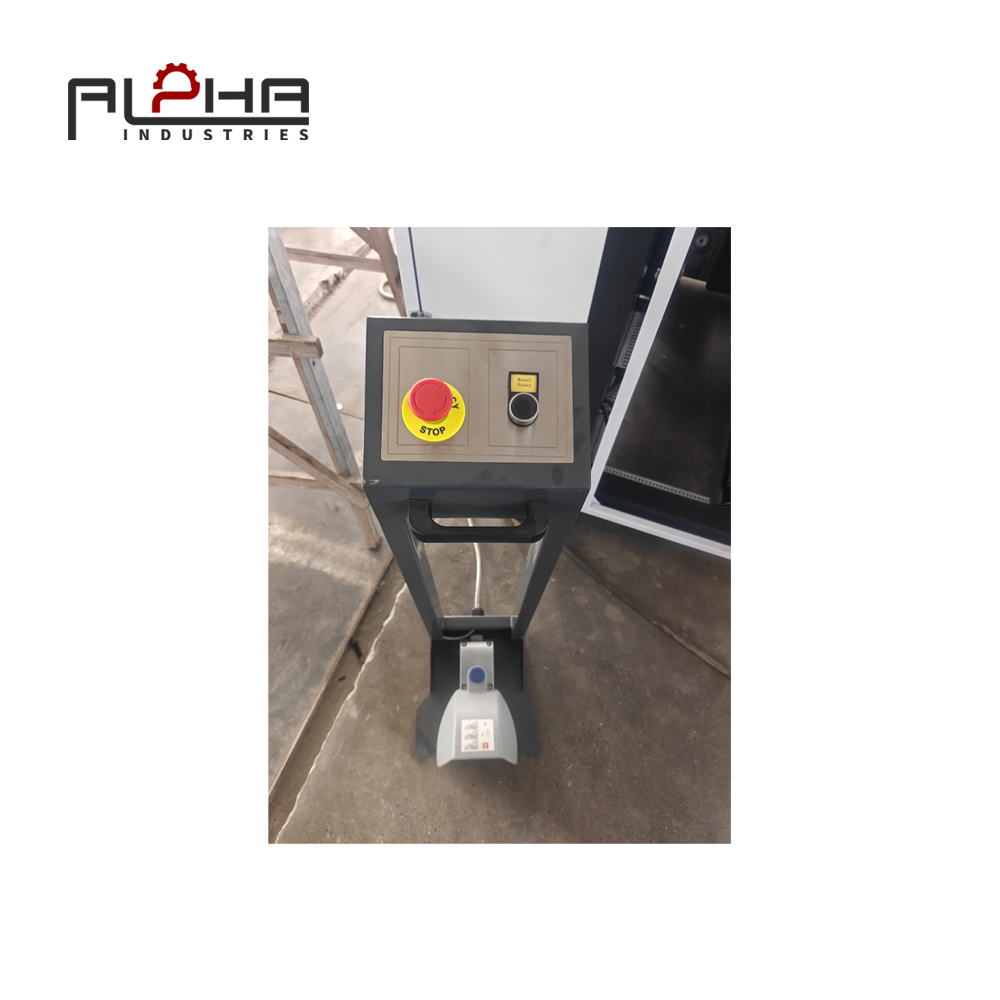
Safety systems, operator access, machine controls, and the production environment should be included in the selection process.
The selected configuration must comply with applicable requirements and the manufacturer's instructions. Operators should receive appropriate training and follow the prescribed safety procedures.
A machine should be evaluated as a complete production system, not only by its force rating.
A Practical Press Brake Selection Checklist for Ukrainian Manufacturers
Before comparing quotations, manufacturers can use the following checklist to organize their requirements.
Material Requirements
Identify the material grades processed regularly and the most demanding materials the machine must handle.
Thickness Range
Document the minimum, most common, and maximum sheet thicknesses relevant to the intended applications.
Bending Length
Identify the longest regular bending line and any special components that may require additional working length.
Bending Force
Ask the supplier to verify the required force for representative parts using the intended material, thickness, tooling, and bending length.
Part Geometry
Provide drawings for components with return flanges, complex profiles, unusual clearances, or demanding bending sequences.
Accuracy Requirements
Define the dimensional tolerances, bend-angle requirements, and surface-finish expectations that the machine must support.
CNC and Backgauge Configuration
Determine the required programming capabilities and positioning axes based on the actual product mix.
Tooling Requirements
Confirm the tooling interface, compatible punches and dies, load limits, and the tooling included in the quotation.
Factory Layout
Review machine dimensions, operator access, material movement, loading space, and supporting equipment.
Future Production Plans
Identify likely new products and expansion requirements, and distinguish confirmed plans from speculative demand.
Service and Spare Parts
Clarify the availability of technical support, maintenance information, replacement parts, and service arrangements relevant to the purchasing decision.
Total Investment
Compare the complete proposed configuration, not just the base machine price. Include required tooling, optional features, installation, training, and other relevant costs.
This checklist helps manufacturers compare machines on a consistent basis and identify missing information before committing to a purchase.
How to Compare Press Brake Quotations More Effectively
When several suppliers provide quotations, comparing the headline price alone can create a misleading picture.
One quotation may include a different CNC system, tooling package, backgauge configuration, or optional feature from another. Differences in machine specifications can make direct price comparisons difficult.
A structured comparison should examine the complete configuration.
Compare the Same Production Application
Ask each supplier to assess the same representative parts and material specifications.
This helps clarify whether the proposed machines can handle the required applications and whether additional options are necessary.
Check What Is Included
Confirm the supplied tooling, clamping system, CNC functions, safety equipment, and other included components.
A lower initial quotation may not represent the lower total investment if essential items must be purchased separately.
Verify Technical Limits
Review rated force, working length, load distribution requirements, machine specifications, and the compatibility of the proposed tooling.
For applications near the machine's limits, request a technical review rather than relying on a general product description.
Consider Long-Term Practicality
The most suitable machine should support the workshop's production requirements over time.
Consider whether the configuration is appropriate for recurring jobs, special components, future product plans, available factory space, and the company's maintenance capabilities.
A careful technical comparison helps manufacturers avoid selecting equipment based solely on the lowest price or the highest specification.
How ALPHA CNC Can Help Evaluate Your Press Brake Requirements
For Ukrainian manufacturers considering a new press brake, the most useful starting point is a clear description of the work the machine must perform.
ALPHA CNC provides metalworking machinery solutions for manufacturers evaluating their production equipment needs.
When reviewing a press brake application, important considerations include bending force, working length, material type, thickness range, part geometry, CNC control, backgauge configuration, tooling compatibility, and required accuracy.
A practical equipment discussion should be based on representative workpieces rather than a single headline specification.
For example, a manufacturer producing short components from thin sheet may need a different configuration from a workshop bending long panels or thicker steel parts. A company processing many customized products may also have different CNC and tooling requirements from a business producing a narrow range of repetitive components.
Providing part drawings, material specifications, bending lengths, and production expectations helps establish a more meaningful basis for machine selection.
The aim is to identify a press brake configuration that meets the real production requirements while taking future development and total investment into account.
Frequently Asked Questions About Press Brake Capacity
1. How do I choose the right tonnage for a press brake?
Start with the material grade, sheet thickness, bending length, V-die opening, and bending method. Use the machine and tooling manufacturer's technical guidance to verify the force required for representative parts. Confirm that the proposed machine can handle the intended load safely across the required working length.
2. Is a higher-tonnage press brake always better?
No. Higher tonnage provides greater force capacity, but it does not automatically improve accuracy or make the machine more economical for every application. The best choice is a machine that can safely process the required workpieces without unnecessary investment in unused capacity.
3. How do I determine the required press brake working length?
Review the longest bending lines in the parts you produce regularly, then examine any important special components or planned future products. Also consider part geometry, tooling clearance, machine dimensions, and handling requirements. Confirm the proposed working length with the supplier using actual drawings.
4. Can a press brake bend thick steel over its full working length?
That depends on the material, thickness, bending length, die opening, tooling, and machine specifications. The required force must be checked for the specific application, and the load distribution must remain within the manufacturer's limits. Never assume that a machine can bend its maximum thickness across its entire working length without verification.
5. What is the difference between press brake tonnage and bending length?
Tonnage refers to the machine's bending force capacity, while bending length refers to the working length available for forming a workpiece. Both specifications must be appropriate for the application. A machine with sufficient force may still be too short for a part, while a long machine may lack the required force for a demanding bend.
6. Should I buy a press brake for future production growth?
Future requirements should be considered when they are supported by a realistic business plan. Estimate the expected materials, thicknesses, bending lengths, and production volumes of planned products. This helps determine whether additional capacity is justified without overspending on uncertain future demand.
7. What information should I send a supplier when requesting a press brake quotation?
Provide material grades, sheet thicknesses, maximum bending lengths, representative part drawings, bend angles, production quantities, dimensional tolerances, and any special requirements. Also explain the types of products the machine will process and whether future expansion is expected.
8. What should I compare when choosing between two CNC press brakes?
Compare verified capacity, working length, CNC functions, backgauge configuration, tooling compatibility, accuracy requirements, safety features, included accessories, service arrangements, and total investment. Use the same representative parts and requirements when evaluating each quotation.
9. Does a CNC press brake require more tonnage than a conventional press brake?
Not simply because it uses CNC control. Required bending force is primarily determined by the material, thickness, bending length, tooling, and bending method. CNC capabilities influence control and repeatability, while machine capacity must be verified for the intended application.
Conclusion: Select Capacity That Matches the Work, Not Just the Specification Sheet
For Ukrainian sheet metal manufacturers, selecting a press brake is a strategic investment decision. The right configuration must balance bending force, working length, material range, part geometry, production requirements, and available capital.
Choosing a machine with insufficient capacity can restrict production flexibility and create additional costs. Buying substantially more capacity than the business needs can also tie up investment without delivering a corresponding operational benefit.
A structured evaluation of representative parts provides a stronger basis for selection. Manufacturers should verify the required force, confirm working length, review tooling and CNC requirements, and assess the complete machine configuration with the supplier.
The most effective press brake is not necessarily the largest machine or the one with the highest tonnage. It is the machine that can safely and consistently produce the required parts while supporting the manufacturer's business plans.
For companies in Ukraine planning to upgrade their sheet metal fabrication capabilities, defining the real production requirements before comparing machines is an important step toward making a well-informed investment.
Contact ALPHA CNC
Looking for a CNC press brake for your sheet metal manufacturing business in Ukraine? Contact ALPHA CNC to discuss your material range, sheet thicknesses, bending length, part drawings, and production requirements.
Contact us: https://alpha-cnc.com/contact-us
Visit our website: https://alpha-cnc.com/