

Introduction: Why Cutting Accuracy Is the True Value of a Guillotine Shear
In industrial sheet metal fabrication, cutting accuracy is the foundation of downstream efficiency. Whether the process involves bending, welding, or assembly, inaccurate shearing creates cumulative errors that increase scrap, rework, and production costs.
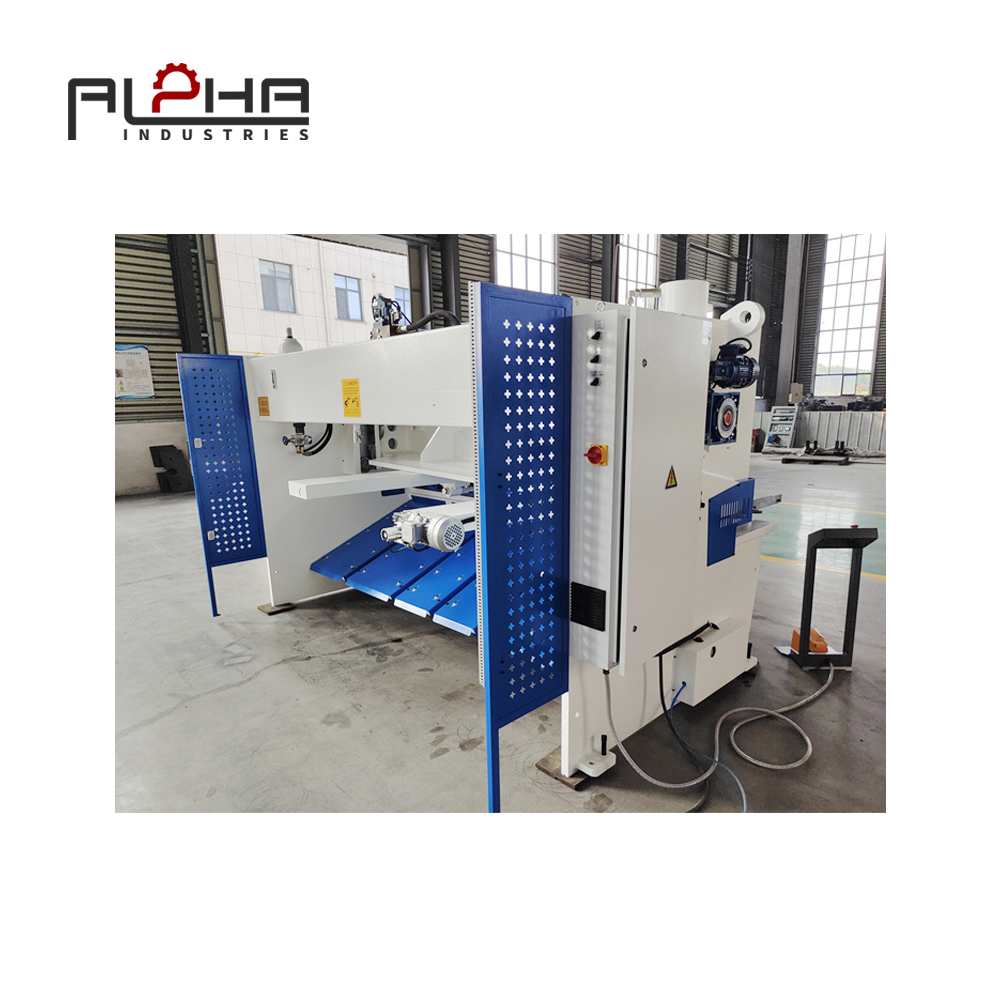
Among all shearing technologies, the guillotine shear remains the preferred solution for straight, high-quality, and high-efficiency cutting of metal sheets. However, not all guillotine shears deliver the same results.
The single most decisive factor that defines guillotine shear performance is:
Structural rigidity and its direct impact on cutting accuracy.
This article focuses exclusively on how structural rigidity determines cutting accuracy, explaining why machine frame design, blade alignment, and load resistance are critical for professional sheet metal production.
What Is Cutting Accuracy in a Guillotine Shear?
Cutting accuracy refers to the machine’s ability to maintain:
-
Straight cut lines
-
Minimal burr formation
-
Consistent edge quality
-
Stable cutting tolerance across the full working length
During shearing, enormous forces are generated instantly. If the machine structure flexes, twists, or vibrates—even slightly—the result is:
-
Uneven cutting edges
-
Tapered or distorted sheets
-
Excessive burrs
-
Inconsistent part dimensions
True cutting accuracy is only achievable when the machine structure remains rigid under full cutting load.
Why Structural Rigidity Is More Important Than Cutting Speed
High cutting speed may improve output, but speed without rigidity destroys precision.
When a guillotine shear lacks sufficient structural rigidity:
-
Blade alignment shifts during cutting
-
Blade clearance becomes inconsistent
-
Sheet material deforms instead of being cleanly sheared
-
Edge quality varies from left to right
In contrast, a rigid guillotine shear frame ensures:
-
Stable blade parallelism
-
Uniform cutting clearance
-
Clean shearing action
-
Repeatable accuracy in batch production
For industrial users, rigidity directly equals reliability.
Key Structural Elements That Define Guillotine Shear Accuracy
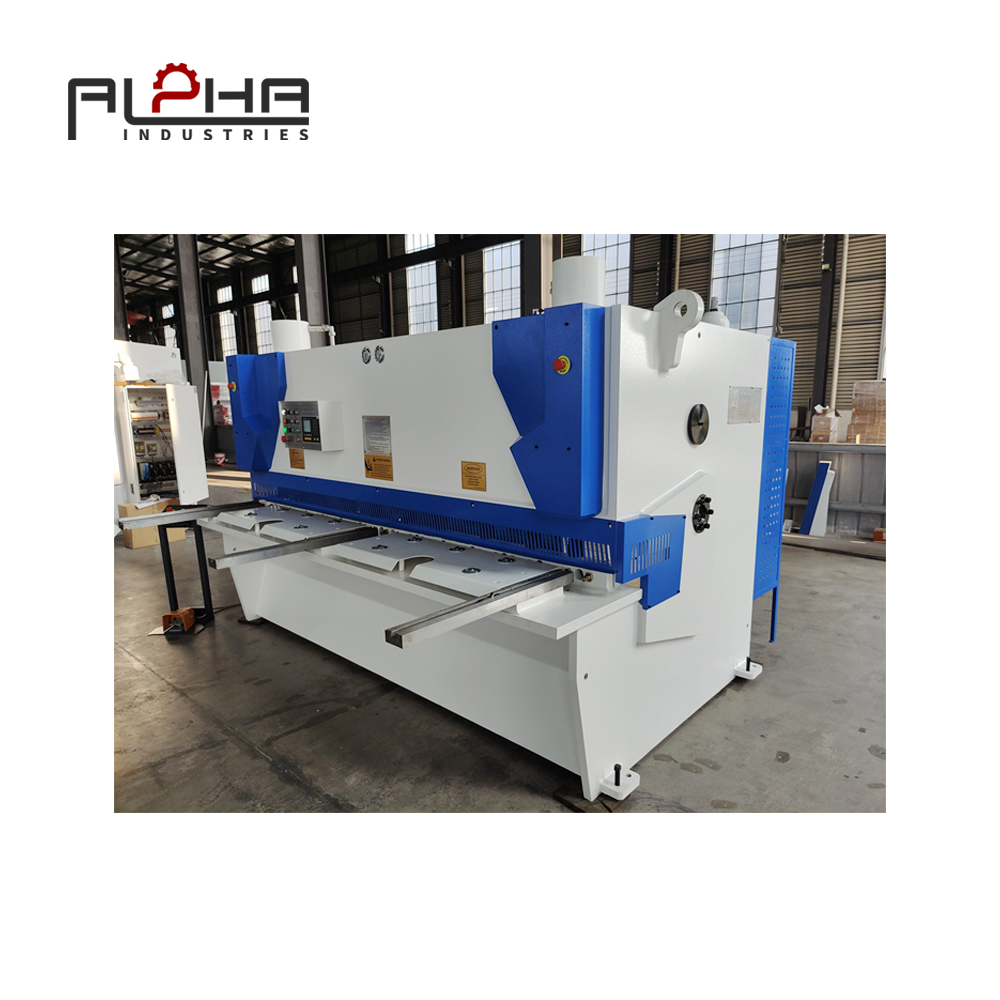
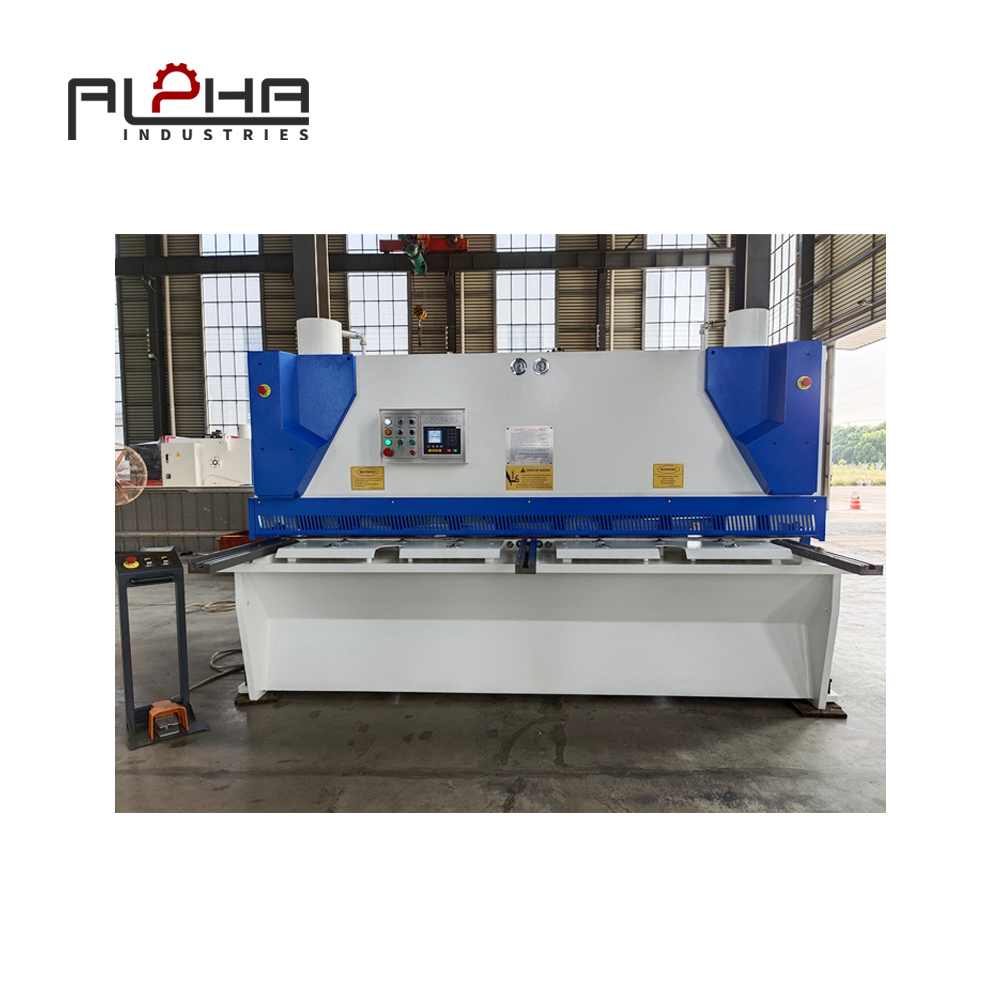
1. Machine Frame and Welded Structure
The frame is the backbone of a guillotine shear.
High-accuracy guillotine shears use:
-
Heavy-duty welded steel frames
-
Stress-relieved structures after welding
-
Finite-element-optimized load distribution
A rigid frame prevents deformation when cutting thick or high-strength materials, ensuring the blade descends in a perfectly controlled path.
2. Upper Beam and Blade Carrier Stability
The upper beam carries the moving blade and absorbs the cutting force.
If the beam lacks stiffness:
-
Blade angle changes under load
-
Cutting clearance becomes unstable
-
Edge straightness deteriorates
A rigid upper beam guarantees:
-
Stable blade movement
-
Accurate shear angle execution
-
Clean, distortion-free cutting edges
3. Blade Alignment and Clearance Control
Structural rigidity directly affects blade alignment.
In a precision guillotine shear:
-
Upper and lower blades remain parallel under load
-
Blade clearance stays constant across the full cutting length
-
Material thickness variations are handled without accuracy loss
This is essential for cutting stainless steel, aluminum, and high-tensile steel.
4. Hold-Down System Integration
A rigid structure allows the hold-down system to work effectively.
Proper hold-down pressure:
-
Prevents sheet lifting
-
Eliminates material movement
-
Improves edge quality
Without structural stability, even advanced hold-down systems cannot compensate for frame flex.
How Cutting Accuracy Impacts Overall Production Quality
| Production Factor | Impact of High Cutting Accuracy |
|---|---|
| Bending Accuracy | Precise blank size improves bend angles |
| Surface Quality | Clean edges reduce secondary finishing |
| Assembly Fit | Accurate dimensions ensure consistency |
| Scrap Rate | Reduced waste and rework |
| Productivity | Faster downstream processing |
A high-accuracy guillotine shear improves the entire production chain, not just the cutting process.
Why Guillotine Shear Accuracy Matters in Modern Fabrication
Modern sheet metal fabrication demands:
-
Tight dimensional tolerances
-
High repeatability
-
Stable batch production
-
Reduced manual correction
Industries such as:
-
Electrical enclosures
-
Elevator components
-
HVAC ducting
-
Machinery panels
rely on precision shearing as the first and most critical operation.
Any inaccuracy at this stage multiplies through bending and assembly, increasing cost and reducing competitiveness.
Alpha Guillotine Shear Design Philosophy: Rigidity First
At Alpha, guillotine shear engineering starts with one principle:
Accuracy begins with structural rigidity.
Key Alpha design features include:
-
Heavy-duty, stress-relieved machine frames
-
Reinforced upper beam structures
-
Precision-machined blade seats
-
Stable blade clearance adjustment systems
-
Long-term structural stability for continuous operation
This ensures:
-
Consistent cutting accuracy over time
-
Reliable performance in high-volume production
-
Clean edges across different material types
Alpha guillotine shears are designed not only to cut metal—but to protect downstream precision.
FAQ
What determines cutting accuracy in a guillotine shear?
Cutting accuracy is primarily determined by structural rigidity, blade alignment, and stable blade clearance under cutting load.
Why does a rigid frame improve shearing quality?
A rigid frame prevents deformation during cutting, ensuring straight edges, uniform clearance, and consistent accuracy.
Is blade sharpness more important than machine rigidity?
Blade sharpness is important, but without structural rigidity, even sharp blades cannot maintain precision under load.
Does cutting accuracy affect bending operations?
Yes. Accurate shearing ensures consistent blank dimensions, directly improving bending accuracy and repeatability.
Are guillotine shears suitable for high-precision sheet metal work?
Yes. When designed with high rigidity and precise blade control, guillotine shears deliver excellent straight-line cutting accuracy.
Conclusion: Structural Rigidity Is the Hidden Standard of a Guillotine Shear
A guillotine shear is not defined by cutting length or thickness capacity alone.
True performance is measured by cutting accuracy under real industrial load.
Structural rigidity is the silent factor that determines whether a machine delivers:
-
Clean, straight cuts
-
Stable batch accuracy
-
Lower scrap rates
-
Higher production efficiency
By focusing on rigid structural design, manufacturers gain long-term precision and competitive advantage.