

High Precision Guillotine Shear with Advanced Blade Control | Alpha
In modern industrial metal fabrication, efficiency and cutting accuracy are crucial. Guillotine shears are widely used for straight-line cutting of sheet metal, steel plates, and alloy sheets, but the real differentiator lies in the blade control system and cutting precision.
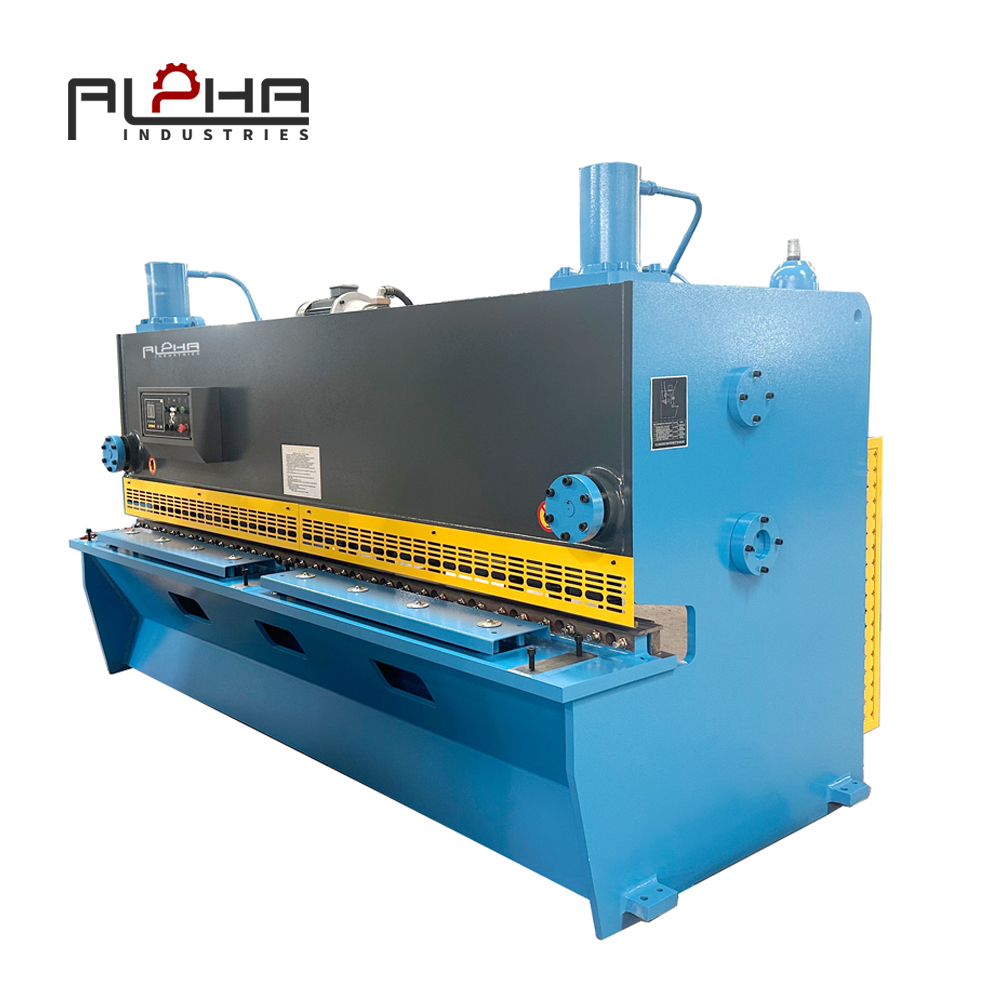
Why Blade Control Determines Guillotine Shear Accuracy
The blade system is the heart of any guillotine shear. Even minor misalignment can result in:
-
Uneven cuts
-
Burr formation
-
Dimensional inaccuracies
-
Reduced tool life
A high-precision blade system ensures consistent shear clearance, minimal deflection, and exact cutting angles, which are essential for industrial-grade sheet metal processing.
Key blade performance factors include:
-
Adjustable blade gap to match material thickness
-
Hydraulic pressure regulation for consistent cutting force
-
High-strength hardened steel blade with long life and wear resistance
-
Rigid blade mounting frame to minimize vibration and deformation
Alpha integrates these principles to provide stable, precise, and repeatable cutting performance for industrial applications.
Blade Gap Adjustment and Clearance Control
A critical factor for cutting accuracy is the shear clearance, the space between upper and lower blades. Incorrect clearance can cause burrs, distorted edges, or blade wear.
Hydraulic Blade Gap Adjustment
Alpha guillotine shears allow automatic hydraulic blade gap control, optimizing cutting based on material thickness and type.
Manual Fine-Tuning Option
For non-standard or ultra-thin sheets, the blade gap can be manually fine-tuned, ensuring precision even under specialized conditions.
Real-Time Pressure Monitoring
Advanced systems monitor and adjust hydraulic pressure in real time, keeping cutting force consistent and preventing blade deflection.
This combination of automated and manual control ensures high-quality cuts across various metal types.
Rigid Frame and Structural Design for Stability
Blade accuracy depends not only on the blade itself but also on the shear’s frame rigidity.
Reinforced Steel Frame
High-strength steel construction minimizes deformation under heavy loads and ensures alignment between blades and backgauge.
Vibration Dampening Ribs
Internal reinforcement ribs absorb cutting vibrations, reducing stress on both the blade and the material.
Thermal Stability Consideration
Thermal expansion is minimized through symmetrical structural design and high-quality steel, maintaining precise blade alignment even during continuous operation.
Hydraulic System Enhancing Cutting Efficiency
The hydraulic system plays a key role in cutting accuracy and repeatability.
-
Consistent Cutting Force: Prevents material distortion and edge burrs
-
Adjustable Ram Speed: Offers fine control for thin sheets and heavy plates
-
Low-Noise Operation: Enhances workplace environment and reduces vibration
-
Long-Term Reliability: Minimizes wear and maintenance costs
Alpha’s hydraulic guillotine shears combine high precision control with industrial durability, making them ideal for steel, aluminum, and alloy plate processing.
How a Precision Guillotine Improves Metal Fabrication
A well-designed guillotine shear enhances production by:
-
Achieving straight and burr-free cuts
-
Maintaining consistent dimensional accuracy
-
Reducing material waste
-
Increasing operator safety through controlled cutting motion
-
Improving overall production efficiency
For industries such as automotive, construction, aerospace, and metal furniture, blade precision determines whether the finished part meets stringent tolerances.
What determines the accuracy of a guillotine shear?
Accuracy depends on blade alignment, clearance control, frame rigidity, and hydraulic pressure stability.
Why is blade gap important?
Blade gap affects cut quality, burr formation, and edge straightness, making it crucial for precision cutting.
How does frame rigidity affect performance?
Rigid frames minimize vibration and deformation, keeping blades aligned and ensuring repeatable, high-quality cuts.
What types of materials can a guillotine shear handle?
Steel, aluminum, copper, stainless steel, and alloy sheets of varying thickness can be accurately cut.
FAQs
What is the ideal hydraulic pressure for cutting steel plates?
It varies by thickness and hardness, but Alpha shears feature adjustable hydraulic pressure to match material specifications.
How often should blades be sharpened?
Depends on usage and material; hardened steel blades typically maintain sharpness longer, with periodic inspection recommended.
Can a guillotine shear cut very thin sheets without deformation?
Yes—blade gap and ram speed adjustment allow precise cuts on thin and delicate materials.
What maintenance ensures long-term precision?
Regular blade inspection, hydraulic fluid replacement, and frame alignment checks preserve cutting accuracy and extend machine life.
Conclusion – Alpha Delivers High Precision Guillotine Solutions
Alpha guillotine shears combine advanced blade control, rigid frame design, and precise hydraulic systems to deliver superior cutting performance.
Whether handling thin sheet metal or heavy steel plates, Alpha ensures repeatable, high-quality cuts with minimal burrs and long-term reliability.
-
Learn more: Deburring
-
Explore: Press Brake Solutions