

Why Consistent Plate Rolling Matters in Colombia
Colombia has a diverse industrial and fabrication environment. Metalworking companies may work on storage tanks, industrial containers, structural components, equipment housings, agricultural machinery parts, and customized steel products. These applications often require flat steel plates to be transformed into accurate cylindrical, curved, or conical shapes.
However, not every production order uses the same material or dimensions.
One project may require relatively thin carbon steel plates for a small tank. Another may involve wider and thicker plates for an industrial vessel. A different customer may request several cylinders with a specific diameter and consistent roundness. For workshops handling this type of mixed production, maintaining stable forming quality can become a major operational challenge.
The difficulty is not simply making a flat plate curve. It is producing the required shape consistently, even when the material, thickness, plate width, and target diameter change from one order to another.
Small variations during plate positioning, pre-bending, and rolling can affect the final geometry. If the plate is not properly aligned, the finished cylinder may develop uneven edges, an inconsistent diameter, or a mismatch at the welding seam. These issues can increase adjustment time and create additional work during assembly and welding.
For Colombian fabricators that need to balance customized orders with production efficiency, improving forming consistency is therefore an important investment consideration.
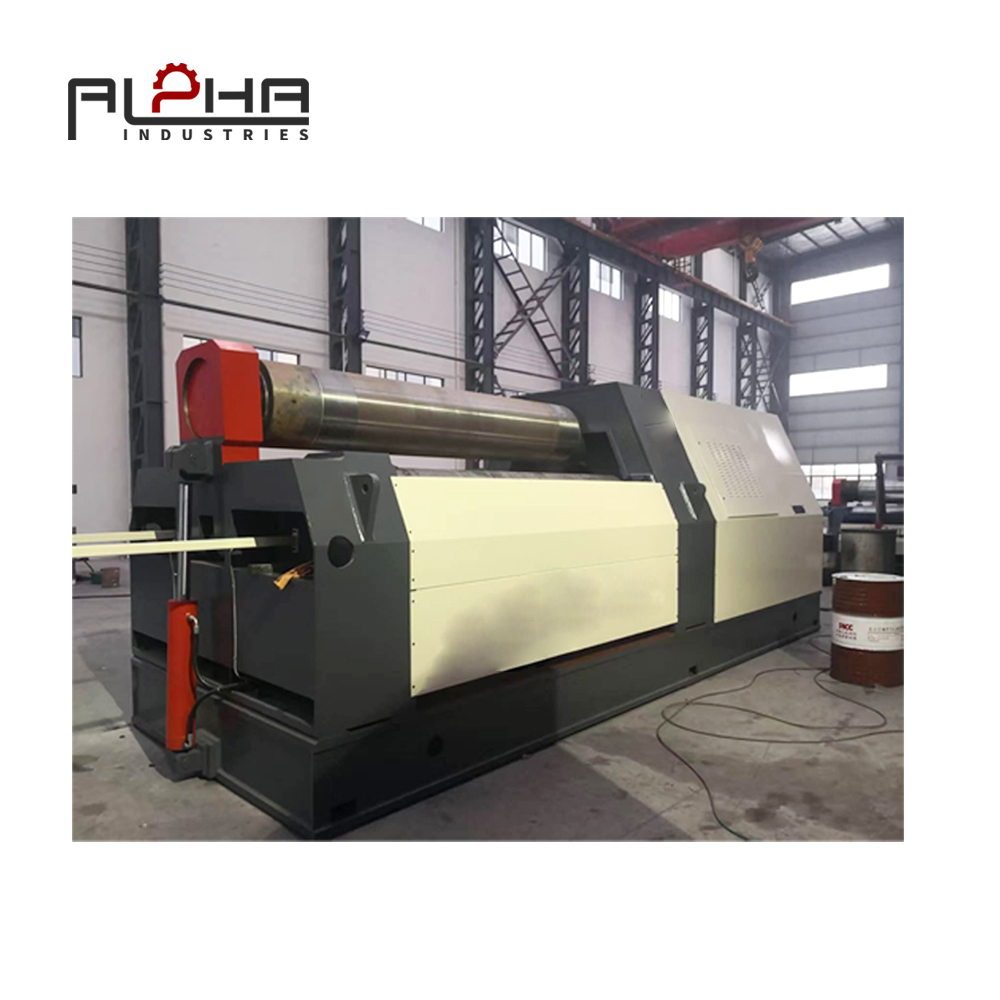
A 4-roller plate rolling machine is designed to make this process more controllable. Through its four-roll structure, the machine clamps the plate securely while the side rolls perform pre-bending and rolling operations. This arrangement helps reduce unnecessary plate repositioning and supports a more repeatable forming workflow.
The following sections explain how four-roll technology addresses the challenge of mixed-specification production.
The Main Challenge: Different Plate Specifications Produce Different Forming Results
A metal fabrication workshop rarely processes only one type of steel plate throughout the year. Even when the final products are similar, the raw materials may vary considerably.
Several factors influence the plate rolling process.
Plate Thickness Variation
Plate thickness is one of the most important factors affecting bending behavior.
A thicker plate generally requires greater forming force and a different roller adjustment compared with a thinner plate. If the machine settings are not adjusted appropriately, the operator may struggle to achieve the intended radius.
For example, a workshop may process 6 mm, 10 mm, and 16 mm carbon steel plates for different cylindrical products. Each thickness requires suitable machine capacity, roller positioning, and forming parameters.
Using one general setting for every material specification can lead to inconsistent results.
Different Material Strengths
Steel grades do not all behave in the same way during cold forming.
Different yield strengths and mechanical properties influence the force required for bending and the amount of springback after the plate leaves the rollers.
Springback occurs because the material partially recovers its original shape after the forming force is removed. If the operator does not account for this behavior, the finished cylinder may have a larger diameter or a different curvature than expected.
This is particularly important when a workshop processes several steel grades or switches between carbon steel and stainless steel.
Changes in Plate Width
Plate width also affects the forming process.
A machine selected for a particular working width must be capable of handling the actual plate dimensions required by the workshop. The operator must also consider how the plate is supported and aligned throughout the rolling operation.
If a plate is not positioned correctly, the resulting cylinder may become skewed or develop a non-uniform shape.
Different Finished Diameters
A single fabrication company may receive orders for multiple cylinder diameters.
Small-diameter shells and large-diameter cylinders require different forming conditions. The relationship between plate thickness, material properties, and target diameter must be considered before production begins.
For this reason, a plate rolling machine should not be evaluated only by its maximum thickness capacity. Its ability to handle the workshop's actual range of materials and finished dimensions is equally important.
How a 4-Roller Plate Rolling Machine Improves Plate Positioning
Stable plate positioning is one of the foundations of consistent rolling quality.
A conventional forming process may require repeated manual adjustments, depending on the machine configuration. When a plate needs to be removed, turned, or repositioned between operations, the possibility of alignment errors increases.
A four-roll plate rolling machine uses four main rollers:
-
Upper roll
-
Lower roll
-
Left side roll
-
Right side roll
The upper and lower rolls clamp the plate, while the two side rolls move to control pre-bending and the rolling radius.
Secure Clamping During Forming
The plate is held between the upper and lower rolls during the forming process. This clamping arrangement helps maintain a stable relationship between the material and the machine.
When the plate remains properly clamped, the operator can control its movement more consistently.
This is especially useful when processing wider plates or repeated cylindrical components, where maintaining the correct position throughout the operation is important.
More Controlled Side-Roll Movement
The side rolls are responsible for applying the forming force that creates the required curvature.
By adjusting their positions, the operator can control the bending process according to the material thickness and target radius.
The actual adjustment range and control method depend on the machine model. Hydraulic, NC, and CNC configurations may offer different levels of control and automation.
For workshops handling multiple product specifications, the ability to adjust the side rolls accurately is an important consideration.
Reduced Repositioning Between Operations
One practical advantage of the four-roll configuration is that it can perform pre-bending at both ends without requiring the plate to be removed and turned over between the two operations.
This reduces unnecessary material handling and helps preserve the plate's alignment during production.
For Colombian workshops using cranes or other lifting equipment to move heavy plates, fewer repositioning steps can also simplify the production workflow.
Pre-Bending: A Critical Step for Accurate Cylindrical Products
Pre-bending is one of the most important operations in plate rolling.
When a flat plate is rolled into a cylinder, the sections near the two ends may remain relatively straight if they are not properly pre-bent. These flat areas are commonly referred to as straight edges or flat ends.
If the straight edges are too long, the operator may need additional forming or correction before the cylinder can be assembled and welded.
This can affect production efficiency and final dimensional quality.
Why Long Straight Edges Cause Problems
Consider a workshop manufacturing cylindrical steel tanks.
After the main rolling operation, the two ends of the plate must meet to create a closed cylindrical shell. If the end sections remain too straight, the edges may not match the required circular profile.
The operator may need to use additional equipment or manual correction to improve the shape.
Potential consequences include:
-
Additional forming operations
-
More time spent on dimensional correction
-
Difficulties aligning the edges before welding
-
Increased dependence on operator experience
-
Greater variation between finished workpieces
The exact effect depends on the plate thickness, material properties, cylinder diameter, and welding requirements.
How Four-Roll Pre-Bending Helps
A 4-roller plate rolling machine uses the side rolls to pre-bend the plate ends while the material remains clamped between the upper and lower rolls.
The operator can pre-bend one end, feed the plate through the machine, and then pre-bend the opposite end before completing the rolling operation.
This process reduces the need for repeated plate removal and repositioning.
It also provides a more integrated workflow for forming cylindrical shells.
For manufacturers producing similar components in batches, a well-adjusted pre-bending process can help establish more consistent starting conditions for subsequent rolling operations.
However, the final straight-edge length is influenced by machine geometry and the relationship between roller diameters, plate thickness, and material properties. Buyers should request actual technical data and sample forming results rather than assume that every four-roll machine delivers identical results.
Managing Material Springback for More Reliable Diameter Control
Springback is a common challenge in metal forming.
When a steel plate is bent, the material experiences both elastic and plastic deformation. After the forming pressure is released, the elastic portion partially recovers, causing the plate to move away from the shape imposed by the rollers.
This means that the roller position alone does not determine the final cylinder diameter.
The material itself also plays an important role.
Why Springback Is Difficult to Predict
Several factors can influence springback:
-
Plate thickness
-
Material yield strength
-
Material grade
-
Rolling diameter
-
Forming pressure
-
Previous material processing and condition
For example, two plates with the same thickness may require different adjustments if their mechanical properties are different.
Similarly, a machine setting that works for one cylinder diameter may not produce the same result for a smaller or larger diameter.
Establishing a More Repeatable Forming Process
To control springback, manufacturers should develop suitable forming parameters for each common material and product specification.
A practical process may include:
-
Confirming the actual plate thickness and material grade.
-
Checking the required finished diameter.
-
Selecting a suitable pre-bending sequence.
-
Adjusting the side-roll positions gradually.
-
Producing a trial workpiece when the material or specification changes.
-
Measuring the finished diameter after unloading.
-
Recording the successful forming parameters for repeat orders.
A CNC-controlled four-roll plate rolling machine may help store or reproduce established programs, depending on its control configuration.
However, stored parameters should not replace material verification and dimensional inspection. A change in steel grade or actual plate thickness may require a new adjustment.
The objective is to build a forming process that is repeatable and measurable, rather than relying entirely on operator memory.
Why This Matters for Colombian Tank and Industrial Fabrication Workshops
Cylindrical steel components are used in many industrial applications. Depending on the project, Colombian fabricators may manufacture storage tanks, process equipment, industrial containers, ducting, structural shells, and other rolled components.
Although these products have different end uses, they share one important production requirement: the rolled plate must match the intended geometry before the next manufacturing stage.
Storage Tank Manufacturing
Tank fabrication requires consistent cylindrical sections that can be assembled and welded correctly.
If the rolled plates have uneven curvature, additional adjustment may be necessary before the shell sections are joined.
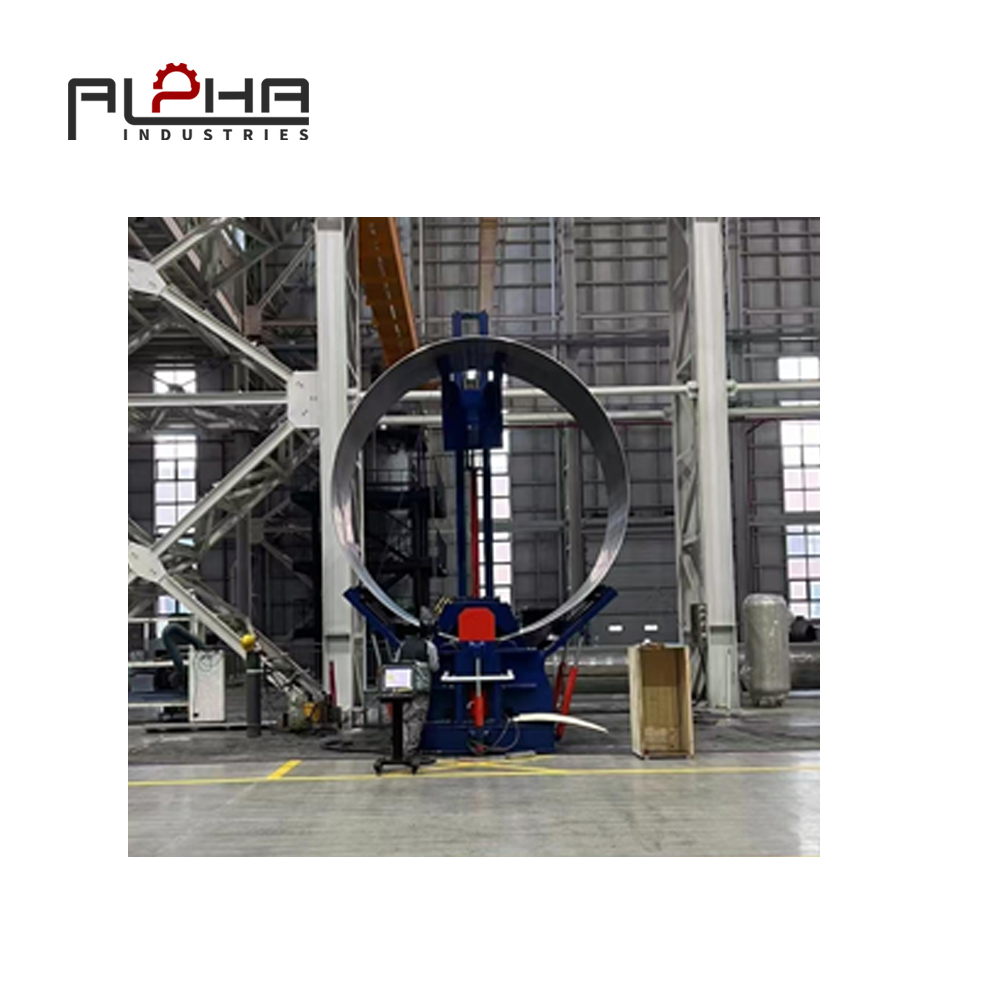
A four-roll plate rolling machine can support the pre-bending and rolling process in a single setup, helping workshops reduce unnecessary handling during cylindrical shell production.
Industrial Equipment Manufacturing
Industrial equipment manufacturers may produce customized housings, covers, cylindrical structures, and other curved steel components.
Different customer orders can involve different dimensions and material specifications.
A machine with suitable capacity and adjustable forming parameters can provide greater flexibility when switching between these jobs.
Agricultural and Infrastructure-Related Fabrication
Colombia's varied industrial and regional operating environments can create different fabrication requirements. Workshops may need to manufacture customized steel structures and equipment components for different projects.
In these situations, a plate rolling machine should be selected according to the actual workpieces, not simply the largest plate that may occasionally enter the workshop.
A suitable four-roll machine can help manufacturers establish a more controlled process for recurring cylindrical and curved components.
How to Select the Right 4-Roller Plate Rolling Machine for Mixed Production
Choosing a machine based only on maximum plate thickness can create problems later.
A more reliable selection process starts with the workshop's actual production requirements.
Confirm the Maximum and Common Plate Thickness
Buyers should identify both the maximum plate thickness and the thicknesses most frequently processed.
For example, a workshop may occasionally roll thick plates but handle medium-thickness material for most of its orders.
The machine should be evaluated against both production scenarios.
It is also important to distinguish between rolling capacity and pre-bending capacity. These figures may differ, so buyers should review the manufacturer's capacity chart carefully.
Check the Effective Working Length
The working length determines the maximum plate width that can be processed within the machine's rated conditions.
A workshop manufacturing long tank shells or wide cylindrical components should confirm that the machine's effective working length matches its production requirements.
Buyers should also consider whether future orders may require wider plates.
Evaluate Minimum Rolling Diameter
The minimum rolling diameter is an important specification when a workshop manufactures relatively small cylindrical products.
A machine may have sufficient thickness capacity but still be unsuitable for a particular small-diameter application.
The required diameter should therefore be checked against the manufacturer's technical specifications and forming recommendations.
Review Roller Dimensions and Machine Structure
The roller diameters, frame rigidity, bearing arrangement, and overall machine structure influence the machine's ability to withstand forming forces.
These factors become particularly important when processing thick plates or materials with higher strength.
Buyers should request technical information about the machine structure and roller specifications, rather than relying only on a general description such as heavy-duty or high-precision.
Choose the Appropriate Control System
Different workshops require different levels of automation.
An NC system may provide practical control for standard rolling operations. A CNC system may offer more advanced programming and repeatability functions, depending on its configuration.
When comparing machines, buyers should check:
-
Available control axes
-
Roller positioning method
-
Program storage capacity
-
Manual and automatic operating modes
-
Position feedback and display
-
Repeat-production functions
-
Operator interface and language options
The control system should match the complexity and frequency of the workshop's production changes.
Consider Loading, Support, and Unloading
The forming process does not end when the plate enters the rollers.
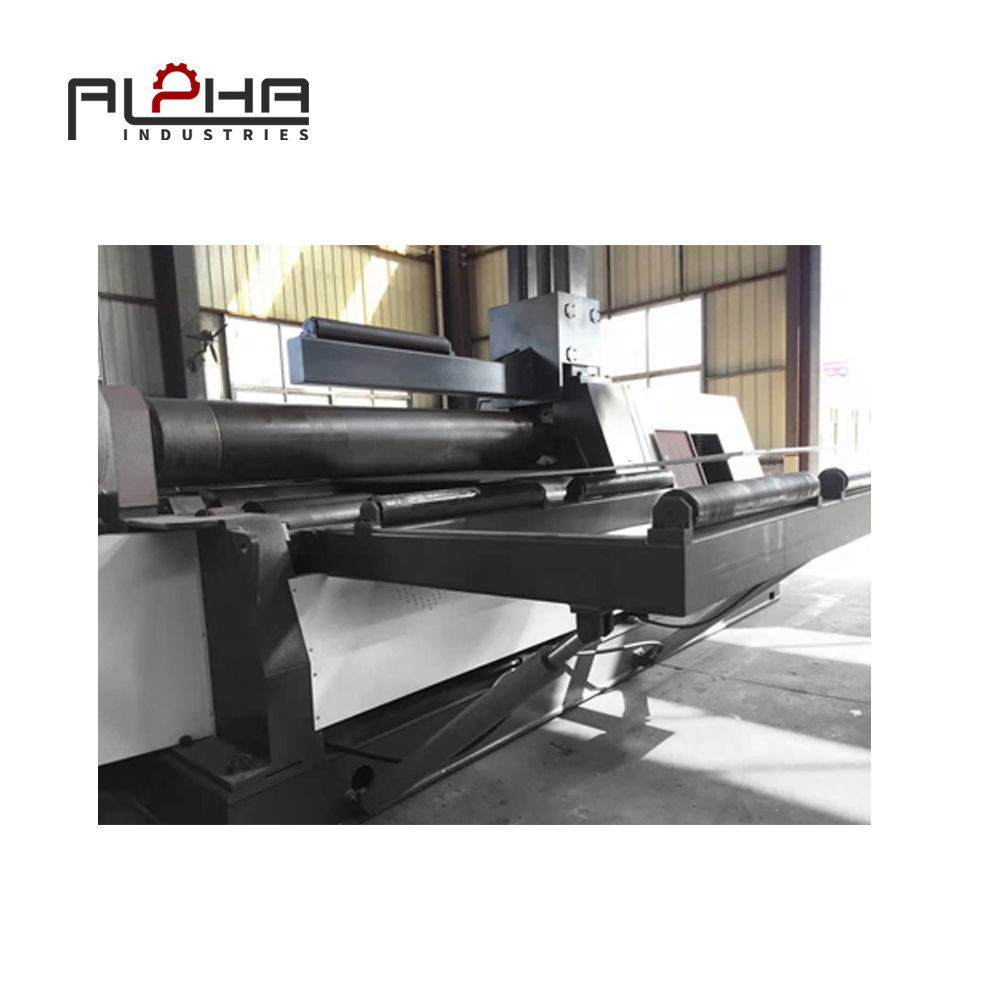
Large or heavy plates require suitable loading and handling arrangements. Depending on the workpiece dimensions, the workshop may need lifting equipment, front or rear support devices, or other material-handling solutions.
A complete machine evaluation should consider how the plate enters the machine, how it remains supported during rolling, and how the finished cylinder is removed.
This is particularly important for workshops with limited floor space or products that are difficult to handle manually.
Practical Production Recommendations for Better Rolling Consistency
Even a well-designed machine requires a controlled production process.
For manufacturers handling different plate specifications, the following practices can help improve repeatability.
Create a Material and Job Record
Record the material grade, actual thickness, plate width, target diameter, and forming parameters for each regular product.
This makes it easier to identify the correct starting conditions when the same job returns.
Verify Plate Dimensions Before Rolling
Do not assume that every plate matches its nominal specification.
Check the actual thickness and dimensions before selecting the machine settings. Material variation can affect the forming result, especially when working close to the machine's rated capacity.
Establish Trial-Forming Procedures
When a new material grade or diameter is introduced, produce a trial workpiece if production conditions allow.
Measure the result and adjust the forming parameters before processing the full batch.
Inspect Both Ends of the Rolled Plate
Pre-bending quality should be checked at both ends.
Uneven end curvature can make it difficult to close the cylinder accurately. Early inspection helps identify problems before the workpiece moves to welding.
Measure the Finished Diameter at Multiple Positions
A single measurement may not reveal all forming deviations.
Depending on the product requirements, check the diameter at several positions along the cylinder length and inspect whether the shell is consistently round.
Maintain Consistent Operator Procedures
Different operators may use different adjustment methods if there is no documented process.
Standard operating procedures, machine training, and recorded forming parameters can help reduce variation between shifts.
Why a 4-Roller Design Can Be Valuable for Customized Orders
For a workshop with a stable, high-volume product, machine selection may focus on cycle time and repeatability.
For a workshop handling customized orders, flexibility becomes equally important.
A 4-roller plate rolling machine can support this requirement through its clamping arrangement and independent side-roll movement.
The same machine may be used for different plate thicknesses, widths, and target diameters, provided that every job remains within the machine's rated capacity and forming limits.
This does not mean that every product can be processed with one universal setting. Each material and workpiece requires appropriate parameters.
The advantage is that the machine's structure provides a practical foundation for changing between forming requirements without repeatedly removing and turning the plate.
For Colombian manufacturers that need to balance customized production with consistent quality, this can make the four-roll configuration a useful long-term investment.
Questions to Ask Before Purchasing a 4-Roller Plate Rolling Machine
Before selecting a machine, buyers should prepare a clear list of production requirements.
The following questions can help make the evaluation more practical.
What plate thickness can a 4-roller plate rolling machine process?
The answer depends on the machine model, working length, material strength, and required rolling diameter. Buyers should check both the maximum rolling capacity and the pre-bending capacity.
Can a four-roll plate rolling machine process different steel grades?
Yes, provided that the selected machine is suitable for the material specifications and the required forming conditions. Different steel grades may require different roller adjustments because of variations in mechanical properties and springback.
Does a 4-roll plate rolling machine reduce straight edges?
A four-roll design can perform pre-bending at both plate ends while the material remains clamped. This helps reduce the unbent sections compared with configurations that require additional handling. The actual remaining straight-edge length depends on the machine design and workpiece specifications.
Is a four-roll machine suitable for small and large cylinder diameters?
It depends on the machine's technical range. Buyers should confirm the minimum and maximum rolling diameters, plate thickness, working length, and material grade before purchasing.
Is CNC control necessary for mixed production?
Not every workshop requires a CNC system. However, CNC control may be valuable when production involves frequent specification changes, repeated jobs, or a need to reproduce established forming programs. The required control functions should be evaluated against actual production needs.
What information should buyers provide when requesting a quotation?
For a more accurate machine recommendation, buyers should provide:
-
Material type and grade
-
Maximum and commonly used plate thickness
-
Maximum plate width
-
Minimum and maximum cylinder diameter
-
Required production volume
-
Whether pre-bending is required
-
Whether conical rolling is needed
-
Preferred control system
-
Available workshop space and material-handling conditions
Providing these details helps the supplier evaluate the application and recommend a suitable machine configuration.
Build a More Consistent Plate Rolling Process with ALPHA
For Colombian metal fabrication companies, the challenge of mixed-specification production is not simply about increasing machine capacity. It is about maintaining reliable forming results when material thickness, plate dimensions, and finished product requirements change.
A properly selected 4-roller plate rolling machine can help address this challenge through stable plate clamping, controlled pre-bending, and a more integrated rolling process.
When evaluating a machine, manufacturers should look beyond the maximum thickness figure. Working length, rolling diameter, material strength, pre-bending capacity, roller specifications, control functions, and material-handling arrangements all influence whether the machine is suitable for real production conditions.
ALPHA provides metalworking machinery solutions for industrial manufacturers and fabrication workshops. If your company is planning to improve cylindrical forming operations or upgrade its plate rolling equipment, sharing your actual workpiece specifications is a useful first step toward selecting the right machine.
Contact ALPHA
Visit our website to learn more about our machinery and discuss your production requirements.