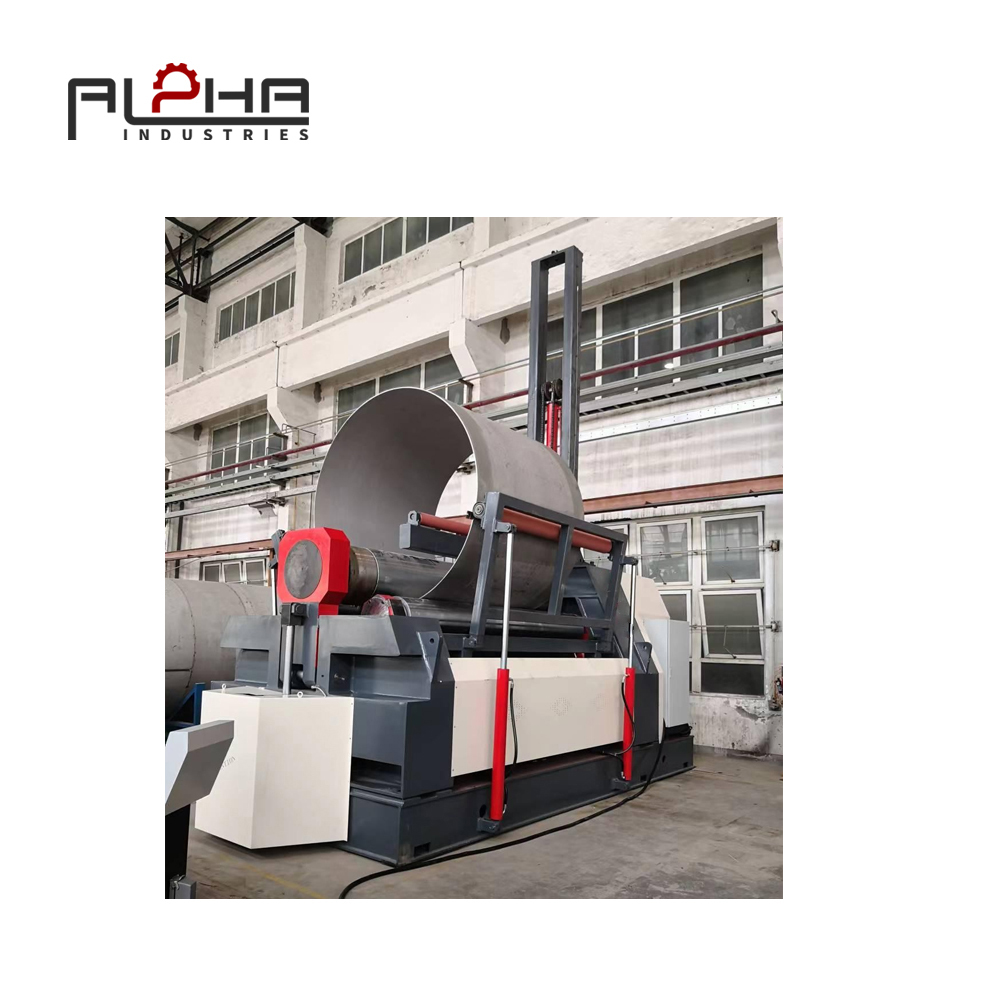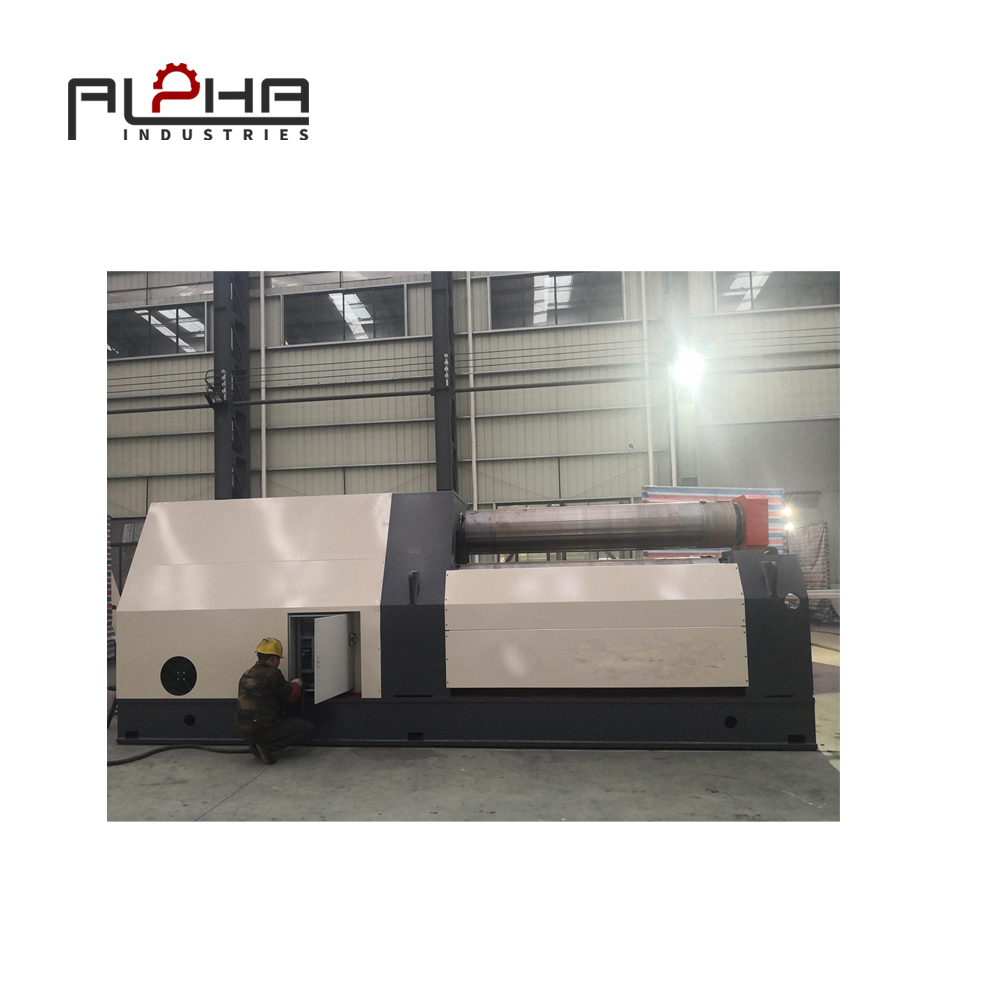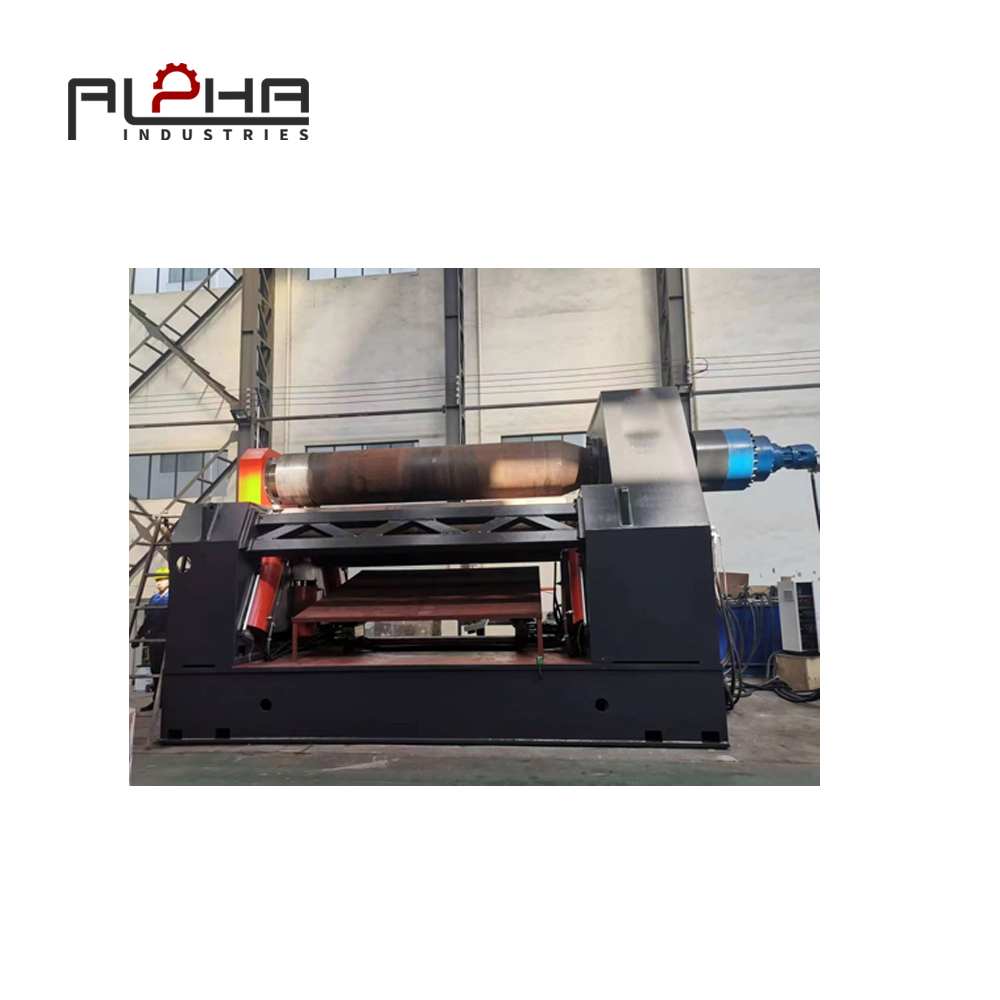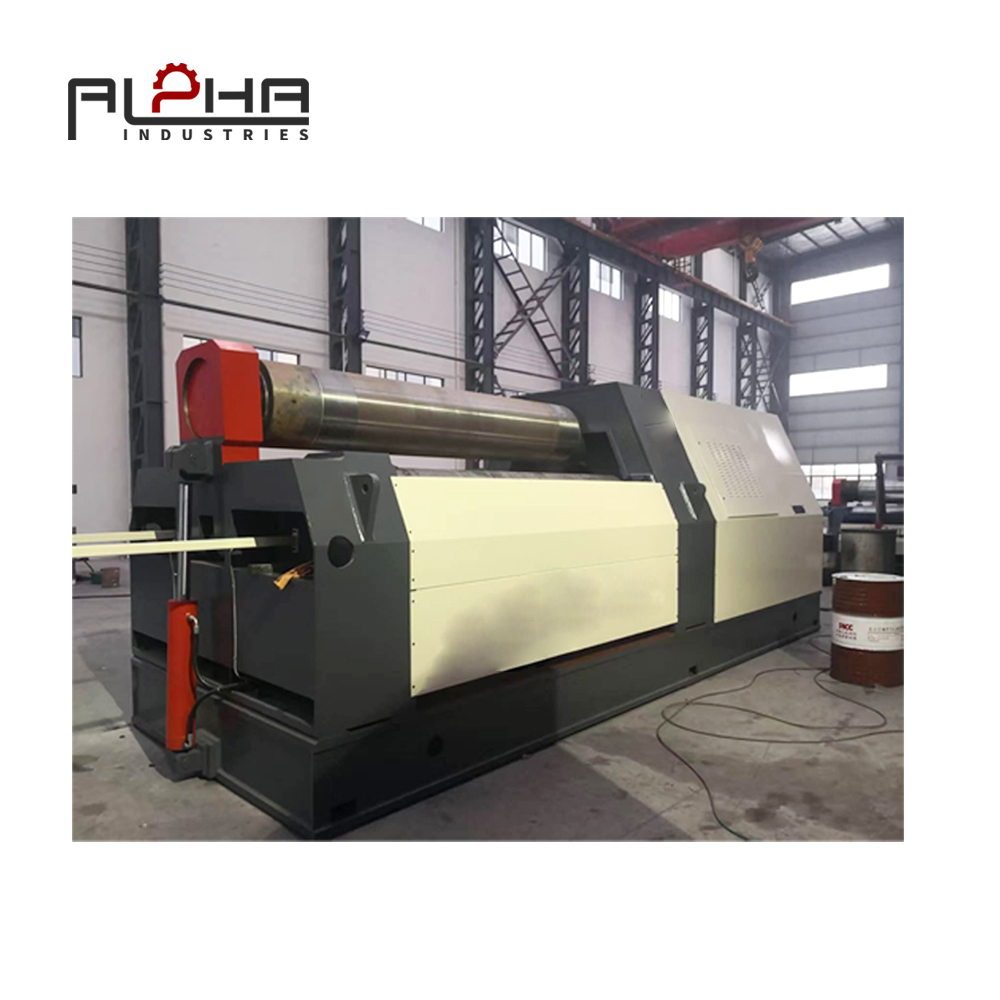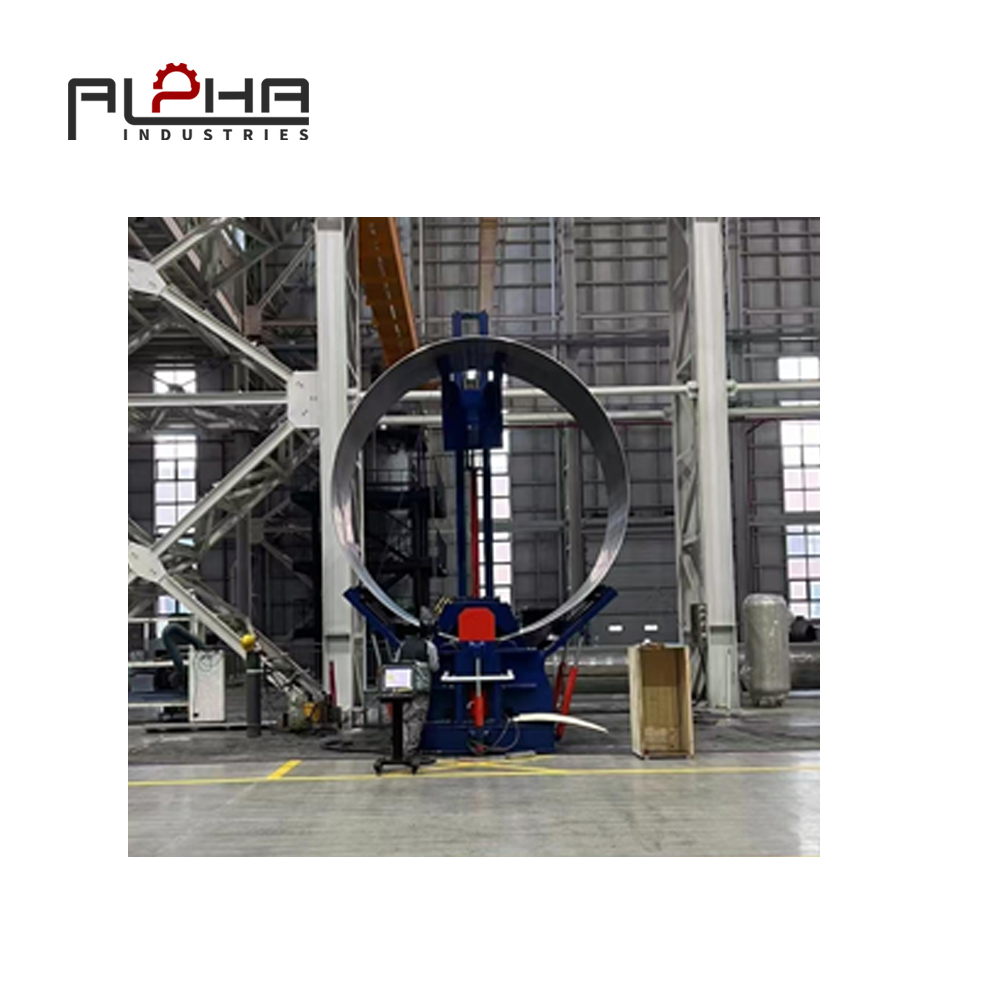


In the competitive American metal fabrication industry, production accuracy directly affects manufacturing costs, delivery schedules, and finished product quality. Companies producing storage tanks, pressure vessels, steel structures, industrial pipes, and heavy equipment must maintain consistent plate curvature while meeting increasingly demanding dimensional requirements.
One of the most common challenges in plate rolling is achieving the required diameter and roundness without excessive correction or material waste.
When processing large or thick metal plates, even small deviations during the rolling process can lead to additional fitting, welding, grinding, and correction work. These problems become more expensive when manufacturers handle customized orders, short production runs, or large-volume industrial projects.
For many American manufacturers, the challenge is not simply whether a machine can roll a steel plate. It is whether the machine can consistently produce the required curvature, maintain dimensional accuracy, and minimize unnecessary adjustments throughout production.
A 4-roller plate rolling machine offers an effective solution by providing controlled plate positioning, pre-bending capabilities, and more stable rolling operations.
Understanding how this machine improves rolling accuracy can help fabrication companies make better equipment investments and build more efficient production processes.
Why Plate Rolling Accuracy Matters in the US Metal Fabrication Industry
The United States has a broad industrial manufacturing base covering energy, construction, transportation, shipbuilding, agricultural equipment, and heavy machinery.
Many of these industries depend on accurately rolled metal plates to manufacture cylindrical and curved components.
For example, storage tank manufacturers need consistent shell curvature to ensure proper alignment during assembly. Pressure vessel manufacturers require controlled dimensions to support downstream fabrication and quality inspection. Steel structure manufacturers often process different plate sizes and thicknesses for customized projects.
In these applications, inaccurate rolling can create several production problems.
1. Incorrect Plate Curvature Increases Rework
If the rolled plate does not achieve the required diameter, operators may need to perform additional rolling operations or manually correct the workpiece.
This increases machine occupancy and reduces production efficiency.
For manufacturers working with thick carbon steel or stainless steel, repeated adjustments can also increase handling time and introduce additional risks of surface damage.
2. Poor Pre-Bending Causes Flat Ends
Flat ends are a common issue in conventional plate rolling processes.
When the plate edges are not properly pre-bent, the finished cylinder may contain straight sections near the joining edges. These areas require additional correction before welding and assembly.
This is particularly important when manufacturing cylindrical tanks, pressure vessel shells, and large-diameter industrial components.
Reducing flat-end length can help manufacturers improve material utilization and simplify subsequent fabrication processes.
3. Inconsistent Rolling Results Affect Welding and Assembly
Rolling accuracy is closely connected to downstream welding quality.
If two rolled plate edges do not align correctly, operators may need to spend additional time adjusting the joint before welding.
Poor alignment can affect production consistency, increase fitting labor, and complicate the assembly of large cylindrical structures.
For American fabrication shops handling multiple customer specifications, maintaining repeatable rolling results is essential for controlling production costs.
How a 4-Roller Plate Rolling Machine Improves Rolling Accuracy
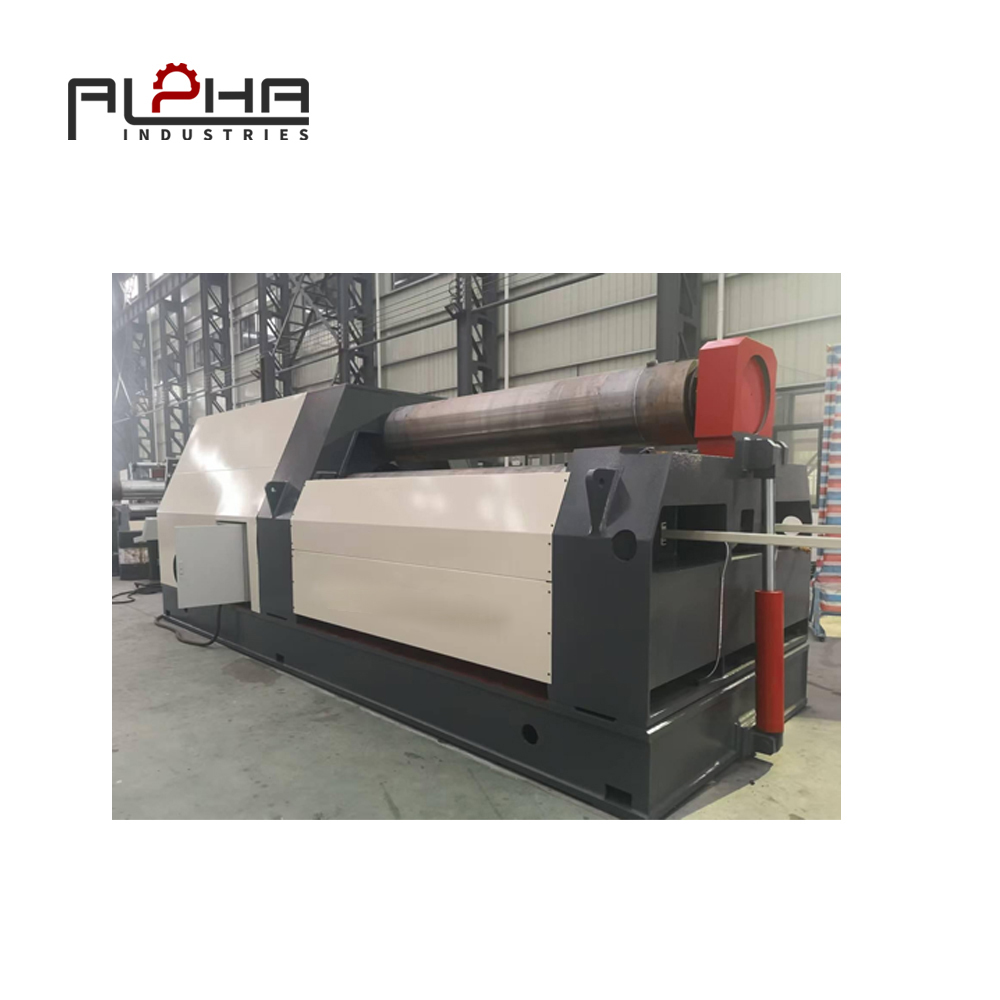
A 4-roller plate rolling machine is designed to provide better control over plate feeding, positioning, pre-bending, and forming.
Unlike traditional three-roll configurations, a four-roll system uses four rollers to control the plate during different stages of the rolling process.
The typical configuration includes an upper roller, lower roller, and two side rollers. Their coordinated movements allow the machine to perform plate clamping, edge pre-bending, and continuous rolling with controlled positioning.
1. Improved Plate Positioning and Clamping
One of the major advantages of a four-roll design is its ability to clamp the plate between the upper and lower rollers.
This helps maintain a stable position during the rolling process and reduces the possibility of unwanted plate movement.
Stable clamping is especially useful when processing large metal sheets, where inaccurate positioning can affect the final cylindrical shape.
For operators, more controlled plate positioning also makes it easier to manage repeated production tasks.
2. More Controlled Edge Pre-Bending
Pre-bending is a critical operation in cylindrical plate manufacturing.
The machine positions and clamps the plate before the side roller applies the required bending force. This allows the plate edge to be pre-bent before the main rolling operation begins.
Proper pre-bending helps reduce flat sections at the ends of the finished workpiece.
For manufacturers producing tanks, pipes, and pressure vessel components, this can simplify subsequent welding and reduce the amount of manual correction required.
The actual pre-bending performance depends on the machine design, roller geometry, material properties, and operating parameters.
3. Continuous Rolling with Reduced Repositioning
A four-roller plate rolling machine can generally complete pre-bending and rolling operations without repeatedly removing and repositioning the workpiece.
This is an important advantage for production environments where handling time directly affects overall efficiency.
Fewer repositioning operations can help reduce operator workload, improve process consistency, and limit unnecessary material handling.
When equipped with an appropriate CNC control system, the machine can also support repeatable positioning and more standardized production procedures.
4. Better Process Repeatability
American manufacturers often process different plate dimensions and materials according to customer drawings.
A machine that supports controlled roller movements and repeatable operating parameters can help operators maintain more consistent production results.
CNC-controlled systems can store or reproduce suitable rolling procedures, depending on the machine configuration.
However, repeatability also depends on correct material identification, plate thickness, yield strength, rolling diameter, and operator setup.
For this reason, selecting a machine according to actual production requirements is more important than focusing on control-system specifications alone.
The Hidden Cost of Material Distortion and Repeated Correction
Material waste is not always caused by cutting mistakes or incorrect raw material dimensions. In plate rolling operations, poor curvature control can also create unnecessary production costs.
Consider a manufacturer producing cylindrical steel shells for industrial storage tanks.
If the initial rolling process produces excessive flat ends or inconsistent curvature, the company may need additional correction before the components can be assembled.
These additional operations can involve:
-
Repeated rolling and dimensional adjustments.
-
Additional fitting and alignment work.
-
Longer welding preparation time.
-
Increased operator involvement.
-
Higher machine occupancy.
-
Greater risk of surface damage during repeated handling.
The cost of these problems extends beyond the individual workpiece.
When production schedules are tight, repeated correction can delay subsequent operations and affect delivery commitments.
A properly selected four-roll plate rolling machine can help reduce these problems through more controlled positioning and pre-bending.
The goal is not simply to increase rolling speed. It is to improve the consistency of the entire manufacturing process.
Choosing the Right 4-Roller Plate Rolling Machine for American Applications
Not every four-roll plate rolling machine is suitable for every manufacturing environment.
Before purchasing equipment, American manufacturers should evaluate their actual material specifications, production capacity, and finished product requirements.
1. Maximum Rolling Thickness
Maximum rolling thickness is one of the most important machine selection criteria.
Manufacturers should identify the thickest material they regularly process and distinguish between pre-bending capacity and rolling capacity.
These two specifications are not necessarily the same.
It is also important to consider material strength. A machine's rated capacity under a particular material condition should not automatically be assumed to apply to higher-strength steel.
2. Maximum Working Width
The working width determines the maximum plate length that can be processed in one operation.
Companies manufacturing large tanks or industrial vessels may require a wider working area than smaller fabrication shops.
Choosing an appropriate working width helps prevent production limitations when handling larger components.
3. Minimum Rolling Diameter
Different applications require different cylindrical diameters.
Manufacturers producing small-diameter pipes or cylindrical components should pay close attention to the minimum rolling diameter supported by the machine.
Roller diameter, machine structure, material thickness, and bending configuration all influence the achievable result.
4. Roller Material and Structural Rigidity
The rollers must withstand repeated bending forces while maintaining dimensional stability.
High-quality roller materials, suitable heat treatment, and a rigid machine frame are important factors in long-term equipment performance.
For companies processing thick steel plates, structural rigidity is particularly important because excessive deflection can affect the final rolling result.
5. CNC Control and Operating Convenience
CNC control can improve production management by making roller positioning and operating procedures more repeatable.
For manufacturers handling multiple product specifications, programmable operations can help reduce setup complexity.
However, the control system should match the actual production process. Buyers should evaluate whether the machine's operating interface, positioning functions, and available automation features meet their workshop requirements.
Why Four-Roller Technology Is Suitable for Customized Metal Fabrication
Customized manufacturing is an important part of the American metalworking market.
Many fabrication companies do not produce only one standard cylindrical product. Instead, they process different materials, plate dimensions, thicknesses, and rolling diameters according to customer orders.
This creates a need for equipment that can handle production variation without excessive manual intervention.
A four-roll plate rolling machine is suitable for this environment because its clamping and pre-bending arrangement supports a more controlled workflow.
For example, a fabrication shop may process carbon steel plates for storage tanks in one production batch and stainless steel plates for industrial equipment in another.
With the correct machine capacity and operating parameters, operators can adjust the rolling process to suit different workpiece requirements.
This flexibility is valuable for manufacturers that need to balance customized orders with production efficiency.
It also helps companies improve workshop utilization by reducing unnecessary handling and repeated positioning.
How to Evaluate a Plate Rolling Machine Before Purchasing
When comparing equipment suppliers, buyers should look beyond the machine's headline capacity.
A practical evaluation should focus on whether the machine can produce the required workpiece under real operating conditions.
Consider the following questions:
-
What is the maximum plate thickness for rolling and pre-bending?
-
What is the maximum working width?
-
What is the minimum achievable rolling diameter?
-
What material grade and yield strength are used for the capacity rating?
-
Can the machine maintain stable plate positioning during operation?
-
What CNC functions are available?
-
Can the supplier provide a rolling demonstration using the buyer's material specifications?
-
What technical support, spare parts, and maintenance services are available?
A rolling test using representative material is particularly useful.
It allows buyers to evaluate the actual curvature, edge pre-bending performance, surface condition, and repeatability of the finished workpiece.
For manufacturers investing in industrial machinery, verifying performance against real production requirements is a more reliable approach than comparing specifications in isolation.
Why Choose ALPHA for Industrial Plate Rolling Solutions?
Choosing the right plate rolling equipment involves more than selecting a machine with sufficient rated capacity.
Manufacturers need equipment that matches their production requirements, material specifications, and long-term manufacturing plans.
ALPHA focuses on metalworking machinery solutions for industrial applications. When evaluating a 4-roller plate rolling machine, buyers should consider the machine's structural design, roller configuration, processing capacity, control options, and suitability for their intended workpieces.
Whether your business manufactures storage tanks, pressure vessels, steel structures, or other cylindrical metal components, selecting suitable rolling equipment can help improve production consistency and reduce unnecessary correction work.
A professional equipment evaluation should begin with the actual plate material, thickness, working width, and required rolling diameter.
For more information about ALPHA's machinery solutions or to discuss your plate rolling requirements, visit our Contact Us page.
You can also contact the ALPHA team to discuss your application and identify a suitable plate rolling solution for your manufacturing needs.
Frequently Asked Questions About 4-Roller Plate Rolling Machines
1. What is a 4-roller plate rolling machine used for?
A 4-roller plate rolling machine is used to bend flat metal plates into cylindrical, curved, and other rounded shapes. Common applications include storage tanks, pressure vessels, steel pipes, industrial vessels, and structural metal components.
2. What is the main advantage of a four-roll plate rolling machine?
Its main advantage is the ability to clamp, pre-bend, and roll the plate through a more integrated process. This reduces the need for repeated plate repositioning and can improve production consistency.
3. How does a 4-roller plate rolling machine reduce flat ends?
The machine uses its roller arrangement to position and clamp the plate before applying bending force to the plate edge. This pre-bending operation reduces the straight sections left at the ends of the rolled workpiece.
4. Is a four-roll plate rolling machine suitable for stainless steel?
Yes. A properly configured machine can process stainless steel, carbon steel, and other suitable metal materials. The required capacity must be evaluated according to material thickness, yield strength, working width, and rolling diameter.
5. Is a CNC 4-roller plate rolling machine suitable for customized production?
Yes. CNC-controlled positioning and programmable operations can help manufacturers manage different rolling requirements and reproduce established processing procedures. Actual functions depend on the machine configuration.
6. What should I consider when buying a plate rolling machine in the USA?
Important factors include rolling thickness, pre-bending capacity, working width, minimum rolling diameter, material strength, roller quality, machine rigidity, control functions, technical support, and spare parts availability.
7. How can I improve the accuracy of plate rolling?
Start by selecting a machine with suitable capacity and structural rigidity. Then verify material specifications, plate positioning, pre-bending settings, roller alignment, and operating parameters. Testing the machine with representative workpieces can help confirm its actual performance.
8. What information should I provide when requesting a plate rolling machine quotation?
Buyers should provide the material type, maximum plate thickness, working width, required rolling diameter, material grade or yield strength, and expected production requirements. Drawings or sample workpiece specifications can also help suppliers recommend suitable equipment.