

Hydraulic Guillotine – Redefining Precision in Sheet Metal Cutting
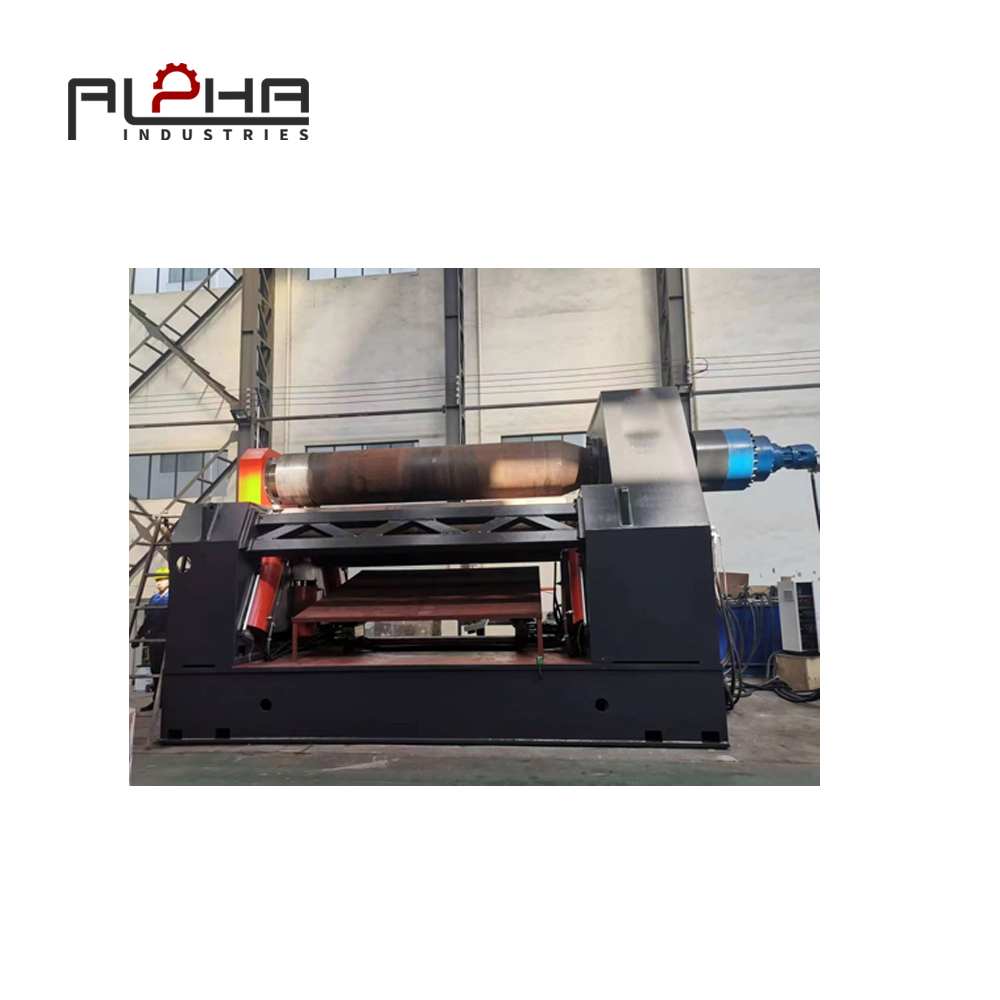
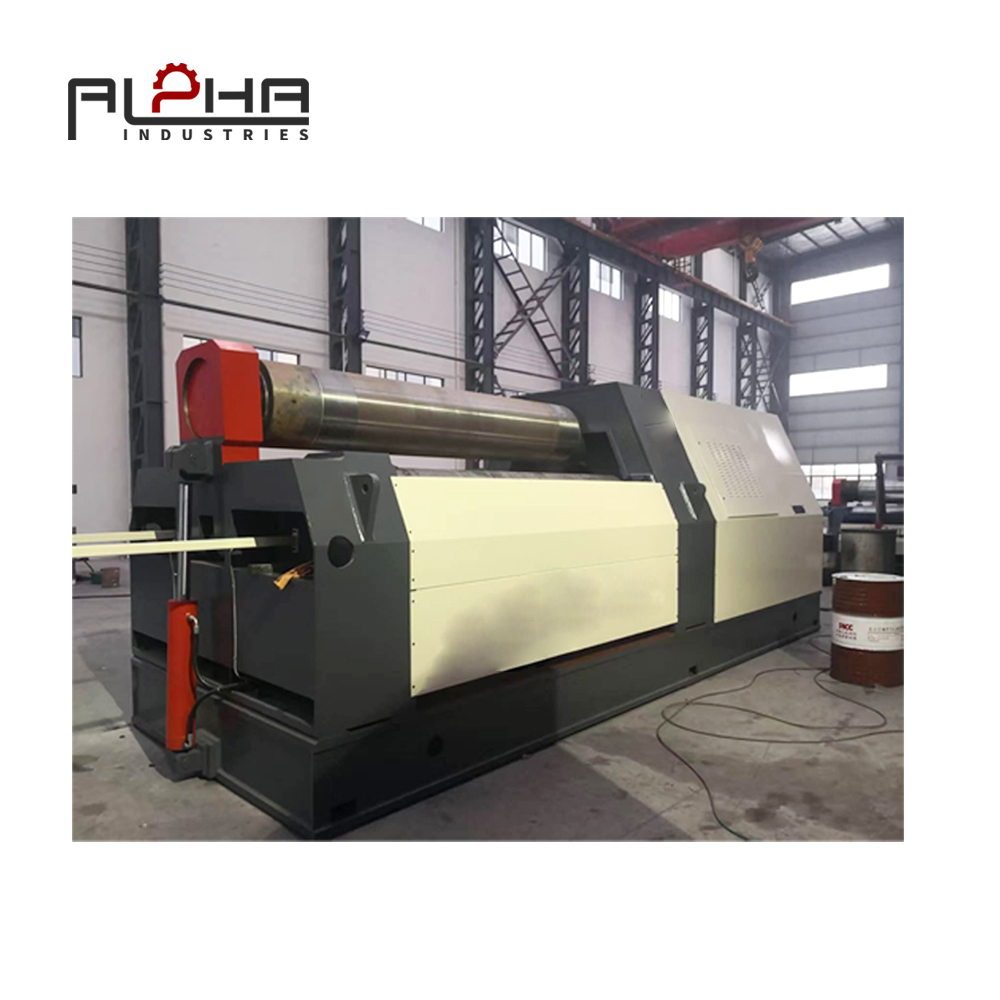
In modern sheet metal fabrication, cutting precision and edge flatness directly define product quality. A Hydraulic Guillotine is designed to achieve stable, accurate, and efficient cutting performance through advanced hydraulic synchronization and rigid mechanical design.
At Alpha, we engineer each Hydraulic Guillotine with an emphasis on synchronized blade movement, ensuring consistent cutting angles and smooth operation even under heavy-duty workloads. This article focuses on one critical aspect — the hydraulic synchronization system — and how it determines the overall precision, efficiency, and lifespan of the machine.
Core Principle – Hydraulic Synchronization and Blade Balance
The Hydraulic Guillotine operates on a dual-cylinder synchronization mechanism, where the movement of each cutting cylinder is precisely balanced by a hydraulic proportional valve and position sensors.
Real-Time Blade Position Feedback
Each side of the upper beam is equipped with a linear position transducer, transmitting real-time displacement signals to the control unit. This ensures:
-
Perfect synchronization between left and right cylinders.
-
Constant blade gap along the entire cutting length.
-
Reduction of torsional stress and frame deformation.
This level of synchronization allows the cutting process to maintain dimensional consistency, even when processing high-tensile materials or variable sheet thicknesses.
Hydraulic System Design – Stability and Efficiency Combined
The hydraulic circuit is the heart of the guillotine’s precision. Alpha uses integrated hydraulic manifolds and proportional flow control valves to achieve smooth pressure transitions, minimal vibration, and low noise operation.
Key Hydraulic Components
-
Main Pump: Delivers high flow at stable pressure, ensuring responsive cylinder movement.
-
Accumulator: Stores hydraulic energy to balance pressure fluctuation during rapid cutting.
-
Servo Valve: Adjusts fluid flow dynamically for precise blade movement.
The result is a cutting force distribution that remains uniform, minimizing blade wear and extending overall machine life.
Precision Blade Gap Adjustment
Cutting performance depends not only on the strength of the hydraulic system but also on the accuracy of blade gap adjustment. Alpha’s hydraulic guillotine adopts:
-
Automatic blade clearance adjustment according to material thickness.
-
User interface display for easy calibration.
-
Mechanical back gauge with digital positioning accuracy up to ±0.05 mm.
This enables operators to handle a wide range of materials — from stainless steel sheets to carbon steel plates — without sacrificing precision.
Structural Rigidity – Foundation for Cutting Accuracy
The entire frame of the Hydraulic Guillotine is welded from high-tensile steel and stress-relieved through vibration treatment. The torsion-free frame design ensures:
-
Uniform pressure distribution during cutting.
-
Reduced deformation under continuous operation.
-
Long-term geometric stability for high-volume production lines.
Together, these mechanical reinforcements and hydraulic precision systems ensure that every cut is straight, clean, and burr-free.
Intelligent Control and Operator Interface
Alpha’s smart control system combines hydraulic precision with digital intelligence.
Key features include:
-
Touch-screen CNC controller with cutting sequence programming.
-
Automatic stroke adjustment to optimize cutting speed.
-
Safety interlock systems ensuring secure operation.
The result is not just a hydraulic guillotine — it’s a smart metal cutting solution built for the future of industrial fabrication.
Applications Across Industries
The Hydraulic Guillotine by Alpha is widely used in:
-
Sheet metal fabrication workshops
-
Automotive and aerospace component production
-
Steel service centers and construction material processing
-
HVAC ducting and enclosure manufacturing
Its combination of precision, reliability, and hydraulic efficiency makes it a preferred choice for high-end industrial cutting operations.
Advantages of Alpha Hydraulic Guillotine
-
High precision through dual-cylinder synchronization.
-
Durable blades ensuring long-term performance.
-
Easy maintenance with modular hydraulic components.
-
Energy-efficient design reducing hydraulic loss.
-
Adaptable for customized sheet thickness and width requirements.
FAQ – Hydraulic Guillotine
Q1: What is the purpose of hydraulic synchronization in a guillotine shear?
Hydraulic synchronization ensures both cutting cylinders move evenly, maintaining a consistent blade gap and achieving uniform cutting results.
Q2: How does a hydraulic guillotine maintain accuracy over time?
By using position sensors, proportional valves, and a rigid welded frame that minimizes deflection during continuous use.
Q3: What materials can a hydraulic guillotine cut?
It can efficiently process stainless steel, carbon steel, aluminum, and alloy sheets of varying thicknesses.
Q4: What safety systems are integrated in Alpha’s Hydraulic Guillotine?
Alpha integrates hydraulic overload protection, light curtain safety sensors, and emergency stop systems to ensure safe operation.
Q5: How is the cutting angle adjusted in a hydraulic guillotine?
The cutting angle can be electronically adjusted through the control interface to optimize for material type and thickness.