

Why Turning Accuracy Defines Lathe Machine Performance
In metal machining, turning accuracy and dimensional consistency directly determine whether a component meets design tolerance or becomes scrap.
Regardless of cutting speed or automation level, a lathe that cannot maintain stable dimensions over time fails its primary purpose.
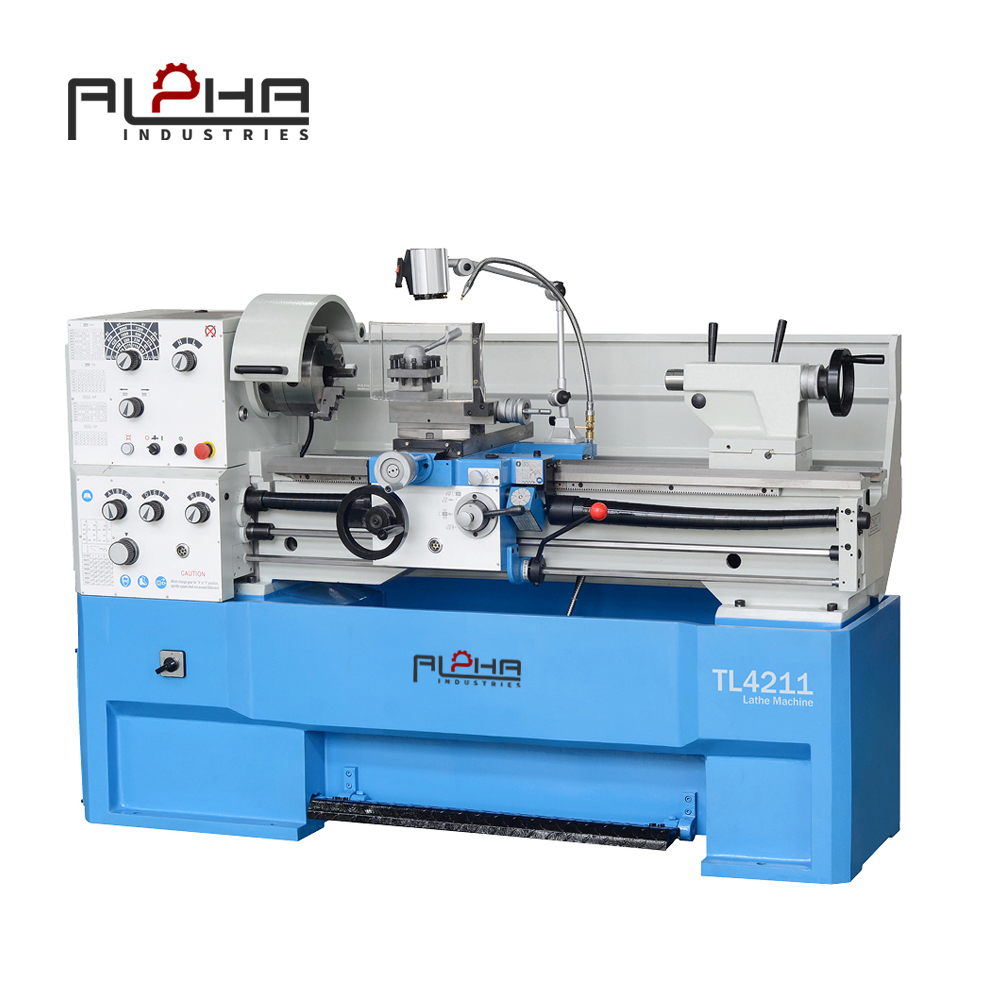
The Lathe Machine Series from Alpha is engineered with one clear objective:
👉 Delivering repeatable, high-precision turning accuracy throughout continuous production cycles.
This article focuses on one decisive technical factor—how mechanical rigidity, spindle precision, and motion stability work together to ensure dimensional consistency in lathe machining.
Understanding Turning Accuracy in Lathe Machines
Turning accuracy refers to a lathe’s ability to consistently achieve specified diameters, roundness, and surface geometry.
It is primarily influenced by:
-
Spindle rotational stability
-
Bed and headstock rigidity
-
Tool post positioning accuracy
-
Feed system precision
-
Vibration control during cutting
Even minor instability can cause taper errors, chatter marks, or dimensional drift.
Rigid Lathe Bed Design: The Structural Basis of Accuracy
The foundation of turning accuracy is machine rigidity.
Alpha lathe machines utilize:
-
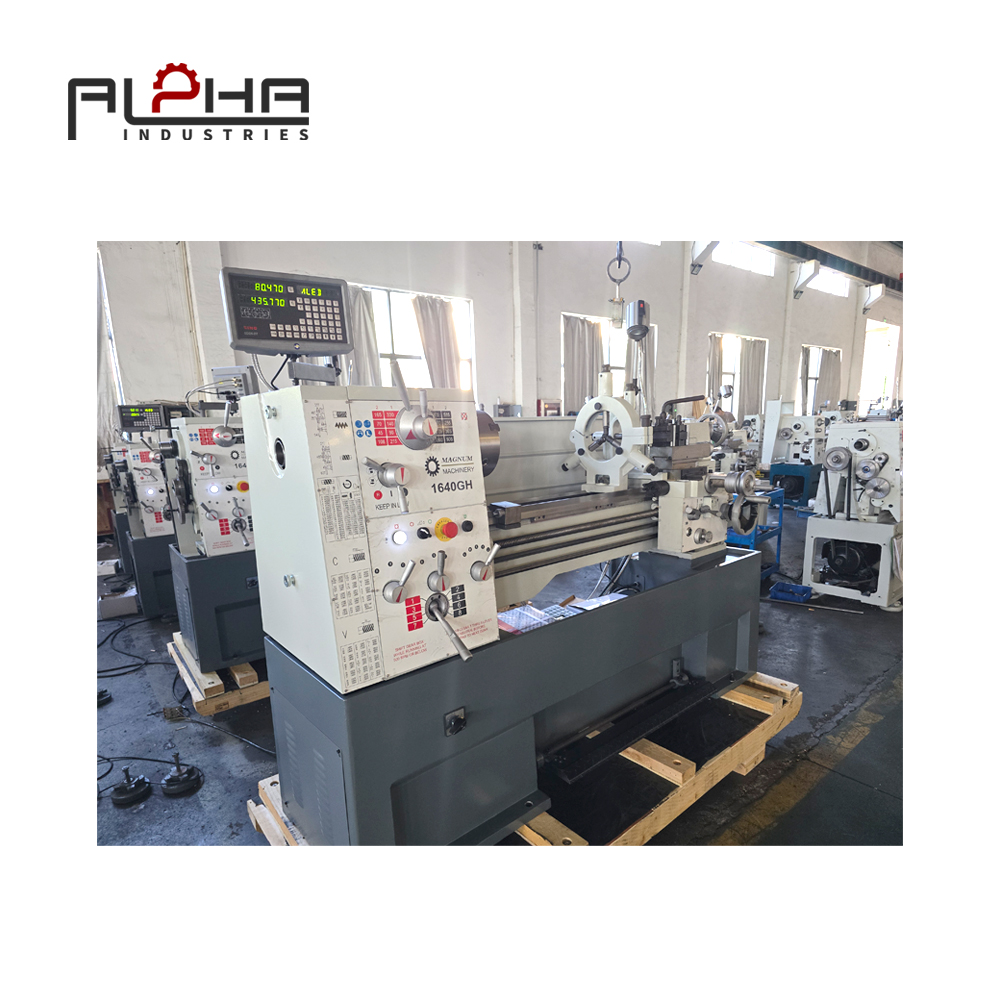
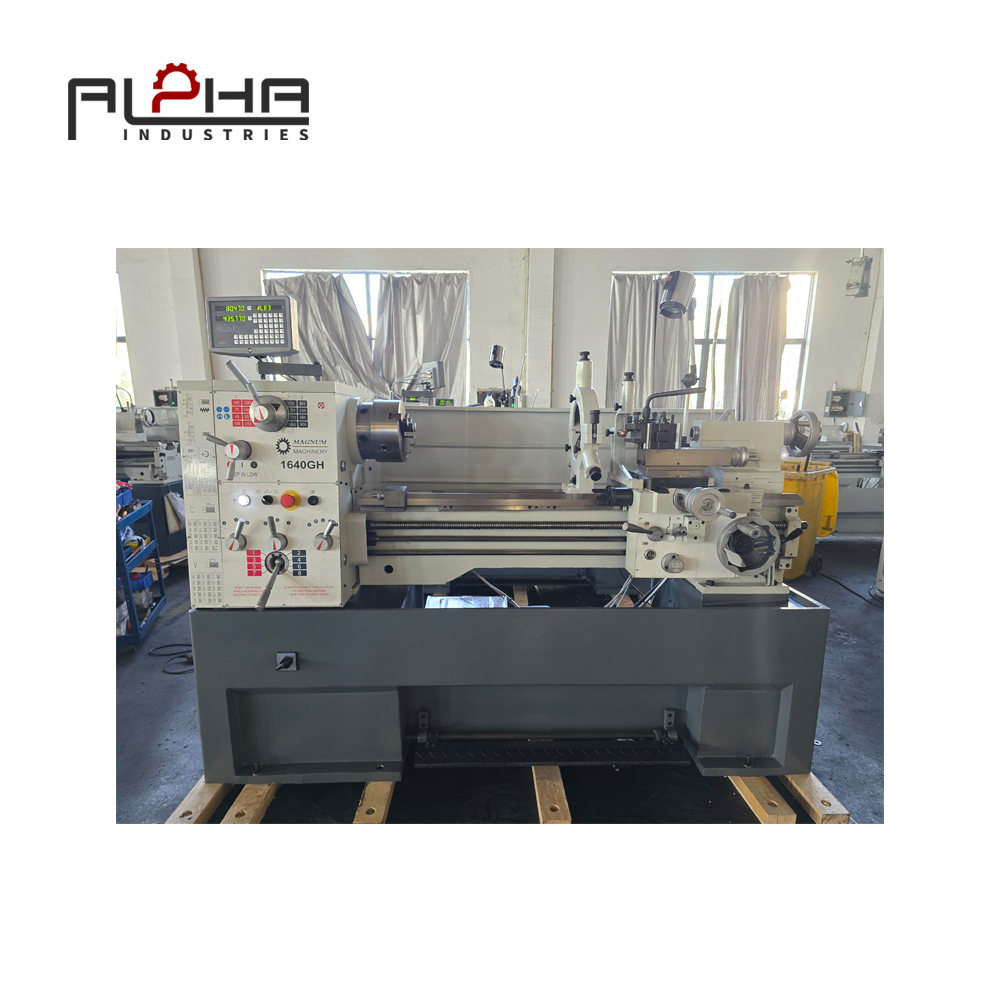
Heavy-duty cast iron beds
-
Optimized rib structures
-
Stress-relieved casting processes
This design minimizes deformation under cutting forces, allowing the cutting tool to maintain a stable position relative to the workpiece.
Benefits:
✔ Reduced vibration
✔ Improved roundness
✔ Stable diameter control
Precision Spindle System for Consistent Turning Results
The spindle is the heart of any lathe.
Alpha lathes are equipped with:
-
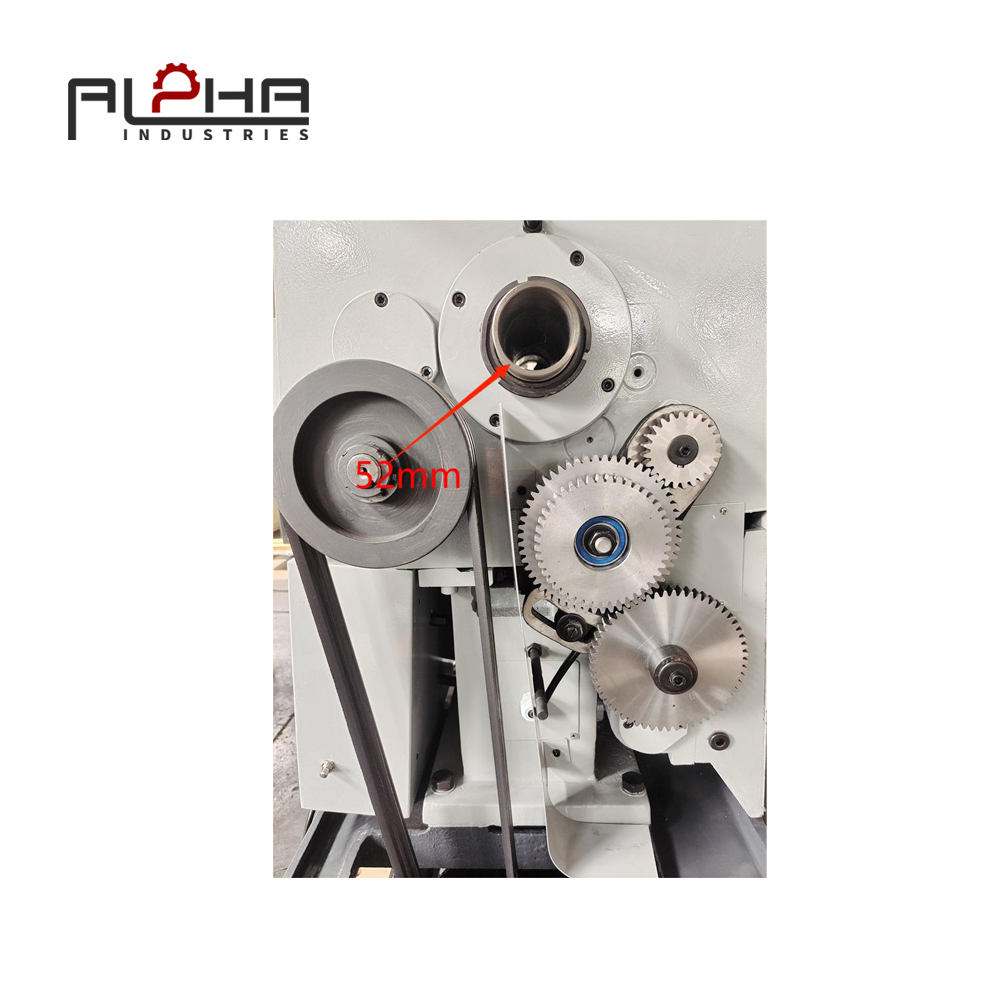
High-precision spindle bearings
-
Optimized preload configuration
-
Rigid spindle housing design
These features ensure smooth, concentric rotation, which is critical for achieving consistent diameters and fine surface finishes.
Stable Drive System and Speed Control
Fluctuating spindle speed negatively affects turning accuracy.
Alpha lathe machines feature:
-
Stable motor and transmission systems
-
Smooth torque output under load
-
Optional variable speed control
By maintaining constant spindle speed, the machine ensures uniform cutting conditions across the entire workpiece.
Tool Post and Carriage Precision
Accurate turning depends on precise tool positioning.
Alpha lathes are designed with:
-
High-rigidity tool posts
-
Precision-machined carriage components
-
Smooth longitudinal and cross feed movement
This allows the cutting tool to follow the programmed or manual path without deviation.
Feed System Accuracy and Dimensional Control
The feed system directly influences dimensional repeatability.
Alpha lathe feed systems provide:
-
Stable feed rate transmission
-
Minimal backlash
-
Smooth, vibration-free motion
This results in consistent material removal and precise dimensional control.
Vibration Control for Surface and Dimensional Stability
Vibration is a major enemy of precision turning.
Alpha lathe machines reduce vibration through:
-
Optimized mass distribution
-
Rigid machine geometry
-
Precision alignment of moving components
This improves both surface finish and dimensional accuracy.
Turning Accuracy Across Different Materials
Different materials respond differently to cutting forces.
Alpha lathe machines are suitable for:
-
Carbon steel
-
Alloy steel
-
Stainless steel
-
Cast iron
-
Non-ferrous metals
Stable machine performance ensures dimensional consistency across various material types.
Lathe Machines for Precision Turning Applications
Industries that rely heavily on turning accuracy include:
-
Shaft and axle manufacturing
-
Hydraulic component production
-
Automotive parts machining
-
Industrial equipment manufacturing
-
Heavy machinery components
The Alpha lathe machine is designed to meet these precision requirements.
Reduced Scrap and Rework Through Accurate Turning
Dimensional inconsistency leads to rework and waste.
By combining:
-
Rigid bed construction
-
Precision spindle systems
-
Stable feed mechanisms
Alpha lathe machines significantly reduce scrap rates and improve production efficiency.
FAQ:
What is a lathe machine used for?
A lathe machine is used for turning, facing, boring, threading, and shaping cylindrical metal components.
What affects turning accuracy in a lathe?
Turning accuracy is affected by spindle precision, machine rigidity, feed system stability, and vibration control.
Why is spindle precision important in a lathe?
The spindle determines rotational accuracy; poor spindle stability leads to diameter variation and surface defects.
Can a lathe maintain accuracy over long production cycles?
Yes. A rigid, well-designed lathe can maintain dimensional accuracy throughout continuous industrial operation.
Why Choose Alpha Lathe Machines for Precision Turning
Alpha focuses on accuracy-driven lathe engineering, not generic machine assembly.
With Alpha lathe machines, manufacturers gain:
-
Stable turning accuracy
-
Consistent dimensional control
-
Industrial-grade mechanical reliability
-
Lower operational error rates
Explore more machining solutions from Alpha:
-
👉 Lathe Machine Series
https://alpha-cnc.com/products/lathe -
👉 All Alpha Industrial Machines
https://alpha-cnc.com/products
Contact Alpha today to learn how our lathe machines can enhance your turning accuracy and dimensional consistency.