

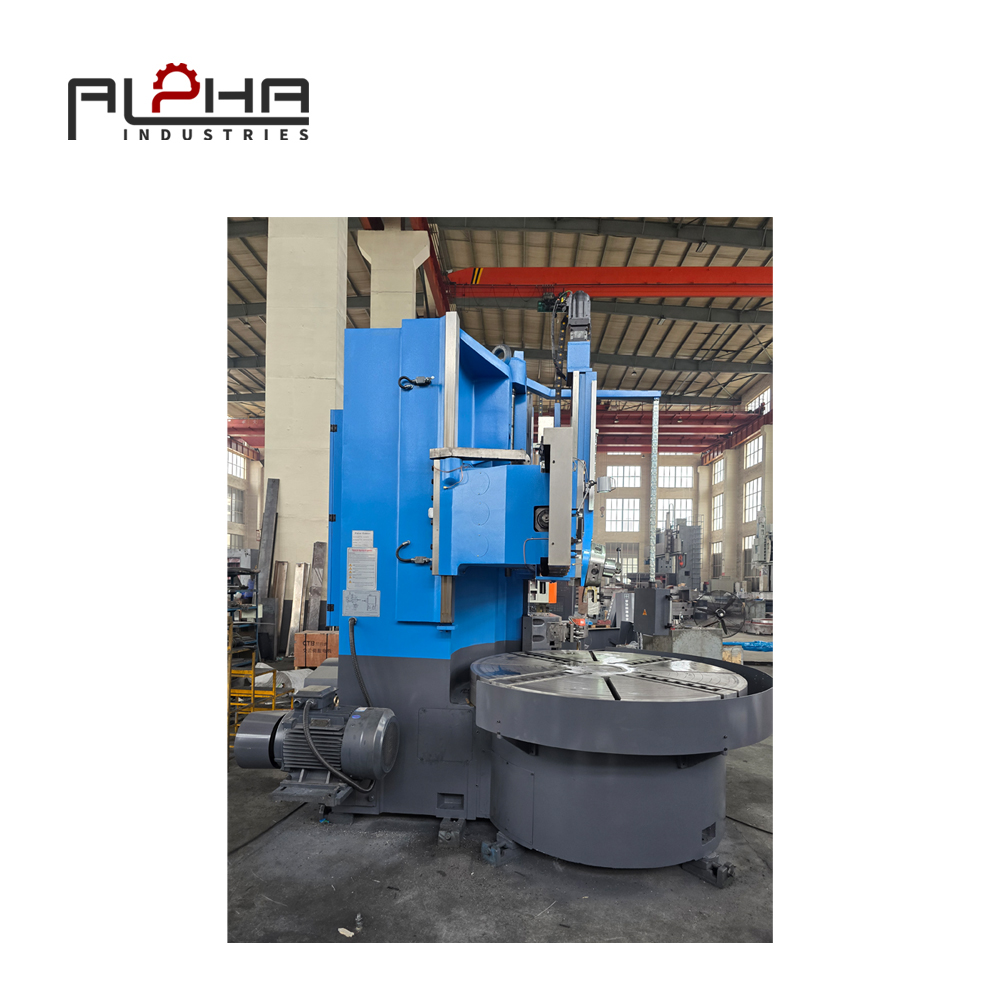
Single Column Vertical Lathe – Built for Powerful and Stable Heavy Turning
In modern heavy machinery manufacturing, many components are too large, too heavy, or too complex to be processed on traditional horizontal lathes. For these demanding applications, the single column vertical lathe has become one of the most important machine tools in the industry.
This type of vertical lathe machine is specifically designed for:
-
Large diameter workpieces
-
Heavy weight components
-
High torque cutting
-
Stable vertical clamping
-
Efficient turning operations
Among all its technical characteristics, one factor stands above the rest:
Heavy cutting capability supported by superior structural stability
This article focuses on this core topic and explains why the single column vertical lathe is the ideal solution for powerful and precise turning.
Why Heavy Cutting Matters in Vertical Turning
Heavy cutting refers to machining operations that require:
-
Large depth of cut
-
High feed rate
-
Strong cutting force
-
Long continuous processing time
Industries such as energy, mining, shipbuilding, and heavy equipment manufacturing often need to machine parts like:
-
Large flanges
-
Gear blanks
-
Turbine components
-
Pump housings
-
Slewing rings
These parts are usually:
-
Large in diameter
-
High in hardness
-
Heavy in weight
Only a properly designed single column vertical lathe can handle such demanding tasks with stability and precision.
Structural Advantages of Single Column Vertical Lathe
The ability to perform heavy cutting does not come only from motor power. It mainly depends on the structural design of the machine.
Vertical Layout – Natural Advantage for Large Workpieces
Unlike horizontal lathes, the single column vertical lathe adopts a vertical structure:
-
Workpiece is clamped on a horizontal table
-
Gravity helps stabilize the part
-
No need for complex long shaft support
-
Easier loading and unloading
This layout allows the machine to handle:
-
Larger diameters
-
Heavier weights
-
More stable cutting conditions
For heavy components, vertical turning is always more reliable than horizontal turning.
Rigid Single Column Structure
The “single column” design is a classic and highly practical configuration.
Key benefits include:
-
Compact machine footprint
-
High structural rigidity
-
Simple mechanical transmission
-
Excellent vibration resistance
The reinforced column and base casting provide a solid foundation to resist the massive forces generated during heavy cutting.
A well-designed single column vertical lathe can maintain stability even under extreme machining loads.
Powerful Worktable System
The worktable of a single column vertical lathe is the core component that directly carries the workpiece.
High-performance machines feature:
-
Large diameter rotary tables
-
High load capacity bearings
-
Strong table drive systems
-
Precision ground surfaces
This enables:
-
Smooth rotation
-
Accurate positioning
-
High torque output
-
Long service life
Without a robust worktable system, heavy cutting would be impossible.
Strong Tool Post and Feed Mechanism
During heavy turning, the tool post must withstand enormous cutting forces.
Professional single column vertical lathes are equipped with:
-
Heavy duty ram structures
-
Rigid cross rails
-
Stable feed transmission
-
Reliable locking mechanisms
These features ensure:
-
Consistent cutting depth
-
Reduced vibration
-
Better surface finish
-
Higher machining accuracy
Key Factors That Influence Heavy Cutting Performance
Even with a strong machine, several elements affect actual performance.
Cutting Parameters
To maximize the capability of a single column vertical lathe:
-
Cutting speed must match material
-
Feed rate should be optimized
-
Depth of cut should be selected reasonably
Proper parameter setting allows the machine to reach its full potential.
Tooling Selection
Heavy cutting requires:
-
Rigid tool holders
-
High-strength inserts
-
Correct tool geometry
Choosing the right tools greatly improves machining efficiency and stability.
Workpiece Clamping
Because parts are large and heavy, correct clamping is essential.
Vertical clamping offers:
-
Better balance
-
Less deformation
-
Higher safety
-
More reliable accuracy
Applications of Single Column Vertical Lathe
Thanks to its heavy cutting strength, this machine is widely used in:
-
Power generation equipment
-
Mining machinery
-
Wind energy components
-
Shipbuilding industry
-
Metallurgical equipment
-
Large valve and pump production
-
Engineering machinery
Wherever large and heavy parts need turning, the single column vertical lathe is the first choice.
Maintenance – Keeping Heavy Cutting Capability
To maintain stable heavy machining performance, regular maintenance is essential.
Recommended practices:
-
Lubricate guideways and gears
-
Inspect table bearings
-
Check tool post locking
-
Clean chips and coolant
-
Monitor vibration and noise
A well-maintained machine keeps its heavy cutting ability for many years.
How ALPHA Builds Reliable Single Column Vertical Lathes
At ALPHA, we focus on designing and manufacturing vertical lathes specifically for heavy industrial applications.
Our single column vertical lathes feature:
-
High-rigidity cast iron structure
-
Large load capacity worktables
-
Stable feed systems
-
Precision assembly
-
Strict quality inspection
These advantages provide customers with:
-
Powerful heavy cutting performance
-
High machining accuracy
-
Long-term stability
-
Lower maintenance cost
-
Excellent production efficiency
Frequently Asked Questions
Q1: What is a single column vertical lathe mainly used for?
A: It is used for turning large diameter and heavy workpieces such as flanges, gears, and mechanical components that are difficult to machine on horizontal lathes.
Q2: What is the main advantage of a single column vertical lathe?
A: Its vertical structure and rigid design allow stable heavy cutting with high load capacity and excellent machining accuracy.
Q3: How heavy a workpiece can a single column vertical lathe handle?
A: Depending on model design, it can handle workpieces from several tons to dozens of tons with large diameters.
Q4: Why is vertical turning more stable than horizontal turning for large parts?
A: Because the workpiece sits horizontally on the table and is supported by gravity, reducing deformation and vibration.
Q5: What industries need single column vertical lathes the most?
A: Energy, mining, shipbuilding, heavy machinery, and large equipment manufacturing industries rely heavily on this type of machine.
Conclusion
The single column vertical lathe is a powerful and indispensable machine tool for heavy industry. Its unique vertical layout and rigid structure make it perfectly suited for:
-
Large diameter turning
-
Heavy cutting operations
-
High load machining
-
Long and stable production cycles
When heavy components require precision and efficiency, no other machine can replace the role of a well-designed vertical lathe.
At ALPHA, we are committed to providing high-quality single column vertical lathes that deliver:
-
Outstanding rigidity
-
Reliable heavy cutting performance
-
Long service life
-
Excellent return on investment
If you are looking for a professional solution for large and heavy workpiece turning, our technical team is always ready to help.
For more information about our machines or to discuss your application requirements, please visit our website or contact us.
Learn more about ALPHA machines: https://alpha-cnc.com/
Get professional consultation: contact us