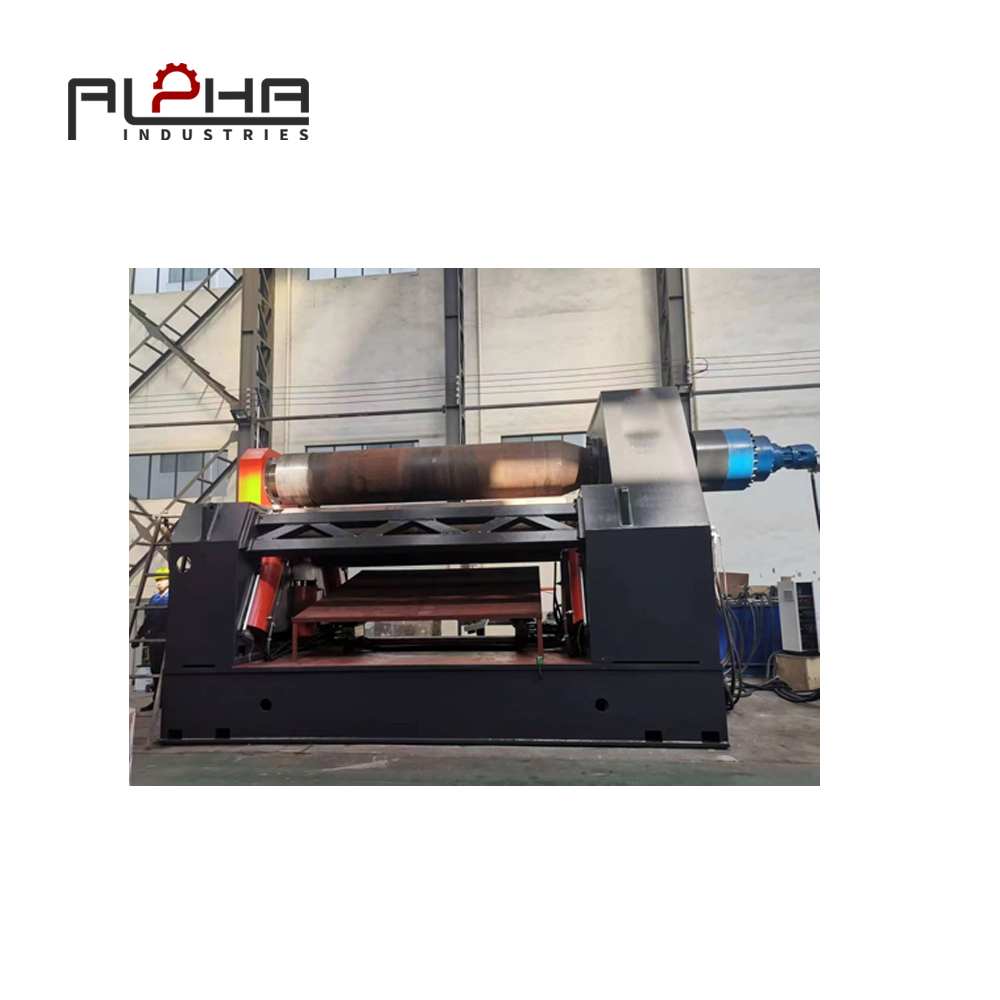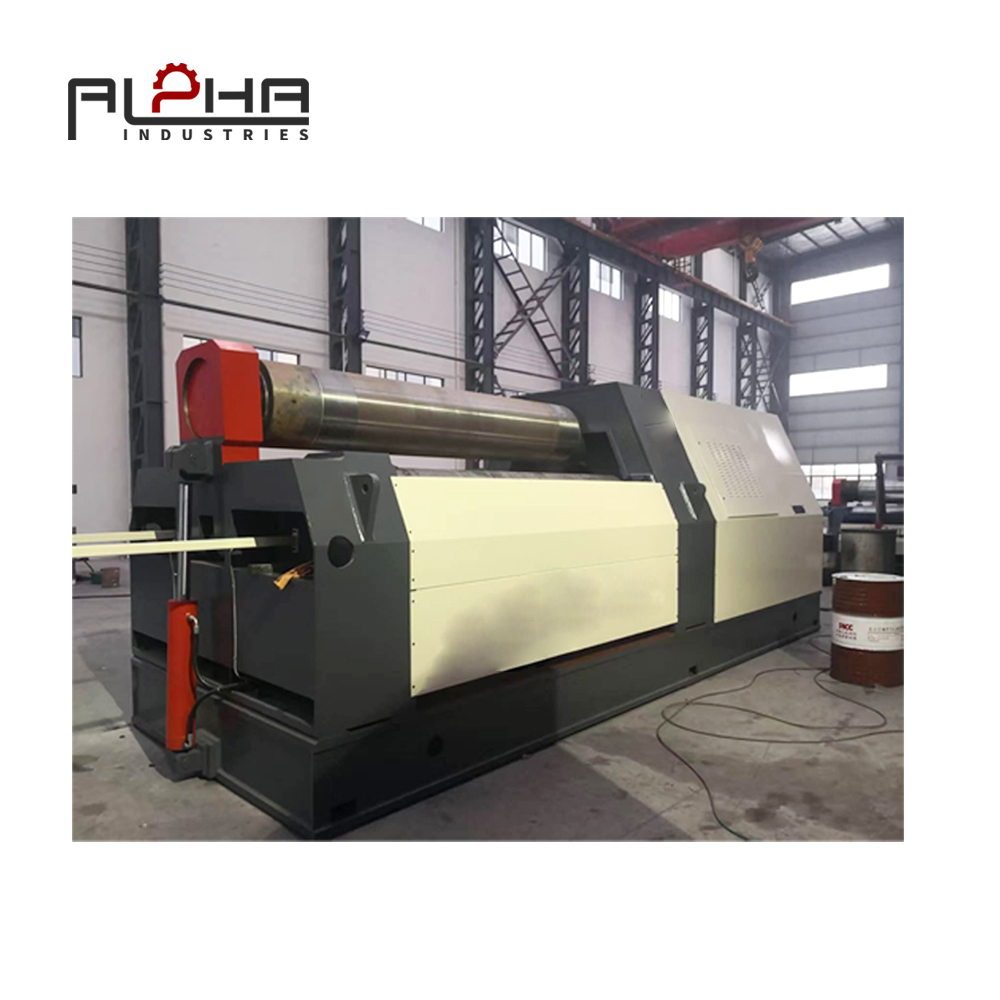


Surface Grinder – Precision Spindle System and Surface Finish Control
In precision metal fabrication, the Surface Grinder defines the final dimensional accuracy and surface quality of components. The smoothness and flatness achieved during grinding determine the performance of molds, dies, and precision mechanical parts.
At Alpha, we focus on one of the most critical aspects of surface grinding — the spindle system — which directly influences the surface finish, grinding accuracy, and overall machine stability. This article explores how spindle technology and vibration control work together to produce flawless, mirror-like finishes across a wide range of materials.
Core Mechanism – Precision Spindle System
The spindle is the heart of every surface grinder. It carries the grinding wheel and transmits the motor’s torque to the workpiece surface with extreme consistency.
Alpha’s hydrodynamic or precision angular-contact bearing spindle design ensures ultra-low runout, enabling micron-level grinding accuracy.
Key Features of Alpha’s Spindle System
-
Dynamic balance calibration minimizes radial vibration.
-
High-precision bearings (P4/P2 grade) maintain stable rotation under heavy loads.
-
Oil film damping in hydrodynamic spindles absorbs microvibrations for a finer finish.
-
Thermal stabilization through constant lubrication prevents thermal drift and ensures long-term accuracy.
With these design parameters, Alpha’s Surface Grinder achieves surface roughness values as fine as Ra 0.2 μm, suitable for tooling, die manufacturing, and precision gauge production.
Grinding Head Structure – Stability Under Motion
The grinding head structure directly affects vibration damping and material removal consistency. Alpha’s machine frame is cast from high-grade Meehanite iron and stress-relieved to eliminate residual stress.
Key Benefits
-
High rigidity minimizes deformation during high-pressure grinding.
-
Optimized center of gravity improves motion smoothness.
-
Shock-absorbing foundation blocks isolate external vibration sources.
The combination of mechanical rigidity and precision spindle alignment ensures a uniform contact surface between the wheel and the workpiece, reducing chatter marks and improving surface gloss.
Hydraulic Feed System – Smooth, Controlled Movement
The hydraulic feed system governs the table motion of the Surface Grinder. Alpha employs a precision hydraulic circuit with:
-
Constant-pressure control for smooth reciprocation.
-
Seamless directional shifting with zero impact.
-
Fine-tuned flow valves to stabilize table velocity.
This design not only enhances grinding consistency but also extends the life of both the spindle and wheel by avoiding sudden load changes.
Surface Finish Control and Material Compatibility
The surface finish is a combination of spindle rotation precision, grinding wheel composition, and feed control. Alpha’s system allows:
-
Variable speed grinding for different material hardness.
-
Automatic cross-feed control for consistent layer removal.
-
Cooling system integration to prevent thermal damage.
This ensures that each pass achieves the optimal material removal rate while maintaining dimensional integrity — critical for industries such as aerospace, automotive mold manufacturing, and tool calibration.
Advanced Control Interface
Alpha integrates an intelligent control panel that simplifies complex operations:
-
Touch-screen PLC interface with grinding sequence memory.
-
Digital position display for both downfeed and cross-feed axes.
-
Auto-lubrication and maintenance alert system to extend component life.
This design makes Alpha’s Surface Grinder not only precise but also user-friendly, adaptable to both skilled machinists and automated workshop environments.
Structural Design – Rigidity as the Foundation of Precision
Alpha’s Surface Grinder is engineered with a high-tensile cast iron base, ensuring excellent vibration resistance and mechanical stability.
Every component — from the column to the saddle — is precision-scraped for smooth movement and long-term geometric accuracy.
Mechanical Highlights
-
Double-V guideways for precise alignment.
-
Hand-scraped surfaces improving sliding sensitivity.
-
Integrated coolant drainage preventing contamination of moving parts.
The result is a grinding system that delivers flatness within 0.003 mm over large workpieces.
Application Fields
The Surface Grinder by Alpha serves critical roles in:
-
Mold and die finishing.
-
Precision tooling and jig fabrication.
-
Flat surface finishing of hardened steels and carbides.
-
Fine polishing of machine components for assembly accuracy.
Its high rigidity, fine control, and intelligent automation make it ideal for industrial grinding environments demanding superior surface integrity.
Advantages of Alpha Surface Grinder
-
High-precision spindle ensuring superior surface quality.
-
Stable hydraulic feed for smooth table motion.
-
Rigid Meehanite structure reducing vibration and wear.
-
Automatic lubrication and digital feedback systems.
-
Adaptable grinding parameters for different materials and surface roughness requirements.
FAQ – Surface Grinder
Q1: What is the function of a Surface Grinder?
A Surface Grinder removes material from the surface of a workpiece to achieve a smooth, flat, and precise finish.
Q2: What makes Alpha’s Surface Grinder different?
Alpha integrates precision spindle technology, advanced hydraulic control, and vibration-damping construction for exceptional surface accuracy.
Q3: What materials can be ground using a Surface Grinder?
It can process hardened steel, stainless steel, cast iron, carbide, and non-ferrous metals.
Q4: How does spindle precision affect surface finish?
The smoother and more stable the spindle rotation, the finer the achievable surface roughness, reducing grinding marks and improving flatness.
Q5: Is the Alpha Surface Grinder suitable for automation?
Yes. With its PLC and CNC control options, it supports automated cycles for batch production and repeatable accuracy.