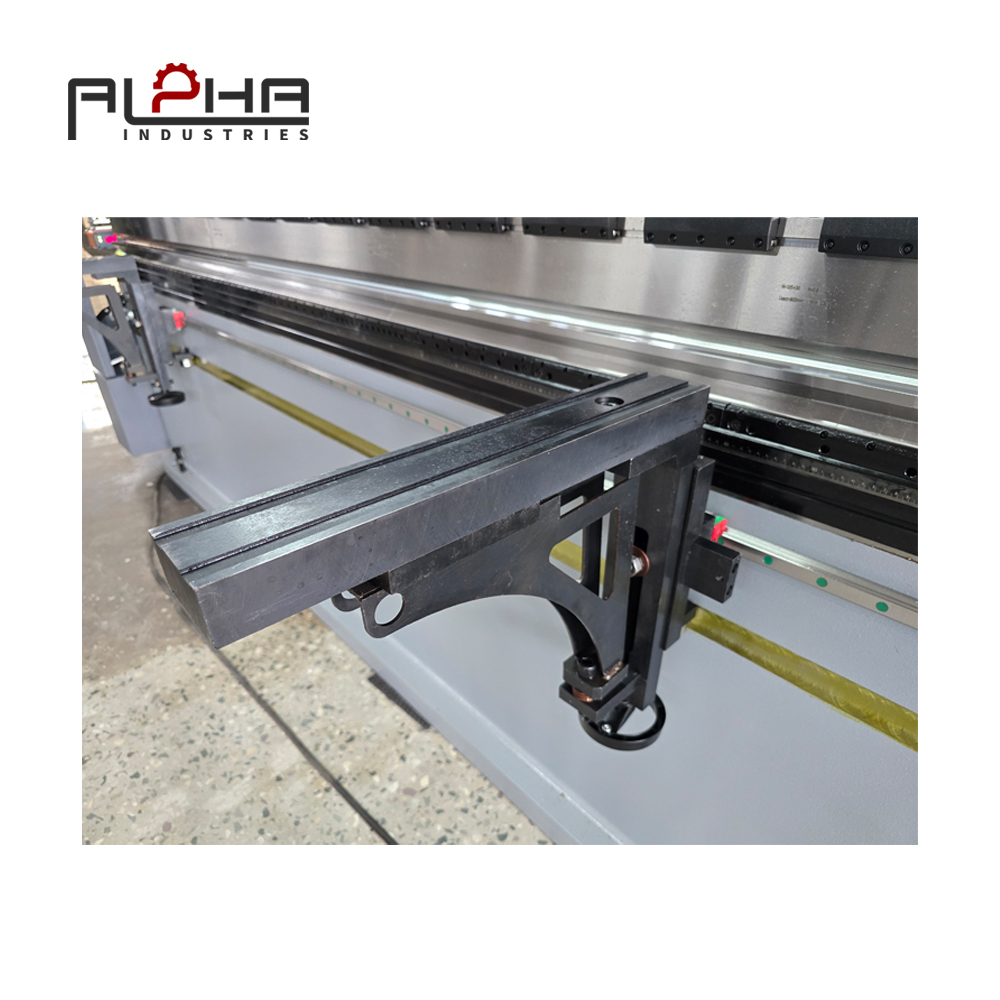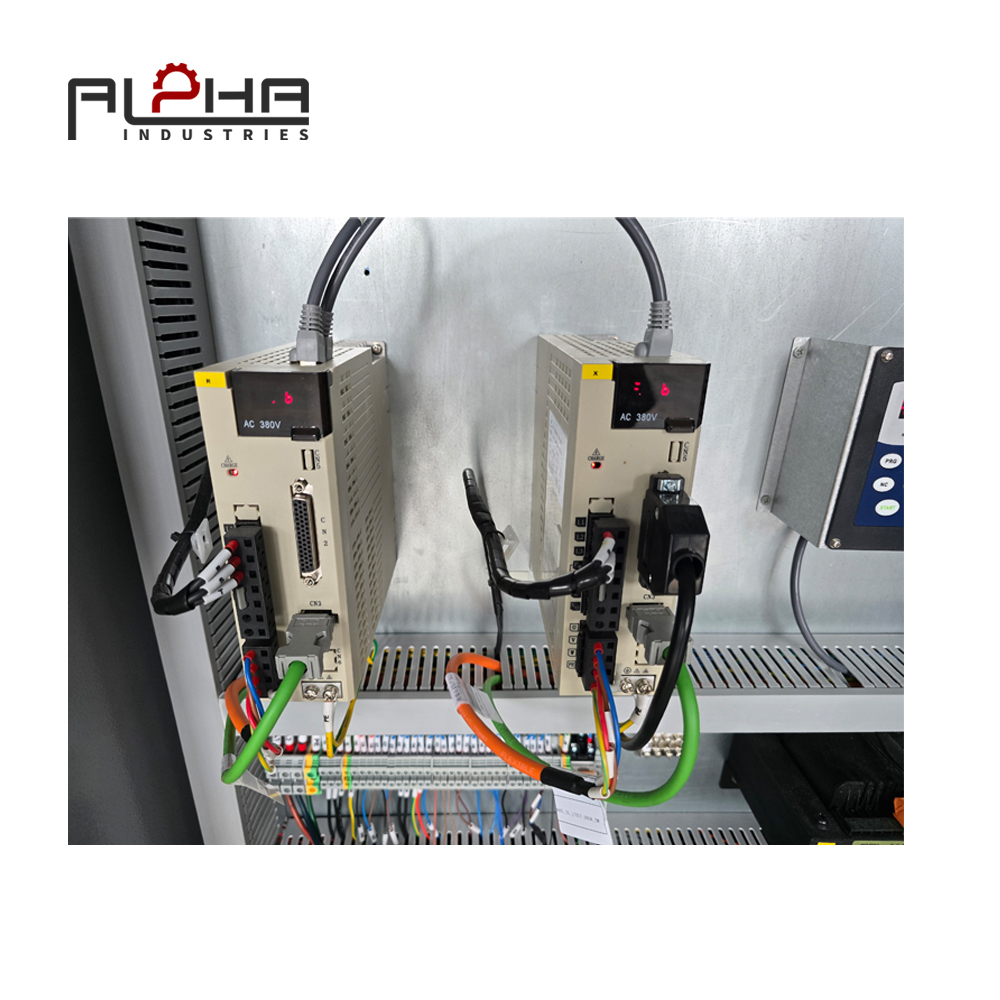


In sheet metal fabrication, bending accuracy is not only determined by hydraulic force or backgauge positioning. One of the most critical yet often underestimated factors affecting bending angle consistency is deflection compensation, commonly known as the press brake crowning system.
During bending, the ram and worktable of a hydraulic press brake naturally deform under load. This deflection causes uneven pressure distribution along the bending length, resulting in inconsistent bending angles between the center and the edges of the workpiece.
At Alpha, we engineer advanced press brake crowning systems to eliminate structural deflection error, ensuring uniform bending angles across the entire length of the sheet. This article focuses on the mechanical principles, structural design, control logic, and industrial advantages of crowning technology in modern press brake machines.
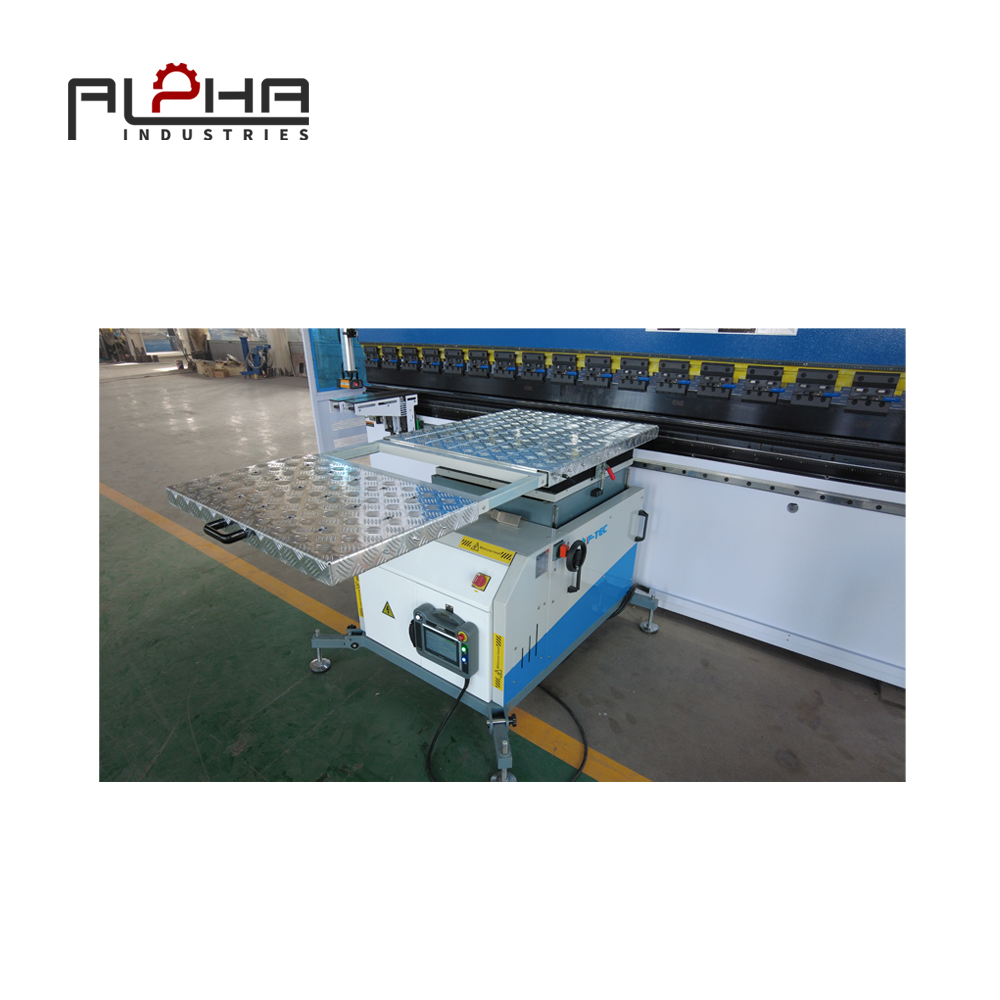
Why Deflection Occurs in a Press Brake
Even in a heavy-duty hydraulic press brake with a rigid steel frame, deflection is unavoidable due to:
-
High tonnage load concentration at the center
-
Material thickness variation
-
Tooling stress distribution
-
Long bending length operations
When bending long sheets such as 3000 mm or 4000 mm plates, the ram typically deflects downward at the center. Without compensation, this results in:
-
Smaller bending angle at the center
-
Larger bending angle near the edges
-
Dimensional inconsistency
-
Increased scrap rate
In precision industries, even a deviation of 0.5° can lead to assembly problems. Therefore, a high precision press brake must incorporate an advanced crowning mechanism.
What Is a Press Brake Crowning System
A press brake crowning system is a compensation mechanism that offsets machine deflection during bending. It intentionally creates a controlled upward curve in the lower table or adjusts hydraulic pressure distribution to counteract structural deformation.
There are two primary types of crowning systems used in modern sheet metal bending machines:
Mechanical crowning system
Hydraulic crowning system
Alpha integrates automatic CNC-controlled crowning tables to ensure real-time deflection compensation during operation.
Mechanical Crowning System in Industrial Press Brake Machines
A mechanical crowning system uses wedge blocks installed under the lower table. These wedges are adjusted through precision screws or servo motors.
Key features include:
-
Uniform compensation along the bending length
-
Stable mechanical structure
-
Low maintenance requirements
-
High repeatability
Alpha mechanical crowning tables are precisely machined to maintain micron-level adjustment resolution. The system synchronizes with bending programs to automatically adjust compensation values based on material thickness and bending length.
Hydraulic Crowning System for Advanced Compensation
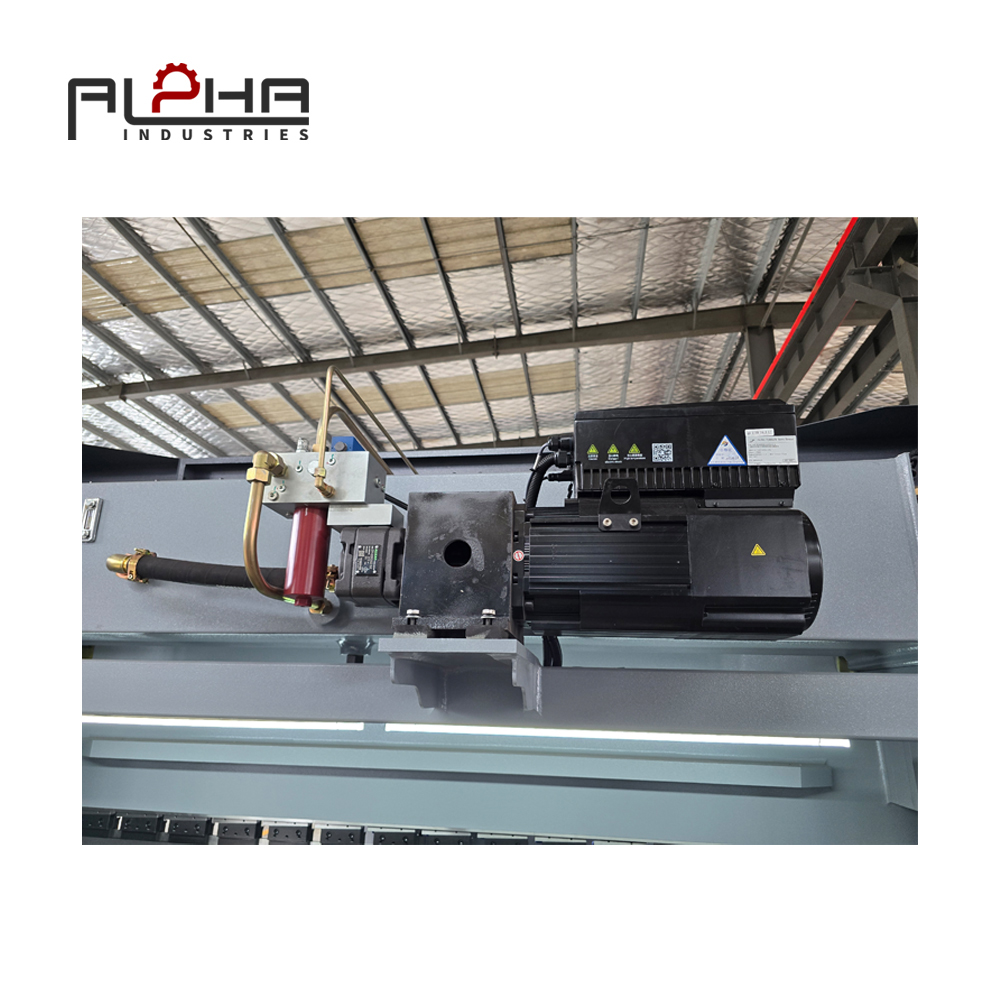
In high-tonnage hydraulic press brake applications, hydraulic crowning provides dynamic compensation by adjusting pressure across multiple hydraulic cylinders positioned along the bed.
Advantages include:
-
Real-time adaptive compensation
-
Suitable for ultra-long bending lengths
-
High automation compatibility
-
Improved angle uniformity
This system is ideal for industrial press brake machines used in heavy fabrication, shipbuilding, and structural steel processing.
Integration with CNC Control System
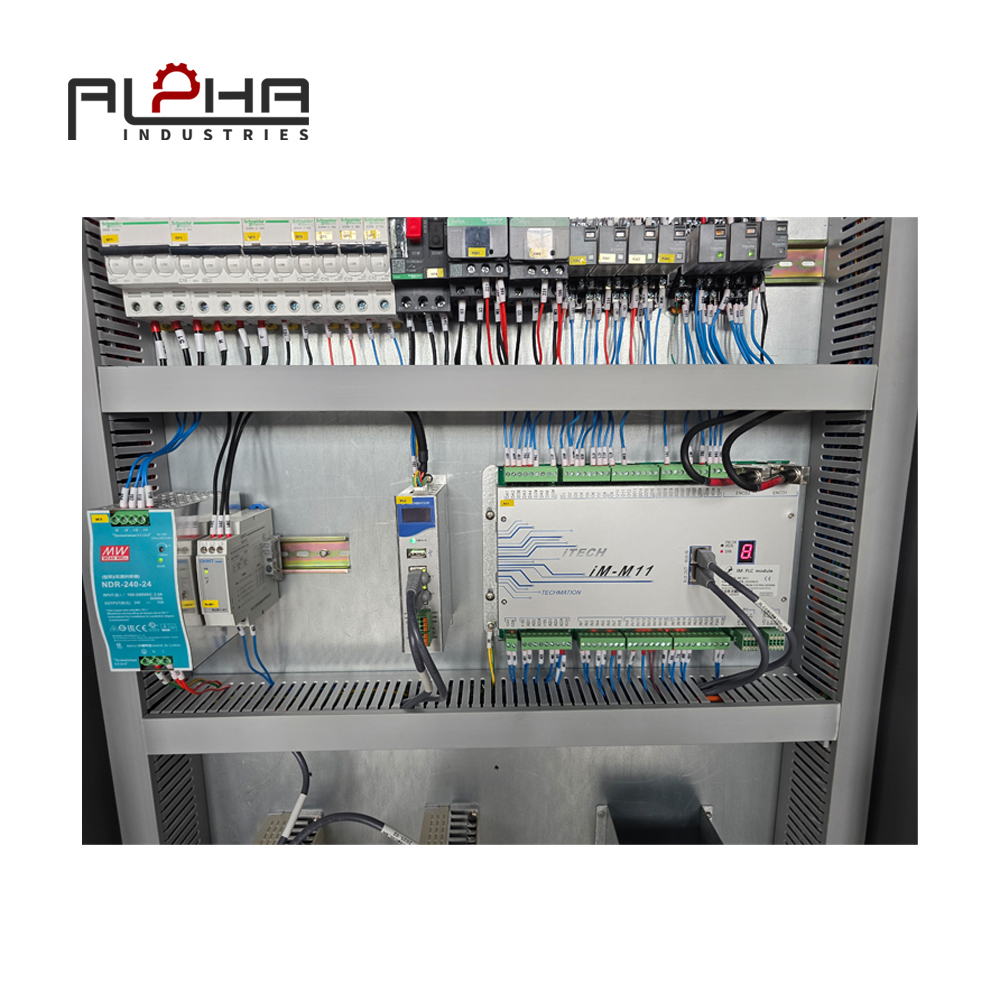
Modern press brake machines require intelligent integration between the crowning system and CNC controller.
Alpha press brake solutions feature:
-
Automatic deflection calculation
-
Material database integration
-
Thickness-based compensation programming
-
Tooling library synchronization
-
Real-time adjustment during bending cycle
When the operator inputs plate thickness, length, and V-die parameters, the system automatically calculates required crowning compensation.
This reduces manual calibration and significantly improves production efficiency.
Impact on Bending Angle Consistency
The primary objective of a press brake crowning system is angle consistency.
Without crowning:
-
Angle deviation increases with plate length
-
Operators must manually adjust depth multiple times
-
Production becomes inconsistent
With automatic crowning:
-
Uniform bending angle across entire sheet
-
Reduced first-piece trial adjustment
-
Lower material waste
-
Higher batch repeatability
Factories upgrading to automatic crowning press brake systems typically experience noticeable improvements in quality control and production stability.
Structural Design and Manufacturing Precision
At Alpha, our press brake frames undergo stress-relief heat treatment and precision machining to ensure structural stability before crowning integration.
Crowning tables are:
-
CNC machined for parallel accuracy
-
Tested under simulated full-load conditions
-
Calibrated for long-term stability
This ensures the compensation system functions accurately over years of continuous industrial use.
Application Scenarios for Crowning Technology
Press brake crowning systems are essential in industries such as:
-
Electrical cabinet manufacturing
-
Elevator panel production
-
Automotive frame components
-
Stainless steel architectural fabrication
-
Heavy-duty steel enclosure manufacturing
These industries demand strict bending angle tolerance and high repeatability.
Energy Efficiency and Cost Optimization
A properly calibrated crowning system reduces:
-
Rework time
-
Scrap material
-
Tool wear
-
Operator adjustment cycles
Over time, this improves overall equipment efficiency and reduces operational costs.
For companies seeking higher production precision with controlled investment, upgrading to an Alpha high precision press brake with automatic crowning delivers measurable ROI.
FAQ
1. What is the purpose of a press brake crowning system?
The purpose of a press brake crowning system is to compensate for machine deflection during bending, ensuring uniform bending angles across the entire sheet length.
2. What happens if a press brake does not have crowning?
Without crowning, long sheets may have inconsistent bending angles, with smaller angles at the center and larger angles at the edges.
3. Is hydraulic crowning better than mechanical crowning?
Hydraulic crowning offers real-time adaptive compensation and is suitable for high-tonnage or long-bed machines, while mechanical crowning provides stable and cost-effective compensation for standard applications.
4. How does crowning improve bending accuracy?
Crowning offsets structural deformation, maintaining consistent pressure distribution along the bending line and ensuring precise angle control.
5. Does crowning increase press brake productivity?
Yes. Automatic crowning reduces manual adjustments, shortens setup time, and improves batch production consistency.
Conclusion – Why Crowning Defines True Press Brake Precision
A press brake is not truly high precision without an effective crowning system.
Force generates bending.
Structure provides stability.
But crowning ensures angle consistency.
At Alpha, we engineer advanced automatic crowning press brake systems that deliver:
-
Superior bending accuracy
-
Long-term structural reliability
-
Intelligent CNC integration
-
Industrial-grade durability
If you are upgrading your sheet metal bending capacity or seeking higher dimensional consistency, Alpha’s engineering team is ready to support your production goals.
Contact Us:
https://www.alpha-cnc.com/contact-us
Alpha – Precision Bending Technology for Modern Manufacturing.