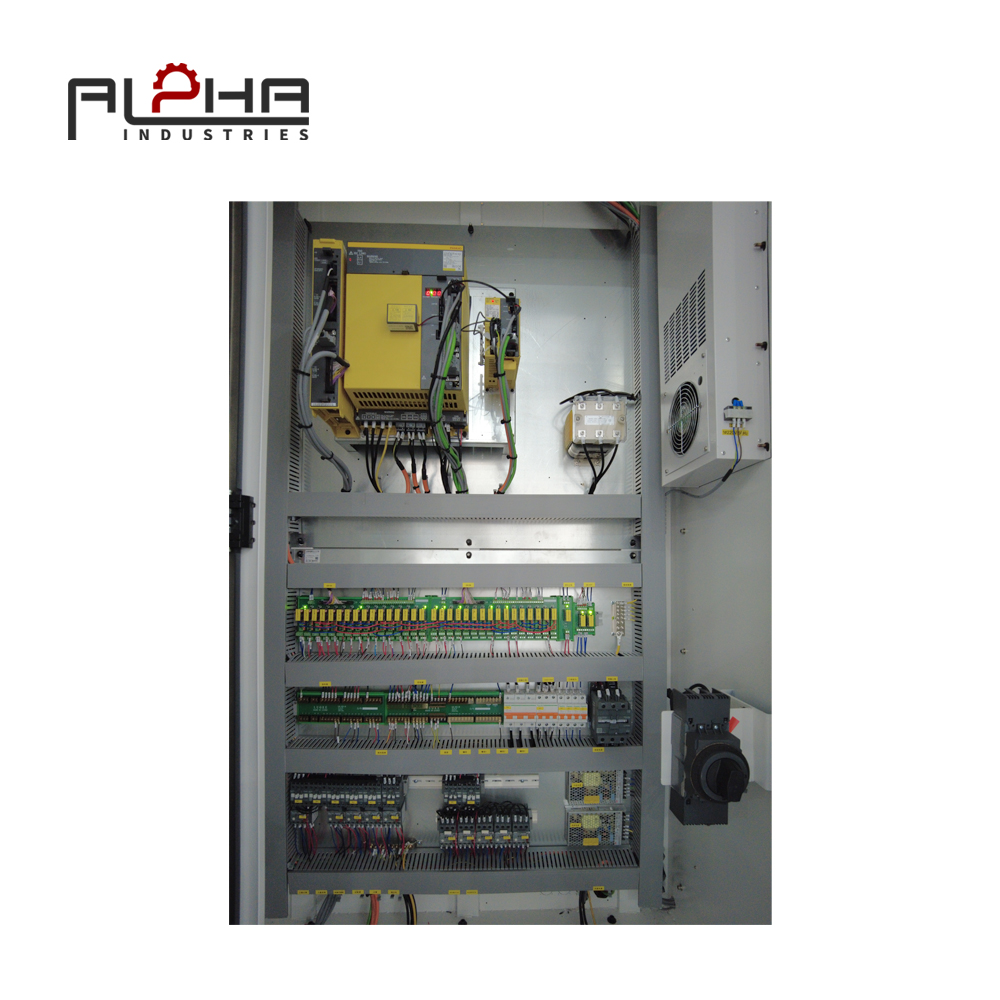


Press Brake Springback Control: Improving Bending Accuracy for Sheet Metal Manufacturers in the Americas
For many sheet metal manufacturers, bending a metal sheet to a specified angle sounds straightforward.
In actual production, however, achieving the same angle repeatedly can be considerably more complicated.
A drawing may specify a precise 90-degree bend, but the finished component may show a slightly different angle after the material is released from the press brake. Even small variations can affect assembly, fit, appearance, and downstream production.
This phenomenon is commonly associated with springback.
For manufacturers across the Americas, controlling springback is increasingly important as customers demand tighter dimensional consistency, shorter delivery times, customized components, and lower production costs.
Instead of focusing only on press brake tonnage or bending speed, manufacturers should also consider:
How consistently can the press brake produce the required bending angle when material and production conditions change?
This is particularly important for automotive components, electrical enclosures, HVAC parts, construction equipment, agricultural machinery, industrial cabinets, transportation components, and general fabricated metal products.
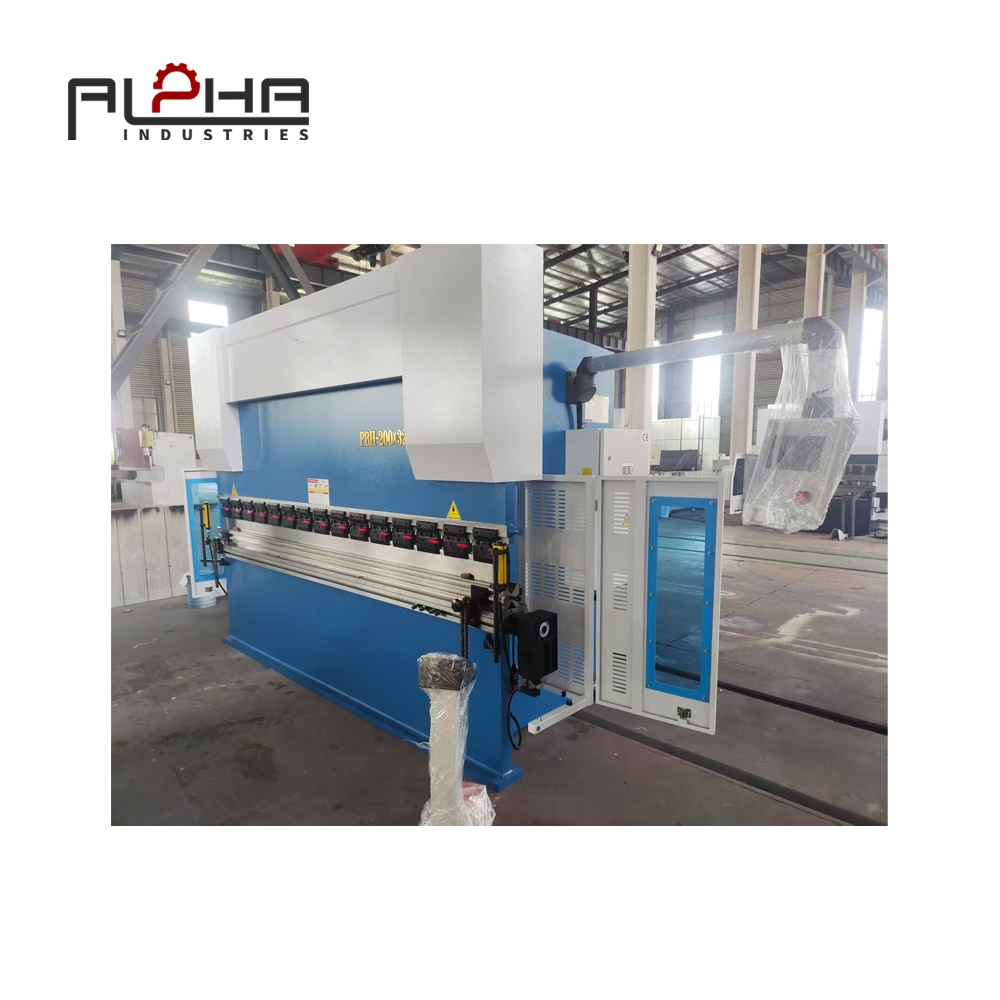
Why Springback Is a Major Press Brake Challenge
When sheet metal is bent, the material undergoes both plastic and elastic deformation.
Plastic deformation creates the permanent bend, while elastic deformation attempts to return the material toward its original shape after the bending force is released.
This recovery is known as springback.
The amount of springback is influenced by:
-
Material type
-
Material strength
-
Sheet thickness
-
Grain direction
-
Bend radius
-
Die opening
-
Punch geometry
-
Bending method
-
Bending angle
-
Tool condition
-
Material batch variation
This means that two sheets with the same nominal thickness may not always behave identically during bending.
For high-volume production, even small variations can become a quality-control issue. For high-mix fabrication shops, the challenge can be greater because operators may process different materials and thicknesses throughout the same shift.
Why Material Variation Matters in the Americas
Sheet metal manufacturers may purchase materials from different suppliers depending on availability, project requirements, pricing, and delivery schedules.
Even when material meets its specified standard, differences in mechanical properties can influence bending behavior.
For example, two materials with similar nominal thicknesses can have different yield strengths. Higher-strength materials may exhibit different springback characteristics compared with lower-strength materials.
This creates a practical production problem:
The same press brake program may not always produce exactly the same result under every material condition.
A reliable sheet metal bending process therefore needs to account for actual production conditions rather than relying exclusively on theoretical calculations.
How Springback Affects Press Brake Production
Springback can create several downstream problems:
Dimensional Variation
The finished flange may not reach the required dimension because the actual bending angle differs from the programmed value.
Assembly Problems
An incorrect angle may prevent components from aligning properly during assembly.
Increased Rework
Operators may need to rebend or manually correct parts that fall outside the required tolerance.
Material Waste
If an incorrect bend cannot be corrected, the workpiece may need to be scrapped.
Longer Production Time
Repeated measurements and parameter adjustments increase production time.
Inconsistent Quality
Different correction methods between operators or shifts can lead to inconsistent parts.
How a CNC Press Brake Helps Improve Bending Consistency
A modern CNC press brake can provide a more structured approach to springback management.
Depending on the machine configuration, CNC systems can control:
-
Bending sequence
-
Backgauge position
-
Ram position
-
Bending angle
-
Multi-step bending operations
-
Production programs
-
Tool configuration
-
Compensation parameters
The key advantage is repeatability.
Once a suitable bending process has been established, parameters can be stored and reused for future production.
However, CNC control does not automatically eliminate springback. The machine still requires appropriate process parameters, tooling, material information, and operator verification.
The objective is to create a controlled process in which springback can be identified, compensated for, and reproduced consistently.
The Role of Press Brake Tooling
Tooling directly affects bending performance.
Punch geometry, die opening, bend radius, and tooling condition can influence the final result.
Manufacturers should consider the relationship between:
Material → Thickness → Bend Radius → Die Opening → Punch → Required Angle
Changing the die opening can affect the bending process and the force required to produce the desired result.
Tooling should therefore be treated as part of the complete bending process rather than simply as a machine accessory.
For high-volume production, consistent tooling condition is especially important. Worn or damaged tooling can introduce additional variation and make established bending parameters less reliable.
Why Backgauge Accuracy Matters
Springback primarily affects the angle, but dimensional accuracy also depends heavily on accurate workpiece positioning.
The press brake backgauge determines where the sheet is positioned before the bend is formed.
If positioning varies from one cycle to another, flange dimensions can vary even when the bending angle remains consistent.
A CNC-controlled backgauge can provide repeatable positioning for multi-step bending operations, which is particularly valuable for:
-
Multiple bends
-
Short flanges
-
Different flange lengths
-
Complex geometries
-
Repeated production
-
Tight dimensional tolerances
Bending accuracy is therefore not controlled by one component alone. Machine structure, CNC system, tooling, backgauge, material, and operator workflow all contribute to the final result.
Air Bending and Springback Considerations
Air bending is widely used because it offers flexibility across different sheet thicknesses and bending applications.
However, the final bending angle can be influenced by material characteristics and the relationship between the punch, die, and workpiece.
Springback needs to be considered when establishing bending parameters.
In practical production, operators may need to use an appropriate compensation strategy so that the material reaches the desired final angle after the bending force is released.
This is one reason why a reliable CNC bending machine should not be evaluated solely according to its maximum force.
The quality of the complete bending process is more important than one specification.
Building a Standardized Press Brake Bending Process
A standardized process can help manufacturers reduce variation between operators and production shifts.
A practical workflow may include:
Material Verification → Tool Selection → Program Selection → First-Part Bending → Measurement → Parameter Verification → Production
The first part should be checked before full production begins.
Key measurements may include:
-
Bend angle
-
Flange length
-
Overall dimensions
-
Hole-to-edge relationship
-
Part squareness
-
Critical assembly dimensions
Once the process has been verified, production parameters can be retained for repeat orders.
This allows manufacturers to build a valuable production database and reproduce previously verified processes more consistently.
Why First-Part Inspection Is Important
First-part inspection can prevent an entire batch from being produced with incorrect bending parameters.
For an order requiring several hundred components, discovering an incorrect bending angle after production has started can result in:
-
Material waste
-
Rework
-
Additional inspection
-
Production delays
-
Delivery delays
A structured first-part inspection can identify problems earlier, especially when working with new materials, tooling, unfamiliar geometries, or revised customer drawings.
Press Brake Productivity Is More Than Bending Speed
Manufacturers often compare press brakes by:
-
Tonnage
-
Bending length
-
Stroke
-
Speed
-
Motor power
-
CNC configuration
These specifications are important, but production efficiency should also consider quality stability.
A machine that produces parts consistently can reduce hidden costs associated with:
-
Rework
-
Scrap
-
Repeated measurement
-
Manual corrections
-
Production interruptions
-
Customer returns
Therefore, press brake productivity should be considered across the entire production cycle.
Fast bending + unstable quality does not necessarily create efficient production.
Supporting Skilled Operators Instead of Replacing Them
Skilled press brake operators remain important in modern fabrication.
Experienced operators understand how material, tooling, machine settings, and part geometry interact.
However, a modern CNC press brake can help convert some of that experience into standardized production procedures.
Operators can work with:
-
Stored CNC programs
-
Standard tooling configurations
-
Documented setup procedures
-
First-part inspection
-
Repeatable backgauge positions
-
Defined quality checkpoints
This can make production knowledge easier to transfer between qualified operators and help manufacturers manage workforce challenges.
ALPHA has also examined how automation and CNC technology can support manufacturers dealing with skilled labor shortages in the Americas.
Safety Must Remain Part of Press Brake Planning
Productivity and accuracy should always be considered alongside safe operation.
Press brakes involve substantial mechanical forces, and the point of operation can present serious hazards.
For manufacturers in the Americas, machine selection should consider applicable workplace safety requirements, machine configuration, safeguarding, operator training, and maintenance procedures.
How Manufacturers Can Improve Press Brake Accuracy
A practical improvement strategy can focus on five areas:
1. Control Material Variables
Record material type, thickness, grade, and supplier information where appropriate.
2. Standardize Tooling
Use consistent punch and die combinations for established applications.
3. Use CNC Positioning
Take advantage of programmable backgauge positioning and stored bending programs.
4. Verify the First Part
Measure critical dimensions before beginning full production.
5. Record Successful Parameters
Store verified bending parameters so repeat jobs can be reproduced more consistently.
These steps can help turn press brake operation into a more controlled manufacturing workflow.
What Should Manufacturers Look for in a Press Brake?
For manufacturers in the Americas, press brake selection should begin with actual production requirements.
Important questions include:
What materials will be bent?
Steel, stainless steel, aluminum, and other materials can behave differently during bending.
What is the typical material thickness?
The machine should have sufficient capacity for the actual production range.
What are the most common part dimensions?
Bending length and throat depth should correspond to the workpieces being produced.
How many bends does each part require?
Complex components may benefit from more advanced CNC and backgauge configurations.
How frequently do materials and jobs change?
High-mix production may place greater emphasis on programming, tooling flexibility, and setup efficiency.
What level of dimensional consistency is required?
Applications with tight tolerances may require greater attention to machine accuracy, tooling, measurement, and process control.
How ALPHA Supports Press Brake Applications
At ALPHA, a press brake is considered part of the customer's broader sheet metal manufacturing process.
The right configuration depends on the application rather than a single machine specification.
For manufacturers across the Americas, ALPHA can evaluate:
-
Sheet material
-
Material thickness
-
Maximum bending length
-
Required bending force
-
Part geometry
-
Production volume
-
Bending sequence
-
CNC requirements
-
Backgauge configuration
-
Tooling requirements
-
Production consistency
-
Automation potential
This application-focused approach allows manufacturers to consider both current production needs and future expansion.
Whether the application involves customized fabrication, industrial enclosures, HVAC components, construction machinery, agricultural equipment, or general sheet metal production, the objective is to create a bending process that is accurate, repeatable, and practical for daily manufacturing.
Frequently Asked Questions
What is springback in press brake bending?
Springback is the tendency of sheet metal to partially return toward its original shape after the bending force is removed.
How can a press brake reduce springback problems?
Appropriate tooling, accurate CNC positioning, suitable bending parameters, compensation strategies, and first-part inspection can help control springback.
Does a CNC press brake eliminate springback?
No. CNC control does not eliminate the physical properties of the material, but it can help establish and repeat controlled bending parameters.
Why does the same press brake program sometimes produce different results?
Material properties, thickness variation, tooling condition, grain direction, and other production variables can influence bending behavior.
How does tooling affect bending accuracy?
Punch and die geometry influence the bending process, including bend radius, force requirements, and final geometry.
Why is first-part inspection important?
It can identify incorrect bending parameters before an entire production batch is manufactured, helping reduce scrap, rework, and delays.
Is a CNC press brake suitable for high-mix production?
Yes. CNC programming and stored production parameters can be useful for manufacturers producing different components and frequently changing part designs.
What is more important: press brake speed or accuracy?
Both matter. Actual production efficiency depends on bending speed, positioning, setup, repeatability, inspection, scrap, and rework.
Conclusion
For sheet metal manufacturers in the Americas, press brake accuracy is not determined by machine tonnage alone.
Springback, material variation, tooling selection, backgauge positioning, CNC control, and process standardization can all influence the final quality of a bent component.
By treating springback control as a complete production-process issue, manufacturers can establish a more repeatable bending workflow.
A well-configured press brake machine can help reduce dimensional variation, improve repeatability, limit unnecessary rework, and maintain stable production quality.
At ALPHA, the goal is to help manufacturers match press brake technology to their actual material, production volume, part geometry, accuracy requirements, and future manufacturing plans.
If you are evaluating a press brake for sheet metal production in the Americas, contact ALPHA to discuss your application and bending requirements.
Contact ALPHA:
Contact Us – ALPHA CNC