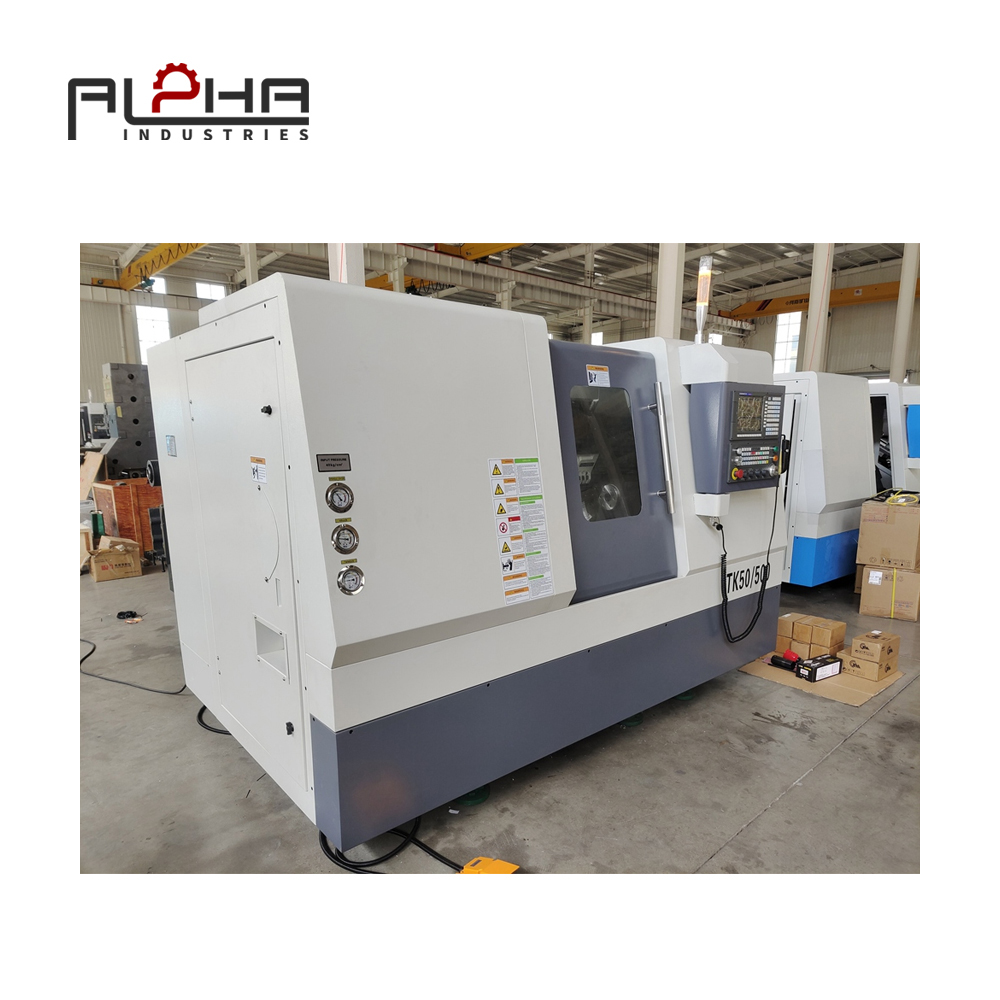


Horizontal Machining Centers: Shorter Cycle Times, Higher Manufacturing Profitability
Across Europe and North America, manufacturers face a common challenge: production demand is growing faster than available factory capacity.
Customers expect shorter lead times, customized products, and consistent quality. At the same time, manufacturers must manage rising labor costs, higher material prices, increasing energy expenses, and shortages of skilled CNC machinists.
Many companies respond by purchasing additional machine tools or hiring more operators. However, both options require significant investment and may not immediately improve profitability.
A more effective strategy is to optimize a production metric that directly affects manufacturing efficiency and return on investment:
Cycle time.
Every second removed from a machining cycle can increase production capacity without requiring additional factory space or labor.
Modern Horizontal Machining Centers (HMCs) are designed to reduce non-productive time, improve machining efficiency, and maximize spindle utilization. For manufacturers seeking higher output and stronger profitability, an HMC can provide an effective long-term production solution.
Why Cycle Time Matters in Modern Manufacturing
Cycle time is the total time required to complete one finished component. It includes more than cutting time and may involve:
-
Workpiece loading and unloading
-
Machine positioning
-
Workpiece alignment
-
Fixture changes
-
Tool changes
-
Pallet exchange
-
Machining operations
-
Inspection between processes
-
Auxiliary machine movements
-
Operator waiting time
Cutting speed is important, but it is only one part of the total production cycle.
In many manufacturing environments, productive cutting may account for less than half of the complete cycle. The remaining time may be consumed by setup activities, manual handling, tool changes, machine movement, and production interruptions.
For manufacturers producing hundreds or thousands of components each month, these non-cutting activities can significantly limit production capacity.
Reducing cycle time enables manufacturers to produce more parts using the same equipment, increasing output while improving the return on existing manufacturing assets.
Production Challenges in Europe and North America
Skilled Labor Shortages
Many manufacturers face difficulty recruiting and retaining experienced machinists.
Production systems that require frequent manual loading, positioning, adjustment, and inspection increase dependence on skilled operators.
Horizontal Machining Centers reduce manual intervention through:
-
Automatic pallet exchange
-
Automatic tool changing
-
Multi-face machining
-
Programmable production processes
These capabilities help manufacturers increase output while making more efficient use of existing personnel.
Rising Production Costs
Labor expenses, electricity costs, raw-material prices, and operating expenses continue to place pressure on manufacturing profitability.
Shorter machining cycles reduce the operating time required to produce each component. This can help lower:
-
Labor costs per part
-
Machine operating costs
-
Energy consumption per component
-
Production overhead
-
Costs associated with production delays
Higher productivity can also improve the utilization of existing manufacturing resources.
Shorter Customer Lead Times
OEM customers increasingly expect faster delivery without sacrificing product quality or dimensional accuracy.
Manufacturers with shorter production cycles gain greater scheduling flexibility and can respond more effectively to changing order requirements.
Improved cycle efficiency supports:
-
Faster order completion
-
More reliable delivery schedules
-
Shorter manufacturing lead times
-
Improved production planning
-
Greater responsiveness to customer demand
Limited Factory Capacity
Expanding a manufacturing facility or purchasing additional machine tools requires substantial capital investment.
Improving the productivity of existing equipment can increase output without immediately adding new production space.
By reducing setup time, idle time, and manual handling, an HMC can help manufacturers increase capacity within their current production environment.
How Horizontal Machining Centers Reduce Cycle Time
Multi-Face Machining Reduces Setup Time
Traditional machining processes may require operators to remove, rotate, and reposition a workpiece several times.
Each additional setup increases production time and may introduce positioning errors.
Horizontal Machining Centers use precision rotary tables to machine multiple workpiece faces during a single clamping operation.
This can reduce:
-
Fixture changes
-
Manual workpiece positioning
-
Coordinate adjustments
-
Repeated alignment procedures
-
Inspection interruptions between setups
Fewer setups shorten the overall production cycle while improving dimensional consistency.
Automatic Pallet Changers Reduce Idle Time
An automatic pallet changer is one of the most valuable productivity features of a Horizontal Machining Center.
While machining is performed on one pallet, operators can load and prepare the next workpiece outside the machining area.
After the machining cycle is completed, the pallets exchange automatically.
This process minimizes machine idle time and supports continuous production across multiple shifts.
Instead of waiting for workpiece loading and setup, the machine can quickly begin the next machining cycle.
High-Capacity Tool Magazines Improve Production Continuity
Complex components may require multiple cutting tools for milling, drilling, boring, tapping, and finishing operations.
Modern Horizontal Machining Centers can be equipped with high-capacity automatic tool magazines that support multiple machining operations without frequent manual intervention.
Fast automatic tool-changing systems reduce auxiliary time while allowing manufacturers to process different component types efficiently.
Key benefits include:
-
Reduced manual tool handling
-
Faster tool changes
-
Greater machining flexibility
-
Support for complex components
-
Improved production continuity
Intelligent CNC Programming Optimizes Machining Paths
Advanced CNC control systems can improve machining efficiency by optimizing movement sequences and reducing unnecessary machine travel.
Modern CNC programming can help:
-
Optimize toolpaths
-
Reduce air cutting
-
Improve feed-rate control
-
Coordinate multi-axis movement
-
Minimize unnecessary positioning
-
Improve machining sequence efficiency
These capabilities help shorten cycle time while maintaining machining accuracy and repeatability.
Efficient Chip Evacuation Supports Continuous Machining
Chip accumulation can interrupt machining operations and may require manual cleaning.
The horizontal machine configuration allows chips to fall away from the workpiece and machining area through gravity.
Efficient chip evacuation can help:
-
Reduce chip recutting
-
Improve machining stability
-
Minimize manual cleaning
-
Support longer uninterrupted machining cycles
-
Improve automation readiness
Reliable chip removal is especially important for high-volume production and unattended machining operations.
How Shorter Cycle Times Improve Manufacturing ROI
Increased Production Capacity
Shorter machining cycles allow manufacturers to produce more components during each shift.
Higher output can be achieved without immediately increasing factory space, labor, or equipment quantity.
Lower Cost Per Component
When more components are produced using the same manufacturing resources, fixed operating costs can be distributed across a larger number of finished parts.
This may reduce the overall manufacturing cost per component.
Faster Return on Investment
Higher machine productivity can increase the value generated by each production asset.
Improved output and reduced non-productive time may shorten equipment payback periods and improve manufacturing cash flow.
Improved Machine Utilization
Efficient production systems allow machines to spend more time cutting and less time waiting for:
-
Workpiece loading
-
Manual setup
-
Tool replacement
-
Operator intervention
-
Production adjustments
Higher spindle utilization can improve the overall productivity of the manufacturing operation.
Better Customer Satisfaction
Faster production supports shorter delivery times and more reliable order fulfillment.
Manufacturers also gain greater flexibility when responding to urgent orders or changing customer requirements.
Horizontal Machining Centers for Automated Manufacturing
Industry 4.0, digital manufacturing, and production automation continue to transform factories throughout Europe and North America.
Manufacturers increasingly require machining systems that can integrate with:
-
Flexible Manufacturing Systems (FMS)
-
Robotic loading and unloading systems
-
Manufacturing Execution Systems (MES)
-
Smart factory monitoring platforms
-
Automated production scheduling
-
Digital production management systems
Horizontal Machining Centers provide the productivity, flexibility, and automation compatibility required for advanced manufacturing environments.
As global competition increases, reducing non-productive time will remain one of the most effective strategies for improving manufacturing efficiency and profitability.
Why Choose ALPHA Horizontal Machining Centers
At ALPHA, we understand that manufacturers require more than powerful machine tools. They need reliable production solutions that improve efficiency, support automation, and create long-term business value.
ALPHA Horizontal Machining Centers are engineered with:
-
Rigid machine structures
-
High-performance spindle systems
-
Precision rotary tables
-
Automatic pallet changers
-
High-capacity tool magazines
-
Intelligent CNC controls
-
Automation-ready configurations
-
Reliable chip-management systems
These features help reduce cycle time while maintaining high machining accuracy, stability, and repeatability.
Whether producing automotive components, aerospace structures, hydraulic manifolds, precision molds, heavy-equipment parts, or industrial machinery, ALPHA provides machining solutions designed to increase productivity and reduce operating costs.
By combining precision engineering, dependable performance, and automation capability, ALPHA Horizontal Machining Centers deliver long-term value for manufacturers across Europe and North America.
Frequently Asked Questions
What is cycle time in CNC machining?
Cycle time is the total time required to complete one finished workpiece. It may include machining, workpiece loading, setup, positioning, tool changes, pallet exchange, inspection, and other auxiliary operations.
Why is reducing machining cycle time important?
Shorter cycle times can increase production capacity, reduce manufacturing costs, improve machine utilization, shorten delivery times, and accelerate return on investment.
How does a Horizontal Machining Center reduce cycle time?
An HMC reduces cycle time through multi-face machining, single-clamping operations, automatic pallet changing, fast tool changes, optimized CNC programming, and efficient chip evacuation.
What is the advantage of multi-face machining?
Multi-face machining allows several sides of a workpiece to be processed during one clamping operation. This reduces repeated setup, manual repositioning, and alignment time while improving dimensional consistency.
How does an automatic pallet changer improve productivity?
An automatic pallet changer allows the next workpiece to be loaded while the current workpiece is being machined. The pallets then exchange automatically, reducing spindle idle time.
Which industries benefit from shorter machining cycles?
Industries such as automotive manufacturing, aerospace, mold production, energy equipment, precision engineering, medical-device manufacturing, and heavy machinery can benefit from improved machining efficiency.
Does reducing cycle time affect machining quality?
No. Modern Horizontal Machining Centers are designed to reduce non-productive time while maintaining high accuracy, repeatability, and machining consistency.
Can an HMC support automated manufacturing?
Yes. Many Horizontal Machining Centers can integrate with robotic systems, Flexible Manufacturing Systems, pallet automation, MES platforms, and smart factory monitoring technologies.
Maximize Productivity with ALPHA Horizontal Machining Centers
Looking to reduce machining cycle times, improve production efficiency, and increase manufacturing ROI?
ALPHA Horizontal Machining Centers are engineered to deliver high productivity, precision, reliability, and automation capability for modern manufacturing environments.
Our engineering specialists can recommend a suitable machining solution based on your component requirements, production volume, automation goals, and operational needs.
Contact ALPHA to discuss your Horizontal Machining Center requirements: