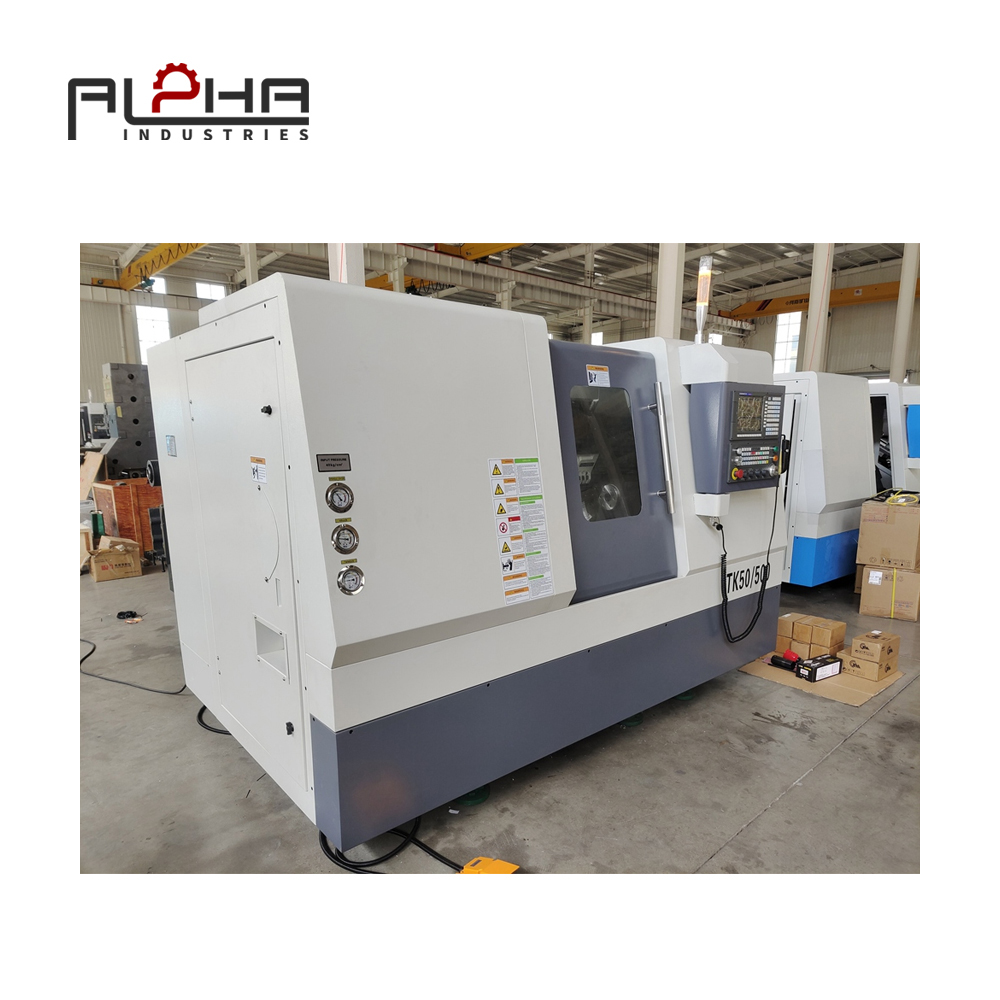


Lights-Out Manufacturing Is No Longer the Future—It's the Competitive Standard
For decades, manufacturers measured productivity by the number of operators working on the shop floor. Today, the situation has changed dramatically. Across Europe and North America, factories are facing an unprecedented combination of labor shortages, increasing wages, aging workforces, and higher customer expectations for faster delivery.
According to industry trends, many manufacturers can no longer rely on adding more skilled machinists to increase production capacity. Instead, they are investing in lights-out manufacturing—a production model where CNC machines continue operating automatically during nights, weekends, and holidays with little or no human supervision.
While the concept sounds simple, successful lights-out machining requires far more than an automatic pallet changer or robotic loader. Every part of the machining process must remain stable for hours without operator intervention.
This is why the Horizontal Machining Center (HMC) has become one of the most important machine tools in modern smart factories.
Its structural design, automation compatibility, process consistency, and long-term reliability make it an ideal platform for continuous unattended production.
The Manufacturing Challenges Driving Lights-Out Production
Manufacturers throughout Europe and North America are facing several structural challenges that continue to reshape production strategies.
Skilled Labor Shortages
Experienced CNC programmers and machinists are becoming increasingly difficult to recruit. Many factories struggle to fill vacant positions while experienced workers approach retirement.
Rising Labor Costs
Hourly wages continue to increase across developed manufacturing economies. Extending production through additional shifts often leads to significant overtime expenses.
Higher Customer Expectations
OEM customers expect shorter lead times, higher quality, and complete production traceability.
Limited Factory Space
Expanding production capacity by purchasing additional buildings is expensive. Manufacturers instead seek to maximize the utilization of existing equipment.
These challenges make unattended machining one of the most effective methods for increasing production capacity without significantly increasing labor costs.
Why Many Unattended Machining Projects Fail
Although automation technology has advanced rapidly, many lights-out manufacturing projects fail because the machining process itself is not sufficiently stable.
Common problems include:
- Tool breakage during unattended machining
- Chip accumulation causing machining interruptions
- Fixture positioning errors
- Thermal expansion affecting dimensional accuracy
- Coolant delivery problems
- Machine alarms stopping production
- Unexpected spindle overload
Without a machine specifically designed for long periods of continuous operation, automated production quickly loses its economic advantages.
How Horizontal Machining Centers Enable Reliable Lights-Out Manufacturing
Modern Horizontal Machining Centers are engineered to eliminate many of the variables that interrupt unattended machining.
Instead of relying on constant operator adjustments, HMCs provide stable machining conditions throughout extended production cycles.
Automatic Pallet Changers Maximize Spindle Utilization
One of the defining characteristics of a Horizontal Machining Center is the automatic pallet changer.
While one workpiece is being machined, the next component can be prepared outside the machining area.
Once machining is complete, pallets exchange automatically within seconds.
This significantly reduces idle time while allowing production to continue without waiting for manual loading.
For overnight production, multiple pallets can be scheduled to run sequentially, dramatically increasing machine utilization.
Multi-Face Machining Eliminates Manual Repositioning
Every manual setup increases the possibility of operator error.
Horizontal Machining Centers use precision rotary tables to machine multiple faces during a single clamping operation.
Benefits include:
- Reduced fixture changes
- Improved dimensional consistency
- Better geometric accuracy
- Fewer manual interventions
- Higher process repeatability
These characteristics are essential for unattended machining, where maintaining consistent part quality is critical.
Superior Chip Evacuation Supports Continuous Operation
One of the biggest causes of lights-out machining interruptions is chip accumulation.
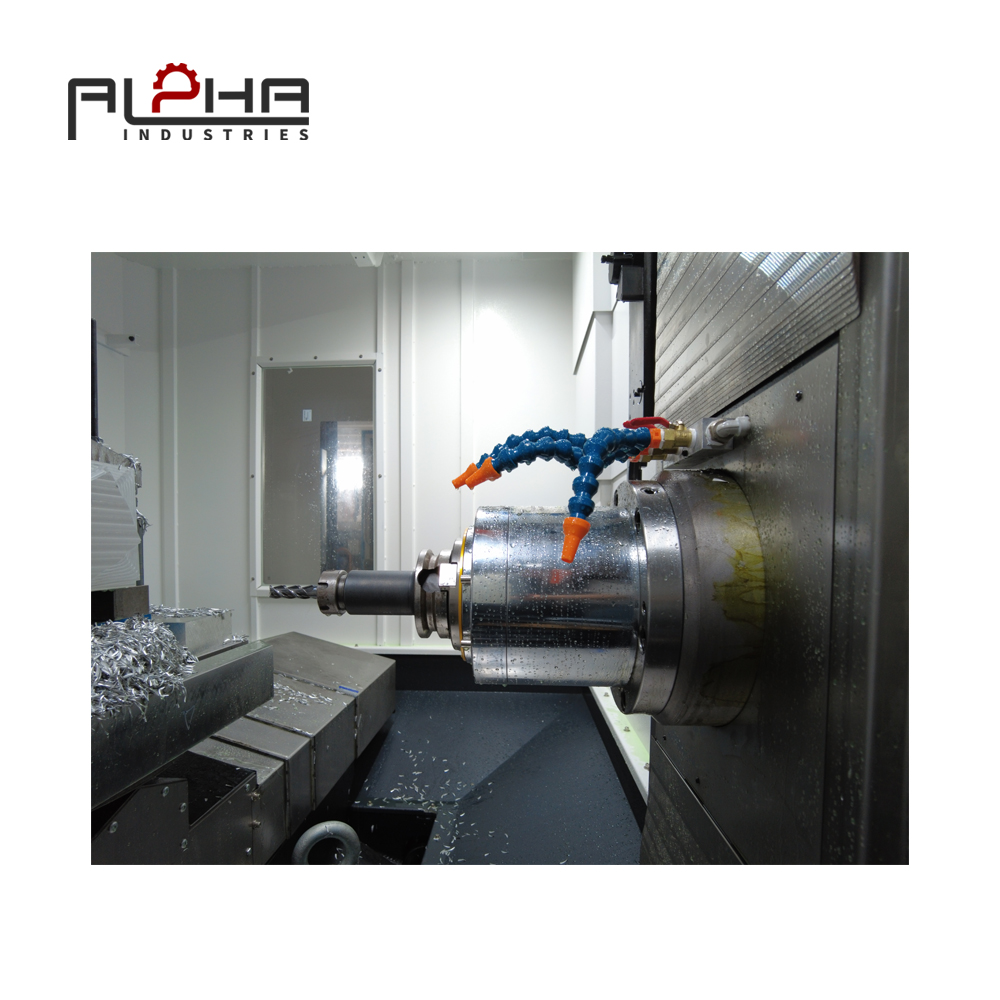
Horizontal spindle orientation allows gravity to remove chips naturally from the cutting zone.
Combined with high-capacity chip conveyors and optimized coolant systems, Horizontal Machining Centers maintain clean machining environments even during extended production cycles.
This significantly reduces the likelihood of production interruptions caused by chip recutting or conveyor blockages.
Intelligent CNC Monitoring Improves Process Security
Advanced Horizontal Machining Centers integrate intelligent CNC systems capable of monitoring machine performance in real time.
Typical monitoring functions include:
- Tool life management
- Spindle load monitoring
- Thermal compensation
- Collision protection
- Adaptive feed control
- Alarm diagnostics
These technologies help prevent minor machining deviations from becoming major production failures.
For manufacturers running overnight production, predictive monitoring provides additional confidence in unattended operation.
Automation Integration Creates Smart Manufacturing Cells
Today's Horizontal Machining Centers are designed to integrate with a wide range of factory automation technologies.
These include:
- Industrial robots
- Flexible Manufacturing Systems (FMS)
- Automated storage systems
- Manufacturing Execution Systems (MES)
- Automatic tool presetters
- Smart scheduling software
This integration allows manufacturers to create highly automated machining cells capable of operating continuously with minimal supervision.
Business Benefits Beyond Labor Savings
The value of lights-out manufacturing extends far beyond reducing labor expenses.
Manufacturers implementing reliable HMC automation often achieve:
Increased Machine Utilization
Machines continue producing components outside normal working hours, significantly increasing annual production capacity.
Lower Cost Per Part
Fixed operating costs are distributed across a greater number of finished components.
Improved Return on Investment
Higher machine productivity shortens equipment payback periods.
Faster Customer Deliveries
Continuous production increases scheduling flexibility and improves on-time delivery performance.
Enhanced Global Competitiveness
Manufacturers can respond more quickly to changing market demand while maintaining high quality standards.
Why Lights-Out Manufacturing Will Continue Expanding
Several long-term industry trends indicate that unattended production will become increasingly common across Europe and North America.
These include:
- Industry 4.0 adoption
- Smart factory development
- Digital manufacturing
- AI-assisted process optimization
- Labor market shortages
- Sustainable manufacturing initiatives
Manufacturers investing in automation-ready Horizontal Machining Centers today will be better positioned to compete in tomorrow's manufacturing environment.
Why Choose ALPHA Horizontal Machining Centers
At ALPHA, we design Horizontal Machining Centers to support continuous, high-efficiency manufacturing with exceptional reliability.
Our HMC solutions combine rigid machine structures, precision rotary tables, automatic pallet changers, intelligent CNC systems, efficient chip evacuation, and automation-ready configurations to maximize unattended machining performance.
Whether producing automotive transmission housings, aerospace structural components, hydraulic manifolds, precision molds, energy equipment, or heavy industrial machinery, ALPHA delivers machining solutions that help manufacturers increase productivity while reducing labor dependence.
By combining advanced engineering with long-term operational stability, ALPHA helps manufacturers across Europe and North America build smarter, more competitive production facilities.
Frequently Asked Questions (FAQ)
1. What is lights-out manufacturing?
Lights-out manufacturing is an automated production method in which CNC machines continue operating without human supervision during nights, weekends, or other unattended periods.
2. Why are Horizontal Machining Centers suitable for unattended production?
Their automatic pallet changers, multi-face machining capability, efficient chip evacuation, and stable machine structure support long periods of reliable operation.
3. What are the biggest challenges in lights-out machining?
Tool wear, chip accumulation, thermal expansion, machine alarms, and inconsistent process stability are the most common challenges.
4. Can Horizontal Machining Centers integrate with industrial robots?
Yes. Modern HMCs are designed to integrate with robotic loading systems, Flexible Manufacturing Systems (FMS), MES platforms, and other Industry 4.0 technologies.
5. Which industries benefit most from lights-out manufacturing?
Automotive, aerospace, medical devices, precision engineering, energy equipment, mold manufacturing, and heavy machinery manufacturers all benefit from unattended CNC production.
Contact Us
Transform Your Factory with ALPHA Horizontal Machining Centers
If you're planning to implement lights-out manufacturing or expand your automated production capacity, ALPHA Horizontal Machining Centers provide the reliability, precision, and automation capabilities required for continuous industrial machining.
Our engineering team can recommend the ideal HMC solution based on your production goals, automation level, and machining applications.
Contact Us: