

High-Rigidity Lathe Bed Structure: The Core of Precision Turning | Alpha
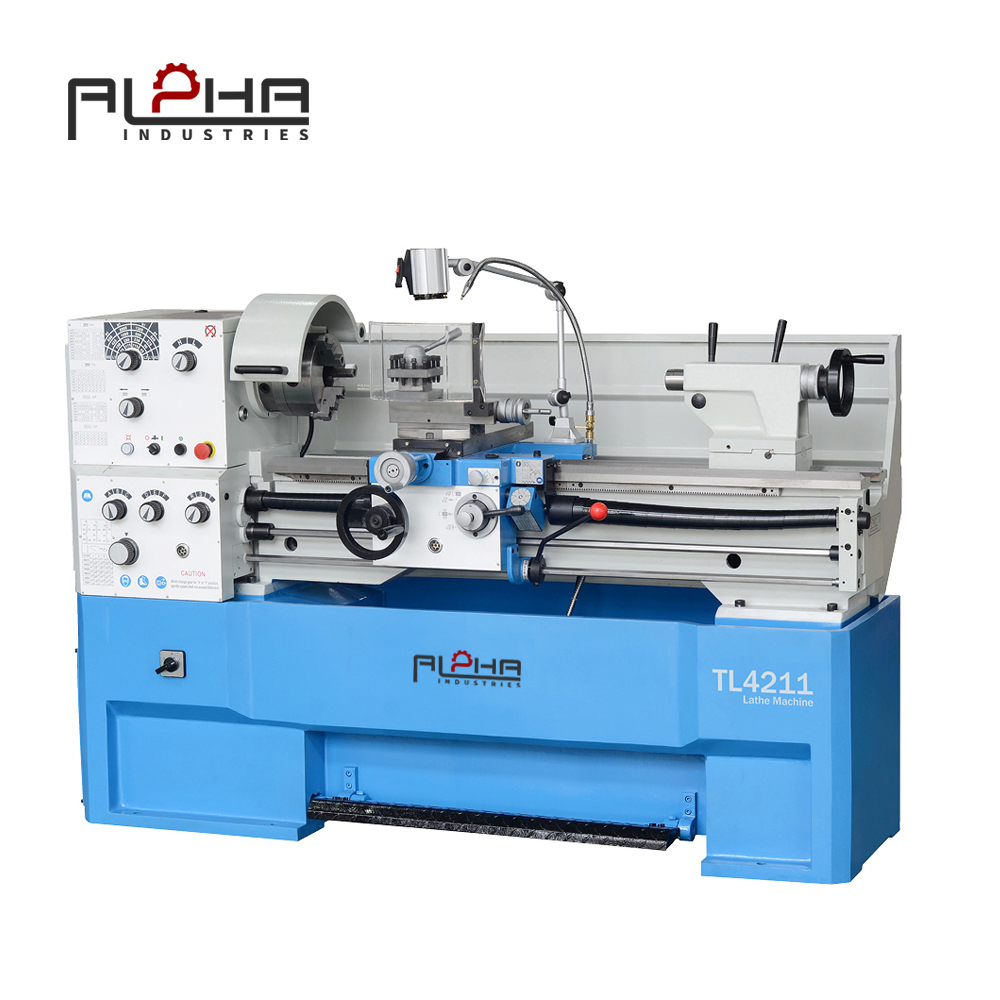
In modern machining, achieving stable, long-term turning accuracy is not solely dependent on spindle quality or tooling performance. The fundamental foundation of any precision lathe is its bed structure—the component responsible for supporting the entire machine and absorbing cutting forces during operation. While many machines emphasize speed and power, structural rigidity is the defining factor that separates high-performance industrial lathes from ordinary models.
This article focuses on one crucial technical point:
How the High-Rigidity Lathe Bed Structure Significantly Enhances Turning Precision, Surface Quality, and Tool Life.
Why the Lathe Bed Structure Determines Precision
During turning, cutting resistance, dynamic loads, and spindle vibrations are transmitted directly into the machine bed. A weak or unstable bed results in:
-
Workpiece chatter
-
Loss of dimensional accuracy
-
Poor surface finishing
-
Premature tool wear
-
Thermal deformation
-
Reduced repeatability
To achieve micron-level tolerance, the lathe bed must deliver exceptional stiffness, stability, and vibration damping.
Alpha’s industrial lathes are built with a technical focus on high-rigidity cast bed structures specifically engineered to maintain precision under heavy cutting and long-term continuous operation.
Engineering Science Behind Alpha’s High-Rigidity Bed
Alpha lathes use an optimized structural architecture designed through finite element analysis (FEA) and industrial-grade casting technology. The engineering goals include:
-
Minimizing bed deformation
-
Maximizing structural stiffness
-
Improving vibration absorption
-
Enhancing long-term thermal stability
Below is an in-depth breakdown of the design technology.
1. Heavy-Duty Cast Iron Bed (HT300 / Meehanite Grade)
Alpha adopts high-strength Meehanite or HT300 cast iron with:
-
High damping capacity
-
Excellent thermal stability
-
Superior load-bearing characteristics
-
Uniform grain structure
Benefits:
-
Reduces machine vibration
-
Maintains accuracy during heavy cutting
-
Prevents long-term deformation
The casting is aged through natural or artificial stress relieving to eliminate internal stress and ensure dimensional stability for years of operation.
2. Wide-Span Guideway Layout for Maximum Stability
The bed uses an enlarged cross-sectional geometry with wide-span guideways to increase rigidity.
Functions:
-
Distributes cutting forces evenly
-
Enhances stability during deep cuts
-
Reduces guideway wear
-
Improves straightness and parallelism
This structural design provides the foundation for heavy-duty turning without compromising surface finish.
3. Integrated Rib-Reinforcement Structure
Alpha’s bed includes internally engineered ribs arranged in a hybrid grid pattern.
Advantages:
-
Increases torsional rigidity
-
Prevents bending under heavy loads
-
Strengthens vibration resistance
-
Enhances overall machine stiffness
This internal framework ensures consistent machining accuracy even when processing large-diameter or long-shaft workpieces.
4. High-Precision Guideways (Hardened & Ground)
The machine bed is equipped with:
-
Induction-hardened guideways
-
Precision ground surfaces
-
Manual or automatic lubrication systems
These features ensure:
-
Smooth slide movement
-
Minimum friction and wear
-
Extended service life
-
Improved repeatability
The combination of structural rigidity and guideway accuracy allows Alpha lathes to maintain stable positioning for long-term production.
5. Thermal Stability and Distortion Control
Temperature changes during long machining cycles can cause bed deformation. Alpha addresses this with:
-
Specialized cast iron with superior heat dissipation
-
Symmetrically balanced bed design
-
Heat-isolated spindle mounting
-
Precision-engineered coolant paths
Result:
Consistent dimensional accuracy across long production runs.
Application Advantages of a High-Rigidity Lathe Bed
Heavy-Duty Metal Turning
-
Improved stability under large cutting forces
-
Accurate roughing and finishing cycles
Long-Shaft Machining
-
Reduced mid-section vibration
-
Improved straightness and concentricity
Precision Industrial Components
-
Better surface finishing
-
Lower defect rate
Hard Materials (Alloy Steel, Tool Steel)
-
Low vibration enables superior tool life
-
Reliable multi-pass machining
FAQ
What determines the stability of a lathe machine?
The stability mainly depends on the rigidity of the lathe bed, which supports the machine structure, absorbs vibration, and maintains cutting accuracy.
Why is a rigid lathe bed important for precision turning?
A rigid bed reduces deformation and vibration under load, ensuring dimensional accuracy, smoother surface finishing, and longer tool life.
How does Alpha improve lathe bed rigidity?
Alpha uses high-strength cast iron, reinforced rib structures, wide-span guideways, and FEA-optimized designs to maximize stiffness and stability.
Does bed rigidity affect long-term accuracy?
Yes. A high-rigidity bed prevents gradual deformation and maintains precision even after years of heavy-duty machining.
Technical Specifications Affected by Bed Rigidity
-
Positioning accuracy: ±0.01–0.02 mm
-
Surface roughness: Ra 0.8–1.6 μm
-
Tool life improvement: 15–30%
-
Vibration reduction: up to 40%
-
Long-term geometric accuracy retention: >95%
Why Alpha Lathe Machines Maintain Precision for Years
Key Advantages:
-
Industrial-grade rigid bed construction
-
High-stiffness guideway design
-
Strong vibration damping capability
-
High-precision machining during heavy loads
-
Stable performance over long production cycles
-
Engineered for durability and repeatability
Alpha lathe machines are built to perform in demanding manufacturing environments where accuracy, stability, and long-term consistency are essential.
🔗 Explore Alpha Lathe Machine Series → https://alpha-cnc.com/products/lathe
🔗 Discover Precision laser cutting Solutions → https://alpha-cnc.com/products/laser-cutting
🔗 Read More High-Precision Machining Articles → https://alpha-cnc.com/blog