

Surface Grinder for High-Precision Mold Finishing Applications
In high-end mold manufacturing, surface quality and dimensional precision directly determine final product performance. Whether for automotive injection molds, die-casting molds, or stamping dies, precision grinding is the final critical process before polishing or assembly.
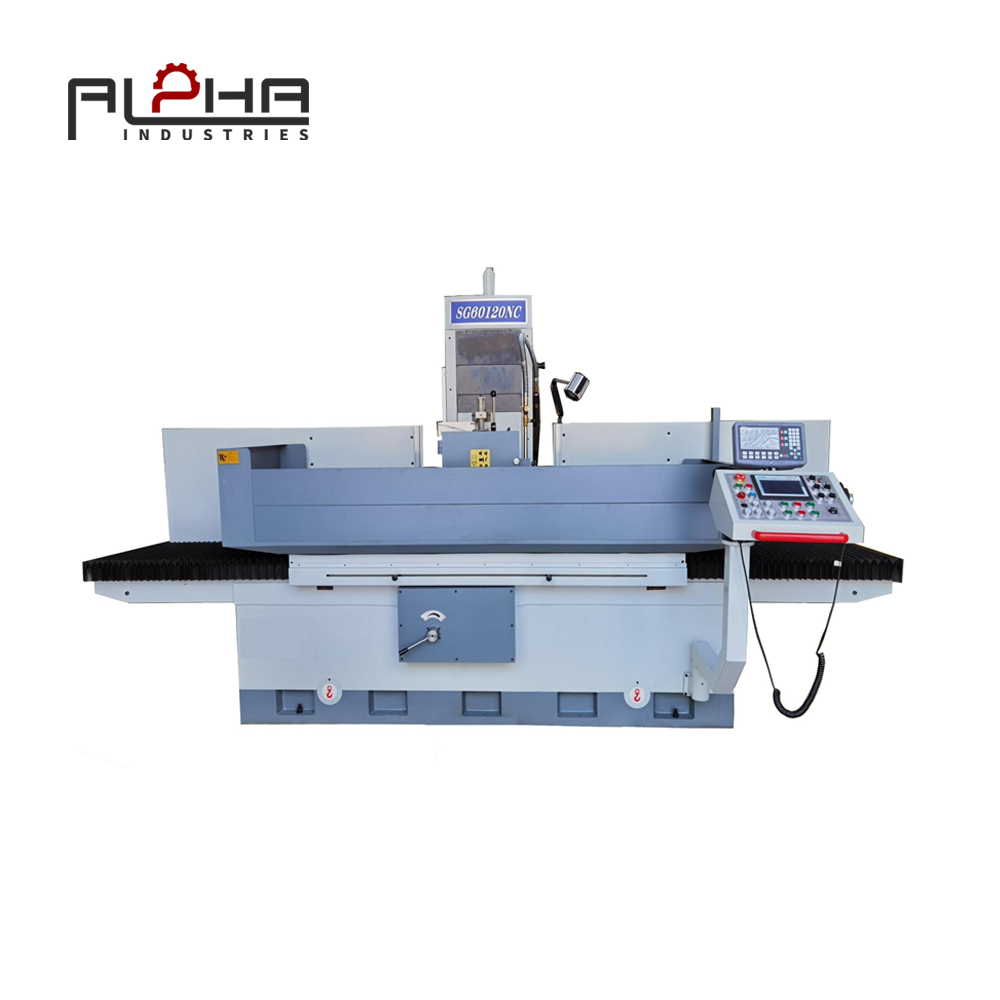
At ALPHA, our Surface Grinder is specifically optimized for high-precision mold finishing, delivering stable micron-level flatness, superior surface roughness control (Ra ≤ 0.2 μm), and long-term geometric accuracy retention.
This article focuses on one core topic:
How a high-precision surface grinder improves mold finishing accuracy and long-term dimensional stability.
Why Surface Grinding Is Critical in Mold Manufacturing
In mold production, milling and EDM create near-net shapes. However, these processes often leave:
-
Residual tool marks
-
Thermal deformation
-
Surface waviness
-
Micro-scale dimensional deviations
Only a high-rigidity precision surface grinder can achieve:
-
Flatness ≤ 0.003 mm / 300 mm
-
Parallelism ≤ 0.005 mm
-
Mirror-like surface finish
-
Stable tolerance repeatability
For industries such as automotive and aerospace, even a 5–10 micron deviation can lead to flash defects or assembly failure.
ALPHA Surface Grinder: Engineering Focus on Mold Finishing
1️⃣ High-Rigidity Machine Structure
The foundation of grinding precision lies in structural stability.
ALPHA surface grinders use:
-
High-grade Meehanite cast iron
-
Finite element optimized bed design
-
Stress-relief heat treatment
-
Wide-span guideways
This minimizes thermal deformation and vibration, especially during long grinding cycles common in large mold plates.
Result:
Consistent geometric accuracy over 8–10 years of operation.
2️⃣ Precision Grinding Spindle System
Spindle stability determines surface quality.
ALPHA integrates:
-
P4-grade angular contact bearings
-
Dynamic balancing calibration
-
Oil-lubricated bearing system
-
Low thermal expansion spindle housing
Spindle runout control: ≤ 0.002 mm
This ensures:
-
Uniform material removal
-
No chatter marks
-
Stable surface roughness
For hardened mold steel (HRC 50–60), this is especially critical.
3️⃣ Advanced Hydraulic Feed Control
For mold finishing, smooth table movement is essential.
ALPHA hydraulic surface grinders feature:
-
Closed-loop hydraulic control
-
Adjustable table speed
-
Anti-creep low-speed stability
-
Automatic lubrication system
This ensures:
-
No stick-slip movement
-
Uniform grinding lines
-
Better surface consistency
4️⃣ Thermal Stability Optimization
Grinding generates heat. Without proper control, thermal expansion affects precision.
ALPHA integrates:
-
Optimized coolant circulation
-
Isolated heat-source layout
-
Symmetrical machine structure
-
Optional magnetic separator & paper filter
This allows long-cycle grinding of large mold bases without dimensional drift.
Technical Specifications (Example Configuration)
| Item | Specification |
|---|---|
| Table Size | 600 × 300 mm |
| Max Workpiece Weight | 350 kg |
| Spindle Motor | 5.5 kW |
| Grinding Wheel Speed | 1450 rpm |
| Vertical Feed Resolution | 0.001 mm |
| Surface Roughness | Ra ≤ 0.2 μm |
| Flatness | ≤ 0.003 mm / 300 mm |
Custom sizes available for heavy mold bases.
Application Scenario: Injection Mold Base Grinding
For large automotive injection molds:
-
Rough milling completes base shaping
-
Stress relief heat treatment applied
-
Precision surface grinding ensures flatness
-
Manual polishing improves mirror finish
With ALPHA surface grinder:
-
Grinding time reduced by 18–25%
-
Surface rework rate reduced by 30%
-
Assembly alignment accuracy improved
Surface Grinder vs Milling for Mold Finishing
| Comparison | Milling | Surface Grinding |
|---|---|---|
| Surface Finish | Moderate | Excellent |
| Dimensional Precision | ±0.02 mm | ±0.003 mm |
| Thermal Stability | Lower | Higher |
| Final Finishing | Not suitable | Ideal |
Grinding remains irreplaceable in high-precision mold workflows.
Frequently Asked Questions
What is the purpose of a surface grinder in mold manufacturing?
A surface grinder ensures flatness, parallelism, and surface roughness precision after milling or EDM processes. It eliminates micro-deformations and prepares molds for final polishing.
How accurate is a precision surface grinder?
High-quality surface grinders achieve flatness within 0.003 mm over 300 mm and surface roughness as low as Ra 0.2 μm, depending on configuration and operator settings.
What type of surface grinder is best for mold finishing?
Hydraulic surface grinders with high-rigidity cast iron structure and precision spindle systems are ideal for mold finishing due to stable feed control and vibration reduction.
How does spindle quality affect grinding results?
Spindle runout and thermal expansion directly affect surface finish and dimensional stability. High-grade bearings and dynamic balancing significantly improve consistency.
How to maintain long-term grinding accuracy?
-
Regular spindle inspection
-
Coolant system maintenance
-
Guideway lubrication
-
Periodic geometric calibration
Proper maintenance ensures long-term micron-level accuracy.
Why Choose ALPHA Surface Grinder?
ALPHA specializes in precision metal processing equipment with a strong focus on:
-
Structural rigidity
-
Thermal stability
-
Precision spindle systems
-
Long-term durability
-
International export standards
We support global mold manufacturers with customized grinding solutions tailored to automotive, aerospace, and precision tooling industries.
Conclusion
In mold manufacturing, surface grinding is not just a finishing step — it is the final guarantee of dimensional accuracy and surface integrity.
A high-rigidity, thermally stable Surface Grinder from ALPHA ensures:
-
Micron-level flatness
-
Superior surface roughness
-
Long-term geometric stability
-
Reduced rework costs
If your mold production demands uncompromising precision, ALPHA surface grinding solutions deliver measurable results.
📩 Contact Us
Looking for a high-precision surface grinder for mold finishing?
👉 Contact Us to get detailed technical specifications, configuration options, and a customized quotation.
ALPHA — Precision Grinding, Engineered for Excellence.